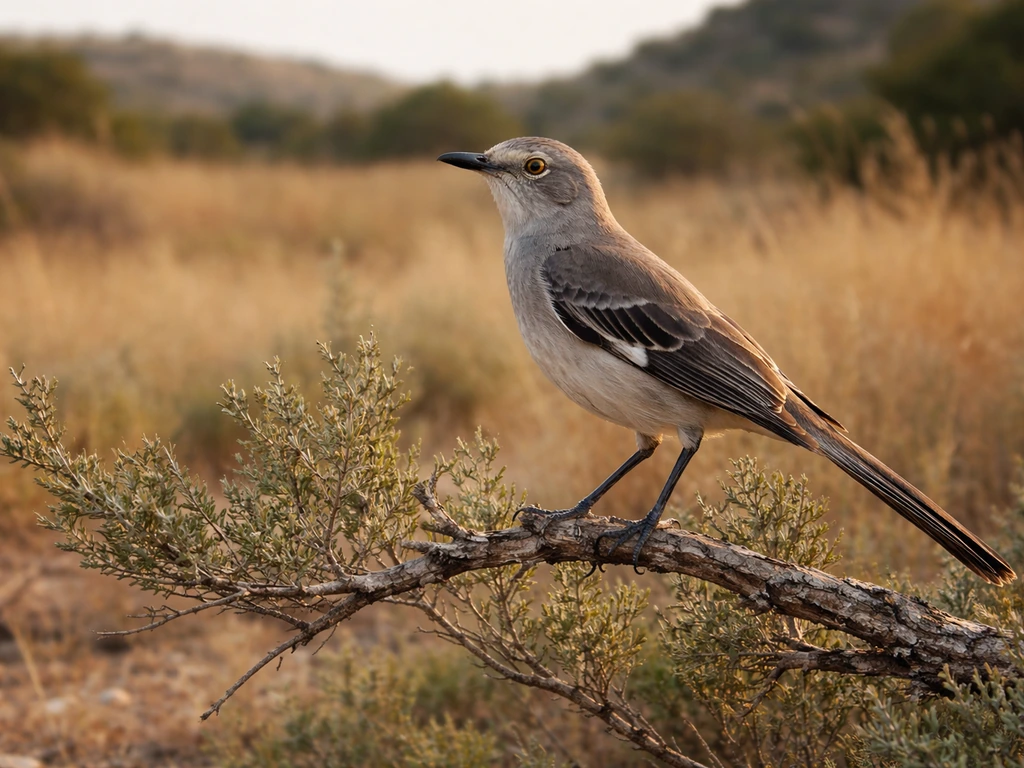
Florida's official state bird is the Northern Mockingbird (Mimus polyglottos), designated by the Florida Legislature on April 23, 1927, through Senate Concurrent Resolution No. 3. The Legislature chose it because of what the resolution called the 'blank" rel="noopener noreferrer">melody of its music' and its 'matchless charm', a bird that delighted both Florida residents and visitors and was already closely woven into everyday life across the state.
Why Florida’s State Bird Is the Mockingbird

Marcus Webb
1 May 2026
Florida's Official State Bird (and the Mockingbird vs. Northern Mockingbird Clarification)
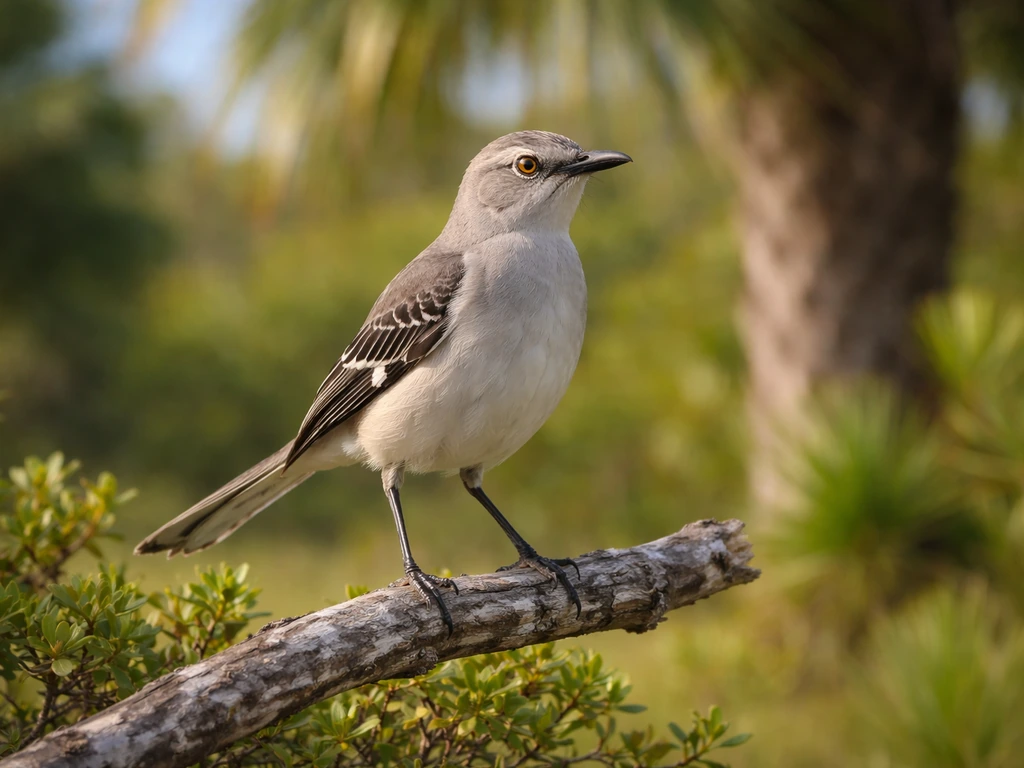
If you've seen Florida's official state symbols page, you'll notice it says 'Mockingbird' and 'common mockingbird' rather than 'Northern Mockingbird.' That's not a different bird, it's the same species. Florida's Department of State identifies it as Mimus polyglottos, which is the scientific name for the Northern Mockingbird. The older designation text from 1927 simply used 'Mocking Bird,' the common name of the time. Every authoritative source, from the Florida Department of State to the U.S. Fish and Wildlife Service and the Tennessee Wildlife Resources Agency, uses Mimus polyglottos to describe the same bird. So whether you see it called the mockingbird or the Northern Mockingbird, you're talking about the same species.
Why Florida Chose the Mockingbird: Symbolism and State-Fit
The original resolution is unusually poetic for a government document. It describes the mockingbird as a 'bird of matchless charm' whose 'melody of its music has delighted the heart of residents and visitors to Florida.' The Legislature even described itself as throwing 'the arm of its protecting care' around the bird, language that signals how valued the species was at the time.
That emotional language wasn't just ornamental. The Northern Mockingbird genuinely earned it. It's a year-round Florida resident, meaning it doesn't disappear in winter the way migratory species do. Floridians see and hear it constantly, in backyards, parks, and neighborhoods throughout every season. It's also helpful to people in a practical sense: mockingbirds feed heavily on insects and weed seeds, with ripe berries rounding out their diet in summer and fall. A bird that's always around, sings memorably, and benefits the local environment is an easy candidate for a state symbol.
A Brief History of the Designation
Florida made it official on April 23, 1927, through Senate Concurrent Resolution No. 3. The original text uses 'Mocking Bird' and states plainly: 'That the Mocking Bird be and it is hereby designated as the State Bird of the State of Florida.' A 2026 Florida Senate bill analysis confirms the mockingbird is 'also known as the northern mockingbird, Mimus polyglottos,' tying the historical language to the modern scientific classification. Florida was one of the earliest states to make this designation, doing so about two years before Arkansas (1929) and six years before Tennessee (1933).
What the Northern Mockingbird Looks and Sounds Like
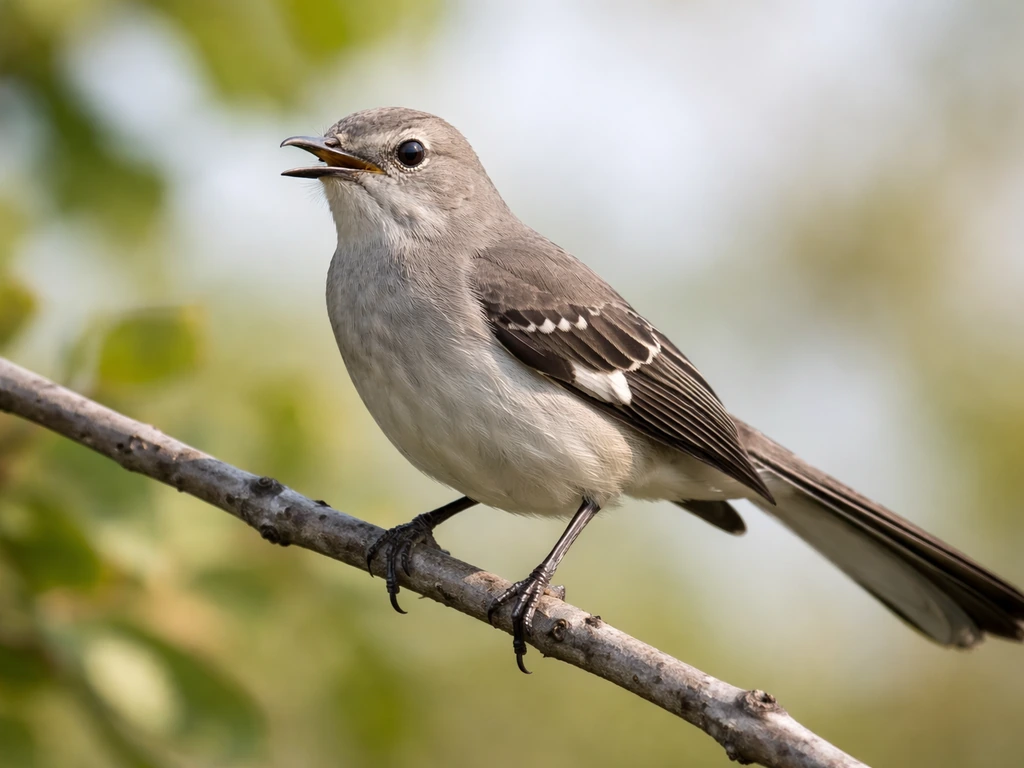
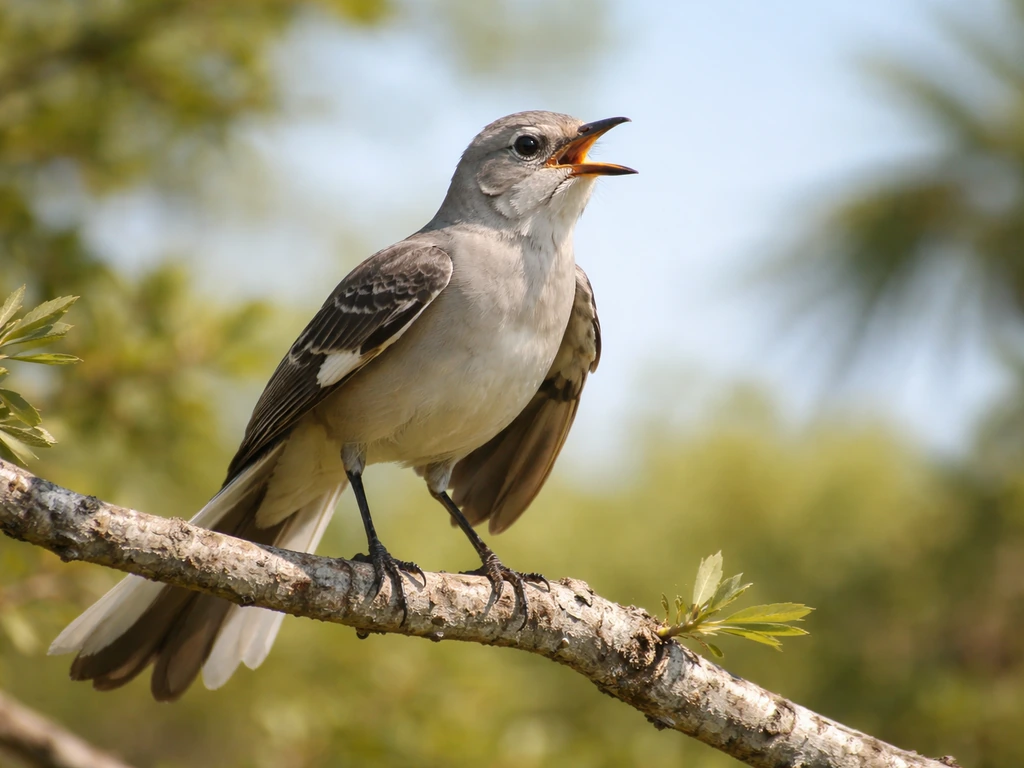
Knowing what to look and listen for makes it easy to spot one. The Northern Mockingbird is a medium-sized songbird, about 10 inches in length with a wingspan of roughly 15 inches. Its upper parts are gray, its underside is white, and it has distinctive white patches on its tail and wings that flash clearly in flight. Females look similar to males but tend to show slightly less bright white. It's not a flashy bird by color, but its shape and those white wing patches make it pretty recognizable once you know what you're looking for.
The song is where the Northern Mockingbird truly stands out. It's a superb mimic, cycling through imitations of other birds and sounds in long, varied sequences. Its own song has a pleasant, lilting quality and can run on for extended stretches, including all night long, particularly on bright spring nights. If you hear what sounds like multiple different birds coming from the same spot, often from the top of a shrub or small tree, there's a good chance it's a mockingbird.
Why It Stands Out in Florida's Landscape
The Northern Mockingbird thrives in exactly the kind of habitat Florida provides in abundance: suburban neighborhoods, parkland, cultivated areas, and open spaces with shrubs and scattered trees. blank" rel="noopener noreferrer">It nests in dense shrubs and trees, typically 3 to 10 feet off the ground, building a bulky, open cup nest from grass, twigs, and rootlets. Clutches run three to six eggs, pale blue-green with brown spots. That nesting profile fits Florida's residential and park landscapes almost perfectly.
Behaviorally, the bird is hard to miss. It's known for fiercely defending its nest, it'll go after much larger birds (and occasionally people) that get too close. That boldness, combined with its near-constant singing and year-round presence, makes it one of the most recognizable species in Florida's everyday environment. This isn't a bird you have to go looking for; it comes to you.
How Other States Handle the Same Bird
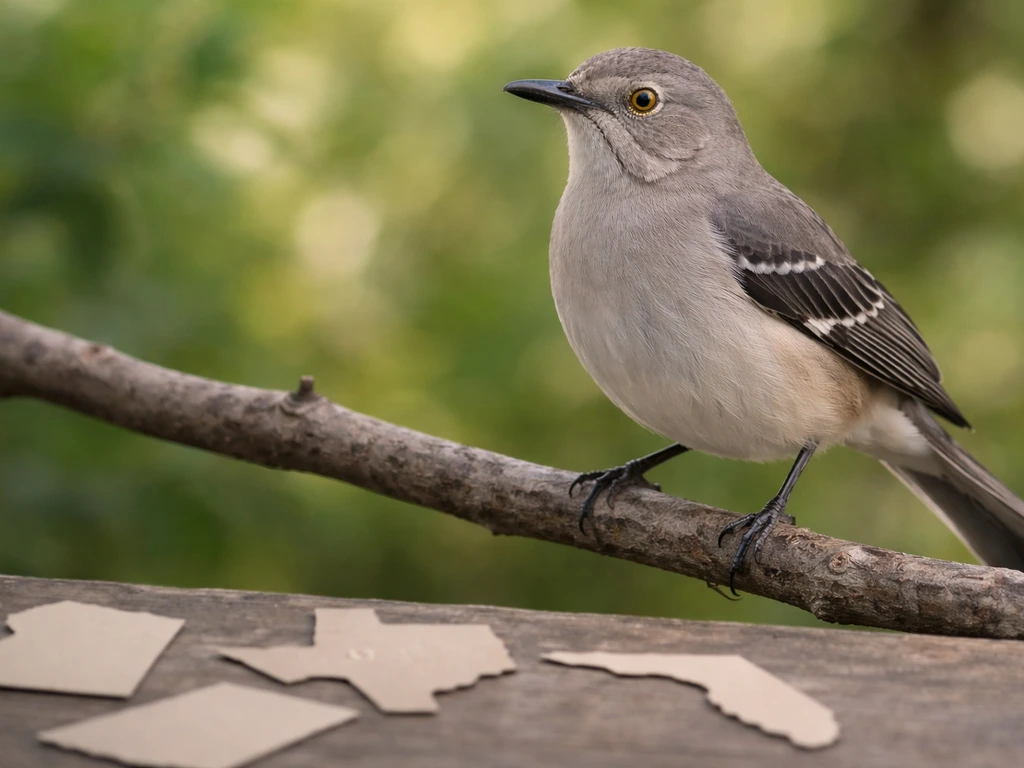
Florida is one of five states that have designated the Northern Mockingbird as their official state bird. You might be wondering how many states have the mockingbird as their state bird, and the answer is revealed once you compare the states that made the designation. That makes it the most shared state bird in the country alongside the cardinal. Here's how the five states stack up:
| State | Year Designated | Designation Notes |
|---|---|---|
| Florida | 1927 | Senate Concurrent Resolution No. 3; one of the earliest designations |
| Arkansas | 1929 | House Concurrent Resolution No. 22; adopted about two years after Florida |
| Mississippi | ~1927–1930s | Also cites Mimus polyglottos as official state bird |
| Tennessee | 1933 | Named official state bird by the Tennessee Legislature |
| Texas | 1927 | Designated same year as Florida; large year-round range in Texas |
Each state had its own reasons for choosing the mockingbird, though the themes overlap considerably: a familiar, year-round resident with an extraordinary song and a strong association with the local landscape. Texas and Florida both made the designation in 1927, pointing to a broader cultural moment in the South when the mockingbird's reputation was at a high point.
You may also be wondering why the mockingbird is the Texas state bird, which comes down to the same kind of recognition for its familiar presence and song. If you want to dig into why the specific language and reasoning differs between states, comparing Florida's designation with those of Tennessee and Texas is particularly interesting, the priorities each Legislature emphasized tell you something about how each state saw itself.
If you're wondering why Tennessee chose it, the same Northern Mockingbird reputation for song and year-round presence played a big role why is the mockingbird the state bird of tennessee.
Quick Takeaways and Where to Go Next
- Florida's state bird is the Northern Mockingbird (Mimus polyglottos), officially designated on April 23, 1927.
- The designation was driven by the bird's remarkable song, its year-round presence in Florida, and its deep familiarity to residents and visitors alike.
- When you see 'common mockingbird' or just 'mockingbird' on Florida's official pages, it's the same bird — the scientific name Mimus polyglottos confirms the match.
- Look for a gray, 10-inch bird with white wing patches and a white belly. Listen for long, varied, mimicking songs — often heard at night in spring.
- Four other states share the same state bird: Arkansas, Mississippi, Tennessee, and Texas — making the Northern Mockingbird the most widely shared state bird in the U.S.
- To compare how Florida's choice stacks up against the same bird's adoption in Tennessee and Texas, or to explore which states chose entirely different birds, the other state-bird profiles on this site offer the full picture.
FAQ
Did Florida mean the Northern Mockingbird specifically, or could it be another mockingbird species?
Florida’s designation points to the Northern Mockingbird, Mimus polyglottos. Other “mockingbird” species are not referenced by Florida’s official naming, and the scientific name used by Florida’s Department of State matches Mimus polyglottos.
Why does Florida sometimes list “Mockingbird” instead of “Northern Mockingbird,” is that a mistake?
It is usually just a naming shortcut. “Mockingbird” and “Northern Mockingbird” refer to the same species, and the distinction matters mainly when matching the common name to the scientific name used in official and wildlife references.
Is the mockingbird actually year-round in Florida across the whole state?
In general yes, but your best odds are where shrubs and scattered trees are common, like suburban neighborhoods, parks, and open areas with growth along edges. Extremely urban cores with fewer shrubs can have fewer sightings even though the species is still present.
What time of day should I listen for to confirm it is a mockingbird?
Listen during daylight for long, varied singing sequences. The article notes extended stretches can occur at night in spring on bright nights, so if you hear multi-sound “bird-like” chatter from one spot after dark, that can be a strong clue.
How can I tell a mockingbird apart from similar songbirds in Florida?
Focus on the combination of gray-and-white overall look with the flash of white tail and wing patches in flight, and the tendency to sing in long sequences from a single elevated perch. Many birds sing, but the mockingbird’s extended mimicry from one location is a key differentiator.
Do mockingbirds ever leave Florida, or are they truly non-migratory?
They are considered year-round residents, but weather extremes can affect how visible they are. Even without migration, heavy storms, seasonal food changes, or dense foliage can reduce how often you notice them.
How do nesting habits affect where you might see or hear them?
Because they nest 3 to 10 feet off the ground in dense shrubs and trees, you are more likely to notice activity near hedges, ornamental shrubs, park edges, and yards with thick planting. If you hear aggressive defense behavior around one shrub, it may indicate a nearby nest.
Are mockingbirds helpful for gardens, or can they cause problems?
They can be beneficial because they eat insects and weed seeds, and their berry consumption supports natural food webs. The tradeoff is that they may aggressively defend nests and may repeatedly alarm if you approach the nesting area, so keeping distance around active shrubs helps.
Why does the Florida bill text sound so poetic, did lawmakers really use that language?
Yes, the resolution’s phrasing is unusually lyrical for a government document. However, the important practical takeaway is that it ties the designation to the bird’s public presence and song, which is consistent with modern identification cues.
Which other states share the mockingbird as a state bird, and does that change Florida’s reasoning?
Sharing the symbol does not change why Florida chose it, but it can help you understand common themes. Other states also emphasize familiarity, year-round presence, and distinctive singing, which suggests a broader regional appreciation rather than a Florida-only factor.
Next Article
Why Is the Mockingbird Texas State Bird? History and ID
Why northern mockingbird became Texas state bird, when it was adopted, and how to identify it.