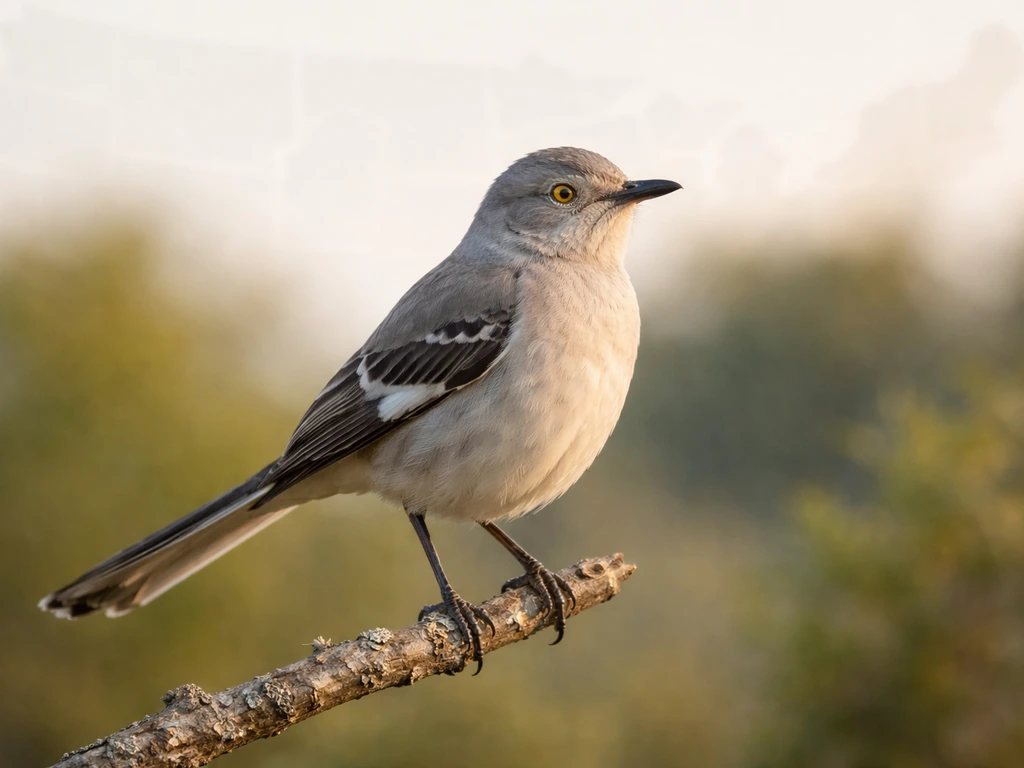
Texas chose the northern mockingbird as its state bird in 1927 because the bird matched the Texan self-image almost perfectly: it's a fearless, vocal, year-round resident that will defend its territory against animals many times its size. The 40th Texas Legislature made it official through Senate Concurrent Resolution No. 8, and the resolution's own language calls the mockingbird 'a fighter for the protection of his home, falling, if need be, in its defense, like any true Texan.' That line tells you everything about why this particular bird won out.
Why Is the Mockingbird Texas State Bird? History and ID

Marcus Webb
1 May 2026
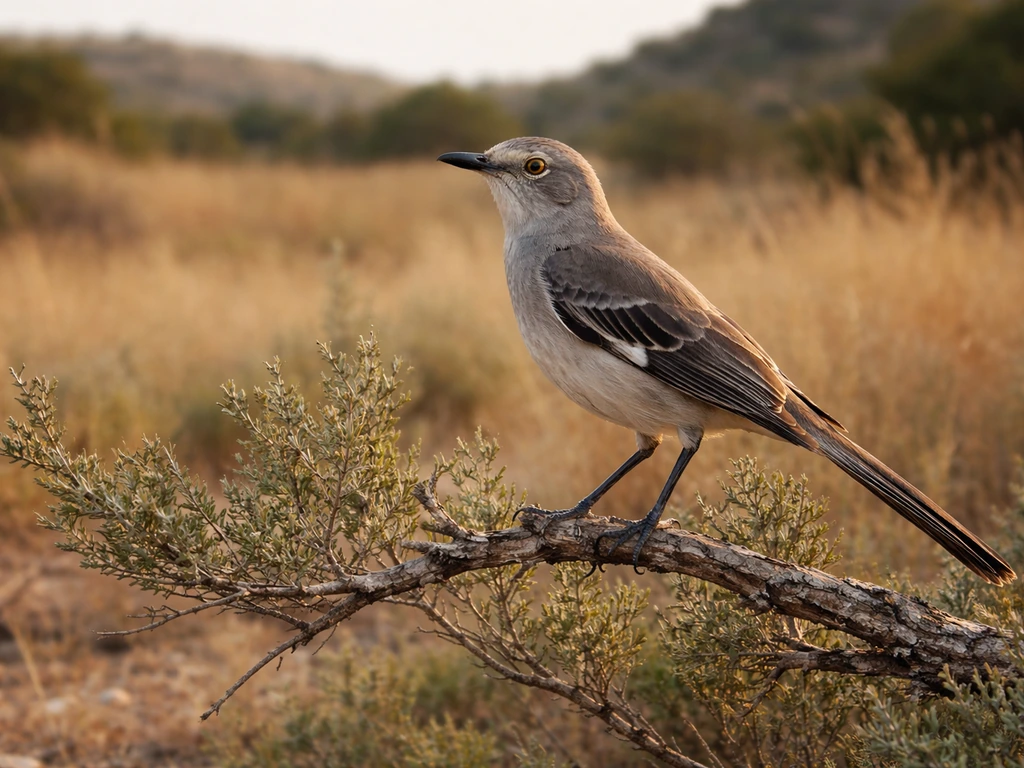
The bird you're actually looking at: northern mockingbird basics
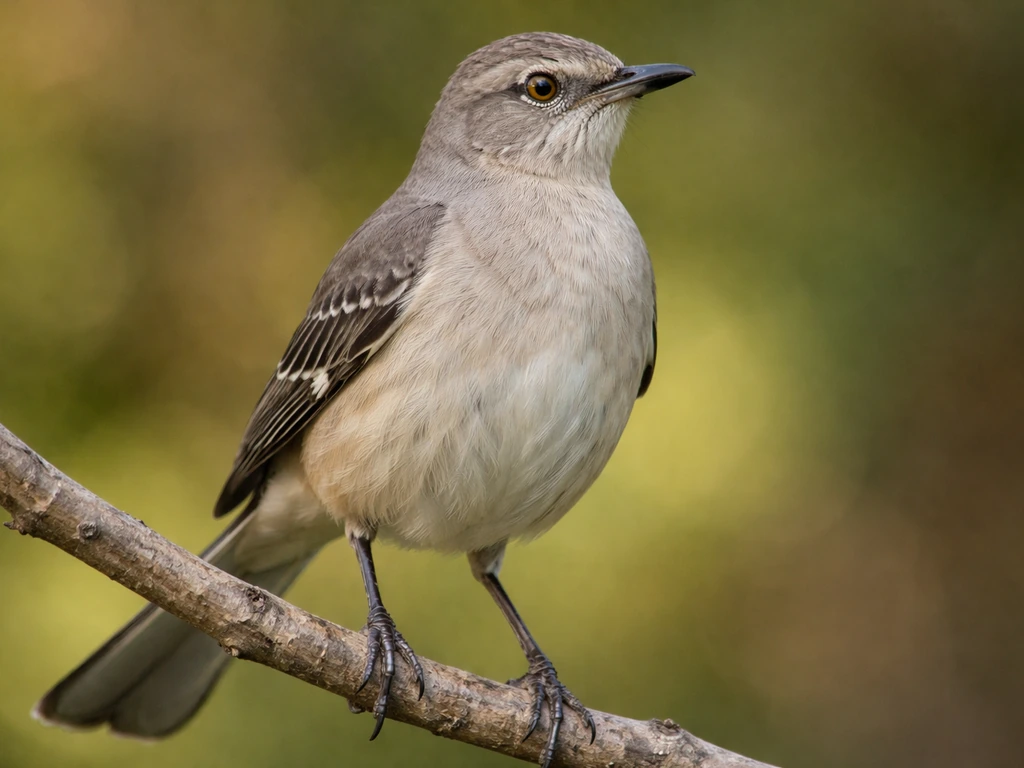
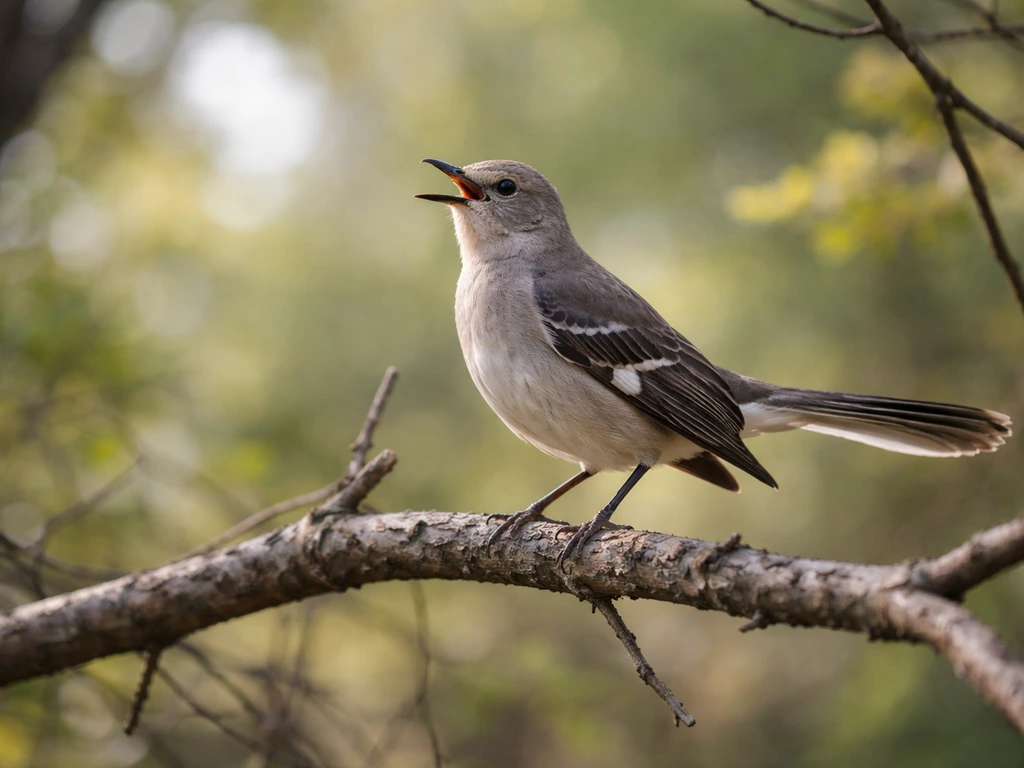
Texas's official state-symbol listing just says 'Mockingbird,' but the species in question is the northern mockingbird (Mimus polyglottos). It's worth knowing what it looks like so you can recognize one, because they're genuinely common across Texas year-round.
- Overall gray-brown on the back, paler on the breast and belly
- Two white wing bars on each folded wing
- A bold white wing patch that flashes prominently in flight
- A long tail with white outer tail feathers, very visible when the bird fans or spreads it
- Medium-sized, roughly robin-sized but slimmer and with a longer tail
The song is the real giveaway. Northern mockingbirds cycle through dozens of imitated calls in rapid succession, often singing at night as well as during the day. According to Texas Parks and Wildlife, they're most vocal from February through July and again in late August through October, meaning you can hear them singing across most of the year in Texas latitudes. If you're standing in a Texas suburb and hear a bird running through what sounds like a playlist of every other bird in the neighborhood, you've found it.
How the designation happened: a quick timeline
The story moves fast once it starts. On January 31, 1927, the Texas Federation of Women's Clubs formally appealed to the 40th Texas Legislature to adopt the mockingbird as the official state bird. The legislature responded that same session, passing Senate Concurrent Resolution No. 8, which made the mockingbird Texas's state bird officially in 1927. That's the authoritative date, confirmed by the Texas State Library and Archives Commission.
This timing isn't a coincidence. The 1920s saw a broad wave of state-bird adoptions across the country, driven largely by women's clubs and conservation groups pushing states to recognize native wildlife as official symbols. Texas was part of that movement, and the Texas Federation of Women's Clubs was directly responsible for putting the mockingbird in front of the legislature.
Why the mockingbird fit Texas so well
The 1927 resolution didn't just rubber-stamp a popular bird. It spelled out two specific reasons that clearly resonated with lawmakers: the bird's singing and its fighting spirit. The resolution describes it as 'a singer of distinctive type' and invokes that 'true Texan' line about defending its home to the death. Both qualities were deliberate choices.
The singing made sense as a symbol because northern mockingbirds are genuinely exceptional. They can learn and imitate hundreds of sounds over a lifetime, and males sing persistently to establish territory. That kind of vocal dominance fits a state that has never been shy about its identity.
The territorial defense angle is just as compelling. Mockingbirds will dive-bomb cats, dogs, and even humans who get too close to a nest. They don't back down from much larger animals, which maps directly onto the 'don't mess with Texas' ethos, even decades before that phrase existed.
There's also a practical geographic argument. According to the Texas Breeding Bird Atlas from Texas A&M, northern mockingbirds are more common in Texas than in any other state. A statewide symbol should represent something that's genuinely present statewide, and the mockingbird qualifies easily. It nests in urban neighborhoods, rural brushland, and everything in between.
Texas isn't alone: states that share the mockingbird
If you're comparing Texas's choice against other states, the northern mockingbird is actually one of the more frequently shared state birds in the country. Five states have officially designated it as their state bird.
| State | Year Adopted | Official Designation Name |
|---|---|---|
| Texas | 1927 | Mockingbird |
| Arkansas | 1929 | Mockingbird |
| Mississippi | 1944 | Mockingbird |
| Tennessee | 1933 | Mockingbird |
| Florida | 1927 | Mockingbird |
All five states list it simply as 'Mockingbird' in their official designations, but all five refer to the same species: the northern mockingbird. The reasons each state gave varied in specifics, but the themes were consistent: wide distribution, distinctive song, year-round presence, and cultural familiarity. If you're curious about why Tennessee or Florida made the same call, those stories share some overlap with Texas's but also have their own regional reasons worth exploring separately. If you are wondering why Tennessee chose the mockingbird as its state bird, the reasoning has its own regional story as well why is the mockingbird the state bird of tennessee. You can explore Florida's own story too, including why its state bird is also the mockingbird Florida's state bird. If you want the answer for Florida specifically, the state bird is the northern mockingbird as well Florida specific state bird.
The fact that five states picked the same bird doesn't diminish Texas's choice. If anything, the northern mockingbird's dominance as a state-bird selection across the South reflects how genuinely embedded this species is in the region's landscape and identity. Texas's 1927 adoption was among the earliest, and the specific language in its resolution is more vivid and detailed than most, making it one of the more memorable state-bird designations in the country.
What to take away from all this
Texas designated the northern mockingbird as its state bird in 1927 through Senate Concurrent Resolution No. 8, driven by the Texas Federation of Women's Clubs and a legislature that saw the bird as a living symbol of Texan character: loud, talented, and willing to fight. It's been the official state bird for nearly a century, and with northern mockingbirds more common in Texas than anywhere else in the U.S., the fit still holds up. So, if you ever wonder which state bird that question points to, it is the northern mockingbird for Texas. If you want to go deeper, the comparisons with Florida, Tennessee, and the other mockingbird states are worth a look, since each state's designation has its own backstory even when the species is the same.
FAQ
Is Texas’s state bird actually a mockingbird species, or just a generic term
It is the northern mockingbird. Texas’s official “Mockingbird” listing refers to Mimus polyglottos, and that species is the one you should use for identification tips like its gray-brown body and bold white wing patches.
What if I hear mockingbird-like sounds but I am not sure it is actually in Texas
If you hear “playlist” mimicry but the bird seems darker, check the context. Northern mockingbirds are year-round across Texas, but in winter you may encounter them less in open fields and more around yards, edges of brush, and parks where they can defend territories.
Do northern mockingbirds really sing at night in Texas
Yes. They can sing at night, especially in suburban areas with street noise and artificial lighting that alters normal behavior. If you notice a lot of nighttime calling during warm months, that pattern can still match a northern mockingbird.
How can I tell a northern mockingbird from other backyard birds besides listening to calls
Watch for defensive behavior rather than just song. When a nest is nearby, they may scold and dive toward intruders, sometimes swooping low along a predictable path, which is a stronger confirmation than sound alone.
Why do I not hear mockingbirds as much some months
Mockingbirds are so common in Texas that people often assume their loudness is constant. In reality, they have peak vocal periods (especially mid-year), so if you do not hear them as much in a cold snap, the timing may explain it rather than the bird being absent.
Who sings most, and when is the best time to spot and hear one
Male northern mockingbirds do most of the frequent territorial singing, and they may intensify it when they have a stable nesting spot. If you want a better chance of hearing them, go early morning or late afternoon, then linger near hedges or fence lines.
What are common identification mistakes when people try to find the Texas state bird
Do not confuse it with other “mocking” birds you might see outside Texas. Northern mockingbirds are the state bird species, but the identification can get tricky at a distance or in dense foliage, so use a combination of behavior (mimicry, ground foraging) and field marks.
If multiple states picked the mockingbird, did they use the same reasons
If you are comparing Texas to other states that also chose the northern mockingbird, the species stays the same, but the symbolism reasons differ in emphasis (for example, some focus more on distribution or cultural familiarity). Checking each state’s official wording helps avoid assuming the story is identical everywhere.
How can I verify the correct state-bird species and adoption details without relying on rumors
If you want to confirm the “state bird” question for a specific location or year, rely on the official legislative designation date and species note, not just common knowledge or local birdwatcher opinions. Texas’s adoption is anchored to the 1927 resolution that named the bird formally.
Next Article
How Many States Have the Mockingbird as State Bird
Find the exact number of US states whose state bird is the mockingbird, plus which states and why it was chosen.