Georgia chose the brown thrasher (Toxostoma rufum) as its state bird because the bird is a widespread, distinctive, and deeply familiar part of the Georgia landscape. Wikipedia’s list of Georgia state symbols identifies the state bird as the brown thrasher. It was first proclaimed state bird by Governor Eugene Talmadge on April 6, 1935, and then officially codified into law by the Georgia General Assembly on March 20, 1970, after a 35-year advocacy campaign by the Garden Club of Georgia. No other U.S. state claims the brown thrasher as its state bird, making Georgia's designation unique.
Why Is the Brown Thrasher Georgia’s State Bird?

Marcus Webb
3 May 2026
What the brown thrasher actually is
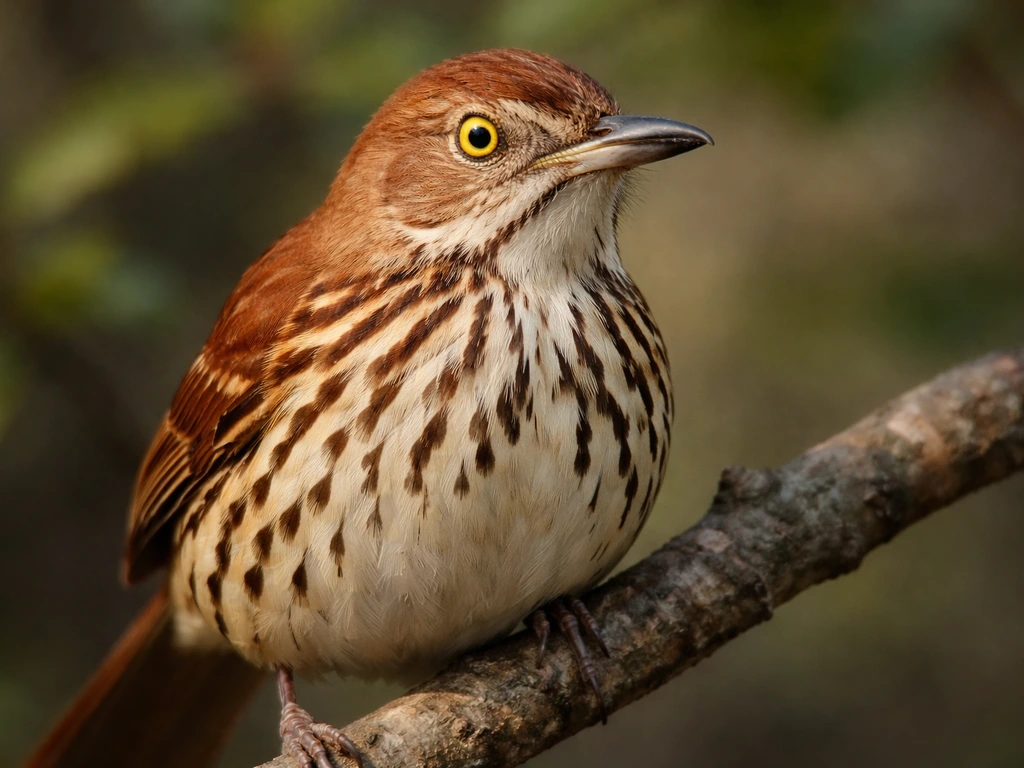
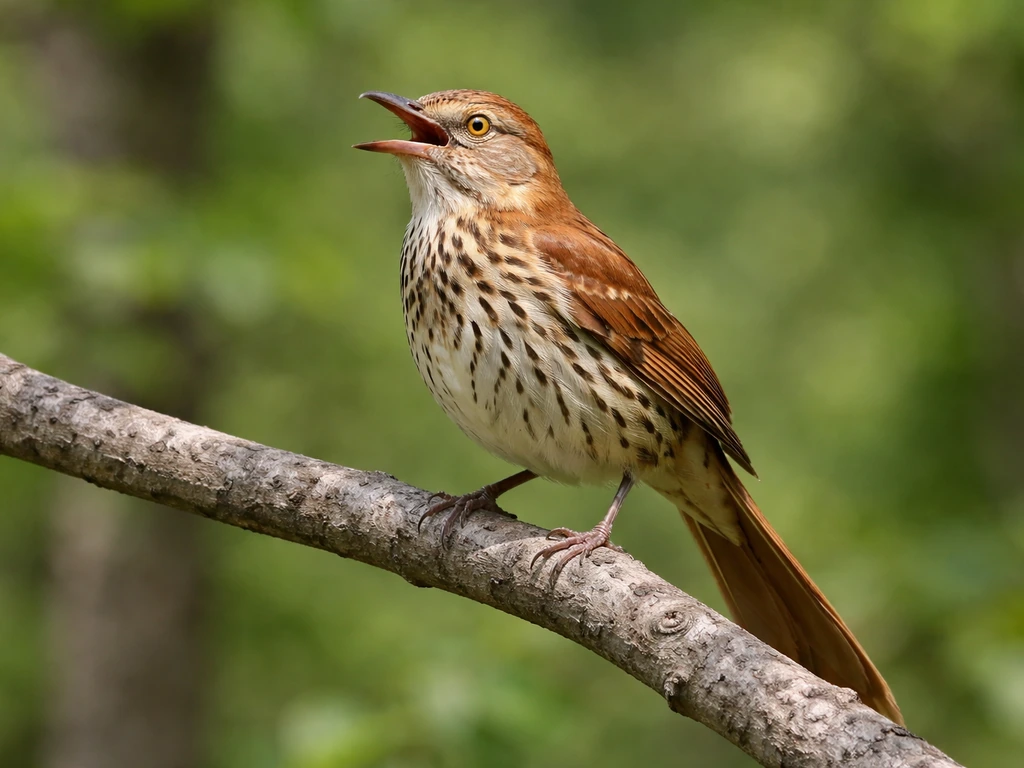
The brown thrasher is a large, slender songbird with striking reddish-brown upperparts, buffy-white underparts heavily streaked with black, and bold lemon-yellow eyes. It's roughly the size of a robin but longer and sleeker, with a notably long tail and a slightly curved bill built for digging through leaf litter. The scientific name is Toxostoma rufum, and it belongs to the same family (Mimidae) as the northern mockingbird and the gray catbird. It's a ground forager by habit, using that long bill to sweep side-to-side through fallen leaves, which is actually where its name comes from: that characteristic 'thrashing' motion.
Why Georgia picked the brown thrasher
The brown thrasher was chosen because it genuinely represents Georgia. It's a year-round resident across the state, showing up in backyards, woodland edges, hedgerows, and scrubby fields that are common across Georgia's varied landscape. It's not a rare or flashy bird that only birders track down. It's familiar, present, and tied to the everyday environment that Georgians actually live in.
Its song was likely a major factor in the Garden Club of Georgia's push to make it the state symbol. The brown thrasher has one of the largest song repertoires of any North American bird, with individuals singing hundreds of distinct phrase types. It's a vocal, energetic presence in the spring landscape, which helped it stand out as a worthy representative of the state. While the northern mockingbird gets more fame for mimicry, the brown thrasher's song output is actually more extensive in terms of sheer variety.
The history behind the designation

The story starts in 1935. Governor Eugene Talmadge issued a proclamation on April 6, 1935, naming the brown thrasher as Georgia's state bird. That was the beginning, but a gubernatorial proclamation isn't the same as a law. For the next 35 years, the Garden Club of Georgia campaigned to get the designation formalized through the state legislature. That effort finally succeeded on March 20, 1970, when the Georgia General Assembly officially designated the brown thrasher as the state bird, now codified in Official Code of Georgia Section 50-3-50. That's a surprisingly long road from recognition to law, and it speaks to how much organized advocacy went into making it official.
How to identify a brown thrasher in the field
If you're trying to spot one, here's what to look for. Brown thrashers are secretive birds that stick close to thick cover, so you're more likely to hear one before you see it. When you do get a look, the identification is usually straightforward.
- Reddish-brown upperparts, bright and warm in good light
- Buffy-white underparts with heavy dark streaking running down the chest and belly
- Bright yellow eyes, one of the most distinctive close-up field marks
- Long, slightly curved bill adapted for ground foraging
- Long tail, giving the bird a stretched, slender silhouette
- About the size of a robin, but noticeably longer in overall proportions
Habitat is your best starting point. Look in scrubby fields, dense regenerating woods, hedgerows, forest edges, and brushy roadsides rather than open lawns or tall canopy. They forage almost exclusively on the ground, sweeping that curved bill through leaf litter. If you hear a loud, complex song with phrases repeated in pairs coming from a dense thicket, there's a good chance a brown thrasher is responsible. The paired-phrase pattern is a useful audio clue to separate it from the mockingbird, which tends to repeat phrases in longer runs.
How Georgia's choice compares to other states
Georgia is the only state that claims the brown thrasher as its official state bird. Wikipedia notes that Georgia's official code lists the brown thrasher as the state bird in Official Code of Georgia § 50-3-50.
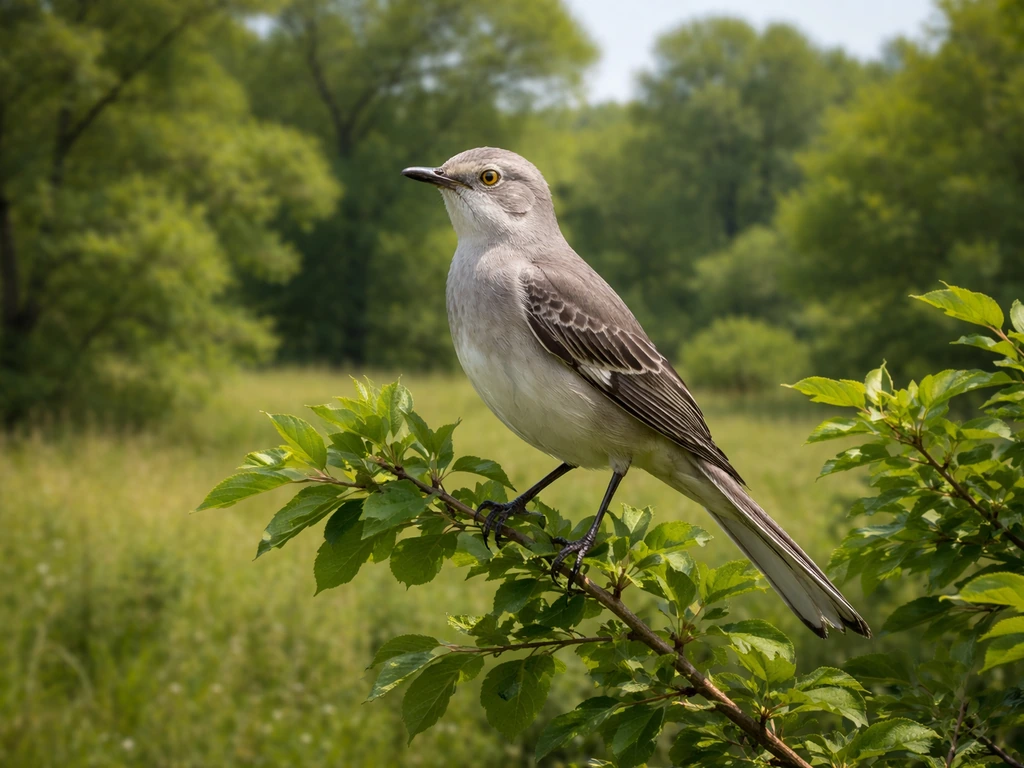
That's notable because the bird's range covers most of the eastern United States and into parts of the Great Plains, meaning plenty of other states could have made the same choice. States like Tennessee went with the mockingbird instead, and that's a useful comparison since the two species belong to the same family and occupy similar habitat. Tennessee is sometimes mentioned alongside Georgia in questions like this, because Tennessee chose the mockingbird as its state bird.
Georgia's pick of the brown thrasher over the far more commonly chosen mockingbird (which is the state bird of five states) reflects either regional preference or the specific momentum built by the Garden Club of Georgia's campaign.
| State | State Bird | Also Found In Georgia? |
|---|---|---|
| Georgia | Brown Thrasher | Yes (year-round) |
| Tennessee | Northern Mockingbird | Yes |
| Florida | Northern Mockingbird | Yes |
| Mississippi | Northern Mockingbird | Yes |
| Arkansas | Northern Mockingbird | Yes |
| Texas | Northern Mockingbird | Yes |
The mockingbird is the dominant choice across the South, which makes Georgia's selection of the brown thrasher stand out even more. It's one of the more distinctive state bird choices in the region precisely because it resisted the obvious pick.
Where to spot one and what to explore next
If you're in Georgia and want to find a brown thrasher, spring is your best window. Males sing actively from late March through early summer, often perching on a high exposed branch at the edge of a thicket to broadcast their song. Outside of that singing season, they're much quieter and harder to locate. Backyards with brush piles, dense shrubs, or leafy garden beds are productive spots, especially if you have native plantings. The Georgia Wildlife Resources Division recommends creating brush piles and planting dense shrubs specifically to attract them.
If this article came up while you were researching Georgia's state symbols, you'll find more context by exploring the full profile of Georgia's state bird and how it compares to the state birds of neighboring states like Tennessee. To learn more, you can also review what is Georgia's state bird and the reasons behind its official selection. The differences in what each state chose, and why, tell a surprisingly interesting story about regional identity and the history of American conservation advocacy. If you are wondering whether a turkey is a federal bird, it helps to separate federal “national” symbols from state wildlife designations like Georgia’s state bird is a turkey a federal bird.
FAQ
Does the brown thrasher being Georgia’s state bird affect how it is protected (for example, hunting or legal handling)?
Georgia’s designation of the brown thrasher is a state (not federal) symbolism. That means it is about state identity and wildlife representation, not a federal protection status or hunting rule. For legal wildlife protections, check Georgia regulations through the state wildlife agency rather than assuming the state-bird label changes how the bird is protected.
What if I hear a mockingbird-like song, but the bird seems in open areas, is it still likely a brown thrasher?
If you hear a complex song, but it seems to come from open lawns or tall trees, that is less consistent with brown thrasher behavior. They usually stay in dense ground-level cover and sing from edges of thickets or brushy woodland margins, so look for the sound coming from low, brushy areas rather than wide-open yards.
How can I tell a brown thrasher from a mockingbird if I only get brief glimpses?
The long tail and ground-foraging habits help, but your best confirmation is behavior plus audio. Brown thrashers typically sweep through leaf litter on the ground, while mockingbirds more often forage on open ground but are also commonly visible in perches and shrubs. When unsure, prioritize the dense-cover location and the paired-phrase singing pattern mentioned in the article.
Are brown thrashers easy to find in winter in Georgia?
Yes, but timing matters. Brown thrasers sing most actively in spring (late March through early summer), and outside that window they may be quiet and hard to spot even in good habitat. If you visit in winter, focus on identifying habitat (leaf litter, brush piles, dense shrubs) but expect fewer audible confirmations.
What backyard changes actually help attract brown thrashers in Georgia?
They can be attracted to backyards, especially if you mimic their preferred cover. Dense shrubs, brush piles, and native plantings that create thickets increase the odds. If your yard is mostly trimmed lawn with few low thickets, you may see other birds more often and get few brown thrasher visits.
Do I need to put out bird feeders to attract brown thrashers?
You usually do not need a feeder to find them, because they primarily hunt on the ground for food in leaf litter. Adding feeders can help some species, but for brown thrashers the more effective approach is keeping ground cover like leaf litter, adding shrub density, and creating safe cover rather than relying on feeder traffic.
How does Georgia’s choice compare to other states in the region, like Tennessee?
The article notes Georgia’s brown thrasher designation is unique among U.S. states. If you want a reliable comparison, the key point is that Georgia selected the brown thrasher while neighboring states such as Tennessee selected the mockingbird. That comparison helps explain why regional familiarity and advocacy momentum mattered more than simply choosing the most widespread “songbird.”
Why do I never see brown thrashers even when I’m in the right part of Georgia?
The article emphasizes they are secretive and often detected by sound first. That is why a “miss” often happens when people stand in a yard with no brushy cover or go looking only during midday when they are less vocal. In spring, try listening from the most brushy edge areas during the main singing period, then scan slowly for movement in thick cover.
Next Articles
Is Tennessee a Bird? Tennessee State Bird and Identification Guide
Answer if Tennessee is a bird, then learn the state bird with easy ID tips, habitat, and why it was chosen.

What Is the Tennessee State Bird? Identification and History
Learn the Tennessee state bird, how to identify it, its key traits, and the history behind its official designation.

What Is Georgia’s State Bird? Identification Guide
Georgia’s official state bird and how to identify it in the wild, plus what it shares with other states