Alabama's official state bird is the Northern Flicker (Colaptes auratus), known locally as the Yellowhammer. It was formally designated in 1927 under Alabama Code § 1-2-7. When you see "Yellowhammer State" used as Alabama's nickname, this is the bird behind it.
What Is the Bird of Alabama? Alabama State Bird Guide

Marcus Webb
2 May 2026
Alabama's Official State Bird at a Glance
| Detail | Information |
|---|---|
| Common name | Yellowhammer (Northern Flicker) |
| Scientific name | Colaptes auratus |
| Subspecies group in Alabama | Yellow-shafted flicker (eastern group) |
| Year designated | 1927 |
| Designating authority | Alabama Code § 1-2-7 |
One quick note: the name "yellowhammer" also refers to a Eurasian bunting (Emberiza citrinella) found in Europe. Alabama's Yellowhammer has nothing to do with that bird. It is strictly the Northern Flicker, a large woodpecker native to North America.
How to Recognize It: Key Field Marks
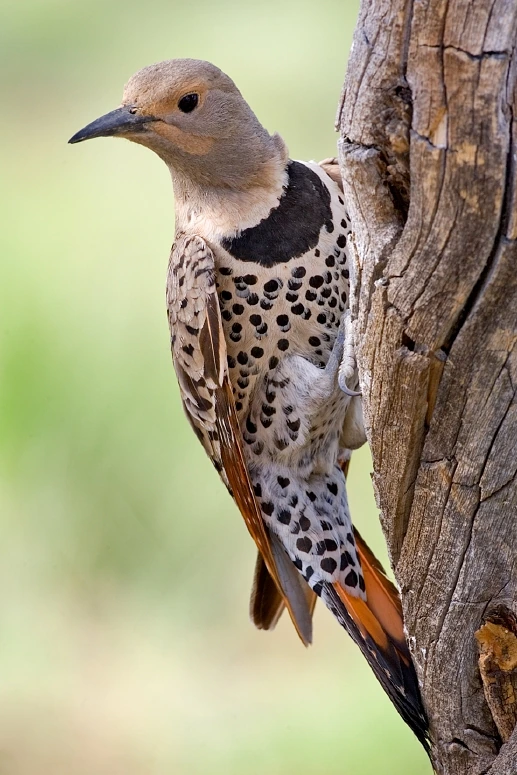
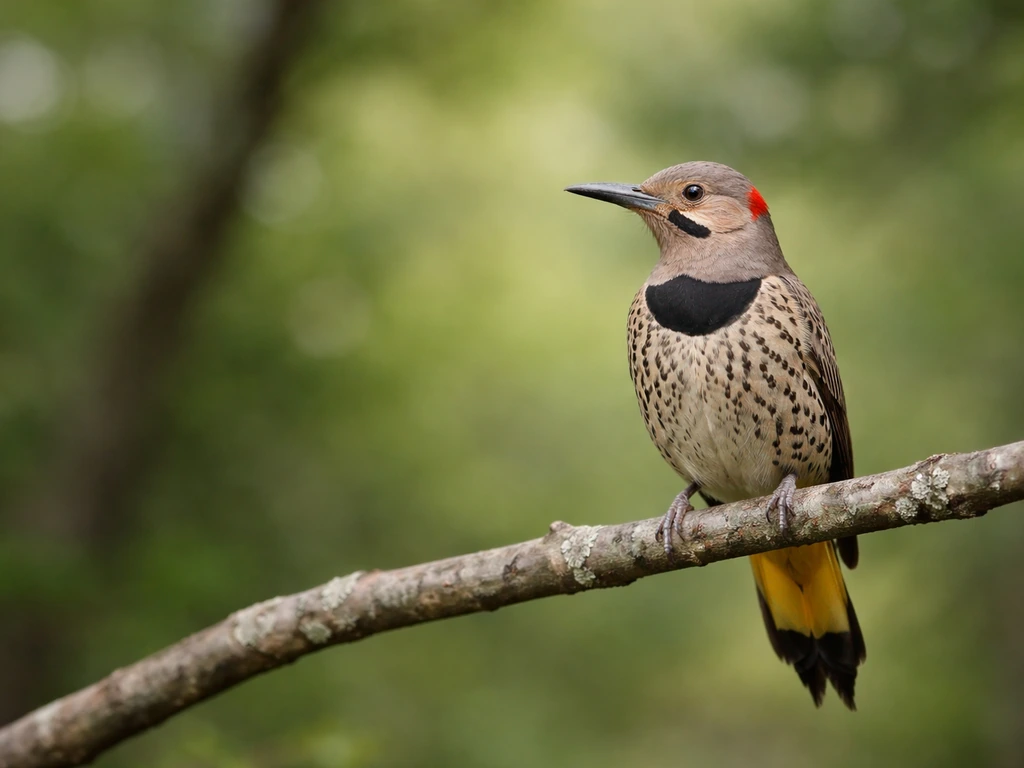
The Northern Flicker is a large woodpecker, noticeably bigger than the common Downy Woodpecker. In Alabama you're looking at the yellow-shafted group, which is the eastern subspecies of the species. In an r/whatsthisbird identification discussion, birders note the yellow-shafted form’s red nape patch and gray or tan facial features as helpful for confirming the ID blank" rel="noopener noreferrer">yellow-shafted group. Here are the features that make it unmistakable in the field.
- Bright white rump patch: this flashes clearly when the bird flushes and flies away, making it one of the easiest field marks to catch
- Yellow underwings and yellow tail shafts: in flight, the undersides of the wings glow a rich golden-yellow (this is what earned it the "yellowhammer" name)
- Brown, black-barred back: the upperparts have a warm brown background with bold black barring across the wings and back
- Bold black chest crescent: a wide black bib or crescent mark sits across the upper breast
- Red nape patch: a red crescent on the back of the head, present in the yellow-shafted group
- Black mustache stripe: males show a black "mustache" mark on each side of the face; females lack this mark
- Spotted belly: the white to buff underparts are heavily spotted with black dots
The call is also distinctive and worth learning: a loud, laughing "wick-wick-wick-wick" series that carries well through woodland edges. You'll often hear a Northern Flicker before you see it. It also gives a sharp single "klee-yer" note. Once you know those sounds, you'll notice how common this bird actually is in Alabama.
Species Facts, Habitat, and Range in Alabama
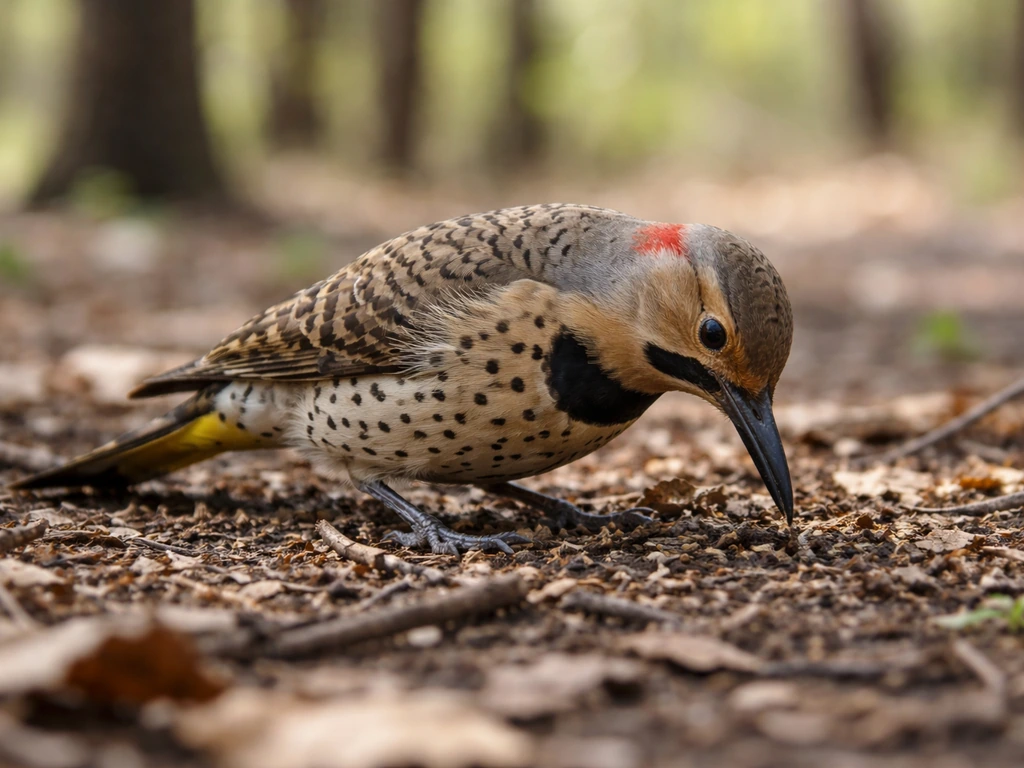
Unlike most woodpeckers, the Northern Flicker spends a lot of time on the ground. It forages primarily for ants and beetles, probing the soil with its slightly curved bill. This ground-feeding habit is a key behavioral trait that sets it apart from bark-drilling woodpeckers.
In terms of habitat, Northern Flickers favor open woodlands, woodland edges, savannas, and farmland with scattered trees or tree rows. They avoid dense, unbroken forest interiors. In Alabama, that means you're most likely to find them in areas where open ground meets tree cover: rural farmland edges, open parks, forest clearings, and suburban neighborhoods with mature trees and lawns.
The species is present across Alabama year-round, though numbers can increase in winter as birds from farther north move into the state. Alabama sits well within the core of the yellow-shafted flicker's eastern range. The bird nests in tree cavities, often excavating its own hole in a dead or dying tree, and will also use nest boxes.
Why Alabama Chose the Yellowhammer
The historical connection runs deeper than most state-bird designations. Alabama's Yellowhammer nickname predates the 1927 official designation by decades, rooted in the American Civil War. A Reddit thread in r/Alabama also discusses how this Northern Flicker and the “Yellowhammer” nickname became linked and why people locally sometimes confuse the nickname’s origins Yellowhammer State used as Alabama's nickname. During the war, Confederate soldiers from Alabama arrived at early engagements wearing new uniforms trimmed with yellow fabric. Soldiers from other Confederate states noticed the yellow markings and started calling the Alabamians "yellowhammers," drawing the comparison to the yellow-shafted flicker's bright golden-yellow coloring.
The nickname stuck. Alabama became known as the Yellowhammer State, and by 1927 the legislature made the association official by designating the Northern Flicker as the state bird. The yellowhammer nickname is also tied to Alabama's 1927 decision to name the [Northern Flicker as the state bird. ](https://encyclopediaofalabama.org/article/northern-flicker/) It's one of the more historically layered state-bird designations in the country, connecting a Civil War identity to a native species that genuinely thrives across the state.
Which Other States Share the Northern Flicker?
The Northern Flicker is not unique to Alabama as a state-bird designation. Several other states have also selected it, though the naming conventions and subspecies references differ by region. States in the west that chose the flicker typically reference the "red-shafted" group, which has red (not yellow) underwing coloration. Alabama's eastern yellow-shafted designation is distinct from those western picks, even though they're all the same species (Colaptes auratus).
This is a pattern you'll see across state-bird designations nationally: a single species can carry different regional names and cultural associations depending on where you are. The Northern Flicker's broad range across most of North America makes it a logical candidate for multiple states, but Alabama's connection through the Yellowhammer nickname is the most historically specific of any state's claim to this bird.
Where and When to See It in Alabama
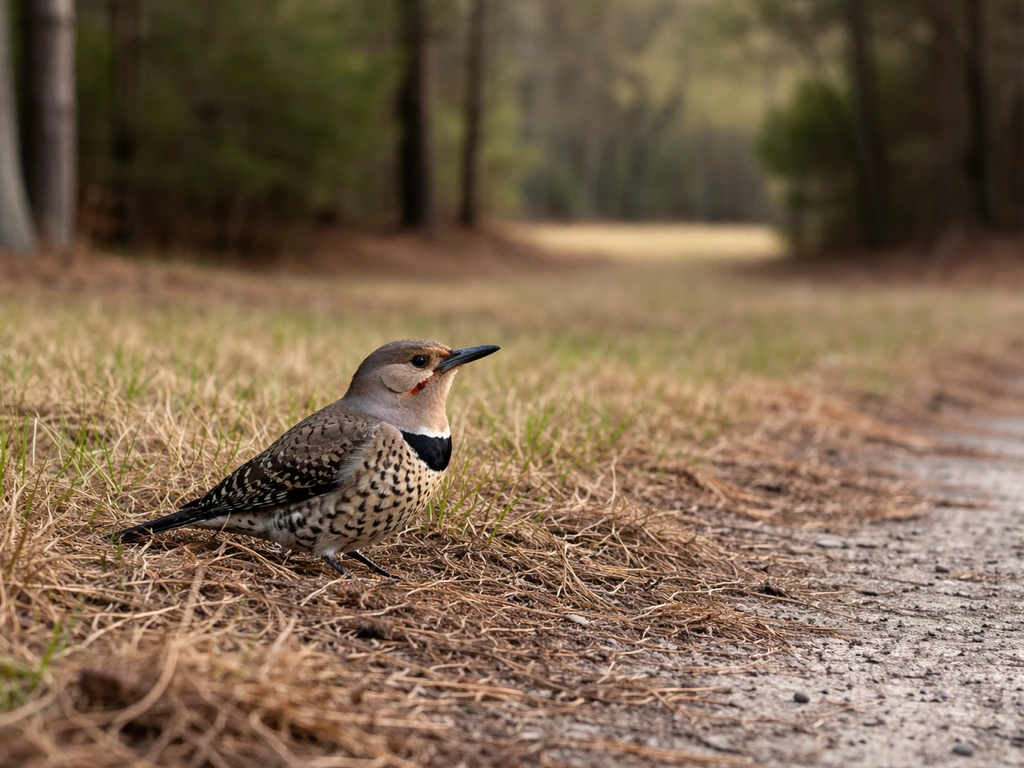
If you want to spot a Yellowhammer in Alabama today, your best strategy is straightforward: head to open woodland edges or any area where grassy, open ground meets trees. Parks with large lawns surrounded by mature trees are reliable spots. Rural areas with farmland and scattered woodlots work well too. Scan the ground first, not the tree trunks. When a Northern Flicker flushes, watch for that white rump patch and the flash of yellow under the wings as it flies into a nearby tree.
Winter is actually a great time to look for them in Alabama, because resident birds are joined by birds moving down from northern states. Early morning is best, as with most birding. Listen for the laughing call or the sharp single note, and follow the sound.
To go deeper on Alabama's state symbols and compare its bird to neighboring states, this site covers all 50 state birds individually. You can also use the same approach to find what Alaska’s state bird is and why it was chosen state birds individually. If you're also wondering about other states' symbols, you can learn what the Arizona state bird is and how it was selected.
You can look into why the Yellowhammer specifically was chosen as Alabama's state bird, compare it to neighboring states' designations, or explore how other states across the South and West made their official bird selections. To better understand how Alabama arrived at this choice, you can also read about why Alabama chose the Yellowhammer nickname.
If you're wondering why this bird specifically became Alabama's state bird, the historical link is part of the story why the Yellowhammer specifically was chosen as Alabama's state bird. You may also be wondering why the cactus wren is Arizona's state bird, which is another good example of a state choosing a bird tied to its local landscape. If you're curious why the cactus wren was chosen, it has a habitat and behavior that match Arizona's desert landscape why is the cactus wren Arizona's state bird.
You might also be wondering why the willow ptarmigan is the state bird of Alaska, which has its own distinct reasoning and history why is the willow ptarmigan the state bird of alaska. If you're curious about other southeastern states or want to see how the Northern Flicker's western red-shafted counterpart factors into state designations in the West, those comparisons are worth exploring across the full state-by-state reference. For Alaska, the question of why the willow ptarmigan was chosen as the state bird comes down to its strong ties to local habitats and seasonal behavior why is the willow ptarmigan the state bird of alaska.
FAQ
Is the bird of Alabama definitely a woodpecker?
Yes, Alabama’s state bird is the Northern Flicker, which is a type of woodpecker. A common mistake is thinking it’s a small songbird because the name “yellowhammer” sounds like a “bunting,” but the Alabama Yellowhammer is the flicker.
What’s the difference between Alabama’s Yellowhammer and the Eurasian “yellowhammer” in Europe?
They are different birds. Alabama’s designation refers to the Northern Flicker (yellow-shafted group), a North American woodpecker. The Eurasian yellowhammer is a separate species found in Europe, and the two names can easily cause confusion.
How can I tell a Northern Flicker from other similar woodpeckers in Alabama?
Focus on ground behavior and field marks. Northern Flickers often forage on the ground for ants and beetles, and in flight they show a bright flash under the wings, plus a noticeable white rump patch. That combination is less typical for small bark-only species.
Do Northern Flickers show up in winter across all of Alabama?
In general, yes. The article notes they are present year-round, and winter can bring higher numbers as birds move south from farther north. If you’re in the southern half, you may see them most consistently, while winter crowds are often more noticeable in the north.
Where should I look if I never see them on tree trunks?
Look on the ground first. Northern Flickers spend substantial time foraging in open areas, especially where grass or bare soil meets scattered trees. Scan walkways, lawns, field edges, and grassy park areas rather than concentrating only on bark.
What should I do if I can only hear the bird but never see it?
Use the sound to guide your search path. Learn the loud laughing call sequence and the single sharp “klee-yer” note, then walk slowly toward where the sound seems strongest. Once the bird flushes, watch the flight for the quick rump and underwing flashes into nearby trees.
Do Northern Flickers nest in any tree cavities, or do they prefer certain conditions?
They typically nest in tree cavities and will excavate their own holes, often in dead or dying trees. If you’re looking for evidence of nesting, pay attention to wooded edges with older trees, snag trees, or areas where natural tree decay is present.
Can I attract Northern Flickers to my yard?
You can sometimes encourage them with the right setup. Since they nest in cavities and will use nest boxes, adding a properly sized woodpecker nest box and keeping an open, grassy foraging area nearby can help. Avoid assuming any birdhouse will work, size and placement matter for woodpeckers.
Are there multiple “versions” of the Northern Flicker in Alabama, or only the yellow-shafted type?
Alabama is in the eastern yellow-shafted group based on the article, which is why you’ll see the yellow underwing association. A common mistake is comparing sightings to descriptions from western regions that emphasize the red-shafted group, which can lead to misidentification.
Why do some people say other states also have the Northern Flicker as a state bird?
Because the same species is used in multiple states, and the local naming often emphasizes different regional traits. Western states that chose it typically reference the “red-shafted” form, while Alabama’s historical and regional identification is tied to the yellow-shafted group and the Yellowhammer nickname.