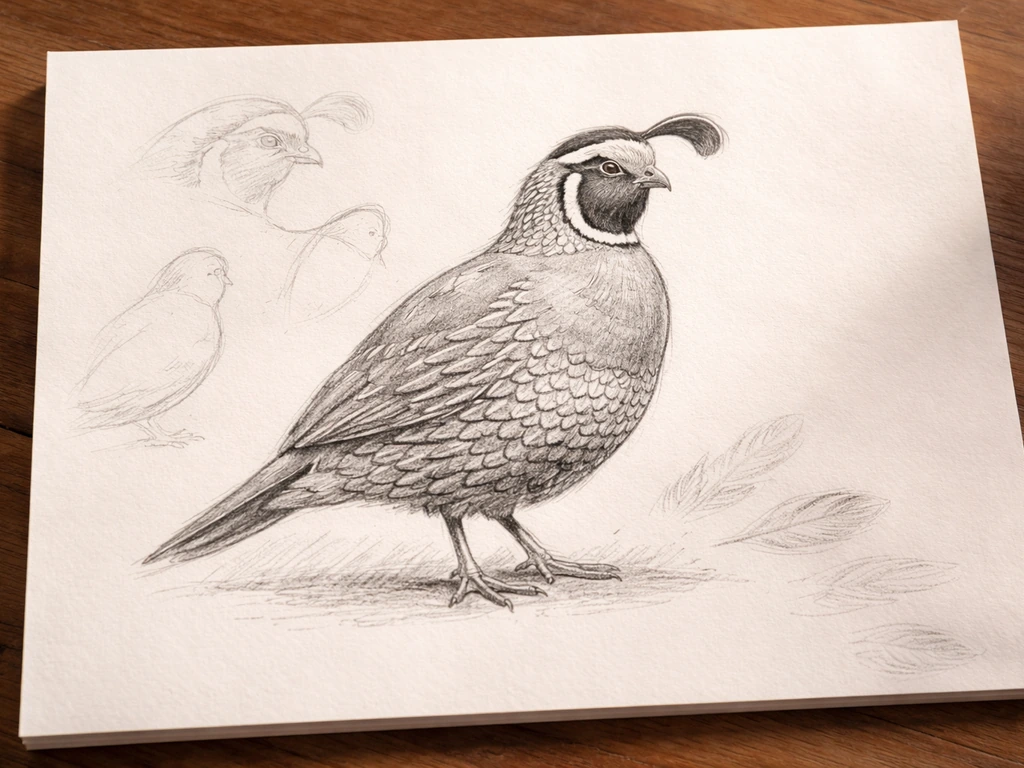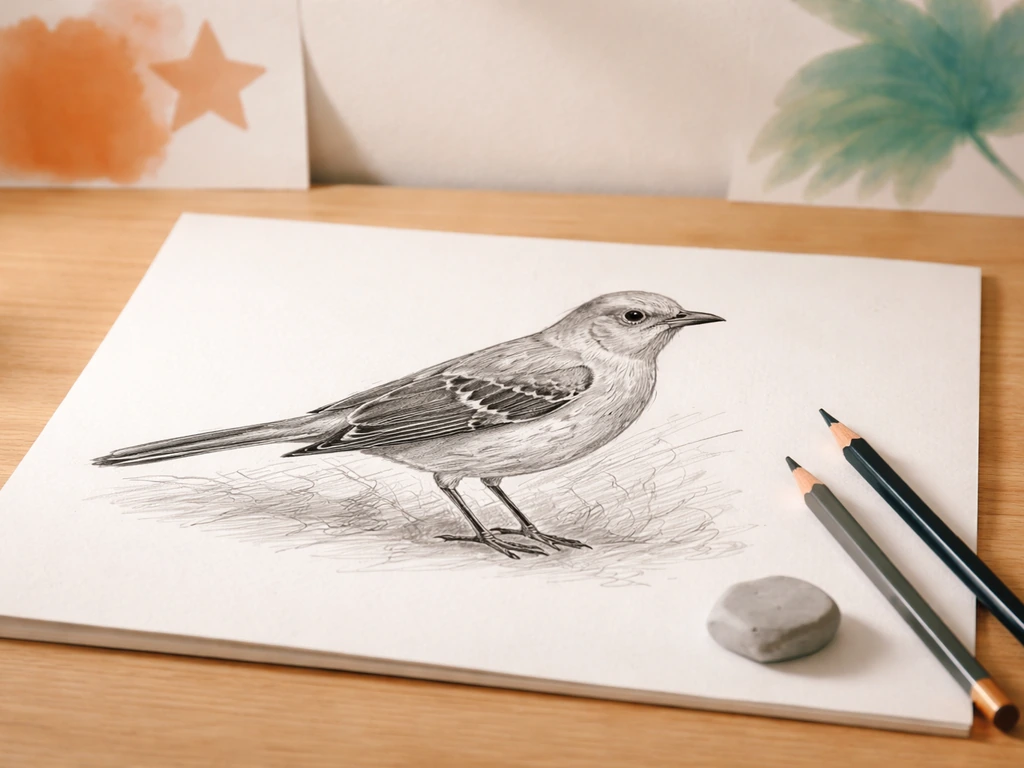
Colorado chose the lark bunting as its state bird on April 29, 1931, when Governor William Adams signed House Bill 222 into law, codified under Colorado Revised Statute 24-80-910. The bird was selected because it's a true Colorado native that breeds on the state's eastern plains in large, visible flocks, it's visually striking enough to be instantly recognizable, and it was championed by Colorado schoolchildren who voted for it in a statewide contest. No other U.S. state uses the lark bunting as its official state bird. If you want a related creative activity, you can also learn how to draw the state bird as a simple way to practice what makes the lark bunting distinctive official state bird.
Why Is the Lark Bunting Colorado’s State Bird? Reasons

Marcus Webb
12 May 2026
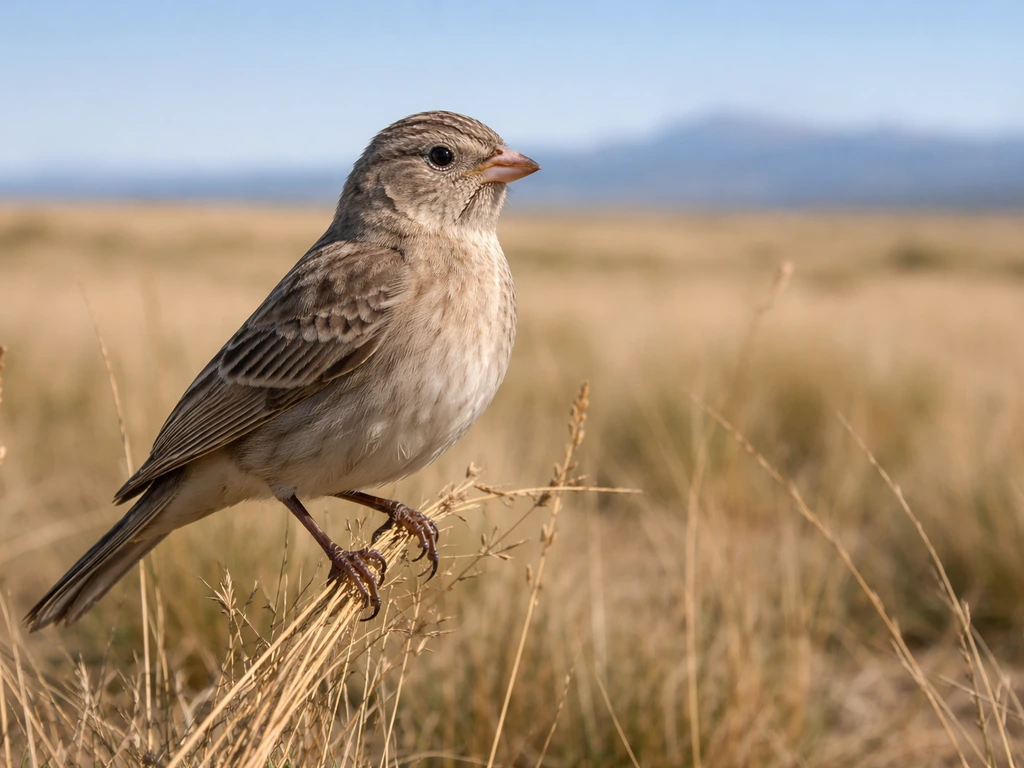
What the lark bunting actually looks like
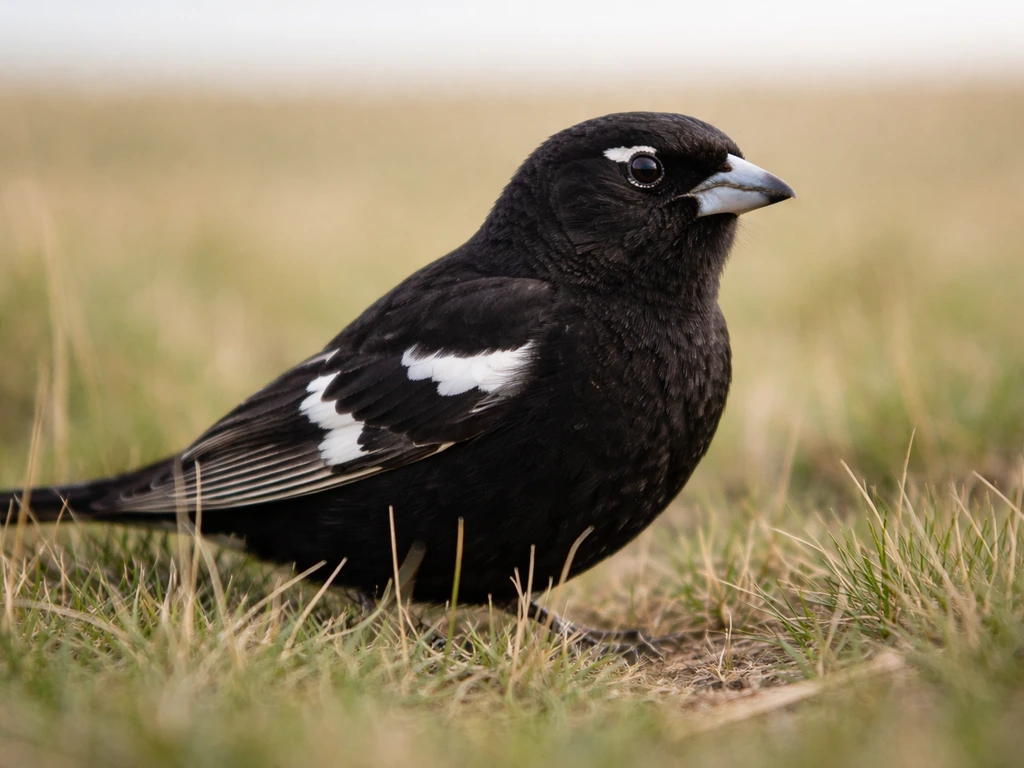
The lark bunting (Calamospiza melanocorys) is a medium-sized songbird in the sparrow family, roughly 6 to 7 inches long. All About Birds provides lark bunting size details, including a length of about 5.5, 7.1 inches (14, 18 cm) blank" rel="noopener noreferrer">including length about 5.5–7.1 inches (14–18 cm). The breeding male is hard to miss: blank" rel="noopener noreferrer">jet-black body with bold white wing patches that flash conspicuously in flight. Females and non-breeding males are streaky brown overall, but those same white wing patches are still visible and make field identification easier than with most sparrows.
In Colorado, lark buntings arrive on the eastern shortgrass prairie in late spring and can form flocks of hundreds or even thousands of birds during migration and breeding season. The males perform a distinctive song flight, rising into the air and floating back down while singing, which makes them highly visible across open grassland. Come late summer they drift south into Mexico and the southern U.S. for winter, but their association with Colorado's landscape is strong and unmistakable.
What it means to be a state bird
A state bird is an official symbol designated by a state legislature to represent the state's natural heritage, regional identity, or cultural values. The designation doesn't grant the bird any special legal protection on its own, but it does embed the species into the state's official identity alongside things like the state flower, state tree, and state flag. State birds are often used in school curricula, appear on promotional materials, and show up in legislation referencing Colorado's official emblems. They're essentially a shorthand for saying: this animal belongs here, and we're proud of it.
Most states selected their state birds between the 1920s and 1940s, often driven by women's clubs, conservation groups, and school programs that wanted to draw public attention to native wildlife. Colorado fits neatly into that pattern.
The specific reasons Colorado picked the lark bunting
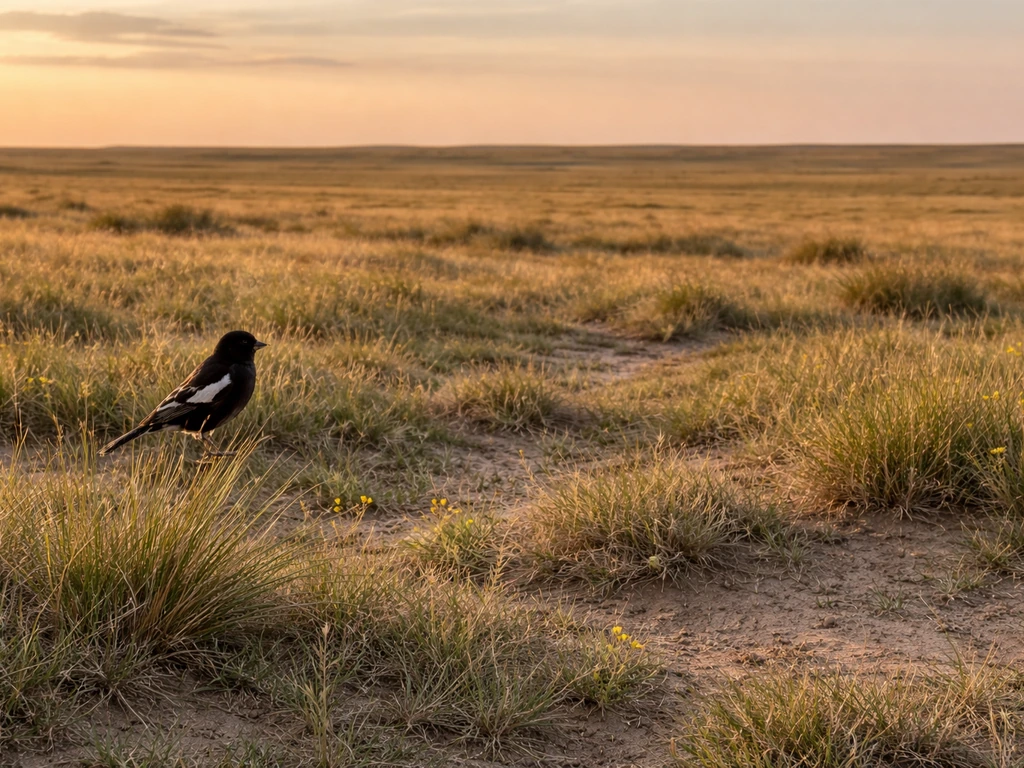
There were a few practical and symbolic reasons the lark bunting stood out as the right choice for Colorado specifically.
- It breeds almost exclusively on the Great Plains, with Colorado's eastern shortgrass prairie being prime nesting habitat. The bird has a genuine, deep-rooted connection to the state rather than a loose geographic overlap.
- The breeding male's black-and-white coloring makes it one of the most visually distinctive grassland birds in North America, practical for a symbol that needs to be recognizable.
- Lark buntings are abundant and observable by ordinary Coloradans, not just birders. During peak season you can see flocks from a car window on the eastern plains, which matters for a bird meant to represent the whole state.
- The song flight display is attention-grabbing and memorable, reinforcing the bird's suitability as something worth celebrating.
- The bird has the word 'lark' in its name, which carries positive cultural associations with singing and open landscape, even though it's technically a member of the bunting family.
Colorado's choice also reflected the state's geography honestly. Colorado isn't just the Rocky Mountains. The eastern third of the state is rolling shortgrass prairie, and the lark bunting is a direct ambassador for that landscape. Picking a mountain bird like a Clark's nutcracker or a rosy-finch would have represented only part of the state's natural identity.
How and when the designation happened
The lark bunting was officially adopted as Colorado's state bird on April 29, 1931, through House Bill 222 of the 1931 Colorado legislative session. The bill was introduced after a statewide vote among Colorado schoolchildren, organized to build civic engagement around the state's natural symbols. The children's vote is a detail worth highlighting: it meant the designation came with broad public buy-in from the start, not just a top-down legislative decision.
The law was codified as Colorado Revised Statute 24-80-910, which is where you'll find the official legal language today if you want to verify it. The 1931 designation has never been changed or challenged, which puts Colorado among the states that settled on their state bird early and stuck with it.
How the lark bunting fits Colorado's broader identity
Colorado's state identity tends to lead with mountains, skiing, and alpine scenery, which makes the lark bunting an interesting counterpoint. The bird is a plains species, and its designation in 1931 was partly a reflection of the fact that early 20th-century Colorado was heavily shaped by agriculture and ranching on the eastern plains, not just mining and mountain tourism. The bird represents a version of Colorado that's easy to overlook today but was central to the state's economy and culture a century ago.
From a purely ornithological standpoint, Colorado sits at a rich intersection of bird habitats: Great Plains grasslands in the east, montane forests in the Rockies, and high alpine tundra at elevation. The lark bunting anchors the state's grassland bird identity the same way species like the white-tailed ptarmigan anchor its alpine identity.
If you want to draw the Colorado state bird, start by sketching the lark bunting’s overall shape and the bold white wing patches visible in flight white-tailed ptarmigan. If you're exploring Colorado's full bird picture, the lark bunting is the right place to start for the eastern half of the state. If you want to make this official symbol more personal, learn how to draw Colorado state bird lark bunting next.
Does any other state share the lark bunting?
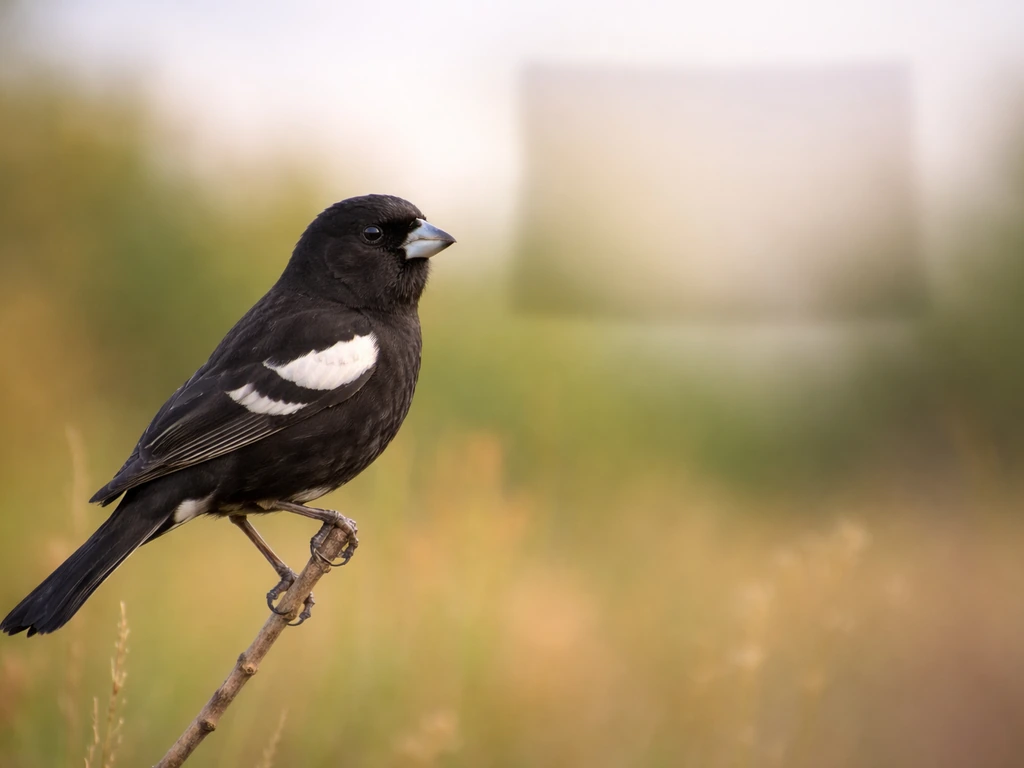
No. The lark bunting is unique to Colorado among state birds. Every other state has chosen a different species, which makes Colorado's choice genuinely distinctive. For comparison, some state birds are shared by multiple states: the northern cardinal is the state bird of seven states, and the western meadowlark is used by six. The lark bunting standing alone gives Colorado something no other state has.
| Bird | States That Use It | Colorado's Situation |
|---|---|---|
| Northern cardinal | 7 states | Not used by Colorado |
| Western meadowlark | 6 states | Not used by Colorado |
| American robin | 3 states | Not used by Colorado |
| Lark bunting | 1 state (Colorado) | Colorado only — unique designation |
The fact that the lark bunting is exclusive to Colorado adds real symbolic weight to the choice. It's not a bird you associate with any other state, which is rarer than it sounds. If you're comparing Colorado's state bird to other states in the region, Illinois uses the northern cardinal, while many western states went with the western meadowlark. Colorado's lark bunting stands apart from all of them.
What to do with this information
If you're using this for a school project, the key facts to cite are: lark bunting, Calamospiza melanocorys, adopted April 29, 1931, House Bill 222, Colorado Revised Statute 24-80-910. If you're a birder planning a Colorado trip, the eastern plains between late April and August are your best window to see lark buntings in breeding plumage, especially around the Pawnee National Grassland in Weld County, which is considered one of the best spots in North America for the species. If you're exploring state bird comparisons across states, Colorado's page pairs well with a look at what makes Colorado's choice genuinely unique compared to states that defaulted to more common songbirds. If you're doing state bird comparisons, you can also look up what is the state bird of illinois as a related example.
FAQ
Is the lark bunting actually found in Colorado year-round?
No. It breeds in Colorado’s eastern plains in late spring and summer, then migrates south for winter. For the best chance at seeing adults in breeding plumage, plan for roughly late April through August.
Where in Colorado are lark buntings most likely to be seen?
They’re most associated with open prairie habitat on the eastern side of the state, shortgrass and grassland areas. For birding, focus on large, open fields and grasslands rather than mountain forests or dense urban green spaces.
Can you reliably identify a lark bunting from just the song?
Song helps, but the most dependable field cue is the male’s jet-black body with bold white wing patches that flash in flight. If you hear a song flight but can’t see the wing patches, treat the identification as tentative and confirm visually.
Do females look like males, or are they hard to tell apart?
Females and non-breeding males are streakier brown, so they blend more than breeding males. The white wing patches can still show, but lighting and distance matter, so use binoculars and be cautious if the birds are only partially visible.
Why do people sometimes confuse lark buntings with other sparrows or buntings?
Because they’re in the sparrow family and can share general shape and “streaky brown” patterns in non-breeding plumage. The key differentiator is the lark bunting’s especially bold white wing patches, which are much more conspicuous than in many similar small grassland birds.
Does being the state bird mean Colorado protects the lark bunting legally?
Not automatically. The designation is symbolic and used in education and state identity, it does not, by itself, create species-specific legal protection. Actual conservation rules depend on wildlife laws and regulations beyond the state emblem status.
Has Colorado ever changed its state bird since 1931?
No. According to the statute’s enduring codification, Colorado’s state bird designation for the lark bunting has not been changed or replaced since the 1931 adoption.
If I’m writing a school report, what exact facts should I include?
Include the scientific name (Calamospiza melanocorys), the adoption date (April 29, 1931), and the legislative and statute details (House Bill 222 and Colorado Revised Statute 24-80-910). Adding what habitat it represents, eastern prairie grasslands, also helps connect the bird to Colorado’s natural heritage.
Is Colorado the only place the lark bunting appears?
No. The lark bunting is not exclusive to Colorado in where it lives, it is a plains and grassland species that occurs in multiple regions. The exclusivity claim in the article refers to state symbols, Colorado is the only state that selected it as its official state bird.