Kentucky's official state bird is the Northern Cardinal, referred to in state law as the "native redbird" or "Kentucky cardinal (cardinalis)." This is the legal, statutory designation, not a nickname. If you see a brilliant red bird with a pointed crest sitting in a Kentucky hedgerow, you are looking at the state's official symbol.
What Is the Kentucky State Bird? Facts, History, ID Tips

Marcus Webb
23 Apr 2026
Kentucky's Official State Bird at a Glance
The Northern Cardinal (Cardinalis cardinalis) is Kentucky's state bird by law, codified under Kentucky Revised Statute 2.080. The statute names the bird using two terms: "native redbird" and "Kentucky cardinal (cardinalis)," both pointing to the same species. There is nothing ambiguous about the designation. This is the same bird you will find at feeders across the eastern United States, and it is one of the most recognizable birds on the continent.
How to Recognize a Northern Cardinal
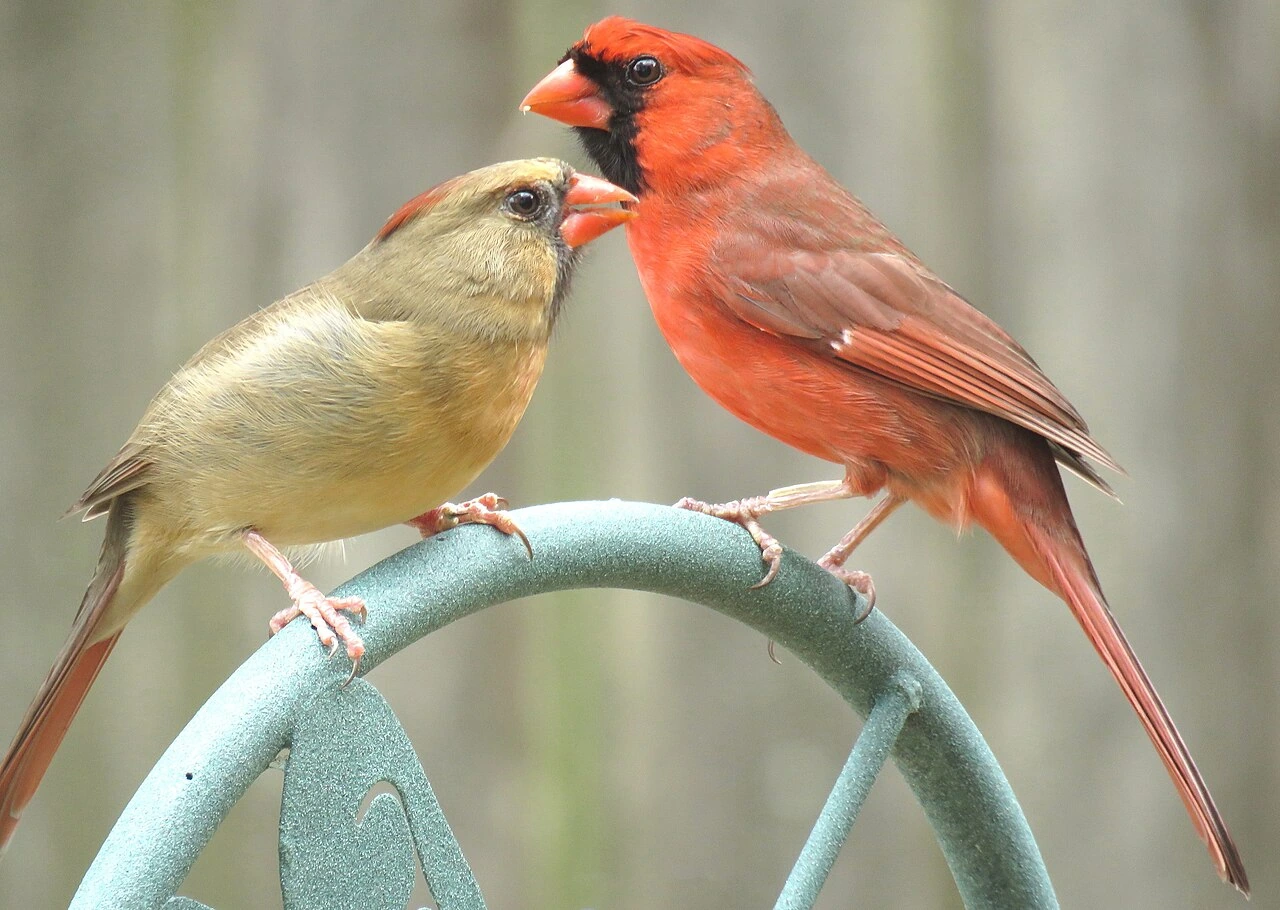
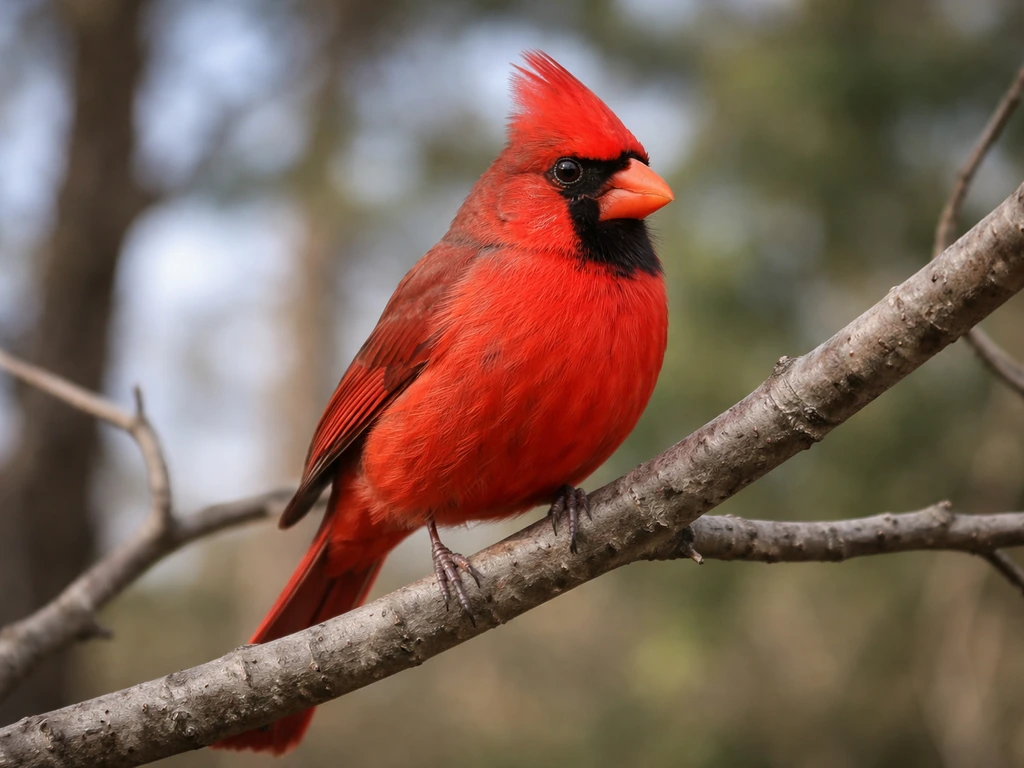
The male Northern Cardinal is, as Audubon puts it, "unmistakable" because it is the only red bird in North America with a crest. The adult male is a brilliant, solid red from head to tail, with a black mask around the bill and face. The crest, that raised tuft of feathers on the crown, is the single best field mark to confirm what you are seeing. Females are brownish-tan with reddish tinges on the wings, tail, and crest, and they share the same black mask and orange-red bill.
In terms of size, the Northern Cardinal measures 8 to 9 inches in length (21 to 23 cm) with a wingspan of 9 to 12 inches (25 to 31 cm). That makes it a medium-sized songbird, noticeably larger than a sparrow but smaller than a robin. If you are trying to confirm one by ear rather than by sight, listen for a loud, sharp, metallic "chip" call. Cardinals use this call frequently, especially near the nest or when warning off intruders. The song itself is a clear, loud whistle that carries well across open yards and woodland edges.
| Feature | Male | Female |
|---|---|---|
| Overall color | Brilliant red | Brownish-tan with red tinges |
| Crest | Prominent, red | Prominent, reddish-brown |
| Face mask | Black around bill and face | Black, less bold |
| Bill color | Orange-red | Orange-red |
| Length | 8–9 in (21–23 cm) | 8–9 in (21–23 cm) |
| Wingspan | 9–12 in (25–31 cm) | 9–12 in (25–31 cm) |
Why Kentucky Chose the Cardinal
The Northern Cardinal was a natural choice for Kentucky. It is a year-round resident of the state, meaning it does not migrate south for the winter like many birds do. That permanence matters symbolically: the cardinal stays through ice, snow, and cold, and its vivid red stands out against a winter landscape in a way almost no other native bird can match. For a state looking for a bird that represents home, resilience, and consistent presence, the cardinal fits perfectly.
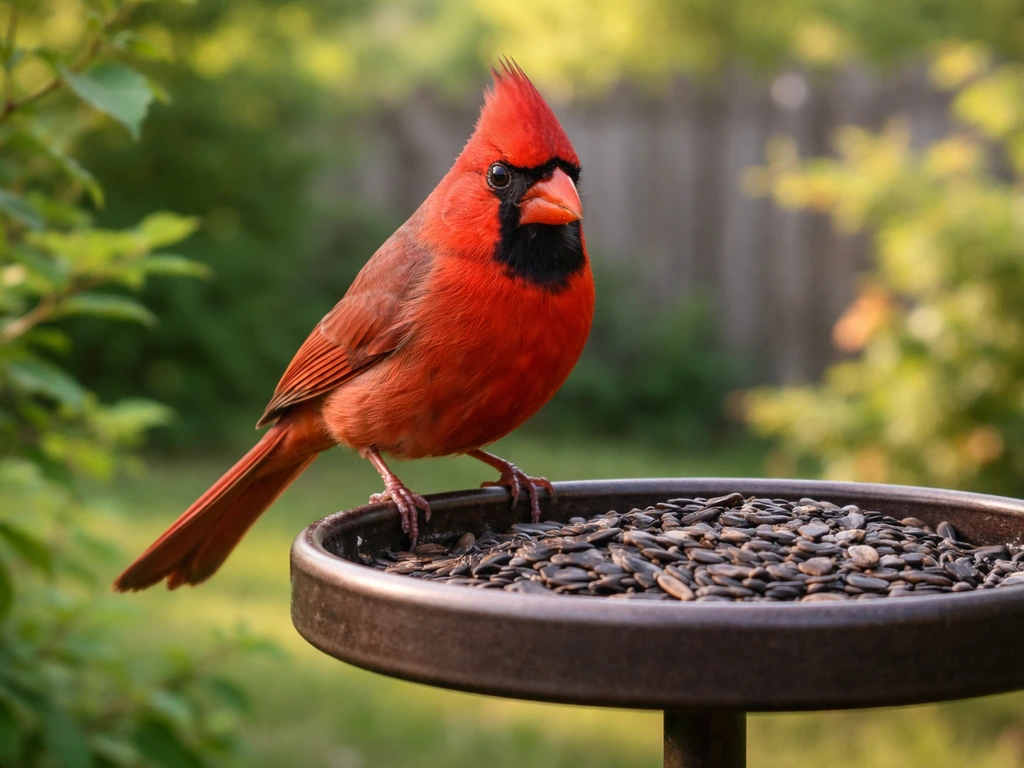
The bird also has deep cultural familiarity in Kentucky. It visits backyard feeders, nests in shrubs and thickets common throughout the state, and is genuinely part of everyday life for Kentuckians. The name "Kentucky cardinal" itself appears in the state statute, signaling how tightly the bird's identity has been woven into the state's own image. The University of Louisville uses the Cardinal as its mascot, and the bird appears widely in Kentucky art, crafts, and imagery. The choice of this bird as an official symbol was not just practical, it was a reflection of how much residents already identified with it.
When Kentucky Made It Official
Kentucky adopted the cardinal as its official state bird on February 17, 1926, through a legislative resolution. That makes Kentucky one of the earlier states to formalize a state bird designation. The resolution was later codified into statute as KRS 2.080, with the "Effective: October 1, 1942" note in the statute reflecting when the law was recodified into the Kentucky Revised Statutes system, not a change in the bird itself. The cardinal has held the designation continuously since 1926.
Kentucky Is Far from Alone: Other States with the Cardinal
The Northern Cardinal is the state bird for no fewer than seven eastern states, making it the most shared state bird in the country. Kentucky was one of the first to claim it, but others followed. Here is the full list of states that share the cardinal designation:
- Kentucky (1926)
- North Carolina (1943)
- West Virginia (1949)
- Ohio
- Illinois
- Indiana
- Virginia
That overlap is worth knowing, especially if you are researching state birds across the region. Ohio, Indiana, Illinois, West Virginia, Virginia, and North Carolina all officially recognize the same species. Each state has its own history and reasoning behind the choice, but the common thread is the same: the cardinal is a beloved, year-round, highly visible resident across the eastern United States. If you are wondering why the cardinal is the state bird of Ohio, its page explains the cultural reasoning behind the choice why is the cardinal the state bird of ohio. If you have been looking at Ohio's or Indiana's state bird pages on this site, you will find nearly the same species at the center of those articles too.
The fact that so many neighboring states chose the cardinal says something about how dominant and beloved this bird is across the region. It is one of the few birds where the field guides essentially say "if you see a crested red bird in the eastern U.S., you already know what it is."
Where to Go Next on This Site
If you landed here looking for a fast answer, you have it: Kentucky's state bird is the Northern Cardinal, official since 1926. Learn more with our guide to what is the bird of Kentucky. But if you want to dig deeper, there are a few natural next steps on this site. The page on what is the bird of Kentucky covers additional context about the species in the state beyond just the official designation. If you are curious how neighboring states handled the same bird, the pages on the Ohio state bird and the Indiana state bird walk through those designations in detail. You can also check the Indiana state bird page for the official designation and identification details. There is also a dedicated page on why the cardinal is Ohio's state bird that digs into the cultural reasoning behind the choice, which parallels Kentucky's story closely. And if you want a broader look at the cardinal as a state symbol across all seven states, the state bird is cardinal page pulls that comparative picture together in one place. The state bird is cardinal page compares how the species is used as a symbol across multiple states, including Kentucky.
FAQ
Is Kentucky’s state bird a nickname, or does the law name a specific species?
In Kentucky law, the designation is the Northern Cardinal, listed as the “native redbird” and “Kentucky cardinal (cardinalis)” (the same species). It is not a nickname, so the official symbol does not change based on color variation or local names.
Do Northern Cardinals migrate out of Kentucky in winter?
Yes. The cardinal is a year-round resident in Kentucky, which is why it shows up in winter landscapes. If you are looking outside typical feeder times, search dense hedgerows and shrubs, since cards often shelter there during colder periods.
What are the fastest visual clues to confirm you are seeing the Northern Cardinal?
For quick field checks, prioritize the raised crest and the black facial mask on both sexes. Also note that adult males are solid red overall, while females are more brownish-tan with reddish highlights, so “red” alone is not enough for ID.
How can I identify the cardinal by ear in Kentucky?
The call most people notice first is a sharp, metallic “chip” that can sound repeated, especially near nests or when the bird is agitated. The song is more of a clear, whistle-like phrase that carries across yards and woodland edges.
What common look-alikes might I confuse with Kentucky’s state bird?
A different red bird in Kentucky, like a House Finch or other finch species, can confuse beginners because of reddish tones. The cardinal’s combination of crest (tuft), black mask around the bill and face, and strong overall head-to-tail color pattern is what separates it.
If I want to document a possible state bird sighting, what should my photos show?
You usually do not need to “collect” evidence to report a sighting, but for photo-based verification, capture the crest and face mask clearly. If possible, include both a close-up (face) and a wider shot (bird posture in the shrub/hedgerow).
If several states share the same bird, does Kentucky’s official designation work differently?
Because multiple states share the same state bird species, you might see similar discussion elsewhere, but the Kentucky designation is still the same species under its own statute. If you are comparing states, focus on each state’s wording and adoption history to avoid mixing timelines.
What does “effective” mean in the statute, and did Kentucky change its state bird later?
Kentucky’s designation has been continuous since 1926. A later “effective” date in statute records usually reflects recodification into the Kentucky Revised Statutes system, not a change in the bird itself.