Ohio designated the Northern Cardinal (Cardinalis cardinalis) as its official state bird on March 2, 1933, making it one of the earliest states to do so. The choice came down to the bird's obvious presence across the state, its striking appearance, and its year-round residency. It wasn't a controversial pick, the cardinal was already a beloved backyard fixture across Ohio, and that familiarity made it a natural symbol.
Why Is the Cardinal Ohio’s State Bird? Answer Explained

Marcus Webb
6 May 2026
Ohio's state bird: the official answer
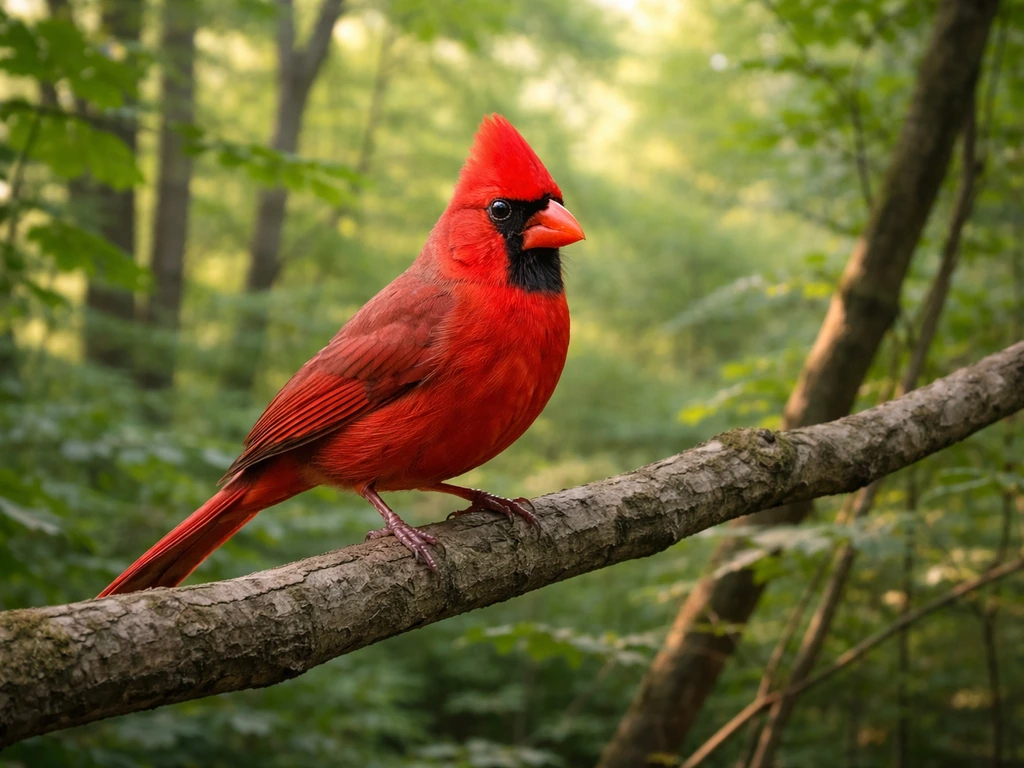
Ohio Revised Code § 5.03 spells it out plainly: 'The bird, cardinalis cardinalis, commonly known as the cardinal, is the official bird of the state.' That's the legal text. No ambiguity, no unofficial nicknames, just the Northern Cardinal, recognized in Ohio law since 1933. You can verify this directly through the Ohio Revised Code, which is publicly available online through the Ohio Laws official site.
The 1933 designation puts Ohio among the first wave of states to formalize a state bird. At the time, the movement to adopt state symbols was picking up steam across the country, and the cardinal was an easy consensus choice given how commonly and reliably it appeared across Ohio's fields, forests, and backyards.
How to recognize the Northern Cardinal in Ohio
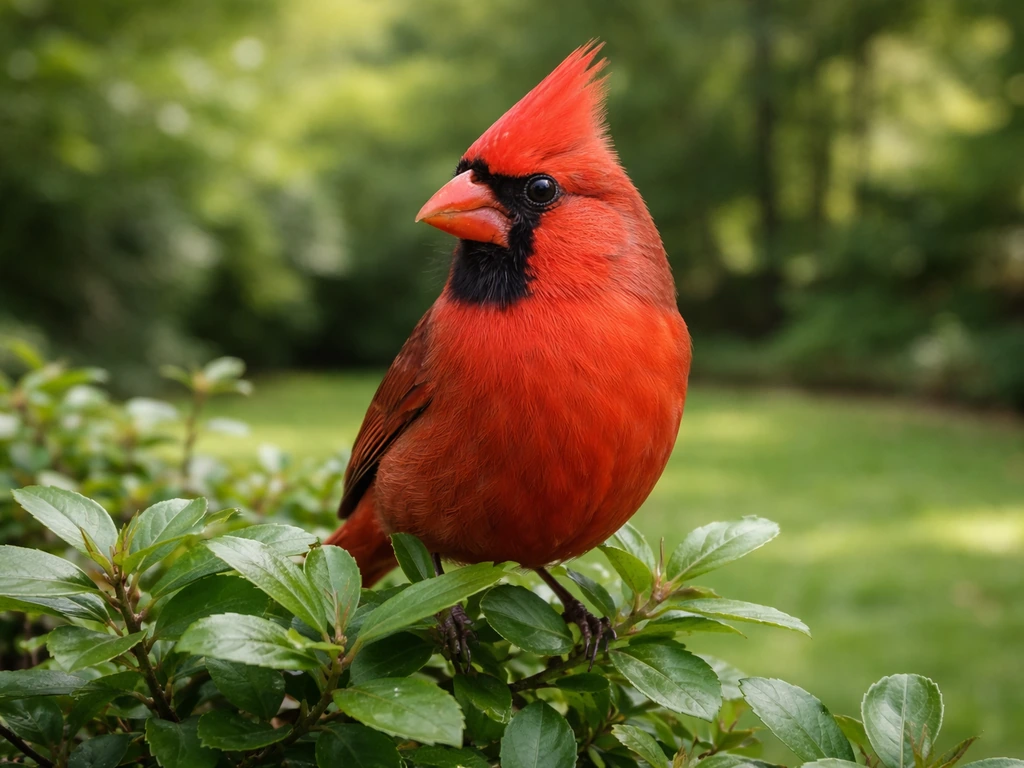
If you're stepping outside to find Ohio's state bird, you won't need a field guide to recognize the male. He's the only red bird with a crest you'll see in Ohio, that combination of brilliant scarlet plumage, a prominent pointed crest, and a bold black mask around the face and bill makes him essentially unmistakable. Cornell Lab's All About Birds describes the species as 'fairly large, long-tailed,' with a 'short, very thick bill' built for cracking seeds. That heavy, cone-shaped bill is a key ID feature even before you see the color.
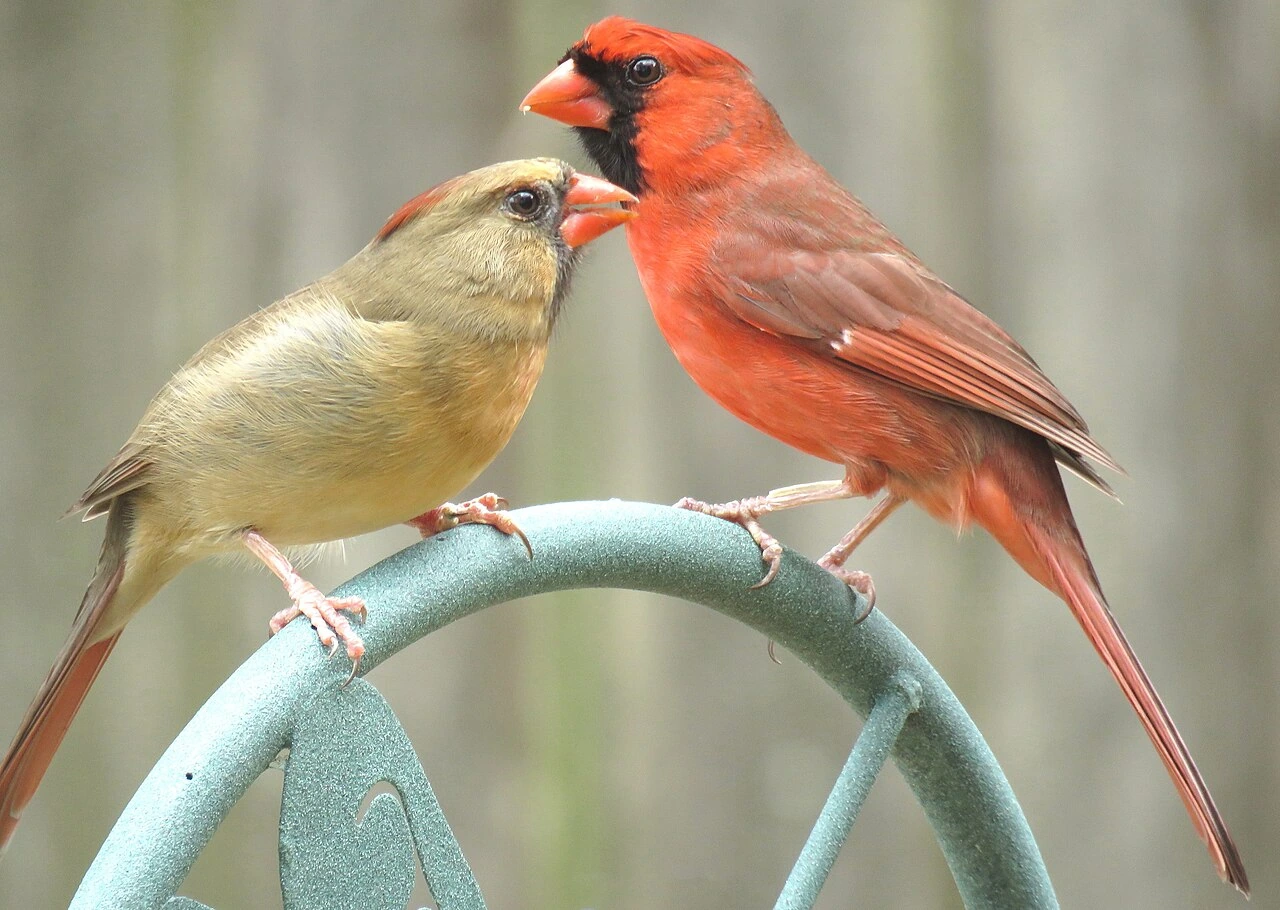
Female cardinals are often overlooked, but they share the same distinctive crest and massive pinkish-orange bill as the male. They're warm brown overall with reddish tints on the wings, tail, and crest. If you see a large-billed, crested brown bird at your feeder, you're almost certainly looking at a female Northern Cardinal.
- Male: brilliant red all over, black mask from face to throat, prominent crest
- Female: warm brown with red tints, same large crest and thick bill as male
- Both sexes: large conical bill, long tail, fairly large for a songbird
- Song: a loud, clear whistle often described as 'cheer-cheer-cheer' or 'birdy-birdy-birdy' — very distinctive and easy to learn
- Year-round resident: cardinals don't migrate, so you can find them in Ohio in any season
Cardinals are most reliably found at backyard feeders stocked with sunflower seeds, along wood edges, and in shrubby thickets. Ohio's ODNR 'Common Birds of Ohio' field guide lists the Northern Cardinal as a consistent backyard species, which tracks with why it was an obvious state symbol candidate in the first place.
Why Ohio picked the cardinal in 1933
The practical reasons behind Ohio's 1933 choice are straightforward. The Northern Cardinal was already one of the most recognized and widely seen birds in the state. It lives in Ohio year-round, so it wasn't a seasonal visitor that Ohioans might only glimpse during migration. The Nature Conservancy also notes that the Northern Cardinal is one of the easiest and most common birds to spot in Ohio Year. It's highly visible, a bright red male sitting in a snowy backyard in January is hard to miss. It has a loud, memorable call. And it's genuinely common across all parts of the state, not just one region or habitat type.
State bird designations from the 1930s often reflected this kind of broad public familiarity and appeal rather than rare or scientifically notable species. The cardinal checked every box: distinctive, beloved, present, and symbolic of something people actually saw and cared about. Ohio's educational materials from the state have consistently tied the designation to the bird's visibility, its distinctive vocalization, and its status as a recognizable Ohio wildlife symbol.
Ohio vs. Virginia: same bird, different stories
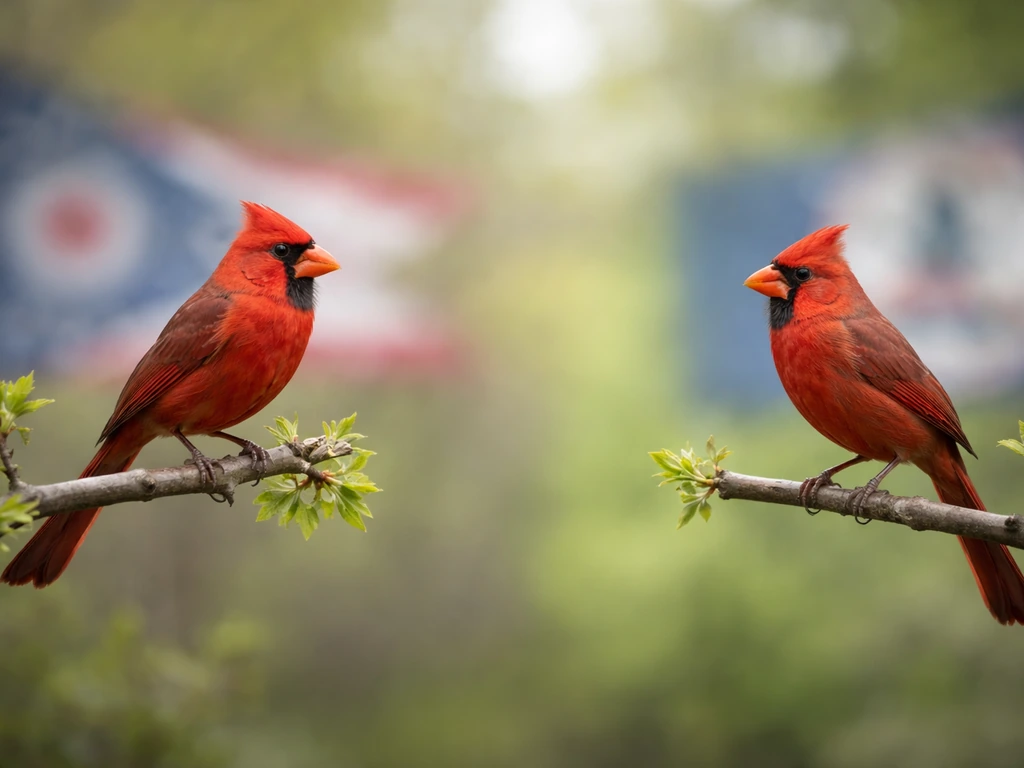
If you searched 'why is the cardinal Virginia's state bird' and ended up here, you're not off track, both Ohio and Virginia have the Northern Cardinal as their official state bird, and the species is exactly the same: Cardinalis cardinalis. But the stories behind each designation are separate, and the timing is different.
Virginia designated the Northern Cardinal much later, in 1950, through House Resolution No. 9 (officially adopted January 25, 1950). The Virginia Federation of Garden Clubs played a central role in pushing for the designation. Their argument for the cardinal included the fact that it doesn't desert Virginia in winter, that it was a unanimous choice, and notably, that Virginia was embarrassed not to have an official state bird at all. Virginia Code § 1-510 now lists 'Bird, Northern Cardinal (Cardinalis cardinalis)' as an official state emblem.
| Detail | Ohio | Virginia |
|---|---|---|
| Official state bird | Northern Cardinal | Northern Cardinal |
| Scientific name in law | Cardinalis cardinalis | Cardinalis cardinalis |
| Year designated | 1933 | 1950 |
| Date of designation | March 2, 1933 | January 25, 1950 |
| Legal reference | Ohio Rev. Code § 5.03 | Code of Virginia § 1-510 |
| Key reason cited | Common visibility, year-round presence | Winter residency, unanimous appeal, Garden Club advocacy |
Ohio and Virginia aren't alone in choosing the cardinal. Indiana and Kentucky also share the Northern Cardinal as their state bird, which makes it one of the most popular state bird choices in the country. If you're tracking down state bird facts for any of those states, the species is the same, what differs is each state's individual designation history and the reasons behind it. You can find the bird of Kentucky by looking at Kentucky's official state symbols and wildlife listings. Indiana and Kentucky each have their own stories worth exploring. If you are asking what the Kentucky state bird is, you can look up the official state designation and then match it to the bird you can expect to see year-round Indiana and Kentucky each have their own stories worth exploring..
How to confirm the designation and find cardinals yourself
The most authoritative place to confirm Ohio's state bird is the Ohio Revised Code, Section 5.03, available through the Ohio Laws official website. It's a short section and takes about 30 seconds to read. If you want a secondary reference, Britannica's list of U.S. state birds confirms Ohio's 1933 Northern Cardinal designation as well.
For actually finding the bird, start with your backyard feeder. Sunflower seeds are cardinals' preferred food, and a feeder stocked with them in an Ohio yard will attract cardinals reliably throughout the year. The ODNR's 'Common Birds of Ohio' guide (available as a free PDF through the Ohio Department of Natural Resources) is a solid Ohio-specific resource for understanding where and how to spot cardinals in different habitats.
If you want to go deeper into Ohio birding, the Ohio Ornithological Society even publishes a journal called 'The Ohio Cardinal,' which speaks to just how closely tied the species is to Ohio's birding identity. It's a good next stop if you want to move beyond the state symbol question and into actually watching and learning Ohio's birds.
- Confirm the official designation: Ohio Revised Code § 5.03 (search 'Ohio Laws Section 5.03' to find the authenticated text)
- Download the ODNR 'Common Birds of Ohio' field guide for free to learn where to find cardinals in your area
- Set up a feeder with black oil sunflower seeds — this is the single most effective way to attract Northern Cardinals to your yard
- Learn the cardinal's call (a loud, whistled 'cheer' phrase) using Cornell Lab's All About Birds free website or app
- Visit the Ohio Ornithological Society's site for Ohio-specific birding resources and publications
FAQ
Is Ohio’s state bird the Northern Cardinal or the cardinal in general?
Ohio’s official state bird is the Northern Cardinal (Cardinalis cardinalis). The “cardinal” wording can sometimes be used for other red birds in casual conversation, but Ohio’s legal designation specifies the species, so you should use that scientific name when confirming it.
Do both male and female Northern Cardinals count as the state bird, even though the male is red?
Yes. The state bird designation applies to the species, not just one sex. Males are the unmistakable scarlet birds, females are more brown with red or reddish tints, but they still are Northern Cardinals and are covered by the same official designation.
What if I only see a cardinal in winter, does that still mean it matches Ohio’s state bird?
It can. The article notes year-round residency as a reason for the designation, but individual birds may be more noticeable in cold months at feeders. Cardinals may also move around locally or depend on food availability, so winter sightings alone do not contradict Ohio’s selection.
What do I do if my feeder brings lots of birds, but never a cardinal?
Start by switching to sunflower seeds, since they are a reliable attractant. Also place the feeder near shrubs or wood edges, because cardinals prefer cover close to the feeding area. If you use a platform or tube feeder, keep it stocked consistently, since cardinals often return after patterns are established.
Are Northern Cardinals the only cardinals I could see in Ohio?
Northern Cardinals are the official species in Ohio, but you could encounter other similarly colored birds. The key is matching features, especially the thick cone-shaped bill and the crest with a dark face mask in males. If you are unsure, confirm the species using size, bill shape, and crest before assuming it is a Northern Cardinal.
Where in Ohio are cardinals most likely to appear?
They are often easiest to spot at feeders, especially when the yard has nearby shrubs or thickets and reliable seed. You may also find them along habitat edges like woodland borders. While cardinals occur broadly, your best odds come from cover plus food in close proximity.
Is Ohio’s state bird designation ever changed or revised?
The official designation is codified in Ohio Revised Code Section 5.03, so that is the safest place to check for any updates. If you are relying on older summaries, confirm the current legal text since state symbols can be amended by legislature even when the symbol itself seems longstanding.
If I’m comparing Ohio and other states, how can I avoid mixing up the state bird question?
Use the scientific name as your tie-breaker. Multiple states can choose the same species, and the story behind the choice can differ. For example, Ohio, Virginia, Indiana, and Kentucky all use the Northern Cardinal, but their adoption dates and motivations are not the same.
Next Articles
What Is the Kentucky State Bird? Facts, History, ID Tips
Learn Kentucky’s official state bird, why it was chosen, adoption history, plus quick ID tips and similar states.
State Bird Is Cardinal: Which States Have It and How Many
List of U.S. states whose official state bird is the cardinal (Northern Cardinal) plus the exact total count.
What Is the State Bird of Ohio? Cardinal Facts and How to Identify
Ohio state bird is the Northern Cardinal. Learn key ID traits, where to spot it, and why it was chosen.