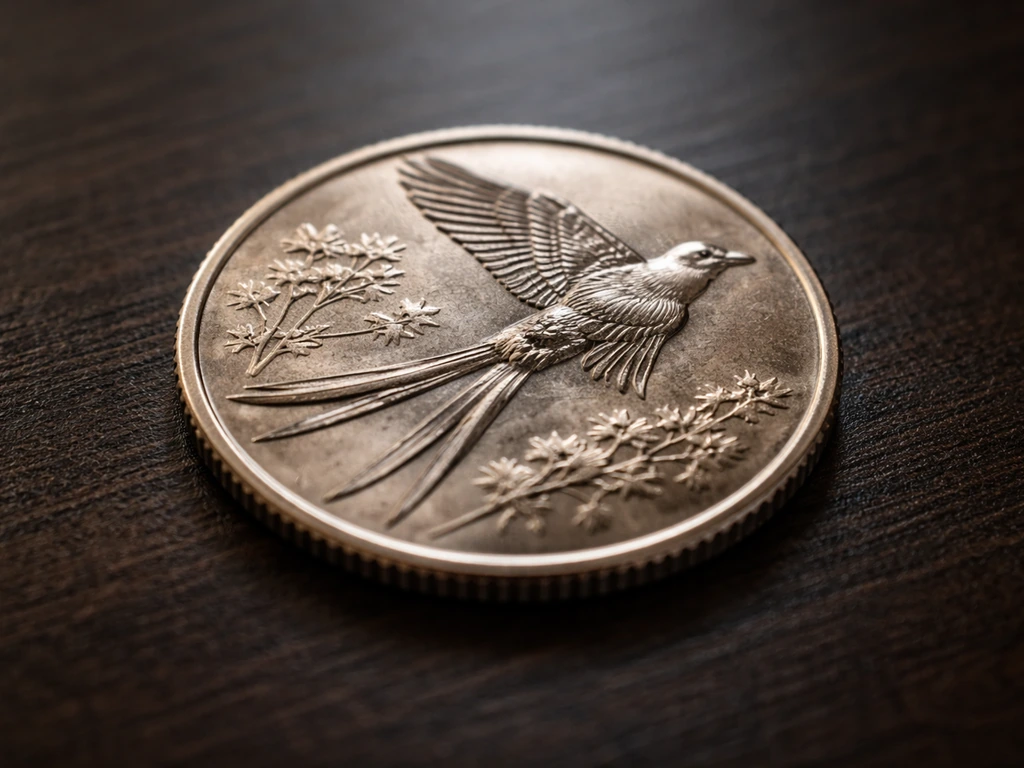
blank" rel="noopener noreferrer">The bird on the Oklahoma quarter is the scissor-tailed flycatcher. The U.S. Mint confirmed this when they released Oklahoma's coin as the 46th entry in the 50 State Quarters Program, describing the reverse design as the state bird "Scissortail Flycatcher" soaring over the state wildflower, the Indian Blanket. If you're looking at the coin and wondering what that bird with the dramatically long, split tail is, that's your answer.
What Bird Is on the Oklahoma Quarter? State Bird Match

Marcus Webb
17 May 2026
How to confirm the bird from the coin image
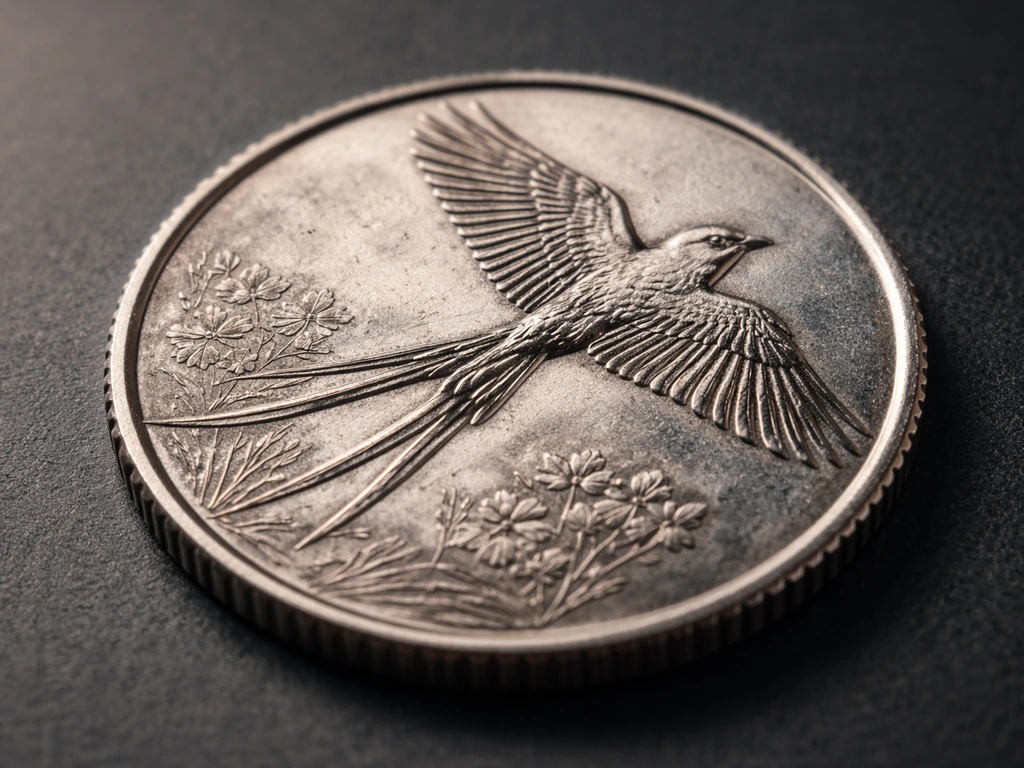
The design shows the scissor-tailed flycatcher in flight with its distinctive tail feathers spread. Even in a stylized coin engraving, a few features make it unmistakable. The tail is the giveaway: it's deeply forked and extremely long, sometimes reaching nine inches on a real bird. In flight, the tail fans open exactly like a pair of scissors, which is what gives the species its name. No other common bird in that region has a tail that dramatically proportioned.
If you're squinting at the coin and second-guessing yourself, here's what to look for: the bird is slender and long, with a stout bill, and the two outer tail feathers extend far beyond the body in a forked "V" shape. The coin captures the bird mid-soar, which is when that scissor tail is most visibly spread. The wildflower depicted below it (Indian Blanket) is also an Oklahoma state symbol, so both design elements on the reverse point directly to Oklahoma's official imagery.
Oklahoma's official state bird: what it looks like
The scissor-tailed flycatcher (Tyrannus forficatus) is one of the more visually striking birds in North America. Adults measure 14 to 15 inches long and weigh roughly 1.1 to 1.9 ounces, with a wingspan of 15 to 17 inches. The body itself is slender, with pale gray upperparts and salmon-colored flanks. The shoulders can show a subtle crimson tint. But what dominates any sighting is that tail: long, black-and-white, and deeply forked, it makes up a huge portion of the bird's total length.
In flight, the bird opens and closes its tail in a scissoring motion as it maneuvers through the air. When perched, the tail folds shut and still looks noticeably long compared to the body. Immature birds have the same basic shape but with a shorter, only slightly forked tail, so if you ever see a younger bird you might not immediately make the connection. The species favors open, shrubby country with scattered trees, which describes much of Oklahoma's landscape perfectly.
Quick ID checklist
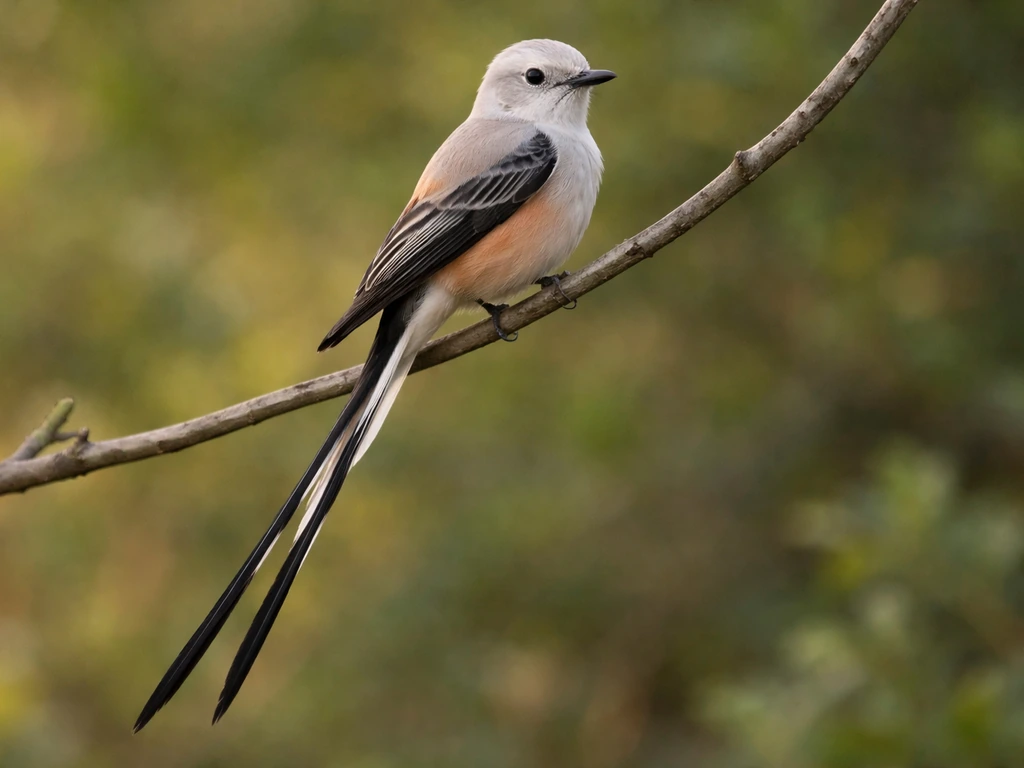
- Very long, deeply forked black-and-white tail (up to 9 inches on adults)
- Slender body with pale gray upperparts and salmon-colored flanks
- Stout bill, typical of the flycatcher family
- Tail fans open like scissors during flight, folds when perched
- Found in open country, often perching on fences or wires
Why Oklahoma chose this bird
Oklahoma made the scissor-tailed flycatcher its official state bird on May 26, 1951, through House Joint Resolution No. 21. The choice wasn't arbitrary. If you are wondering why it became the Oklahoma state bird, the short answer is that it was selected for its strong connection to local agriculture and ecology why is the scissor tailed flycatcher oklahoma state bird. Legislators pointed to a few practical reasons: the bird feeds heavily on grasshoppers, crickets, and other harmful insects, making it genuinely useful to Oklahoma's agricultural communities. It also nests primarily within Oklahoma and the surrounding south-central region, so it's a bird that feels distinctly tied to the state rather than one that just passes through.
There was also a convenient timing factor. At the time Oklahoma was making its selection, no other state had claimed the scissor-tailed flycatcher as its own. That gave Oklahoma a unique symbol, which is always a plus when you're picking a state bird. The bird's dramatic appearance didn't hurt either. It's the kind of species that leaves an impression, and that's exactly what a state symbol should do. The bird is formally designated in Oklahoma Statutes 25 O.S. Section 98 under the scientific name Tyrannus forficatus (earlier legislation used the older name Muscivora forficata). Oklahoma Statutes 25 O.S. § 98 designates the scissor-tailed flycatcher (Muscivora forficata) as the official state bird of Oklahoma Oklahoma Statutes 25 O.S. Section 98.
Don't confuse it with these similar birds
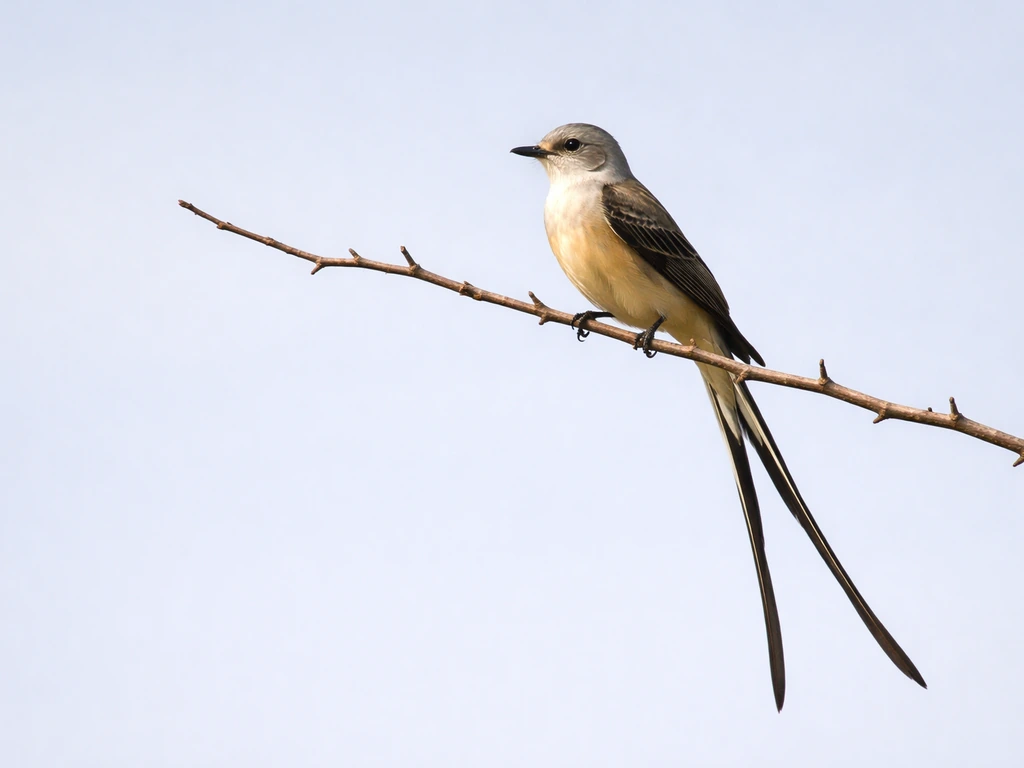
The scissor-tailed flycatcher belongs to the kingbird group, and a couple of other species in that family can cause confusion, especially if you're looking at a stylized coin image rather than a live bird.
| Bird | Tail | Belly color | Range overlap with OK |
|---|---|---|---|
| Scissor-tailed Flycatcher | Very long, deeply forked, black-and-white | Pale with salmon flanks | Yes, nests here |
| Western Kingbird | Medium length, not forked | Yellow belly | Yes, common in OK |
| Eastern Kingbird | Medium length, white-tipped, not forked | White underparts | Yes, passes through |
National Geographic notes that the scissor-tailed flycatcher is the only regular long-tailed kingbird in the region, which is the clearest way to separate it from its relatives. If the tail is dramatically forked and long, it's the scissortail. Immature scissor-tails can look more like Western Kingbirds because their tails are shorter, but even then the tail proportions tend to be narrower and more extensively white. On the coin, you're seeing an adult in full flight, so the long forked tail is prominent and conclusive.
Where to go from here
If the coin sparked your curiosity about Oklahoma's state bird more broadly, there's a lot more to explore. To learn what the bird of Oklahoma is, start with the scissor-tailed flycatcher and its distinctive split tail. The scissor-tailed flycatcher's selection story, its behavior (including a famous aerial "sky dance" display), and its role in Oklahoma's ecology all make for a fascinating deep dive. This site has dedicated pages on Oklahoma's state bird covering identification, history, and the reasoning behind the 1951 designation in more detail.
One thing worth noting: the scissor-tailed flycatcher is unique to Oklahoma as a state bird. No other U. S. state has claimed it, which makes Oklahoma's quarter and its state bird symbol genuinely one-of-a-kind among all 50 states.
If you're curious how this compares to other state bird coins, the Idaho quarter is another interesting case where the state bird appears on the reverse design. The Idaho quarter features a different state bird, so you can figure out what bird is on the Idaho quarter by matching its details on the reverse. And if you're wondering about birds on other iconic American currency, the bird on the dollar bill is a different story entirely.
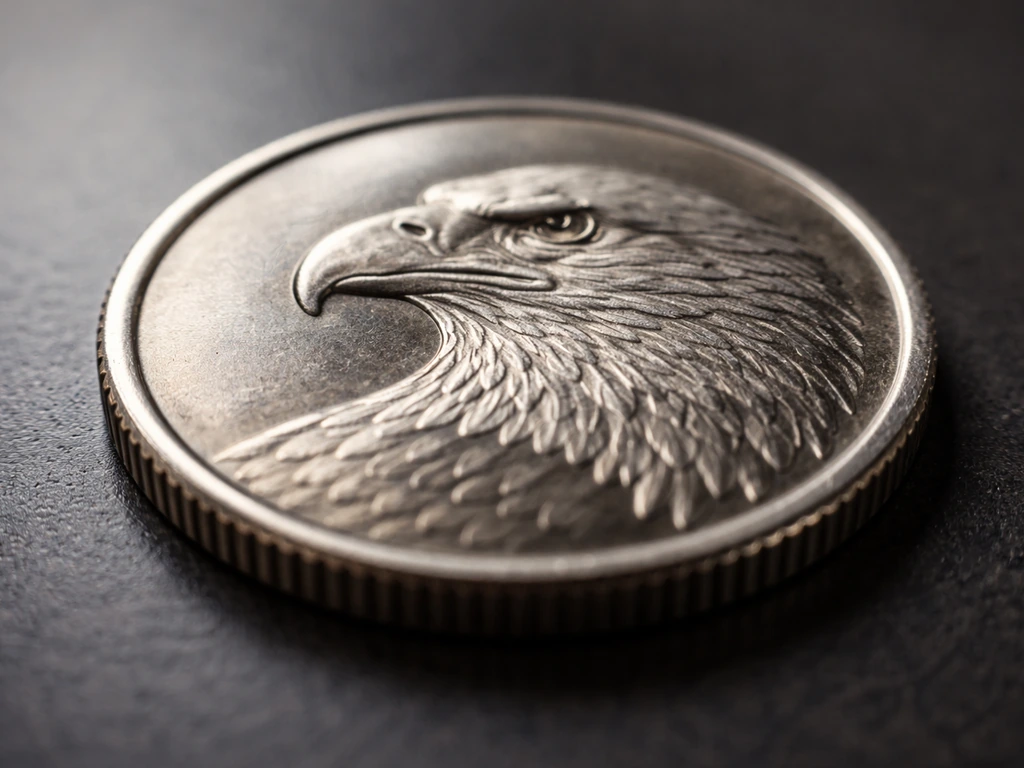
The bird on the dollar bill is the bald eagle, a symbol that appears on U. S. currency in a different way than Oklahoma's state bird.
For anyone doing a deeper dive into American state birds and what drives their selection, the scissor-tailed flycatcher is a great example of a state picking a bird that's both regionally meaningful and visually distinctive. If you are also asking what the bird of the United States is, it helps to know there is a difference between state birds and any official national bird what is the bird of the united states. Oklahoma got it right in 1951, and the U.S. Mint honored that choice when it came time to design the state's quarter.
FAQ
How can I confirm it is the scissor-tailed flycatcher if the quarter image looks stylized?
If you are unsure, focus on the tail proportions. On the Oklahoma quarter the bird is shown with an adult-style, deeply forked, very long tail that looks like a pair of scissors. A perched scissortail folds the tail shorter, but the coin is designed to show the full in-flight spread.
Could the bird on the Oklahoma quarter be mistaken for a different flycatcher or kingbird?
No. The coin specifically uses the scissortail flycatcher, but immature scissor-tails can resemble Western Kingbirds because their tails are shorter and only slightly forked. On the quarter, the tail looks long and sharply forked, which matches an adult.
Why is it called a flycatcher if it is related to kingbirds?
The scissor-tailed flycatcher is a kingbird relative (family Tyrannidae), not a typical “true flycatcher” in the way many people expect from the common name. The quickest way to identify it on a coin is still the hallmark long, black-and-white, deeply forked tail.
What scientific name should I use, and why do I sometimes see an older name?
Because state-bird laws and naming conventions have changed over time, you may see older scientific names in references. In Oklahoma materials, the species is tied to Tyrannus forficatus, while earlier legislation used Muscivora forficata.
Where on the Oklahoma quarter should I look to identify the state bird?
If you are comparing quarters, verify the reverse design, not the obverse (the state seal on the front). Each state quarter’s bird appears on the reverse panel, so the easiest check is to identify the artwork on the back.
Does the quarter include any other visual clue besides the bird itself?
The quarter’s bird is paired with the Indian Blanket wildflower, an Oklahoma state symbol. If you see a long-tailed bird above that particular flower, that combination is a strong confirmation you are looking at the Oklahoma design.
Is Oklahoma’s state bird also the bird of the United States?
Yes, it can help to separate “state bird” from “national bird.” Oklahoma’s official state bird is the scissor-tailed flycatcher, but that is not the same thing as the official bird of the United States (a separate concept).
Do coin engravings change the look enough that the bird identification could differ?
If you are collecting coins and want consistency, note that the key identifying feature is the tail. Even when engravings vary slightly by year or die, the tail length and deep fork are the consistent “tells” that distinguish the scissortail from other long-tailed birds.
Next Article
What Bird Is on the Idaho Quarter U.S. Coin
Identify the exact bird on the Idaho quarter, confirm it as Idaho’s state bird, and learn why it was chosen.