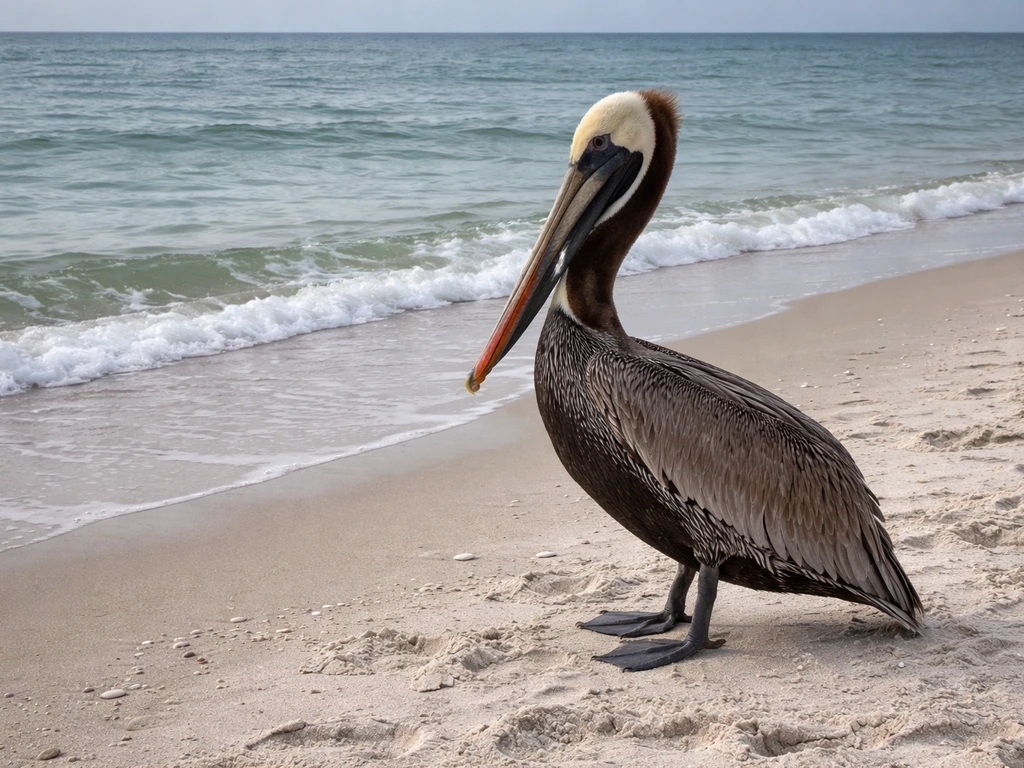
Louisiana chose the Brown Pelican as its official state bird because the species is deeply woven into the state's coastal identity, its ecology, and even its oldest government symbols. In Missouri, the Eastern Bluebird is the state bird, chosen for its presence and significance in the region why is the eastern bluebird missouri state bird. The Brown Pelican has appeared on Louisiana's state seal since the earliest days of statehood, long before a formal bird designation existed. When Louisiana codified the choice in statute (effective July 27, 1966), it was simply making official what had already been true in spirit for over a century: the pelican is Louisiana's bird.
Why Is the Brown Pelican Louisiana State Bird? Facts and ID

Marcus Webb
13 May 2026

Why the Brown Pelican represents Louisiana
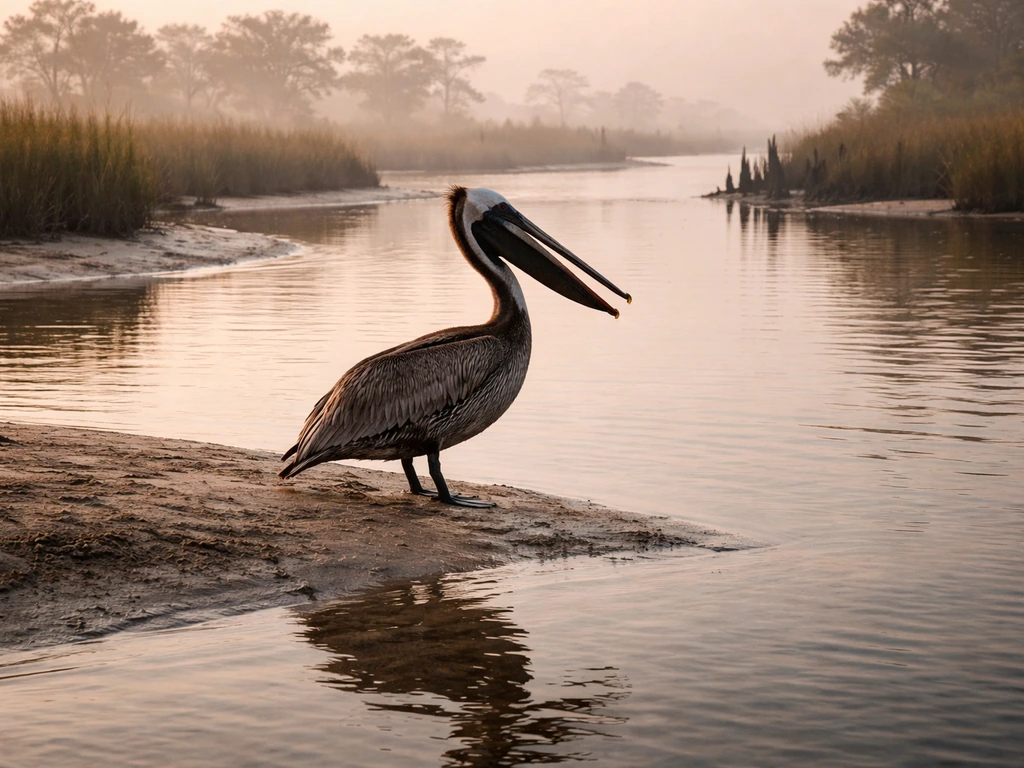
The Brown Pelican is not a generic waterbird that happens to live near Louisiana. It is a species that depends almost entirely on shallow coastal waters, estuaries, and bays, exactly the kind of habitat that defines Louisiana's Gulf Coast. Louisiana has more coastal wetlands than almost any other state, and the pelican evolved to thrive in that world. It hunts by plunge-diving into shallow inshore waters to catch small and mid-size fish, which means it lives or dies based on the health of the same fisheries and estuaries that Louisiana's human communities have depended on for generations.
There is also a cultural dimension that goes beyond ecology. The image of a mother pelican wounding her own breast to feed her young with her blood is an ancient Christian symbol of self-sacrifice and parental devotion. That image, called the 'pelican in her piety,' appears on Louisiana's state seal and has been part of Louisiana's official iconography since territorial days. Louisiana is sometimes called the Pelican State, and that nickname predates the 1966 statute by well over a hundred years. Choosing the Brown Pelican as the state bird was, in a real sense, the legislature catching up to existing cultural reality.
The history behind the designation
The formal designation is codified in Louisiana Revised Statutes, Title 49, Section 159. The statute language reads: 'After July 27, 1966, the official bird for the state of Louisiana shall be the Brown Pelican as it presently appears on the seal of the state of Louisiana, and its use on the seal of the state, other insignia of the state and on all official documents is hereby authorized and directed.' The underlying legislation traces back to Acts 1958, with the 1966 effective date marking when the Brown Pelican became the fully official state bird.
Here is the remarkable twist in the story: by the time Louisiana officially made the Brown Pelican its state bird in 1966, there were essentially no breeding pelicans left in the state. By 1963, the Brown Pelican had been completely extirpated from Louisiana, driven to local extinction by pesticide contamination, particularly DDE residues that caused nesting failure across the Gulf Coast population. Louisiana named a bird that had just disappeared from its own coast.
That irony gave the designation real urgency. Starting in 1968, Louisiana launched one of the most notable bird restoration efforts of the era. From 1968 through 1976, wildlife managers captured 767 Brown Pelican chicks from Florida's Atlantic Coast and relocated them to coastal Louisiana, including to Queen Bess Island near Grand Isle, which has since become a historically significant colony site.
The state's commitment was serious enough that in 2019, the Louisiana Wildlife and Fisheries Commission converted Queen Bess Island into a dedicated state wildlife refuge to protect the nesting colony there. Today, active Brown Pelican colonies exist at multiple Louisiana coastal sites, including Breton Island within Breton National Wildlife Refuge, one of the largest colonies in the state, and Rabbit Island, the only colony in southwestern Louisiana.
How to identify a Brown Pelican in Louisiana
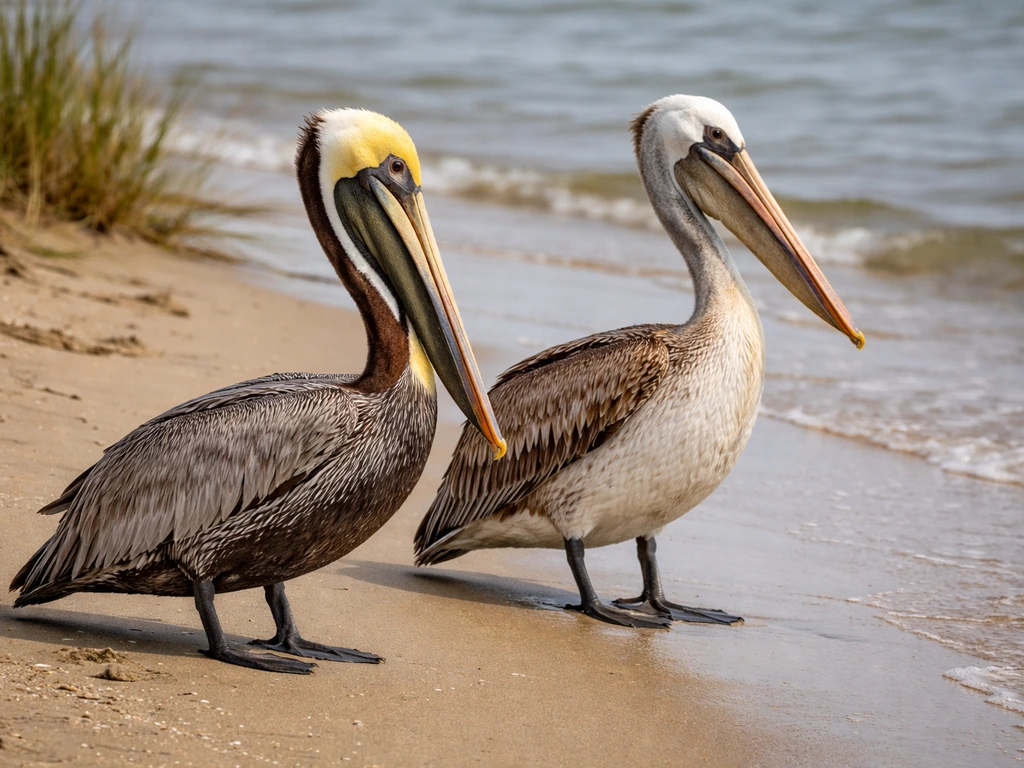
If you are out on the Louisiana coast and want to confirm you are looking at a Brown Pelican rather than another large waterbird, the identification is actually pretty straightforward once you know what to look for. The Brown Pelican is massive and stocky with a long neck and an unmistakably oversized bill attached to a large, stretchy throat pouch. Adults show brown skin on the throat pouch, which helps separate them from the American White Pelican, the most likely confusion species in Louisiana waters.
The most reliable behavioral cue is plunge-diving. Brown Pelicans hunt by flying over water and then diving headfirst from the air to scoop fish below the surface. American White Pelicans do not do this. They feed cooperatively at the surface, herding fish in groups. If you see a large pelican dropping out of the sky like a gannet, it is a Brown Pelican. You will also often see Brown Pelicans flying low over the waves in single file, which is another reliable behavioral field mark.
| Feature | Brown Pelican | American White Pelican |
|---|---|---|
| Overall color | Dark brown and gray | Mostly white with black wing tips |
| Throat pouch color (adults) | Brown skin | Orange or yellow skin |
| Size | Massive but stocky | Even larger overall |
| Hunting method | Plunge-dives from the air | Surface-feeds cooperatively |
| Flight pattern | Often low over waves in single file | High soaring in loose groups |
| Louisiana habitat | Coastal shores, estuaries, bays | Coastal lakes, shallow inland water |
In Louisiana, Brown Pelicans are year-round residents along the coast. The best places to see them are around Grand Isle, the barrier islands of the Barataria-Terrebonne estuary, the shores near Breton Island, and anywhere you find active shrimp or fishing boats, since pelicans have learned to follow the fleet. Breeding colonies are most active from roughly March through late summer, when adults and juveniles are both present in large numbers. Juveniles are overall dull brownish with pale underparts, so do not expect the clean adult pattern on younger birds.
How Louisiana's pelican fits into the bigger picture of state birds
Louisiana is the only U. S. state that has designated the Brown Pelican as its official state bird. That makes the choice genuinely distinctive.
Across the country, the most common state bird by far is the Northern Cardinal, which is shared by seven states. If you are wondering about the most common bird in Missouri, the answer depends on seasonal and habitat factors, but birdwatchers often focus on widespread species like the Northern Cardinal what is the most common bird in missouri.
Many other states have gone with songbirds or raptors that are broadly distributed across the continent. Louisiana's choice of a large coastal waterbird that cannot survive far from the ocean puts it in a much smaller category of states whose bird designations reflect a very specific regional ecosystem rather than widespread appeal.
There is a pattern worth noting here: states often choose birds that either appear on existing state symbols or that have strong native cultural associations, and Louisiana fits that pattern more precisely than almost any other state. The pelican was already on the seal and in the state's nickname before the legislature ever voted. Compare that to states like Missouri, where the Eastern Bluebird was chosen more for its pleasant associations and broad habitat range, or Mississippi, where the Northern Mockingbird was selected for its musical qualities and wide regional presence. Louisiana's choice was grounded in something harder to replicate: a specific, irreplaceable coastal ecosystem and a centuries-old symbol.
The Brown Pelican also appears on Louisiana's state flag and has famously featured on the Louisiana state quarter, which was released in 2002 as part of the U.S. Mint's 50 State Quarters program. That level of cross-symbol saturation, flag, seal, quarter, and official state bird, is unusual and reflects just how central the pelican is to Louisiana's self-image.
Where to go from here
If you want to verify the official designation yourself, look up Louisiana Revised Statutes Title 49, Section 159, or check the State Symbols page on Louisiana.gov, which lists the Eastern Brown Pelican as the official state bird. The Louisiana House of Representatives' public information materials also confirm the designation. For detailed species identification, Cornell Lab's All About Birds entry and the Audubon Field Guide are the most useful references for Brown Pelican ID in the field.
If you are exploring state bird designations more broadly, this site covers every state's official bird with context on why each was chosen, from Louisiana's pelican to the songbirds of the neighboring Gulf Coast states. If you are also curious about other states, the state bird of Missouri is another fun place to start. The Brown Pelican's story, named as a state symbol right as it was disappearing and then recovered through one of the most sustained wildlife restoration programs in Gulf Coast history, makes it one of the more meaningful state bird choices in the country.
FAQ
Is the Brown Pelican the only pelican species Louisiana could have chosen as its state bird?
Louisiana specifically designated the Brown Pelican, not a generic pelican category. Other large Louisiana pelicans, like the American White Pelican, have different feeding behavior and winter or migratory patterns, so the designation matches the species most closely tied to the state’s shallow coastal plunge-diving hunting style and the historical “Pelican State” symbolism.
Why were Brown Pelicans basically gone from Louisiana when it became the official state bird in 1966?
The designation came after severe pesticide impacts on the wider Gulf Coast population, which reduced nesting success and led to local extirpation in Louisiana by 1963. The irony is that the state “locked in” its symbol right as the birds were effectively missing from their own core breeding habitat.
Where exactly in Louisiana are the best chances to see Brown Pelicans year-round?
For reliable sightings, focus on active coastal waters where pelicans feed with shrimp boats and fishing activity, especially around Grand Isle, the Barataria-Terrebonne estuary barrier islands, and areas near known colony sites like Breton Island. Pelicans can be easier to spot where fish are being concentrated by inshore fisheries.
How can I tell a Brown Pelican from a American White Pelican if I am not sure about the throat pouch color?
Use behavior first. Brown Pelicans repeatedly plunge from the air and scoop fish below the surface, while American White Pelicans feed cooperatively at the surface and do not dive-plunge. If you are unsure in a single moment, watch the bird’s hunting pattern over a short stretch of time.
Are juvenile Brown Pelicans harder to identify than adults?
Yes. Juveniles are typically duller, with more brownish tones and less crisp contrast than adults, so they can look “washed out” compared with the textbook adult pattern. If you see a large pelican that behaves like a plunge-diver, treat it as a stronger ID signal than color alone.
When are Brown Pelican breeding colonies most active in Louisiana?
Most breeding activity is roughly from March through late summer, when adults and juveniles are both present. Colonies can be active outside that window, but if you are planning a visit for the most constant pelican presence, aim for the spring-to-summer period.
Did Louisiana only protect the species after it became an official symbol in 1966?
No. The state’s major restoration push began after the 1966 designation, starting with chick relocations from 1968 through 1976. Later actions included formal protection of key colony habitat, such as converting Queen Bess Island into a dedicated refuge in 2019.
How does Louisiana’s state-bird choice compare to other states that picked birds?
Many states select birds that are widespread and easy to find, which helps the choice fit most regions of the state. Louisiana’s selection is narrower and more ecosystem-specific because Brown Pelicans rely heavily on shallow coastal waters and plunge-diving habitat, so sightings are tied to the Gulf Coast environment rather than inland areas.
Can Brown Pelicans be seen inland in Louisiana, or are they strictly coastal?
They are overwhelmingly coastal because they depend on shallow marine and estuarine feeding grounds. If you see them farther inland, it is usually connected to river outlets, major estuaries, or coastal-adjacent waters where their prey and foraging conditions occur.