Nevada chose the Mountain Bluebird (Sialia currucoides) as its state bird because the species is a genuine native of Nevada's open mountain landscapes, visually striking, and ecologically tied to the terrain that defines the state. The designation became official in 1967 when the Nevada Legislature formally added it to state law under blank" rel="noopener noreferrer">NRS 235.060, making it one of the later states to lock in a state bird. If you want the one-sentence answer: it's a bird that actually lives in Nevada's high country, it's unmistakable, and the state made it official more than 55 years ago.
Why Is the Mountain Bluebird Nevada’s State Bird?

Marcus Webb
2 May 2026
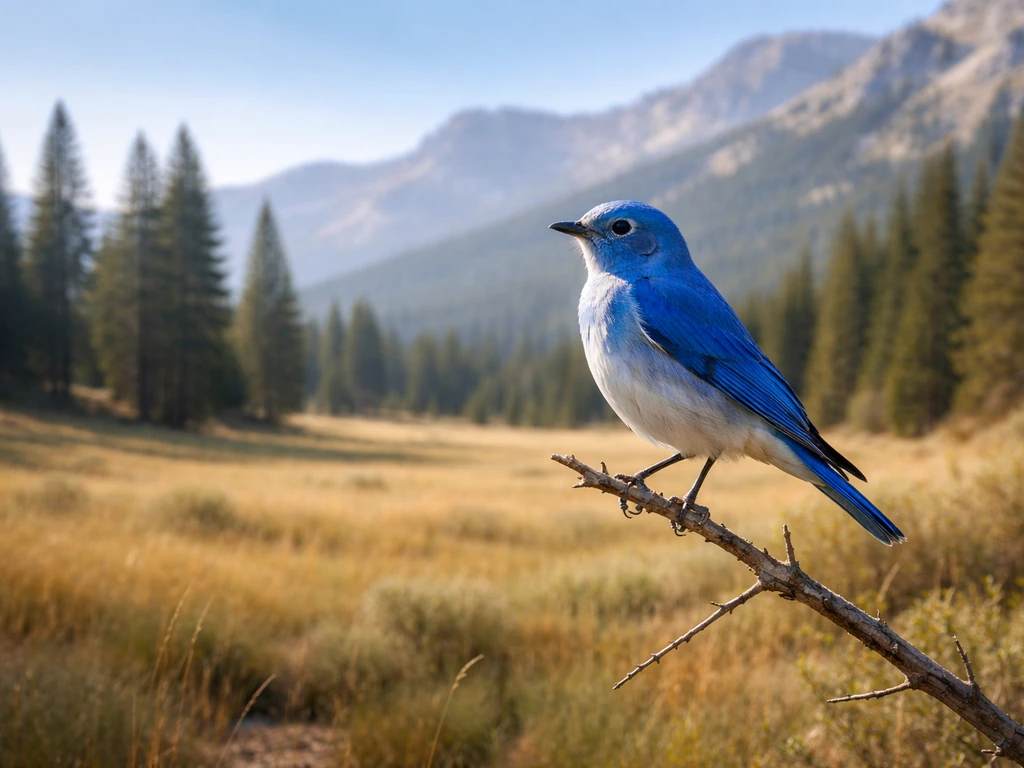
Meet the Mountain Bluebird: what it looks like and where it lives in Nevada
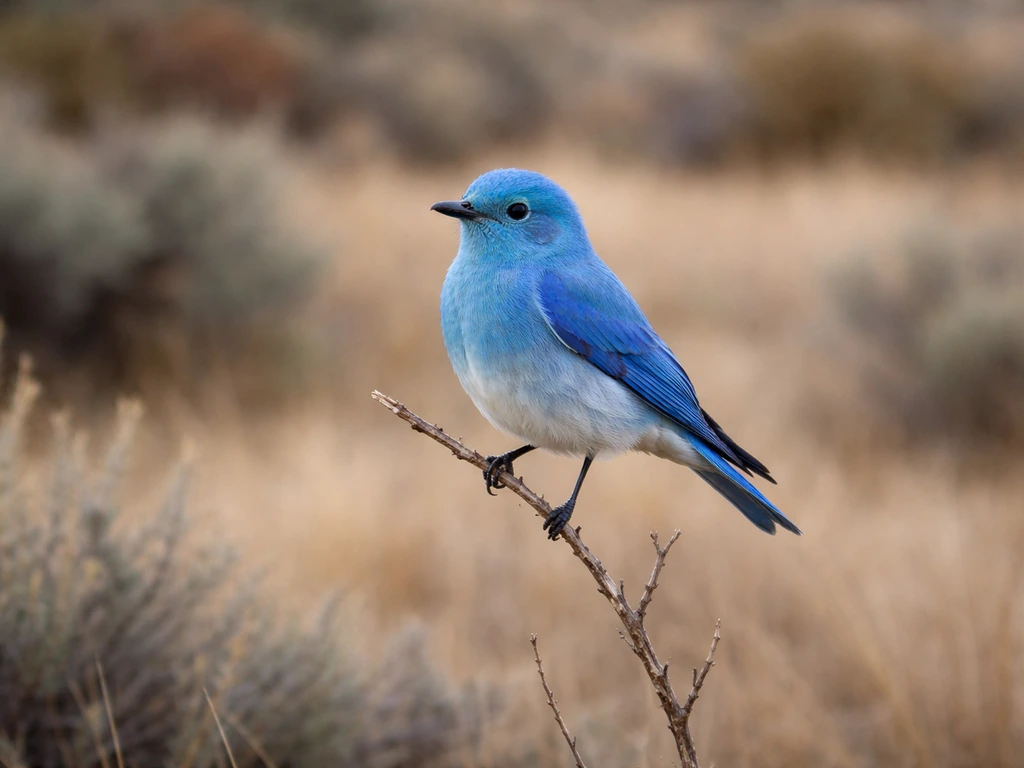
The male Mountain Bluebird is one of the most visually clean birds in North America. He's sky-blue overall, with slightly darker wings and tail, lighter underparts, and a white undertail. There's no rust, no orange, no reddish wash on the chest at all. That's the key field mark: unlike the Eastern Bluebird or Western Bluebird, the male Mountain Bluebird lacks any reddish coloration on its underparts. If you see a bluebird in Nevada and it's pure blue with a pale belly, that's your bird. Females are brownish-gray with a hint of blue in the wings and tail, much subtler but still identifiable with a good look.
In Nevada, Mountain Bluebirds are birds of open, high-elevation country. The Nevada Department of Wildlife places them in mountain meadows adjacent to alpine forests, and notes they're easier to find at higher altitudes, typically above 7,000 feet. They also turn up in burned-over areas, which makes sense since they like open ground for foraging. Their range stretches from Alaska down to central Mexico and across the mid-west to California, so Nevada sits comfortably in the middle of their core territory.
Nevada's official state-bird designation: what the decision was and when it happened
The Mountain Bluebird became Nevada's official state bird in 1967. The Nevada Legislature codified it in the Nevada Revised Statutes, and the exact language in NRS 235.060 reads: 'The bird known as the Mountain Bluebird (Sialia currucoides) is hereby designated as the official state bird of the State of Nevada.' The 1967 Statutes of Nevada index lists it as 'Mountain bluebird designated state bird, 702.' That statutory entry has remained unchanged. You can verify it today through Nevada's official state symbols page, which ties the designation directly to NRS 235.060 and the scientific name Sialia currucoides.
Nevada was relatively late compared to states like Idaho, which adopted the same bird back in 1931. But the 1967 designation wasn't arbitrary. By that point the Mountain Bluebird was well-documented as a resident species in Nevada's mountains, making it a defensible and regionally authentic choice.
Why the Mountain Bluebird fits Nevada: natural representation and symbolic reasons
State birds are generally chosen to reflect a species that actually lives there, is recognizable to residents, and in some way mirrors the character of the landscape. The Mountain Bluebird checks every one of those boxes for Nevada. It's a true resident of Nevada's Great Basin mountain ranges, not a bird that happens to pass through. It breeds in the state from April to September, usually producing two broods per season, which means it's not a fleeting visitor but a genuine part of the ecosystem.
There's also something fitting about the color. Nevada is known for wide open skies, and the male Mountain Bluebird's sky-blue plumage feels like a visual echo of that. It's a bold, immediately recognizable bird against the sagebrush and high meadow grasses of the Sierra Nevada and other mountain ranges in the state. And unlike some state birds that are chosen more for sentiment than ecology, the Mountain Bluebird is genuinely native and observable in Nevada's own backyard.
How to spot it: practical identification tips for Nevada habitats
If you're heading out specifically to find a Mountain Bluebird in Nevada, focus on open mountain meadows at or above 7,000 feet elevation during the breeding season (April through September). blank" rel="noopener noreferrer">They're cavity nesters, so look for them around dead trees with holes, fence posts along meadow edges, and nest box trails. They take to nest boxes readily, so areas where conservation groups have installed bluebird box trails are reliable spots.
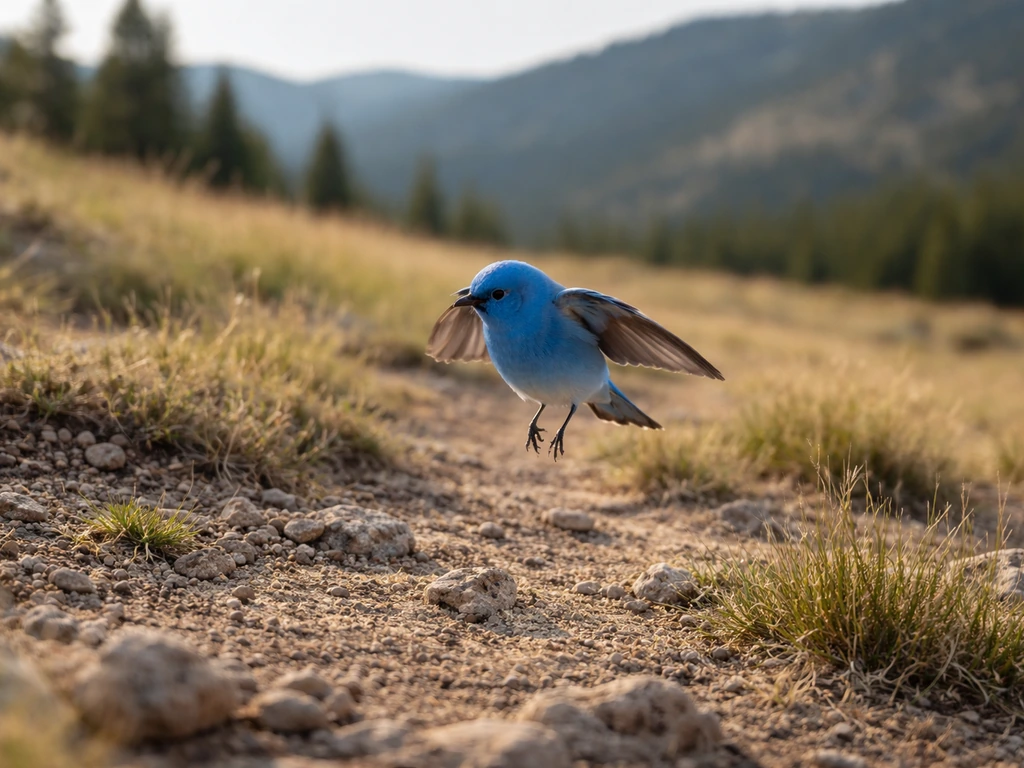
Watch for their hunting behavior: Mountain Bluebirds hover like small hawks while scanning the ground for insects, then drop to make a catch. Mountain Bluebird foraging behavior includes hovering over open fields or grass and dropping to the ground to capture prey, and Audubon notes it often hovers more than other bluebirds hover like small hawks while scanning the ground for insects.
This hovering is distinctive and makes them easy to pick out even at a distance. They also perch on elevated spots like fence posts or low branches and pounce on prey from there. Their call is a low, soft 'fewor' or a burry chortle, quiet and easy to miss in wind but worth learning if you want to locate them by ear in dense meadow edges.
- Target elevations above 7,000 feet in Nevada's mountain ranges during April through September
- Look for open meadows adjacent to conifer forest or burned areas, not dense woodland interiors
- Watch for the hovering hunting behavior, it's the quickest way to spot them in flight
- Check fence lines, dead snags, and nest box installations along meadow edges
- Males are unmistakably sky-blue with no rust on the chest; females are gray-brown with blue wing and tail tints
- Listen for a soft, low 'fewor' or burry chortle call
Nevada state-bird history and any notable background facts
Nevada formalized its state bird in 1967, decades after many other western states had already designated theirs. Idaho, for example, adopted the Mountain Bluebird as its state bird in 1931, a full 36 years earlier. The fact that Nevada landed on the same species independently speaks to how well the bird represents the broader intermountain west landscape that both states share.
One interesting ecological note: Mountain Bluebirds will nest in cliff holes or dirt banks when tree cavities aren't available, which is particularly relevant in Nevada's drier mountain terrain where large trees with cavities aren't always plentiful. That adaptability makes them a good fit for Nevada's varied high-country environments. The Nevada Department of Wildlife notes them in their state wildlife species documentation and flags the Idaho connection in the fun facts for the species.
Compare state birds: does any other state share the Mountain Bluebird or a similar bluebird
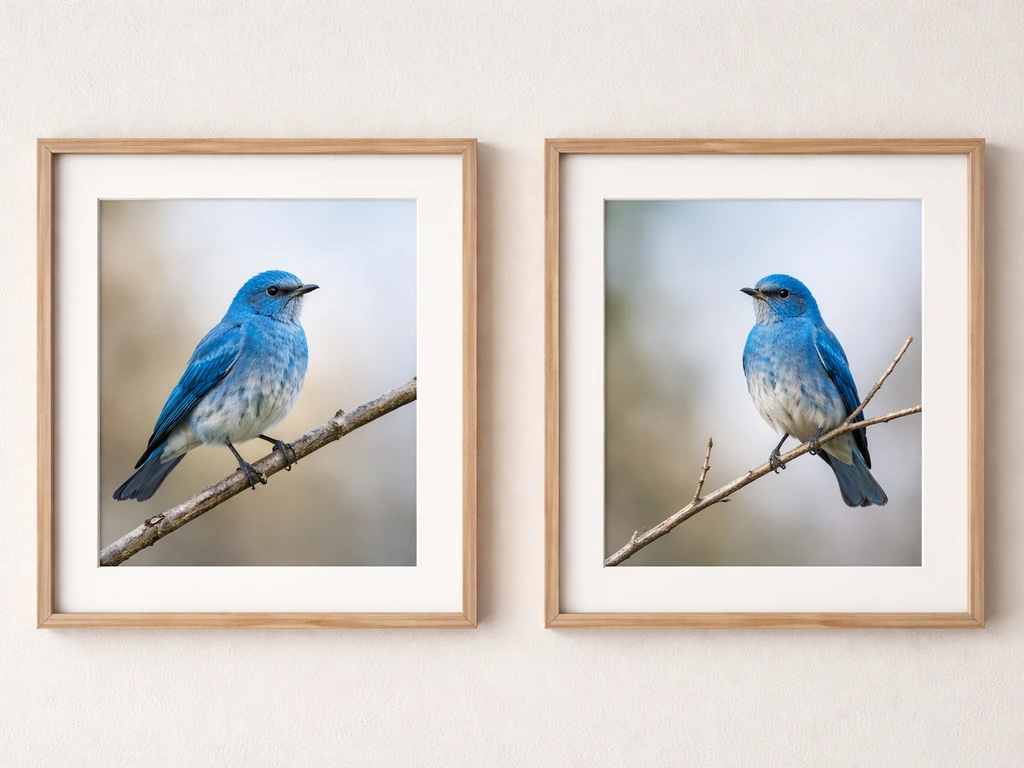
Yes, and it's a short list. Only two states claim the Mountain Bluebird: Nevada (since 1967) and Idaho (since 1931). No other state uses Sialia currucoides. The Eastern Bluebird (Sialia sialis) is a different story, with Missouri designating it as their state bird back in 1927. So across the bluebird family, three states have gone with a bluebird species, but only Nevada and Idaho share the exact same bird.
| State | State Bird | Species | Year Designated |
|---|---|---|---|
| Nevada | Mountain Bluebird | Sialia currucoides | 1967 |
| Idaho | Mountain Bluebird | Sialia currucoides | 1931 |
| Missouri | Eastern Bluebird | Sialia sialis | 1927 |
If you're comparing Nevada's bird to neighboring states, Montana's state bird is the Western Meadowlark, North Dakota also chose the Western Meadowlark, and Nebraska went with the same. North Dakota's state bird is also the Western Meadowlark. If you're wondering what Nebraska picked for its state bird, that is different from Nevada's Mountain Bluebird. If you meant Montana, its state bird is the Western Meadowlark Mountain Bluebird. The Mountain Bluebird actually sets Nevada apart from most of its neighbors. The only western state that matches Nevada's choice is Idaho, which makes the Nevada-Idaho pairing one of the more distinctive shared state-bird situations in the country.
Where to go from here
To verify Nevada's official designation yourself, look up NRS 235.060 directly through the Nevada Legislature's website or the Nevada State Assembly's official symbols page. Both confirm the Mountain Bluebird (Sialia currucoides) as the state bird, with the 1967 statutory origin intact. If you want to see one in person, plan a trip to Nevada's mountain meadows between April and September, aim for elevations above 7,000 feet, and keep an eye out for that hovering, sky-blue bird scanning the open ground below it. Once you've seen a male Mountain Bluebird in good light, you'll understand exactly why Nevada made it official.
FAQ
How can I tell the Mountain Bluebird from other bluebirds in Nevada?
No. The Nevada state bird is specifically the Mountain Bluebird, Sialia currucoides, and the ID hinge for birders is the male’s lack of reddish or rusty coloration on the chest and underparts (a pure, sky-blue look with a pale belly). If your “bluebird” shows a noticeable reddish wash, you are likely not looking at the Mountain Bluebird (even if it resembles a bluebird in general shape).
When is the best time of year to see Nevada’s state bird?
Winter is the hard time to expect them. Because they’re tied to open high-country breeding habitat (typically April through September), you’ll generally have the best odds during the breeding season and fewer sightings outside it. If you’re out in colder months, focus on lower-elevation areas with open ground, but don’t treat it as prime “state bird spotting” season.
Where in Nevada should I look if I want the best chance of spotting one?
Yes, location matters more than most people think. For the highest success rate in Nevada, target open mountain meadows near alpine forests at elevations typically above 7,000 feet, especially where dead trees, fence posts, or nest boxes provide cavities or nesting opportunities. If you search in dense forest or very low, closed valleys, you can spend hours without results.
What should I look for besides open meadows to find Mountain Bluebirds?
They’re cavity nesters, so your search should include nest sites as well as foraging areas. Look for holes in dead trees, natural cavities, fence posts, and especially nest box trails where bluebird boxes have been installed. Even if you find suitable open ground, you may miss them if there are no available nesting spots nearby.
What behavior helps confirm I’m seeing a Mountain Bluebird and not a look-alike?
Look for behavior, not just color. Their hunting style often includes a hovering “scan” over the ground followed by a drop to grab insects, and they also perch on elevated spots like fence posts before pouncing. Learning to watch for that pattern can confirm the species even when lighting is poor.
What if there aren’t many dead trees with holes where I’m birding?
They can use cliff holes or dirt banks when tree cavities are limited, which is a meaningful edge case in Nevada’s drier, higher terrain where large cavity trees may be scarce. If tree hollows seem limited at your site, expand your scan to banks and rock faces in addition to dead trees and fence posts.
Does Idaho’s state bird being the same bird change the reason Nevada chose it?
If you’re comparing Nevada’s state bird to Idaho’s, the shared choice matters: both states designate the same species (Sialia currucoides), but Nevada’s official date is 1967 while Idaho’s is 1931. That means the “why” can still be similar (native, representative of the intermountain west landscape), but the timeline and legislative history differ.
Which other states have the Mountain Bluebird as a state bird?
Mostly, yes. Only Nevada and Idaho claim Mountain Bluebird as their state bird, meaning you won’t find other states with the exact same designation. If you’re cross-checking and you see a different bluebird listed elsewhere, it’s usually because they chose a different species (for example, Eastern Bluebird) rather than Mountain Bluebird.
How do I confirm the designation is official, not just an online summary?
You can verify the designation by checking Nevada’s statute that sets the symbol, NRS 235.060, and confirming the scientific name is listed as Sialia currucoides. If you are using a third-party list, double-check that it matches the legal citation and the scientific name, since some sites summarize state symbols without repeating the full statutory wording.