No U.S. state has the great hornbill (Buceros bicornis) as its official state bird. If you landed here after searching for which American state claims this bird, the honest answer is: none of them do. The great hornbill is the state bird of Kerala and Arunachal Pradesh, two states in India, not any of the 50 U.S. states. It does not appear anywhere on the official U.S. state-bird roster.
the great hornbill is the state bird of Meghalaya

Marcus Webb
30 May 2026
Which region actually claims the great hornbill as its state bird
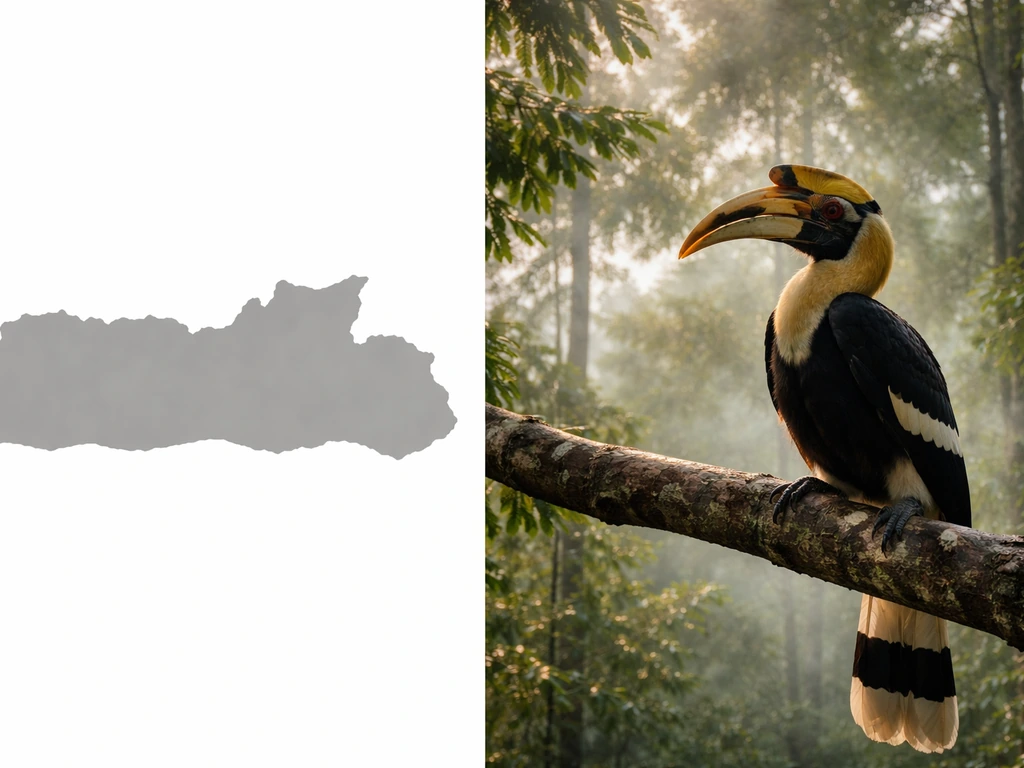
The great hornbill holds official state-bird status in India. Kerala's Forest Department explicitly names the Great Indian Hornbill (Buceros bicornis) as 'our State bird,' and Arunachal Pradesh's official state portal lists the Great Pied Hornbill (Buceros bicornis) as its designated bird symbol. NCSL's Map Monday page on state symbols discusses U.S. state bird designations and helps clarify that these official state-bird lists are governed by U.S. state legislatures official state-bird status in India. So the bird does carry real, official recognition, just not within the United States. Every U.S. state bird is designated by that state's legislature through a formal bill, and Buceros bicornis has never appeared in any of those U.S. legislative records.
The confusion is understandable. People researching 'state birds' often pull up results from multiple countries at once, and the phrase 'state bird' is used in India just as commonly as it is in the U.S. But if you are specifically looking for a U.S. state, there is no match here.
Quick facts for identifying the great hornbill
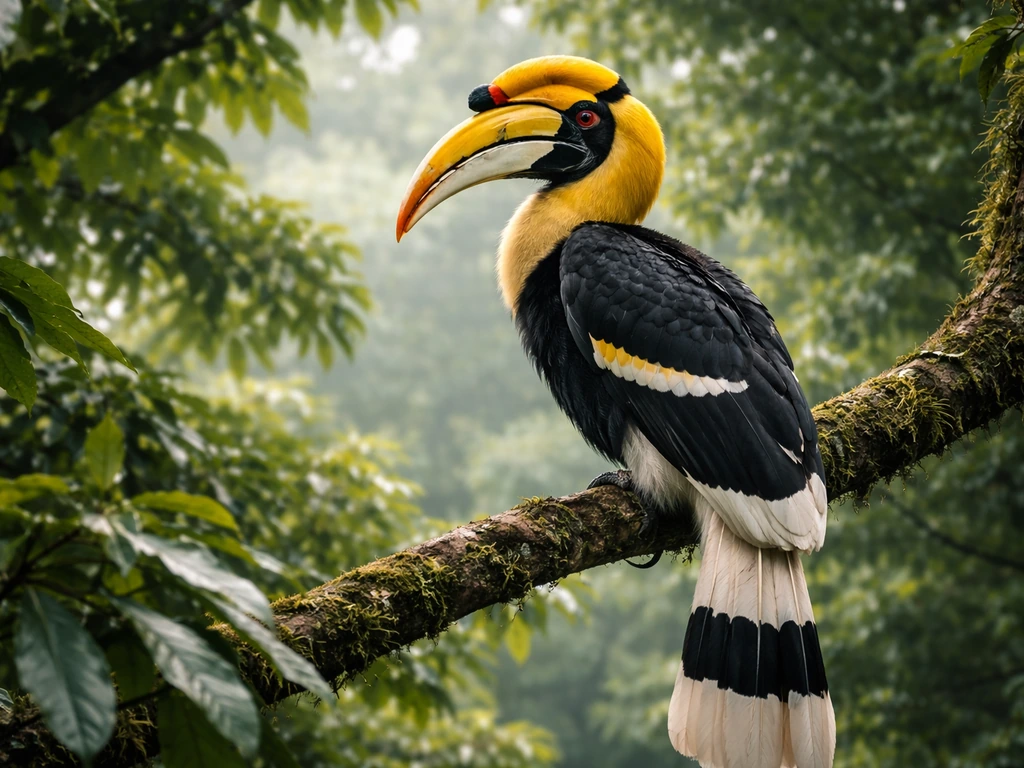
Even if it is not a U.S. state bird, it is worth knowing what you are looking at if you encounter this species. The great hornbill is one of the most visually striking birds in the world and is hard to misidentify once you know the key features.
- Size: One of the largest hornbill species, reaching up to about 160 cm (roughly 63 inches) in length.
- Casque: The defining feature is the large, hollow, yellow-and-black casque sitting on top of the massive bill. No other commonly confused species has a casque quite like it.
- Coloration: Mostly black and white plumage, with the bill, casque, and parts of the neck showing vivid yellow and red tones. A preen-gland oil can further tint feathers, adding a warm cast to the white wing and tail feathers.
- Voice: Loud, resonant barking calls that carry long distances through dense forest.
- Habitat: Tropical and subtropical forests across South and Southeast Asia, including the Western Ghats of India.
Why the great hornbill was chosen as a state symbol in India
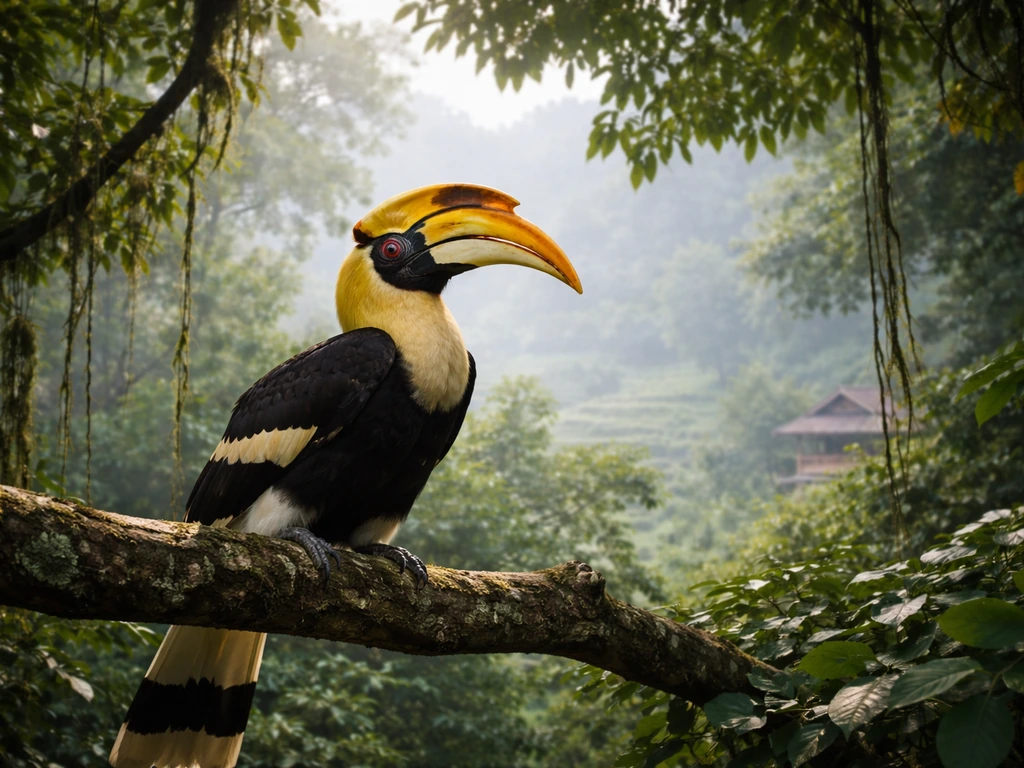
For Kerala and Arunachal Pradesh, the choice reflects deep ecological and cultural connections. The great hornbill is a forest-dependent species that thrives in the kind of dense, biodiverse habitat both regions are known for. In Kerala's forest documentation, the bird is framed as a rare and impressive species, one that signals healthy, intact forest ecosystems. That association between the bird and the health of the forest makes it a powerful symbol for regions where environmental identity is central to local culture. In Arunachal Pradesh, tribal communities have long had cultural relationships with hornbills, and the bird features prominently in traditional festivals, headdresses, and ceremonies.
The designation timeline (outside the U.S.)
Because no U.S. state has ever designated the great hornbill, there is no U.S. legislative timeline to report here. No bill number, no committee vote, no governor's signature, nothing in the U.S. state-symbol record connects to Buceros bicornis. The Indian state designations are documented through each region's official portals (Kerala's Forest Department and Arunachal Pradesh's state portal both confirm the symbol status), but those sources do not publish a detailed bill-history timeline in the way U.S. state legislatures typically do. The designation is treated as an established official fact in government documentation rather than something tied to a specific enactment date available in public records.
How this compares to other hornbill state birds around the world
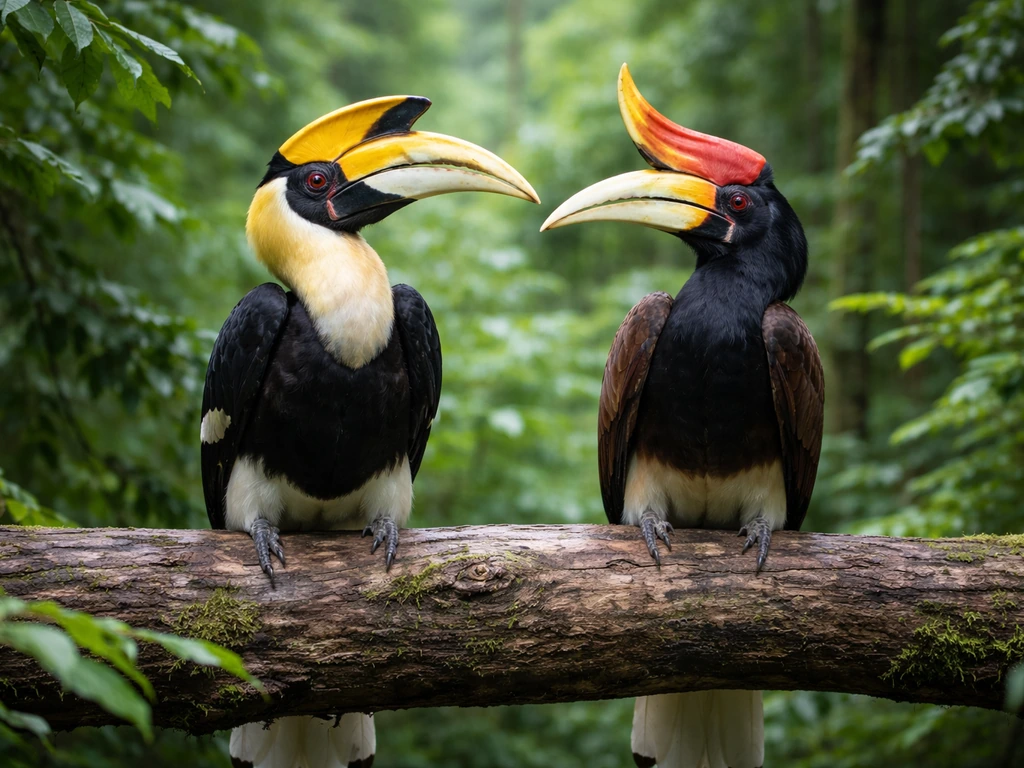
The great hornbill is not the only hornbill species to carry official state-bird status somewhere. The rhinoceros hornbill (Buceros rhinoceros) is the state bird of Sarawak in Malaysia. These two species are frequently mixed up in casual references, especially in infographics and bird-symbol roundups that do not specify the scientific name. The key visual difference is the casque shape: the rhinoceros hornbill has a dramatically upturned casque that curves upward like a horn, while the great hornbill's casque is flatter and sits more horizontally on top of the bill. The great hornbill’s most conspicuous identification trait is its casque, a hollow structure atop the massive bill The key visual difference is the casque shape:.
Within the broader world of official bird symbols, the pattern of choosing large, ecologically significant forest birds as state symbols appears across regions. India's choices of the great hornbill reflect the same logic seen in some other Asian designations.
You can see similar reasoning in designations like the Himalayan monal and the sarus crane, both of which are official bird symbols for Indian states and are often searched alongside the great hornbill by people curious about South Asian state bird designations. The sarus crane is the state bird of some Indian states, and it is commonly searched alongside other bird symbols like the great hornbill.
Another bird symbol people often search for is the Himalayan monal, which is the state bird of Uttarakhand. The yellow-footed green pigeon is another Indian state bird that comes up in these comparisons.
| Bird | Scientific Name | Designated Region | Country |
|---|---|---|---|
| Great Hornbill | Buceros bicornis | Kerala & Arunachal Pradesh | India |
| Rhinoceros Hornbill | Buceros rhinoceros | Sarawak | Malaysia |
| Himalayan Monal | Lophophorus impejanus | Himachal Pradesh / Uttarakhand | India |
| Sarus Crane | Antigone antigone | Uttar Pradesh | India |
| Yellow-footed Green Pigeon | Treron phoenicoptera | Maharashtra | India |
None of the birds in that list are U.S. state birds. They are all official symbols for sub-national regions outside the United States.
How to find the actual U.S. state bird you are looking for
If you came here trying to solve a quiz question, complete a school project, or verify a U.S. state bird, the best path forward is to browse by state directly on this site. The scarlet honeycreeper bird is native to Jamaica, so it is not a U.S. state bird. Every U.S. state has its own dedicated page with the official bird name, the year the designation was made, and the reasons the state chose that particular species. You can also look at the comparison pages, which show which birds are shared across multiple states (seven states, for example, all claim the northern cardinal as their state bird).
If you want to double-check whether any U.S. state has a specific bird you are unsure about, a quick search combining the bird's scientific name with 'state bird' and limiting results to .gov domains is a reliable method to get an authoritative answer fast. For Buceros bicornis specifically, that search will return no U.S. results, which confirms everything covered here.
The site also covers birds that generate frequent cross-country confusion, so if you stumbled onto the great hornbill while researching a different species, browsing the related identification and designation pages here should get you to the right answer quickly.
FAQ
Why does the great hornbill show up in some “state bird” searches even though it is not a U.S. state bird?
Because many websites and infographics use “state bird” loosely to mean any sub-national region symbol worldwide. That mixing of countries makes it easy for results to pull in India’s official designations when you are actually asking about U.S. states.
Is the state bird in Meghalaya definitely the same species as the ones listed for Kerala and Arunachal Pradesh?
Meghalaya’s designation is typically tied to the Great Hornbill concept, but the exact official bird name can vary by government wording. If you need certainty, match the official local name to the scientific name (Buceros bicornis) rather than relying only on the English label.
What is the most common mix-up between the great hornbill and another hornbill in “state bird” roundups?
People often confuse the great hornbill with the rhinoceros hornbill. A quick field cue is the casque shape, the rhinoceros hornbill’s casque is strongly upturned, while the great hornbill’s casque sits more horizontally.
If I am doing a quiz or school assignment, how should I phrase the answer for full credit?
State it as a Meghalaya official state bird, and avoid linking it to any U.S. state. If the question wording says “in the United States,” the correct response is that no U.S. state has the great hornbill as an official state bird.
Does the lack of a U.S. legislative bill history mean the designation is unofficial anywhere?
No, it mainly means you are looking at the wrong jurisdiction. Indian state symbols are documented through each region’s government portals or forest and culture departments, which may not publish the same kind of bill-number timeline used in U.S. state legislation.
How can I quickly verify whether a bird is an official state bird for a specific U.S. state I am considering?
Search by the bird’s scientific name plus the words “state bird,” and restrict results to U.S. government (.gov) domains. If Buceros bicornis appears nowhere in those authoritative results, it confirms there is no U.S. state designation.
What if my source lists a hornbill but does not specify the scientific name?
Treat it as unreliable for verification. “Great hornbill” and “hornbill” labels are often reused, so you should confirm the scientific name (Buceros bicornis for the great hornbill) or the official government wording for the region.
Are there other countries that use the term “state bird” for sub-national regions in a similar way?
Yes. Some countries use the concept of an official regional bird for provinces, states, or regions, and the phrase “state bird” can be used in English summaries even when the legal structure differs. That is why search results can look consistent but refer to different administrative levels.
Next Articles
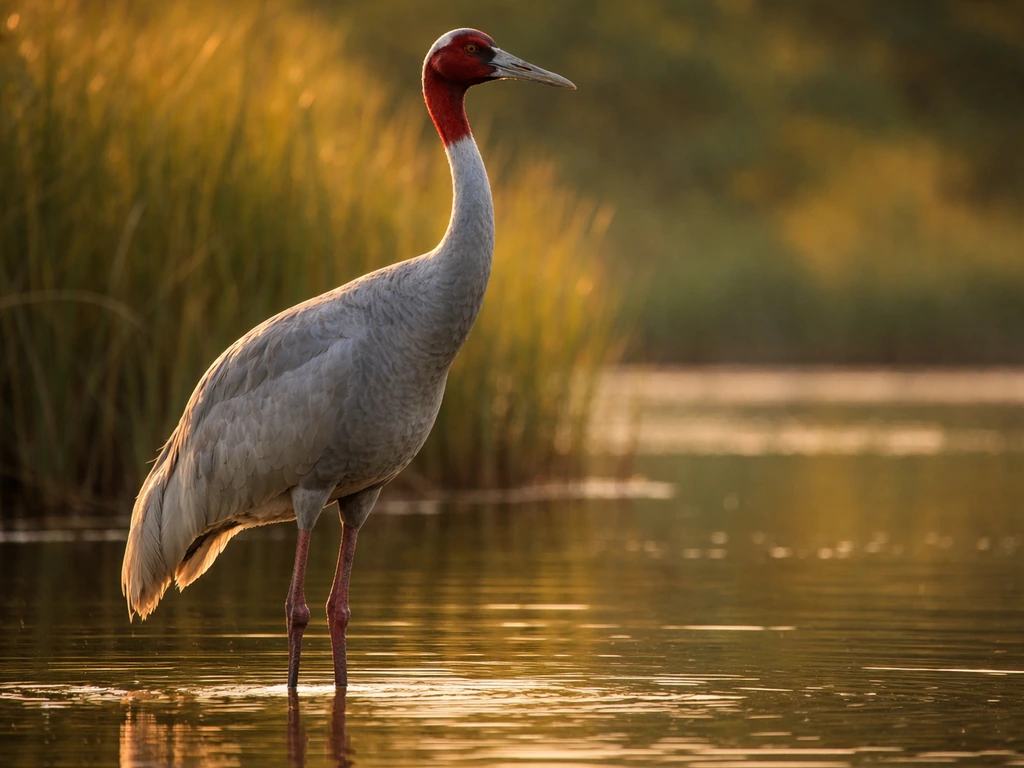
Sarus Crane Is the State Bird of Which State?
Find which US state, if any, lists the sarus crane as its official state bird, plus key ID traits.
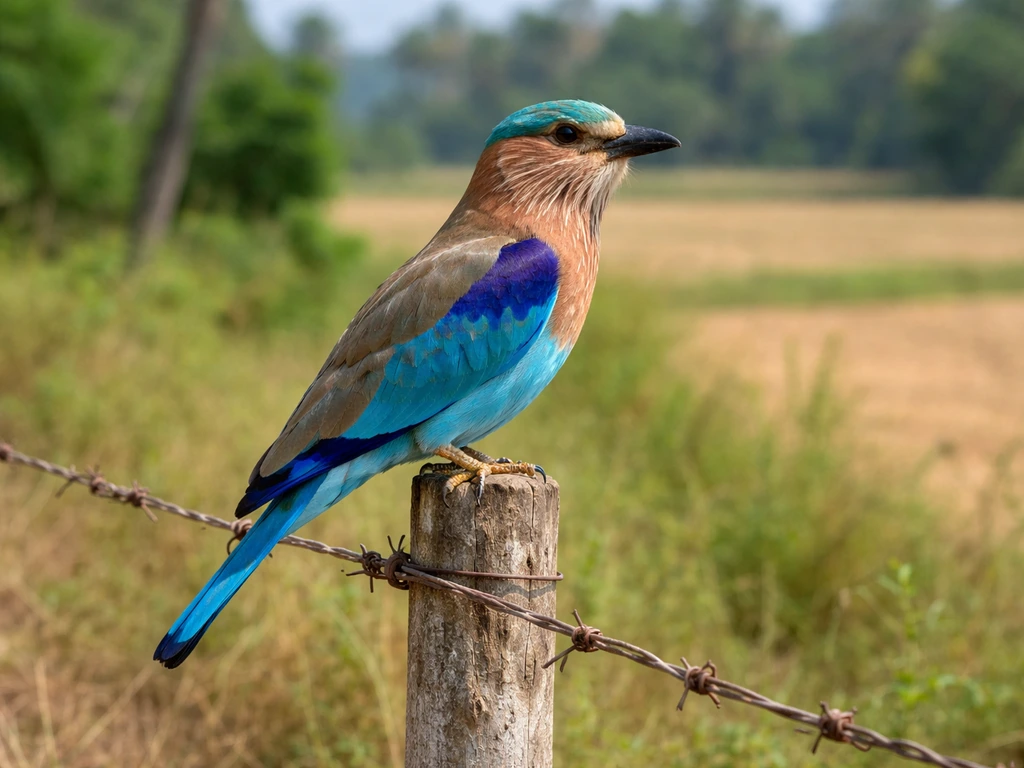
Which Is Karnataka State Bird? Identification and Facts
Discover Karnataka’s official state bird, key ID traits, where to spot it, and why it was chosen.
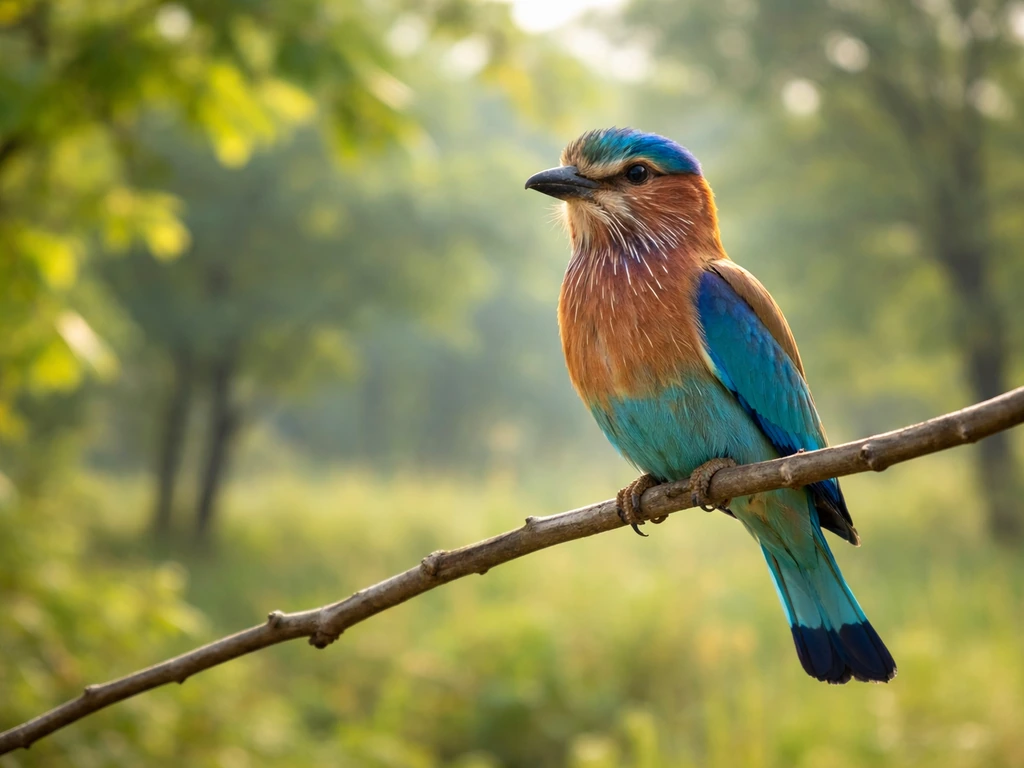
What Is the Telangana State Bird? Official Bird and How to Spot It
Discover Telangana’s official state bird, key traits to spot it, and why it was chosen, with quick context.