The scarlet honeycreeper is native to Hawaii. Specifically, the bird most commonly called the scarlet honeycreeper is the ʻiʻiwi (pronounced ee-EE-vee), a striking Hawaiian honeycreeper found on the forested slopes of the Hawaiian islands. Hawaii is the only U.S. state this bird calls home, and it plays a significant role in the state's native bird heritage.
The Scarlet Honeycreeper Bird Is Native to Which State?

Marcus Webb
1 Jun 2026
What exactly is the scarlet honeycreeper?
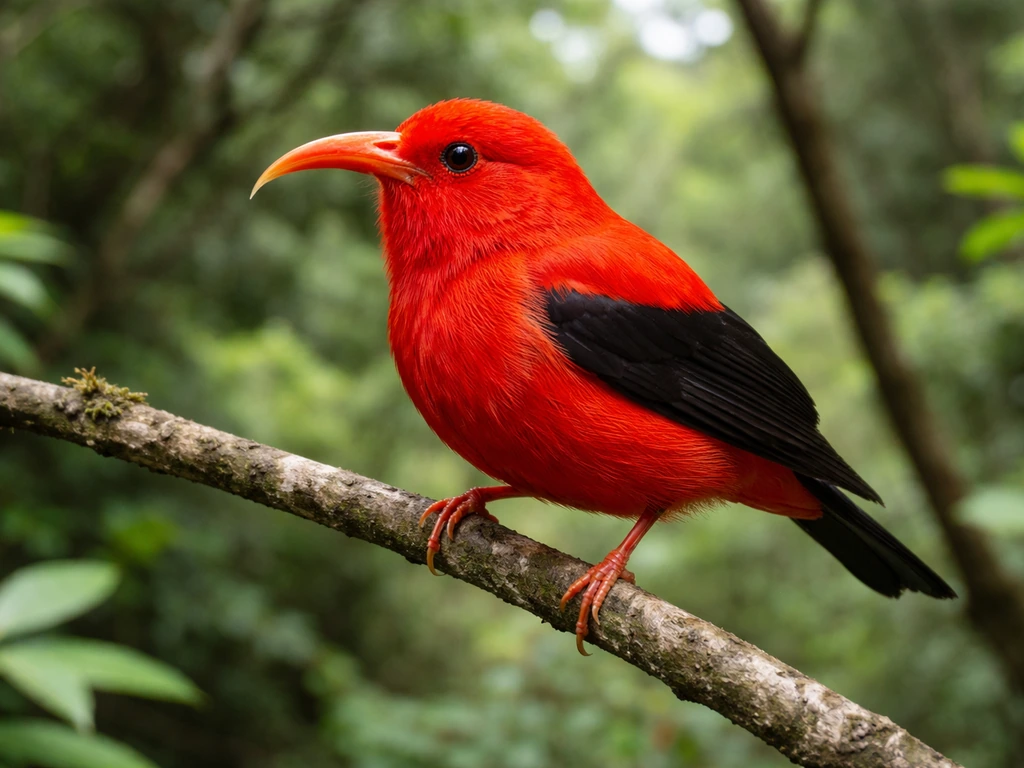
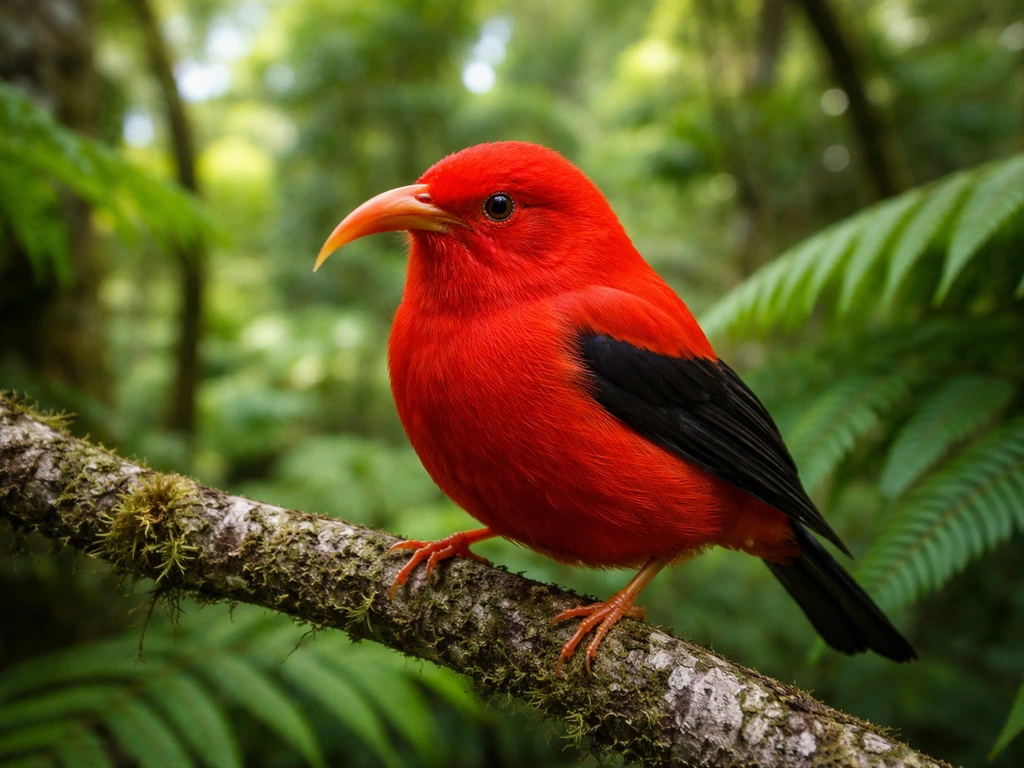
The ʻiʻiwi (Drepanis coccinea) is a medium-sized Hawaiian honeycreeper about 6 inches long. Its plumage is almost entirely brilliant scarlet-red, contrasted by jet-black wings and tail. The most immediately recognizable feature is its long, dramatically curved salmon-pink bill, which it uses to probe native Hawaiian flowers, especially those of ʻōhiʻa lehua and lobelioids. Its call is a mix of whistles, squeaks, and liquid notes that experienced birders describe as one of the most distinctive sounds in Hawaiian forests. It is listed as a threatened species under the U.S. Endangered Species Act, making every sighting genuinely meaningful.
Native range vs. where it lives today
Historically, the ʻiʻiwi was found across all the main Hawaiian islands and at a wide range of elevations. Today, its range has contracted significantly. It is most reliably found at higher elevations (above roughly 4,000 feet) on the Big Island of Hawaii, Maui, and Kauai. The main reason for this retreat to higher ground is avian malaria, which is spread by mosquitoes. Mosquitoes are less common at higher, cooler elevations, giving the ʻiʻiwi a refuge. On Oahu and Molokai, populations are now extremely small or functionally absent. So while the ʻiʻiwi is native to Hawaii as a state, its practical range within Hawaii is now much more limited than it once was.
Why Hawaii and the scarlet honeycreeper are so closely linked

The ʻiʻiwi is not Hawaii's official state bird. That title belongs to the nene, the Hawaiian goose. But the ʻiʻiwi is one of the most iconic and recognized of all Hawaiian native birds, and it appears prominently in Hawaii's wildlife programs, birding trail guides, and conservation materials published by the Hawaii Division of Forestry and Wildlife. When people search for the "scarlet honeycreeper" in the context of American state birds, the answer is always Hawaii, both because the bird is biologically native to the islands and because it is deeply embedded in the state's natural and cultural identity.
Native Hawaiians have long recognized the ʻiʻiwi. Its bright red feathers were historically harvested for royal cloaks and helmets (ʻahuʻula and mahiole), objects of great cultural and spiritual significance. This deep historical tie reinforces why the ʻiʻiwi is inseparable from Hawaiian identity, even if it is not the formal state bird.
A note on "native to" vs. "state bird of"
It's worth unpacking the phrasing here, because it trips people up. "Native to" means the species evolved in and naturally occurs in that place, without being introduced by humans. The ʻiʻiwi is unquestionably native to Hawaii in this sense. "State bird" refers to an official designation made by a state legislature. Because the ʻiʻiwi is native to Hawaii, it is sometimes discussed in the same breath as the sarus crane is the state bird of which country. Hawaii's official state bird is the nene, designated in 1957. The ʻiʻiwi has no separate official state-bird designation, but it is absolutely a native Hawaiian bird and one of the most symbolically important ones. If you're answering a quiz question or looking for a state-bird reference, Hawaii is the correct answer either way. The yellow footed green pigeon is another distinctive native bird associated with state bird references, but Hawaii's official state bird is the nene.
How to verify this on a state-bird reference site
The fastest way to confirm this on a state-bird reference site is to navigate directly to the Hawaii state bird page. You'll find the nene listed as the official state bird, and the ʻiʻiwi will typically appear in the broader context of Hawaii's notable native birds. If you want to go deeper, look at official state wildlife resources: the Hawaii Division of Forestry and Wildlife and the Hawaii Birding Trails (both state-run programs) specifically reference the ʻiʻiwi as a native Hawaiian bird. Cross-referencing those sources with a state-bird guide gives you the full picture: Hawaii is the state, the nene is the official state bird, and the ʻiʻiwi is the scarlet honeycreeper native to that state.
Quick reference: scarlet honeycreeper at a glance
| Feature | Detail |
|---|---|
| Common name | Scarlet honeycreeper / ʻIʻiwi |
| Scientific name | Drepanis coccinea |
| Native state | Hawaii |
| Official state bird of Hawaii? | No (the nene holds that title) |
| Size | About 6 inches long |
| Plumage | Brilliant scarlet-red body, black wings and tail |
| Bill | Long, curved, salmon-pink |
| Current status | Threatened (U.S. Endangered Species Act) |
| Where found today | Higher elevations on Big Island, Maui, and Kauai |
Related state birds worth exploring
If the ʻiʻiwi caught your interest, it's a natural gateway into some fascinating state and regional birds around the world that share its kind of vivid coloration, specialized bills, or similar ecological roles. The Himalayan monal, the yellow-footed green pigeon, the sarus crane, and the great hornbill are all celebrated state birds in their respective regions, each with its own story of cultural significance and conservation status. While they are not U.S. state birds, they come up often in comparative birding discussions alongside Hawaiian honeycreepers because of their equally striking appearances and deep ties to regional identity.
Within the U.S. state-bird context, it's also worth noting that Hawaii stands alone in having a truly unique set of native birds found nowhere else on Earth. No other state shares the nene or the ʻiʻiwi. That exclusivity is part of what makes Hawaii's bird heritage so compelling for anyone doing deeper research into American state symbols. The great hornbill is the state bird of Arunachal Pradesh, India.
Where to look next
- Visit the Hawaii state bird page on this site to get the full story on the nene, including why it was chosen in 1957 and how it compares to other state birds.
- Check whether any other states share their state bird with a neighbor, a common pattern in the eastern U.S. that contrasts sharply with Hawaii's uniqueness.
- Explore the conservation status section for Hawaii's native birds if you want to understand the broader threats facing the ʻiʻiwi and related species.
- Use the site's state-by-state index if you encountered the scarlet honeycreeper in a trivia or quiz context and want to cross-check other state-bird answers quickly.
FAQ
If someone asks “the scarlet honeycreeper bird,” could it be native to a different U.S. state than Hawaii?
It is native to Hawaii (the islands), because the ʻiʻiwi evolved and naturally occurs there without human introduction. If you see the name “scarlet honeycreeper” used in a different context, the likely intent is still the Hawaiian ʻiʻiwi, not a separate U.S. state species.
Is the scarlet honeycreeper native to Hawaii everywhere in the state, or only on certain islands?
Yes. Even though the species is native to the state of Hawaii, it is now most reliably found at higher elevations on specific islands (notably Big Island, Maui, and Kauai). On Oahu and Molokai, populations are extremely small or effectively absent.
On a quiz, what should I answer: Hawaii as “native to,” or the nene as “state bird”?
For quizzes, confirm which term the question uses. “Native to” typically expects Hawaii, but “state bird” expects the nene as the official state bird. The ʻiʻiwi is an iconic native species in Hawaii, but it does not have its own official state-bird designation.
What should I do if a state-bird website lists the scarlet honeycreeper under a state other than Hawaii?
If a source lists a “scarlet honeycreeper” as a state bird for somewhere else, it is likely using the common name loosely or referencing a different region. In the U.S. state-symbol context, the reliable pairing is Hawaii for native, and the nene for the official state bird.
Why might I not see the scarlet honeycreeper often even though it is native to the state of Hawaii?
Because mosquito-borne avian malaria has reduced the ʻiʻiwi’s range, you might not see it consistently even in places where it once occurred. When people think “native” means “easy to spot,” they can be surprised, since the best sightings tend to be at higher, cooler elevations.
What search terms help me confirm I’m finding the right bird, the ʻiʻiwi, when looking for the “scarlet honeycreeper”?
The “ʻiʻiwi” pronunciation is often written with apostrophes and macrons (ʻiʻiwi). Some people search without diacritics and get inconsistent results, so using the scientific name Drepanis coccinea can help verify you are looking at the correct bird.
Next Articles
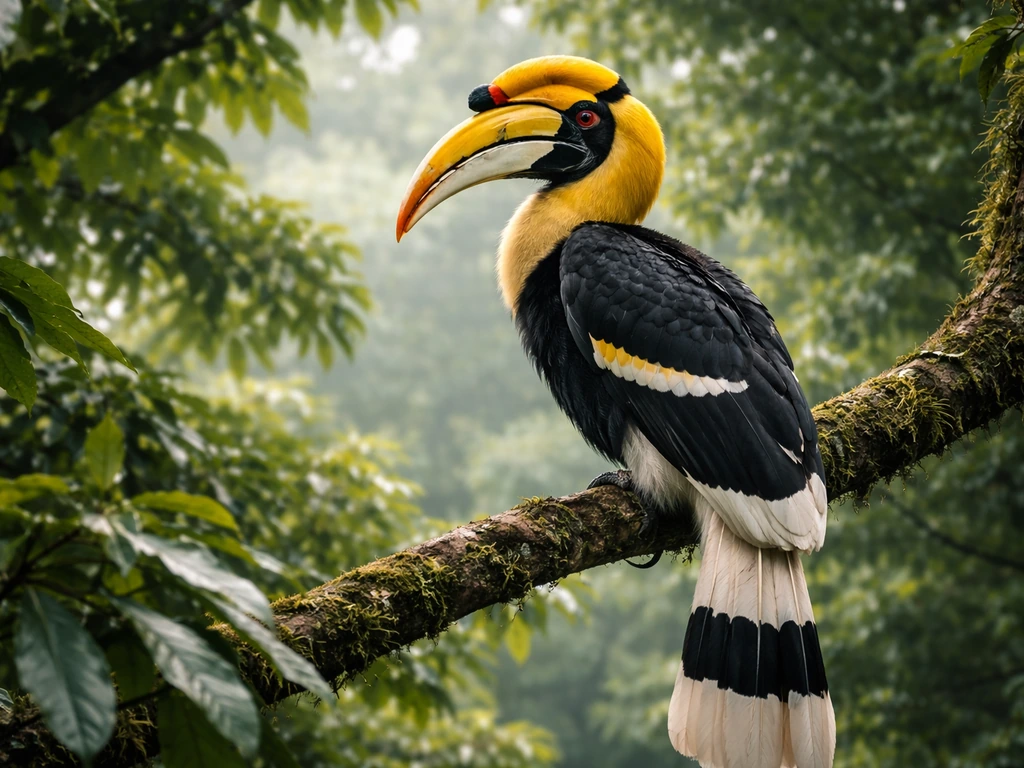
the great hornbill is the state bird of Meghalaya
The great hornbill is the state bird of Meghalaya, chosen for local biodiversity and forest heritage.
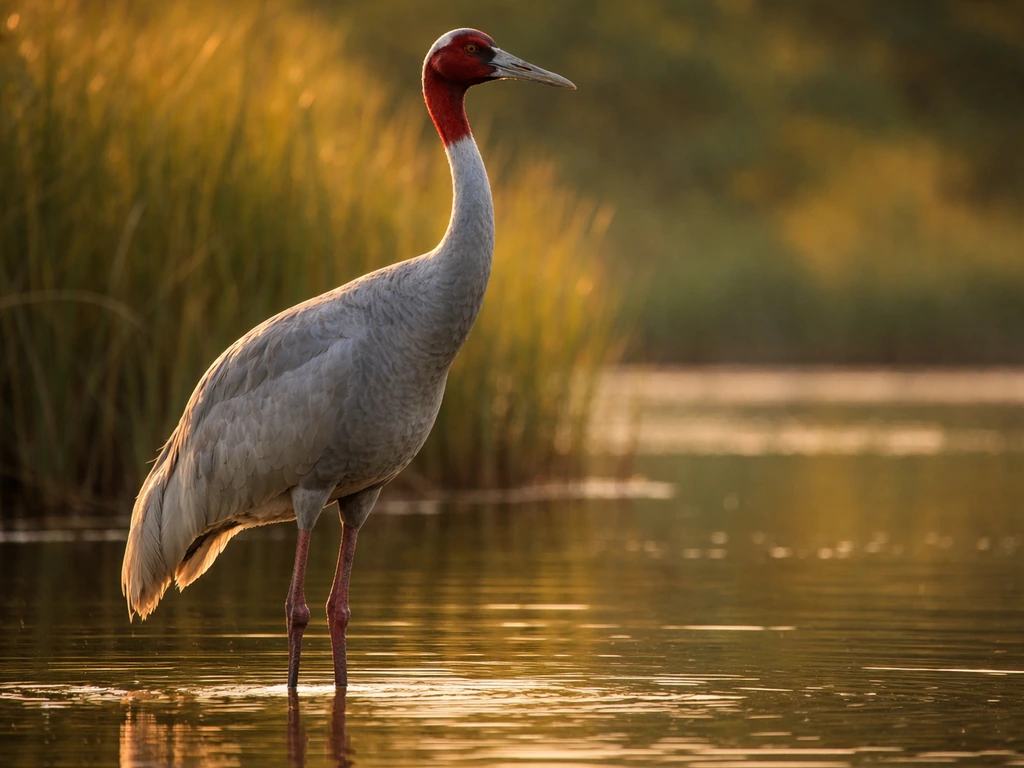
Sarus Crane Is the State Bird of Which State?
Find which US state, if any, lists the sarus crane as its official state bird, plus key ID traits.
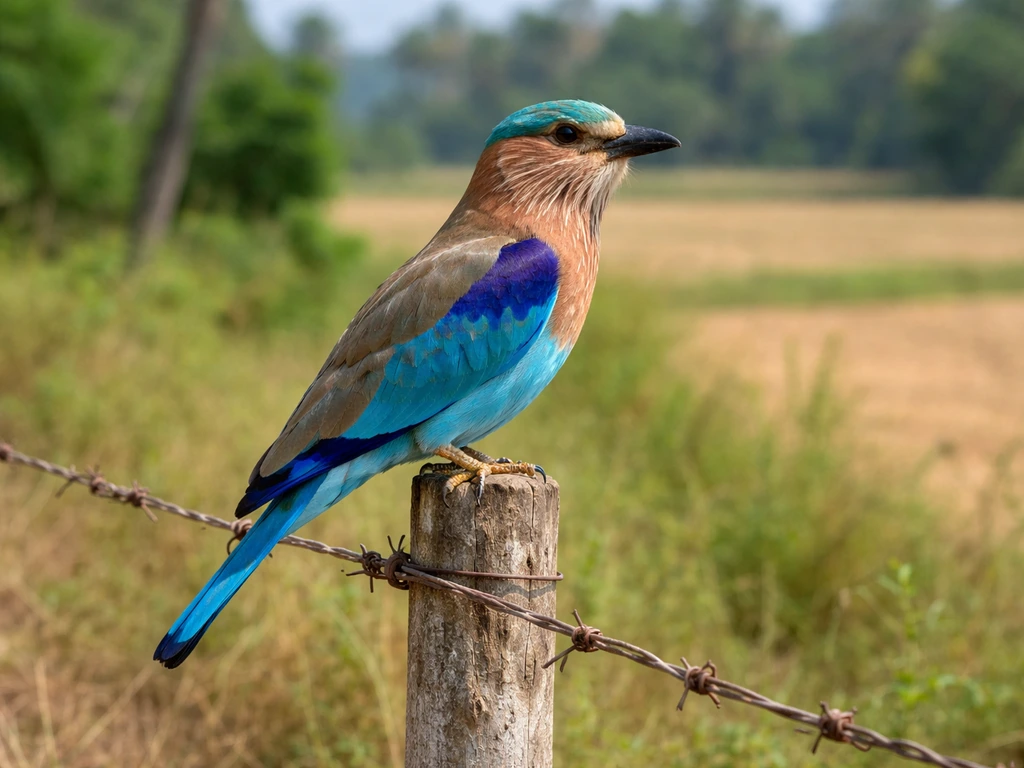
Which Is Karnataka State Bird? Identification and Facts
Discover Karnataka’s official state bird, key ID traits, where to spot it, and why it was chosen.