No U.S. state has the hornbill as its official state bird. The hornbill is most famously recognized as the national bird of Malaysia (the rhinoceros hornbill specifically) and appears as a symbol in several Southeast Asian and African countries and regions, but it has no official designation in any of the 50 U.S. states. If you landed here looking for a U.S. state bird, you are in the right place to get redirected to the correct answer.
Hornbill as a State Bird: Which US State? Fact Check

Marcus Webb
27 May 2026
"National bird" vs. "state bird" in the U.S.
These two terms mean different things, and mixing them up is one of the most common reasons people end up with confusing search results. The United States has one national bird: the bald eagle, officially designated under 36 U.S.C. § 306 and formally recognized as the country's national bird by legislation in December 2024. That's a federal designation for the entire country.
A state bird is something different. blank" rel="noopener noreferrer">Merriam-Webster defines it as "a bird selected (as by the legislature) as an emblem of a state of the U.S." Each of the 50 states has chosen its own official bird independently, usually through a state legislature vote. But if you are wondering whether the flamingo is a state bird, that question depends on the specific state. So when someone asks "hornbill is the national bird of which state," they are most likely asking about a U.S. state bird, not a country-level national bird. The phrasing is just a little mixed up, which is totally understandable.
Is the hornbill an official U.S. state bird?
No. Not a single U.S. state has designated any species of hornbill as its official state bird. No, the hummingbird is not the official state bird of any U.S. state. Hornbills are not native to North America. They belong to the order Bucerotiformes and are found naturally in tropical regions of Africa, South Asia, and Southeast Asia. Because they do not occur in the wild anywhere in the United States, no state has ever had a reason to consider one for its state bird designation. You will not find the hornbill on any official list of U.S. state birds.
Where the hornbill actually shows up as a national symbol
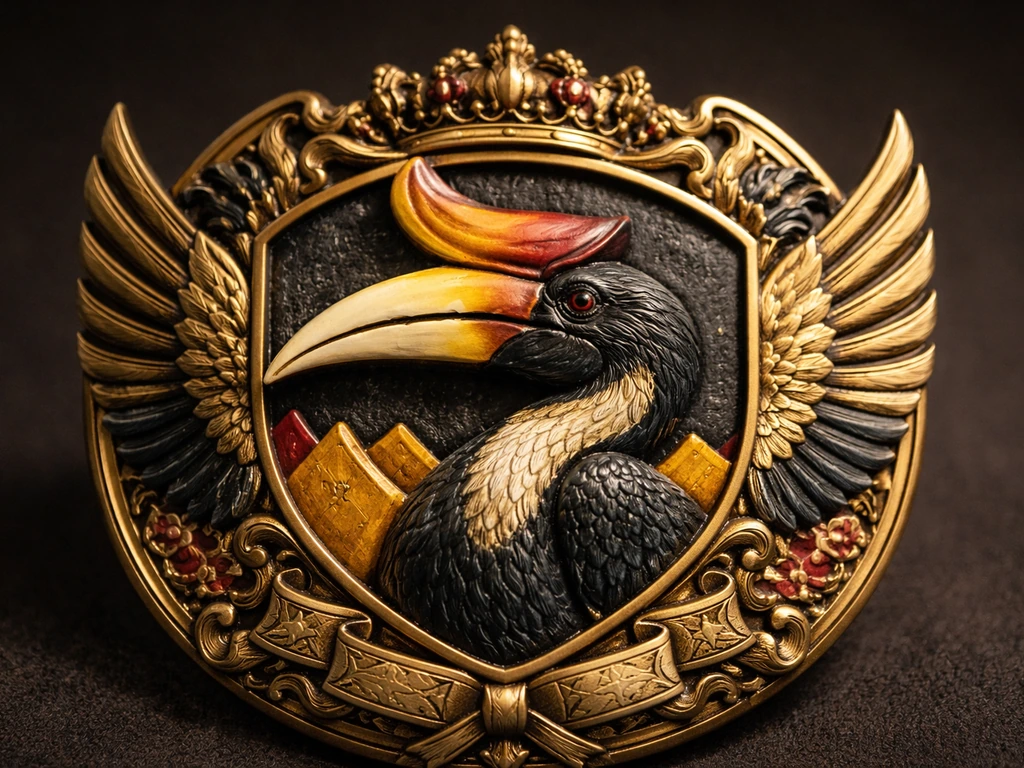
The hornbill is most closely associated with Malaysia, where the rhinoceros hornbill (Buceros rhinoceros) is the national bird. It appears on the coat of arms of Sarawak, a Malaysian state on the island of Borneo, and is deeply embedded in the culture of the Dayak people of Borneo. The helmeted hornbill is also found across much of Southeast Asia and is considered a critically endangered species due to poaching for its solid casque.
In Africa, various hornbill species are culturally significant across multiple countries, though none hold a formal national bird designation as widely recognized as Malaysia's. The southern yellow-billed hornbill, sometimes called the "flying banana," is one of the most recognizable African species. If your question about the hornbill originated from a geography quiz, a school assignment, or a trivia question, the answer they are looking for is almost certainly Malaysia.
| Country/Region | Hornbill Species | Significance |
|---|---|---|
| Malaysia | Rhinoceros hornbill (Buceros rhinoceros) | National bird; appears on Sarawak coat of arms |
| Borneo (Sarawak, Malaysia) | Rhinoceros hornbill | Cultural symbol of the Dayak people |
| Southeast Asia broadly | Helmeted hornbill (Rhinoplax vigil) | Critically endangered; heavily protected |
| Sub-Saharan Africa | Various species (e.g., southern yellow-billed) | Culturally recognized, no formal national designation |
How to find the right state bird on this site
If you came here looking for a specific U.S. state bird and ended up with the hornbill by mistake, here is how to get the right answer quickly. Each state on this site has its own dedicated page listing the official bird, the year it was designated, and why that particular bird was chosen. If you need another quick example, some pages even cover birds like the Indian roller is state bird of a specific state, along with why it was chosen. The Missouri Eastern bluebird, for example, has been the official state bird of Missouri since 1927 per the Missouri Secretary of State. Every state entry is that specific and sourced.
- Search by state name: type the state you are curious about directly into the site search and you will get the official bird with its designation year.
- Search by bird name: if you have a bird in mind, search the species name to see if any U.S. state claims it.
- Check the official designation year: every state bird listed here includes the year the legislature made it official, which helps confirm you have the right, verified answer.
- Look for shared birds: several states share the same bird (the northern cardinal, for instance, is the state bird of seven states). The site highlights these overlaps.
Quick hornbill ID basics
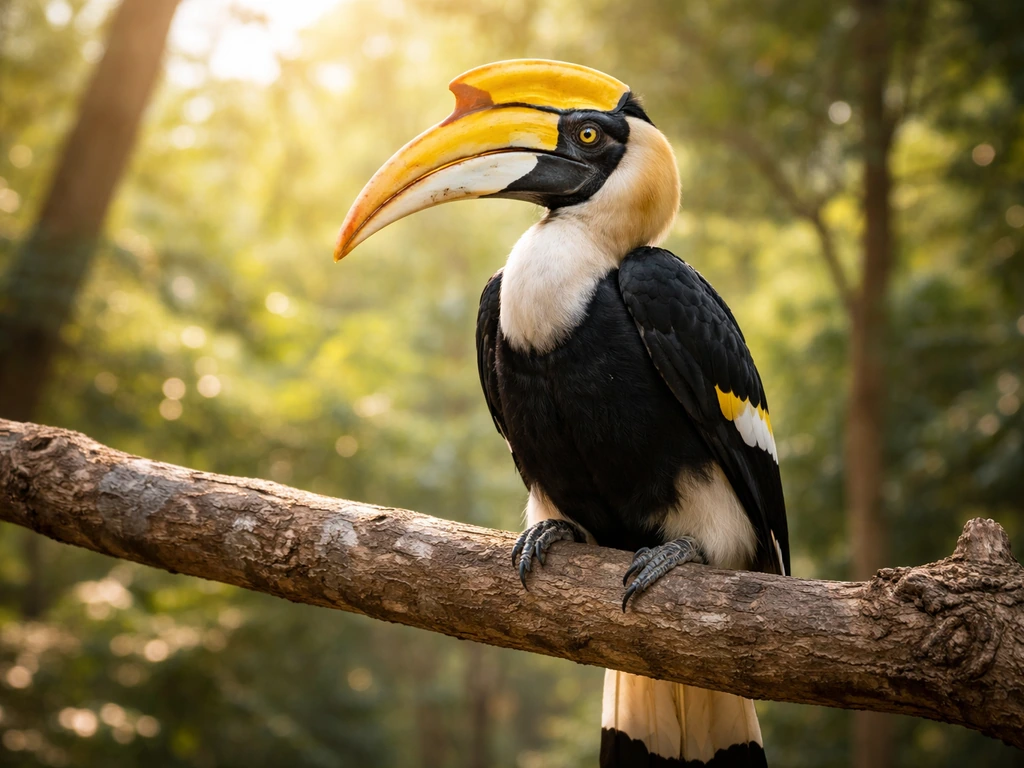
If you need to confirm you are thinking of the right bird before diving deeper, here are the key features that make a hornbill unmistakable. Every hornbill species shares a dramatically large, curved bill, often topped with a prominent casque (a hollow or solid bony structure on top of the beak). They are medium to very large birds, ranging from about 12 inches to over 4 feet depending on the species. Their wingbeats produce a loud whooshing sound because their feathers lack the stiffening barbicels that muffle flight noise in most birds.
- Bill: large, curved, and downward-pointing with a casque on top
- Size: ranges from crow-sized (small species) to nearly the size of a turkey (great hornbill)
- Flight sound: distinctly loud whooshing caused by feather structure
- Color: typically black and white with bright bill coloration in many species
- Habitat: tropical and subtropical forests; not present in the wild in North America
- Behavior: nesting females seal themselves inside tree cavities using mud and droppings, leaving only a slit for the male to pass food through
Common confusions and similar state-bird questions to try
The hornbill question is part of a broader pattern of mix-ups between national birds of foreign countries and U.S. state birds. A few similar questions come up regularly on this site. Peacocks, for example, are not U.S. state birds either, despite being popular and visually striking birds. Flamingos, magpies, and hummingbirds each have their own complicated relationship with the U. So if you are wondering, is the hummingbird a state bird, the answer is state-specific and not a nationwide designation hummingbirds. S. state bird list. Hummingbirds and magpies do appear as state birds for specific states, while flamingos do not hold an official U.S. state bird designation.
If you are working through a quiz or trivia question about national birds of countries, the Indian roller (national bird of India), the Indian paradise flycatcher (state bird of Madhya Pradesh in India), and the rhinoceros hornbill (Malaysia) are all birds that tend to show up in these contexts and are sometimes confused with U.S. state bird questions. None of them are U.S. state birds. The safest approach is to search the specific state or bird name here to get the verified U.S. designation rather than relying on general knowledge about where these species live.
The bottom line: if a bird is not native to North America, it is almost certainly not a U.S. state bird. That single filter eliminates most of the confusion. For everything that is a genuine U.S. state bird, this site has the confirmed, legislature-verified answer with full historical context.
FAQ
If hornbill is not a U.S. state bird, which country is it actually the national bird of?
It is Malaysia, specifically the rhinoceros hornbill, which is widely recognized as the national bird of Malaysia. If your question is about a U.S. state, the key check is that no hornbill species has a legislature-backed state-bird designation in any of the 50 states.
Are any hornbill species, like helmeted or rhinoceros hornbill, listed as an official state bird in a U.S. state?
No U.S. state bird lists include any hornbill species. This includes both specific species (like helmeted or rhinoceros hornbill) and general categories (hornbills) because these birds do not naturally occur in the wild in the United States.
Why do people keep getting the hornbill question wrong when it comes to the U.S.?
A common mix-up is treating “national bird” (a country-level designation) as if it were a U.S.-style “state bird” (a state emblem). In the U.S., state birds are chosen independently by each state, so you cannot use a country national bird to answer a U.S. state-bird question.
How can I tell whether a hornbill trivia question is asking about a country or a U.S. state?
If your hornbill question comes from a quiz, confirm whether the quiz explicitly says “national bird” (country) or “state bird” (U.S. state). When it does not specify, assume it might be using “national bird” loosely and double-check Malaysia versus the particular U.S. state it asks about.
What quick method should I use to verify whether a bird could realistically be a U.S. state bird?
Use the “native to North America” filter and then verify with the exact state and bird name. Since hornbills are native to tropical regions of Africa, South Asia, and Southeast Asia, they should be excluded immediately for any U.S. state-bird answer.
Can I rely on hornbill appearance to confirm it is the bird named in a state-bird claim?
Hornbills are recognizable by their large curved bills, often with a casque on top, and their generally medium to very large size. However, appearance alone cannot replace verification because some other large birds (or national birds from other countries) may look similar in photos or roundups.
What’s the safest way to document a state-bird answer for a school or quiz key?
If you are building an assignment or answer key, cite the specific state-bird page for the bird you are using (including the year designated). Do not infer from regional symbolism, coats of arms, or cultural references in other countries, since state-bird status requires an official U.S. state designation process.