The Indian paradise flycatcher is not the official state bird of any U.S. state. It is, however, the official state bird of Madhya Pradesh, a state in central India. If you landed here expecting a U.S. state answer, that search comes up empty: every official U.S. state bird is a species native to the Americas, and Terpsiphone paradisi, the Indian paradise flycatcher, does not appear on any of those lists.
The Indian Paradise Flycatcher Is the State Bird of Which US State?

Marcus Webb
24 May 2026
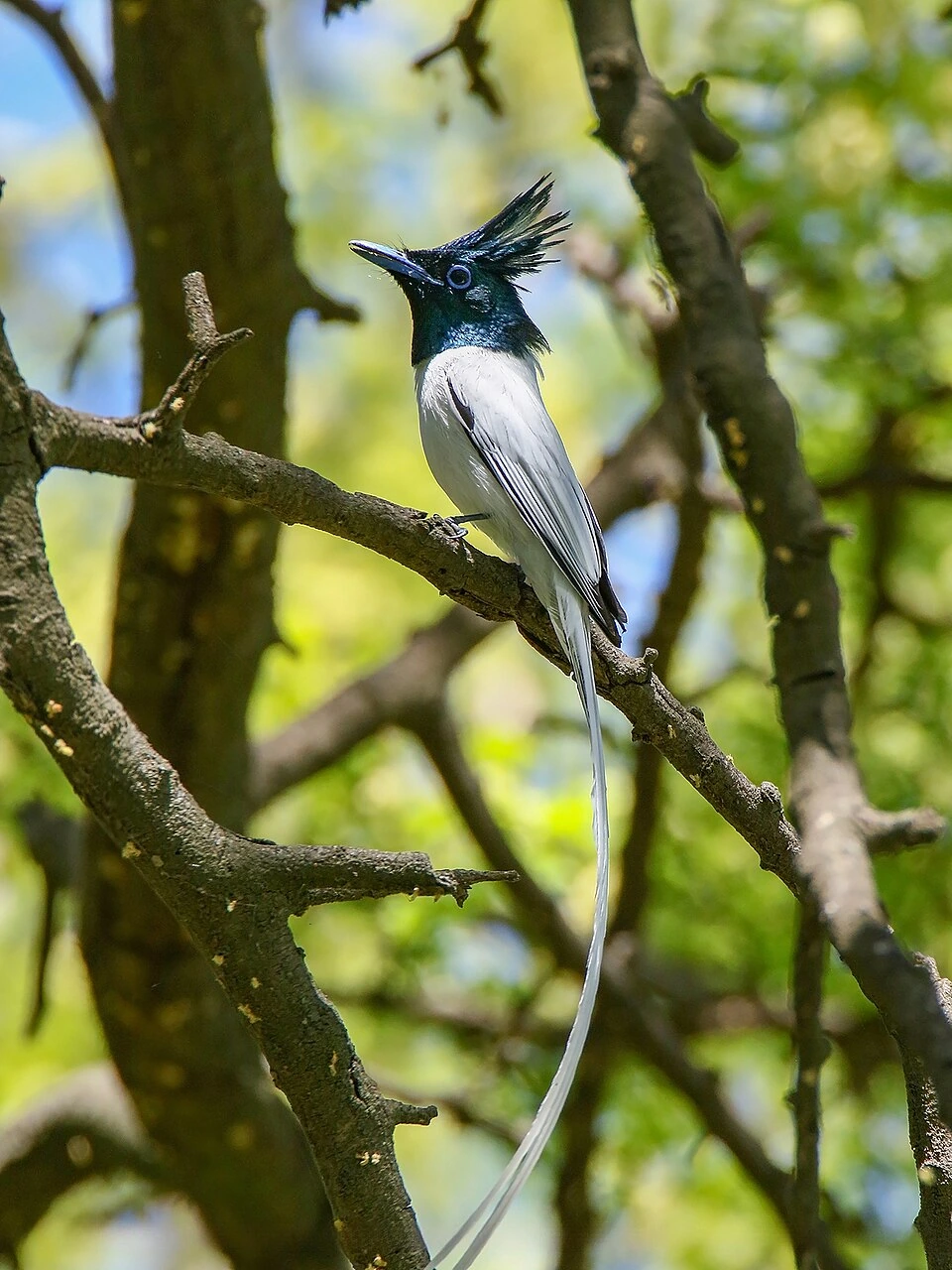
Which state claims the Indian paradise flycatcher?
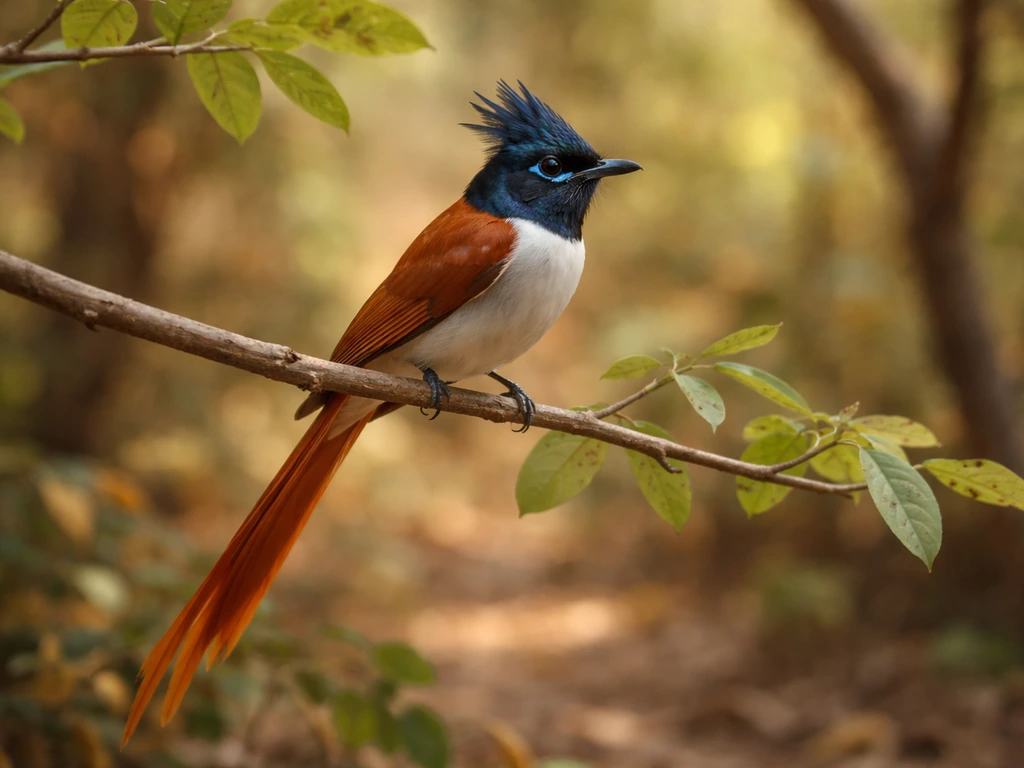
Madhya Pradesh, often called the 'heart of India,' officially designates the Indian paradise flycatcher as its state bird. The bird is known locally as 'Dudhraj' (sometimes spelled 'Dhudraj'), a name that roughly translates to 'king of milk' and references the male bird's striking white plumage. The official scientific name used in Madhya Pradesh's state records is Terpsiphone paradisi.
To be completely clear for anyone working through a quiz, crossword, or geography assignment: no U.S. state uses this species. Britannica’s list of U.S. state birds also does not include the Indian paradise flycatcher no U. S. state uses this species. All 50 U.S. state birds are drawn from North American and Caribbean species. The Indian paradise flycatcher is an Indian subcontinent bird through and through.
Making sure you have the right species
The name 'paradise flycatcher' applies to a whole genus of birds, Terpsiphone, spread across Asia and Africa, so it is easy to get tangled up. The specific bird designated by Madhya Pradesh is Terpsiphone paradisi, the Indian paradise flycatcher. A closely related species, Terpsiphone affinis (the Asian paradise flycatcher), was formerly grouped with T. paradisi but has since been separated following IOC World Bird List taxonomy updates. One subspecies, 'saturatior,' was reassigned from T. paradisi to T. affinis as part of those revisions. So if you are verifying a source, make sure it specifies Terpsiphone paradisi and not a generic 'paradise flycatcher' or 'Asian paradise flycatcher,' which could point to a different taxon.
| Common Name | Scientific Name | Notes |
|---|---|---|
| Indian paradise flycatcher | Terpsiphone paradisi | Madhya Pradesh state bird; the correct species |
| Asian paradise flycatcher | Terpsiphone affinis | Separate species; formerly partially grouped with T. paradisi |
| African paradise flycatcher | Terpsiphone viridis | Different continent; unrelated to this designation |
How to identify the Indian paradise flycatcher
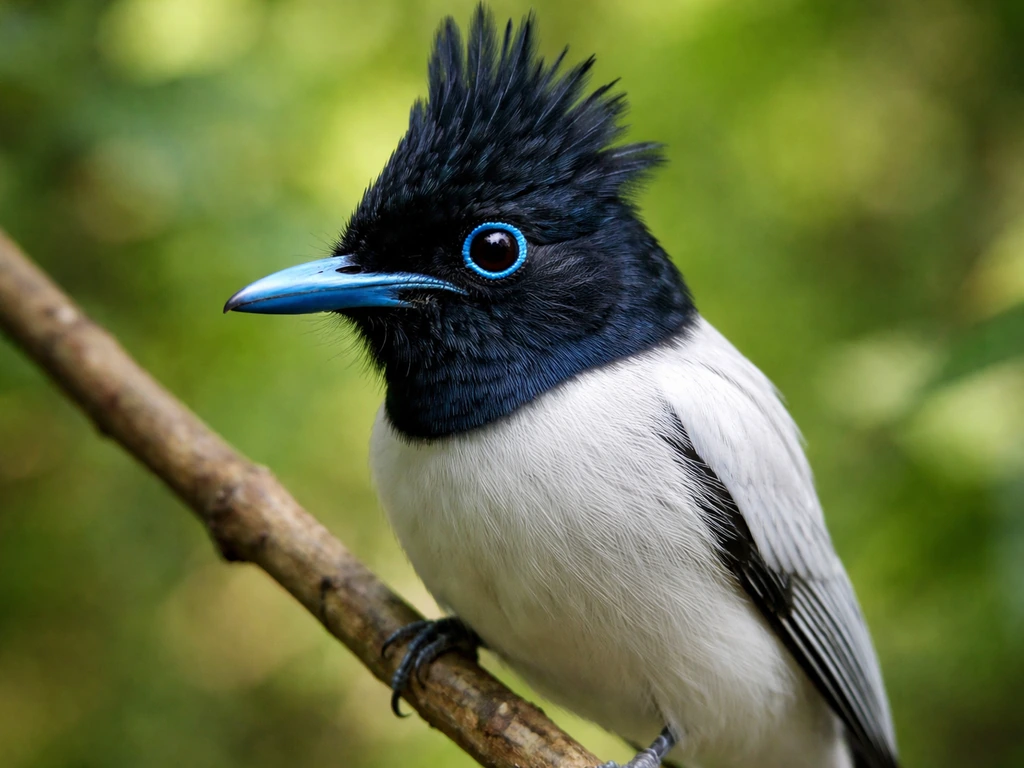
This is one of those birds you genuinely cannot mistake once you have seen a male. The overall body sits around 20 to 22 cm (roughly 7.75 to 8.75 inches), but adult males grow extraordinarily long tail streamers that add another 20-plus centimeters, making them look far larger in flight. Here are the key field marks to lock in:
- Male head and crest: jet black with a vivid blue bill and blue eye ring, creating a sharp contrast with the rest of the body
- Male plumage (white morph): silvery-white body with those unmistakable long, narrow tail streamers flowing behind in flight
- Male plumage (rufous morph): some males retain a rich chestnut-rufous coloration rather than white; both morphs share the black head
- Female: shorter tail (no streamers), rufous-brown upperparts, paler below, still with the black head and blue bill
- Size impression: despite the measurement, the flowing tail makes males look dramatically large and unmistakable in open woodland
The combination of the black crested head, blue bill, and ribbon-like tail on the male is essentially diagnostic. In the field, the bird tends to hawk for insects in shaded forest interiors, and that long tail rippling through dappled light is genuinely one of the more spectacular sights in Indian birding.
Why Madhya Pradesh chose this bird
State bird designations in India, much like those in the U.S., tend to pick species that feel representative of a region's character, are reasonably widespread within the state, and carry cultural weight. The Indian paradise flycatcher checks all those boxes for Madhya Pradesh. The state covers a huge swath of central India and contains some of the subcontinent's most significant deciduous forests and wildlife reserves, including Kanha and Bandhavgarh. The paradise flycatcher is genuinely at home in exactly this kind of landscape: light deciduous jungle and bamboo plantation, which is the habitat type that defines much of the state's forested interior.
The local name 'Dudhraj' carries symbolic resonance too. A bird that looks regal, moves gracefully, and is associated with forested wilderness fits the identity Madhya Pradesh projects as a wildlife-rich, forest-heavy state. It is worth noting that the designation also helps raise awareness of the species at a regional level, something state bird designations across the world consistently accomplish.
Does any other state share this bird?
Within India, Madhya Pradesh is the state specifically associated with the Indian paradise flycatcher as an official symbol. No U.S. state uses this species, as confirmed by consolidated U.S. state bird lists, which cover only species native to the Americas. So there is no cross-state overlap to report on the U.S. side.
If you are exploring which birds do double-duty as state or national symbols more broadly, the pattern of shared designations is actually more common in the U.S. context: for example, the northern cardinal is the state bird of seven U.S. states, and the western meadowlark covers six. The Indian paradise flycatcher is unique to Madhya Pradesh as an official symbol, which, if anything, makes the designation feel appropriately special given how visually extraordinary the bird is.
For readers who arrived here while exploring exotic or unexpected state bird designations, it may be worth knowing that none of the flashier tropical species like flamingos, peacocks, or hornbills appear on U. Hornbills are not listed as state birds for the United States either. The peacock is not used as a state bird in this context, since the article focuses on India’s official state bird designations for the Indian paradise flycatcher peacocks. Flamingos are not designated as state birds in the United States either, so the flamingo is not a state bird is the flamingo a state bird. S. state bird lists either. Those comparisons come up often in trivia contexts, and the answer is consistently the same: U.S. official state birds are limited to species naturally found in North America.
Where to find the Indian paradise flycatcher and when
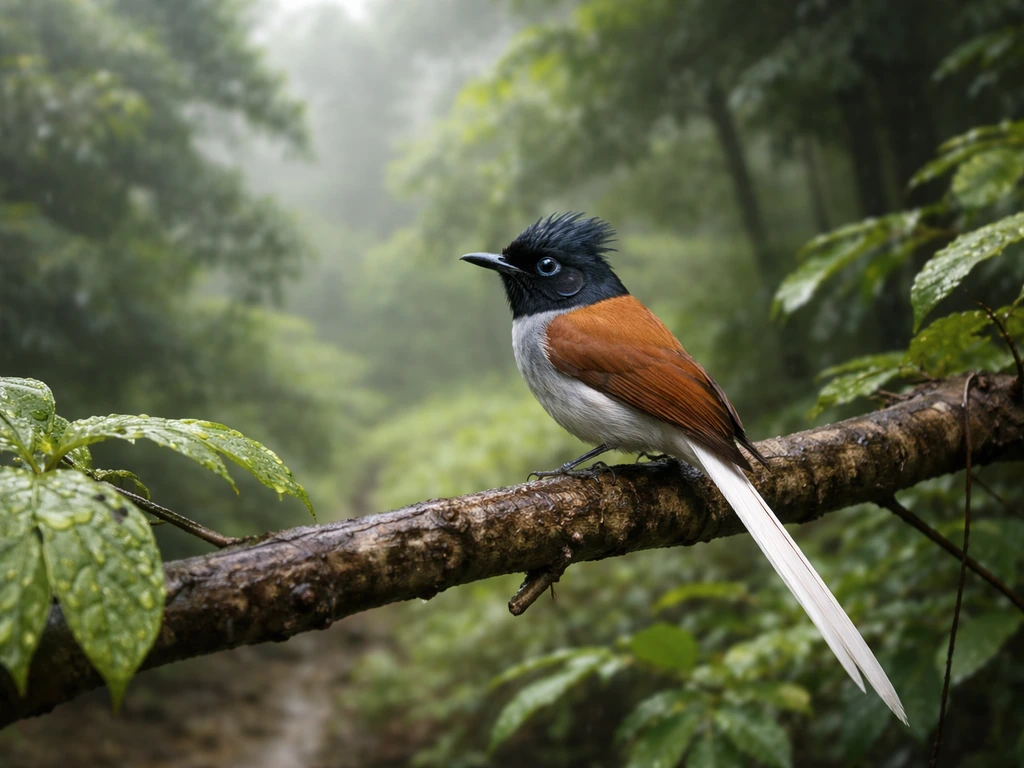
The Indian paradise flycatcher is a breeding visitor and partial resident across the Indian subcontinent. In Madhya Pradesh specifically, the bird is most associated with light deciduous jungle and bamboo plantations, the dominant forest types across the state's many wildlife reserves. It tends to favor shaded, moist forest edges and interior clearings rather than open country, which means the major national parks and tiger reserves of central India are your best bet for a sighting.
Breeding activity peaks in the warmer pre-monsoon and monsoon months, roughly April through July, when males are most active and those long tail streamers are fully grown. Outside of the breeding season, many individuals move to lower elevations or shift southward, so the state's forests in spring and early summer offer the most reliable viewing window. If you are planning a birding trip to Madhya Pradesh, pairing it with a wildlife reserve visit in May or June gives you the best combination of accessible habitat and active birds.
Practical takeaway
The direct answer: Madhya Pradesh, India. Hummingbirds are never state birds in the U.S., so they are not the answer here. Not a U.S. state. The bird is Terpsiphone paradisi, known locally as Dudhraj, and it earns its status as a state symbol through genuine ecological presence in the region's deciduous forests and sheer visual impact. If you are looking for U. If you are wondering instead about the magpie, it is not the state bird of any U.S. state. S. state bird equivalents of equally dramatic-looking birds, the list stays resolutely focused on North American natives, which makes this particular species entirely unique to its Indian state designation.
FAQ
How can I confirm I am looking at the exact bird that Madhya Pradesh designated (not a generic “paradise flycatcher”)?
No. The official designation is for Madhya Pradesh’s state bird, Terpsiphone paradisi. If a source says only “paradise flycatcher” or uses a different taxon name, it may be referring to a related species rather than the one used in Madhya Pradesh records.
What habitat should I focus on in Madhya Pradesh if I want to see the Indian paradise flycatcher?
The bird is primarily associated with forest interiors and shaded edges, and especially deciduous jungle plus bamboo plantations. If you are searching open fields, roadsides, or dry grasslands, your chances drop sharply compared with going to woodland habitat within central India.
Why is the Indian paradise flycatcher often hard to identify, and what feature is most reliable?
Males are the easiest to verify because of the black crested head, blue bill, and the distinctive long ribbon-like tail streamers. Females and juveniles are harder to identify, so if you need a “lock in the ID” moment, prioritize male behavior and tail display during good light.
When is the best time of year to look for this species in Madhya Pradesh?
The best viewing window is typically the breeding season, roughly April through July, when males are most active and their tail streamers are fully developed. Outside that period, birds may shift locally or move to lower elevations, so sightings can become less predictable.
Can this bird ever be a U.S. state bird depending on where the information is sourced or updated?
The species is an Indian subcontinent bird, and it is not among any official U.S. state bird designations. So the “US state bird” answer will not change depending on whether you are doing a quiz, crossword, or casual trivia, the correct result remains Madhya Pradesh, not a U.S. state.
What common naming or taxonomy mix-ups affect worksheets and bird lists?
Be careful with similar names and recent taxonomy changes. Terpsiphone paradisi is the Madhya Pradesh bird, while Terpsiphone affinis is the Asian paradise flycatcher, which has been separated from T. paradisi in modern taxonomy. If a worksheet uses “affinis,” it is likely pointing to the wrong bird for Madhya Pradesh’s symbol.
Does the spelling of the local name Dudhraj matter, or is it always the same bird?
The local name is “Dudhraj,” sometimes spelled “Dhudraj,” and it is linked to the male’s striking white plumage. If you see a spelling variant on a regional sign or quiz clue, it still points to the same Madhya Pradesh state bird.