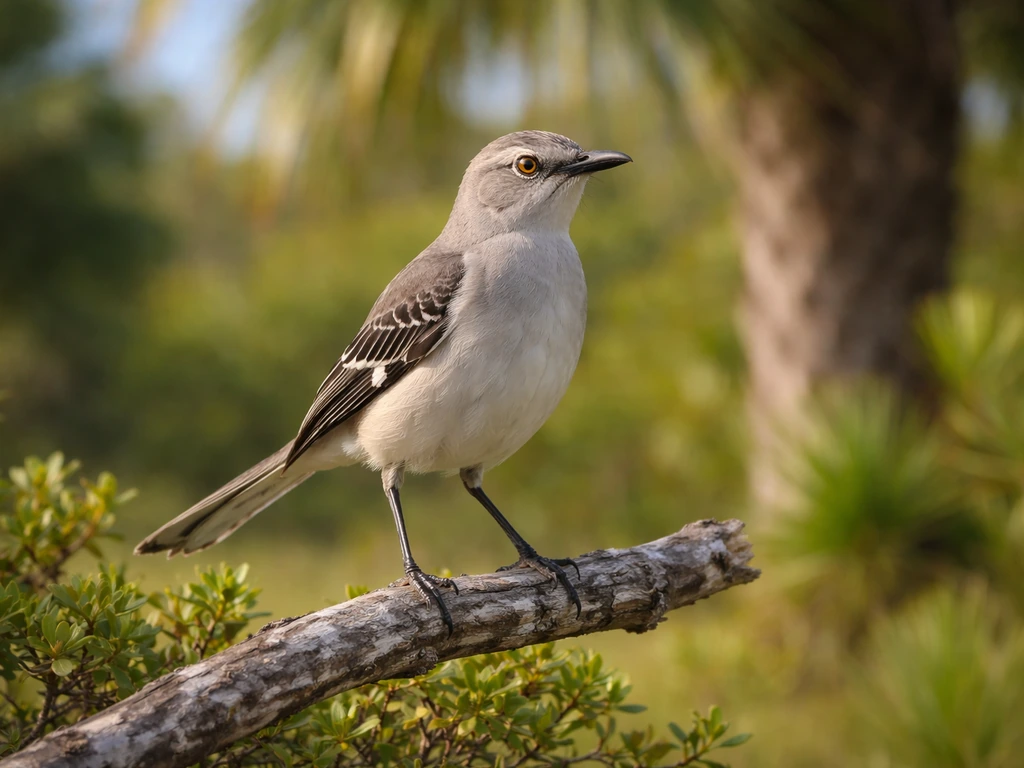
Tennessee's state bird is the Northern Mockingbird (Mimus polyglottos), officially designated on April 11, 1933. The Tennessee Ornithological Society ran a public election to choose the bird, and the mockingbird won. The state legislature then confirmed the selection through Senate Joint Resolution 51. The core reason Tennessee chose it: the mockingbird is a year-round resident found across the entire state, it is one of the most distinctive and bold songbirds anyone in Tennessee will encounter, and its reputation as a skilled mimic of other birds gave it an outsized cultural profile that felt like a natural fit for a music-proud state.
Why Is the Mockingbird Tennessee’s State Bird? Facts

Marcus Webb
18 May 2026
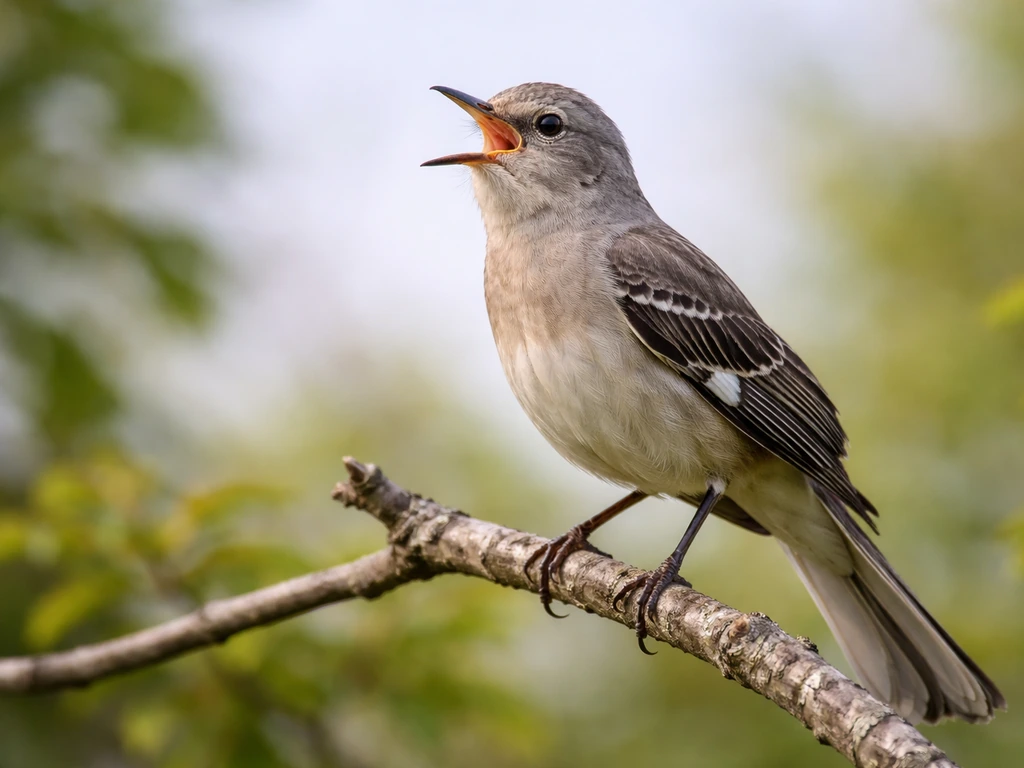
Tennessee's State Bird: The Northern Mockingbird
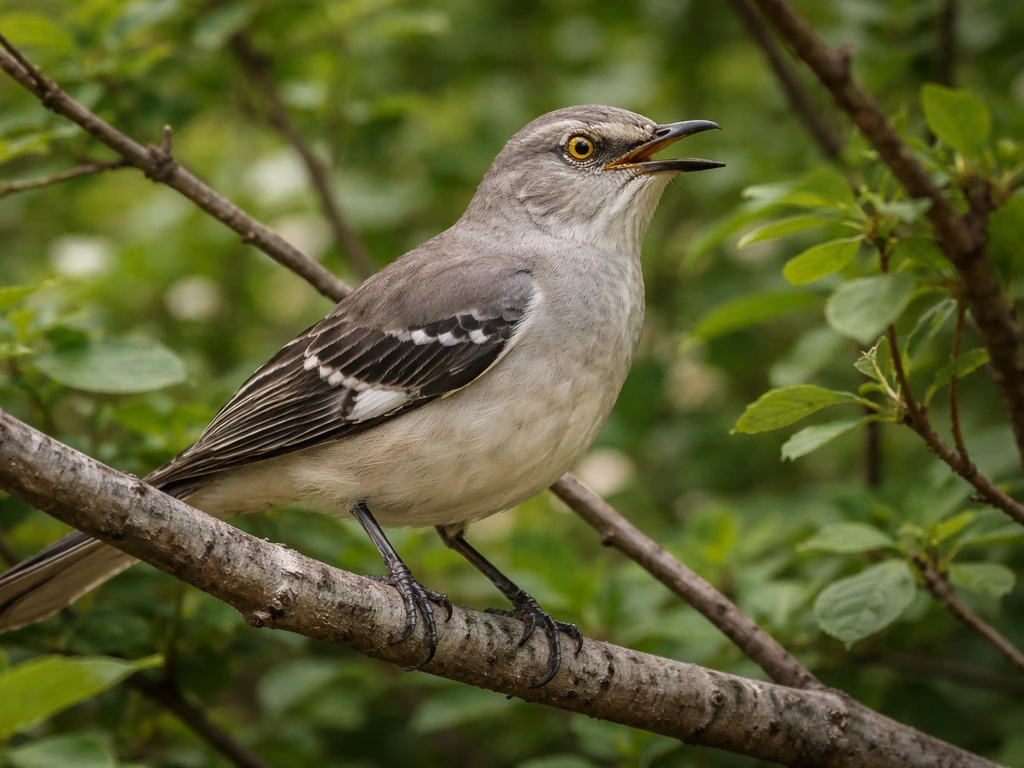
The official designation on Tennessee's state symbols page reads: "Mockingbird, Mimus polyglottos." The Tennessee Wildlife Resources Agency (TWRA) spells it out more fully as the Northern Mockingbird, the only species in the genus Mimus regularly found in the eastern United States. The scientific name itself is telling: Mimus polyglottos translates roughly to "many-tongued mimic," which tells you exactly what makes this bird stand apart from hundreds of other candidates the ornithological society could have chosen.
How Tennessee Made It Official: The 1933 Designation
The process that gave Tennessee its state bird was driven by the Tennessee Ornithological Society, not by politicians working in isolation. The society organized an election, gathering public and ornithological opinion to select the most fitting representative species. On April 11, 1933, the mockingbird was declared the winner of that election, documented in a 1933 society publication titled "The Mockingbird, State Bird-Elect" by Ben B. Coffey Jr. The state legislature then ratified the choice through Senate Joint Resolution No. 51, making it the official state bird without requiring a separate standalone act.
The process is worth understanding because it reflects how seriously Tennesseans took the choice. This was not a rubber-stamp legislative act. An organized ornithological body ran a real selection process, and the mockingbird earned the designation on its merits: abundant statewide presence, year-round residency, unmistakable behavior, and a song that people across Tennessee already recognized from their own backyards.
Why the Mockingbird Fit Tennessee Culturally and Symbolically
Tennessee is synonymous with music, and the Northern Mockingbird is a living embodiment of musical range and versatility. A single bird can learn up to around 200 songs over its lifetime, mixing phrases from other bird species and even mimicking human-made sounds like car alarms. That reputation for vocal creativity maps almost perfectly onto a state whose cultural identity is built on Nashville, blues roots, and the kind of musical tradition that borrows from everything around it and makes it something new.
Beyond music, the mockingbird carries deep roots in American Southern culture. It appears in literature, folklore, and everyday speech across the region. Harper Lee's "To Kill a Mockingbird" cemented the bird as a symbol of innocence and resilience in the American cultural imagination, and that symbolism resonates strongly in Tennessee. The bird's boldness, including its well-documented habit of diving at cats, dogs, and even people who approach its nest too closely, also reflects a scrappy, unintimidated character that Tennesseans tend to admire.
Tennessee's official state symbols page calls the mockingbird the "finest singer" and specifically highlights its "skill in mimicking the songs of other birds" as a defining trait. That language is significant: the state chose to anchor the bird's identity in its voice, not its appearance. For a state with music at its center, that framing makes perfect sense.
How to Identify the Northern Mockingbird in Tennessee
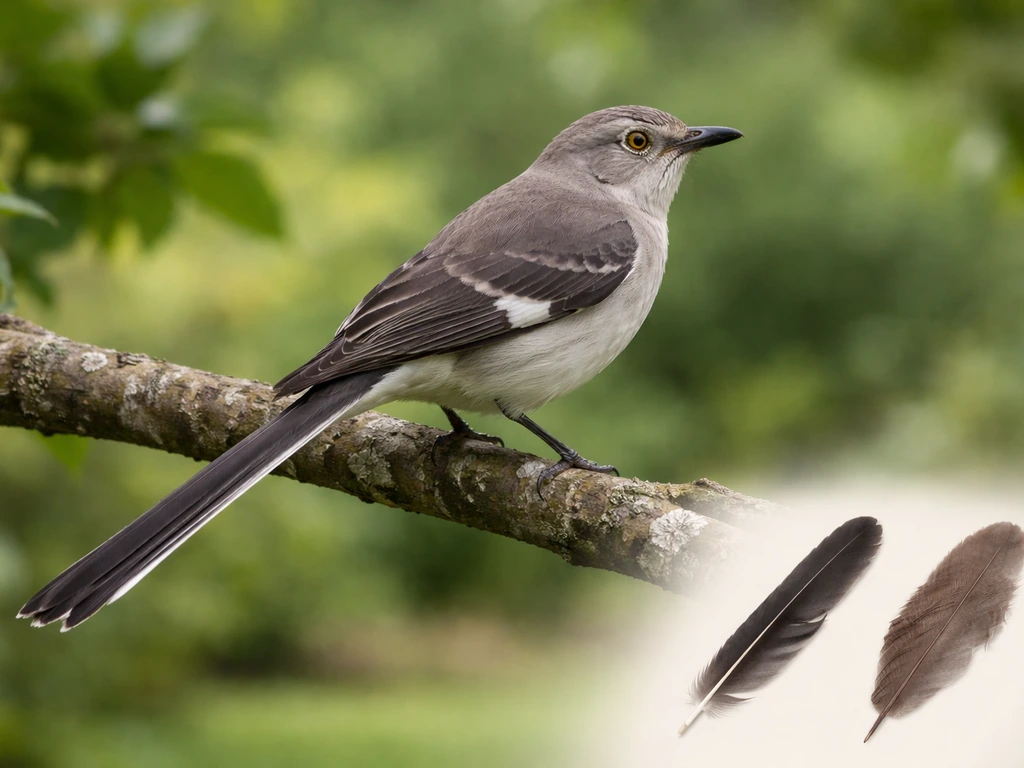
The Northern Mockingbird is a medium-sized songbird, roughly the size of an American Robin, with a slender build and a noticeably long tail. The plumage is understated but distinctive once you know what to look for: pale gray above, slightly paler below, with bold white wing patches that flash prominently when the bird flies or fans its wings. The outer tail feathers are also white, creating a striking contrast in flight. At rest, the white wing markings appear as two white wing bars on a folded gray wing.
The song is the easiest identifier of all. Mockingbirds cycle through long strings of repeated phrases, often singing each phrase two to six times before switching to the next. They mimic other birds freely, so the song sounds like a medley. Males famously sing at night during breeding season, and that night singing is one of the most reliable ways to confirm what you are hearing. If you hear a bird running through what sounds like half the species in your neighborhood at 2 a.m., that is almost certainly a mockingbird.
| Field Mark | What to Look For |
|---|---|
| Size | Similar to an American Robin, slender with a long tail |
| Color | Pale gray above, paler gray-white below |
| Wing patches | Large white patches visible in flight; two white bars when perched |
| Tail | White outer tail feathers visible when flying or fanning the tail |
| Song | Long repeating phrases, mimics many other species and human-made sounds |
| Behavior | Bold, conspicuous; sings from exposed perches; aggressive near nests |
Why the Mockingbird Thrives Across Tennessee
One practical reason the Tennessee Ornithological Society landed on the mockingbird is that it is genuinely everywhere in the state. The TWRA classifies it as a widely distributed, common permanent resident across Tennessee, meaning it does not leave for winter. That matters for a state bird: it should be something residents can actually see and hear year-round, not a seasonal visitor that disappears for months.
The Northern Mockingbird favors open ground with shrubby vegetation, which describes a large portion of Tennessee's landscape, including suburban neighborhoods, farmland edges, parks, and roadsides. It nests in dense shrubs or low trees, typically between 3 and 10 feet off the ground. Tennessee's breeding season for the species runs from late March through August, and pairs commonly produce up to four broods per season, which partly explains why the population stays so visible and audible throughout the warmer months. Even in winter, mockingbirds hold territories and can be spotted perched at the tops of shrubs defending fruit patches.
Tennessee's Mockingbird Compared to Other States' Choices
Tennessee is not alone in this choice. The Northern Mockingbird is the official state bird of five states in total: Arkansas, Florida, Mississippi, Tennessee, and Texas. That concentration in the South and Southeast is not a coincidence. The mockingbird's natural range is heaviest across exactly this region, and its habit of living close to people and human development made it visible and familiar to residents and legislators across the entire area.
Texas was actually the first to designate the mockingbird as its state bird, doing so in 1927 through Senate Concurrent Resolution No. Texas Highways reports that Texas's legislative resolution supporting the 1927 state-bird designation included reasoning that northern mockingbirds were blank" rel="noopener noreferrer">full-time residents statewide, not just migratory waystations. Texas is often discussed alongside Tennessee because it was the first state to adopt the mockingbird as its state bird why is the mockingbird Texas state bird. In total, there are five states that have the mockingbird as their state bird Texas was actually the first to designate the mockingbird as its state bird. 8. Florida followed in the same year with its own legislative resolution. Tennessee came next in 1933, using the ornithological society election model rather than a purely legislative route. NCpedia notes that, for North Carolina, the 1933 General Assembly designated a specific state bird at the suggestion of the North Carolina Federation of Women’s Clubs, illustrating how other states approached state-bird adoption blank" rel="noopener noreferrer">rather than a purely legislative route. Mississippi waited until 1944, when Governor Thomas Lowry Bailey signed it into law after statewide legislative action. Each state arrived at the same bird through its own process, but the reasoning was always similar: the mockingbird was abundant, year-round, culturally embedded, and immediately recognizable.
If you are comparing state birds and wondering why so many Southern states share the same one, the honest answer is that the mockingbird simply was the dominant, most noticed bird in everyday Southern life at the time these designations happened. It sang loudly from porches, fences, and gardens, and almost everyone already had a name for it. Choosing it was less a decision and more a confirmation of what people already knew.
| State | Year Designated | Designation Method |
|---|---|---|
| Texas | 1927 | Senate Concurrent Resolution No. 8 |
| Florida | 1927 | Senate Concurrent Resolution No. 3 |
| Tennessee | 1933 | TOS election, confirmed by Senate Joint Resolution No. 51 |
| Mississippi | 1944 | Legislative bills signed into law by the governor |
| Arkansas | 1929 | Legislative designation |
The Short Version and Where to Go Next
Tennessee chose the Northern Mockingbird in 1933 because it was everywhere in the state, sang year-round, and carried a cultural reputation that felt right for Tennessee's identity. The Tennessee Ornithological Society ran the election, the mockingbird won on merit, and the legislature confirmed it. That process made the designation more meaningful than a simple legislative vote would have.
- Official designation date: April 11, 1933, confirmed by Senate Joint Resolution No. 51
- Scientific name: Mimus polyglottos, meaning "many-tongued mimic"
- Key field marks: pale gray, white wing patches, white outer tail feathers, long tail
- Song: long repeating mimicked phrases; males sing at night during breeding season
- Habitat in Tennessee: suburbs, farmland edges, parks, open ground with shrubby cover
- Breeding season: late March through August, up to 4 broods per year
- Shared with: Arkansas, Florida, Mississippi, and Texas
For a deeper dive, the Tennessee Wildlife Resources Agency's Northern Mockingbird page covers the species' Tennessee-specific ecology and status in detail. If you want to compare Tennessee's choice to the other states that use the same bird, exploring why Florida and Texas also chose the mockingbird reveals the broader regional pattern that made this species the de facto symbol of the American South. You can also dig into why Florida’s state bird is the mockingbird, including the state’s own legislative resolution Florida and Texas also chose the mockingbird.
FAQ
Why is it specifically the Northern Mockingbird, not just “the mockingbird”?
Tennessee’s designation is tied to the Northern Mockingbird scientific identity, Mimus polyglottos. If you see a mockingbird outside the eastern U.S., it may be a different species, so the “state bird” match depends on the bird’s regional species, not only the behavior of mimicking.
Is the mockingbird a year-round bird in Tennessee, or does it only stick around in the breeding season?
It’s a permanent resident, so it generally stays through winter. That also means you can plan on hearing singing and territorial behavior in colder months, though the loud nighttime singing is most associated with the breeding period.
What’s the easiest way to confirm you are hearing a mockingbird in Tennessee?
Listen for long runs of repeated phrases, then sudden switches to a new phrase, plus free mixing of sounds from other birds. Night singing during breeding season is a particularly reliable clue, especially when the “medley” style sounds too complex for a single species call.
Are there other Tennessee birds that people commonly confuse with the Northern Mockingbird?
Yes, especially birds with strong mimicry and variable songs. If the bird’s song is dominated by crisp single-note calls instead of layered, phrase-cycling strings, or if you never see the distinctive white wing patches flashing in flight, it may not be a mockingbird.
Does the mockingbird’s nest-defense behavior matter to why Tennessee chose it?
It can reinforce the “scrappy, bold” public reputation, but the core official justification emphasized recognizability, statewide presence, and vocal talent. Nest-diving behavior is more about cultural association and firsthand experience than the formal selection criteria.
Why would a state bird be based on sound instead of appearance?
Using voice makes the symbol more inclusive, people experience it from yards, streets, and porches, even if they never get a good look at plumage. Mockingbirds are particularly suitable because their mimicry and song structure are noticeable at a distance.
Was Tennessee’s selection purely political, or was there a separate group behind it?
It wasn’t a one-off legislative choice. The Tennessee Ornithological Society organized an election and the public and ornithology community could influence the outcome, then the legislature confirmed it later.
How does Tennessee’s process compare to other states that chose the same bird?
Other states used their own legislative timelines and mechanisms, with some adopting earlier and others later. Tennessee is notable for using the ornithological society election model before legislative ratification, rather than relying only on a direct legislative designation.
Where in Tennessee is the mockingbird most likely to be seen?
Open ground with shrubs is a strong bet, like suburban edges, parks, farmland borders, and roadsides. It nests low, often in dense shrubs or low trees between a few feet and about 10 feet, so look in the “shrub height” zone rather than high canopies.
Does the mockingbird’s mimicry include human-made sounds in Tennessee?
In some cases, yes. They can incorporate sounds from the environment, and in Tennessee that can include recognizable mechanical noises common near people. The key is that their mimicry often blends into the same phrase-cycling singing style rather than sounding like isolated imitations.
Why does the mockingbird remain so visible compared with other candidates?
Because it tends to be widespread and permanent resident, people hear it consistently rather than seasonally. It also can produce multiple broods in the warmer months, which helps keep numbers and activity noticeable over time.
Next Article
Why Florida’s State Bird Is the Mockingbird
Learn why Florida chose the Northern Mockingbird as its state bird, plus traits, history, and how to spot it.