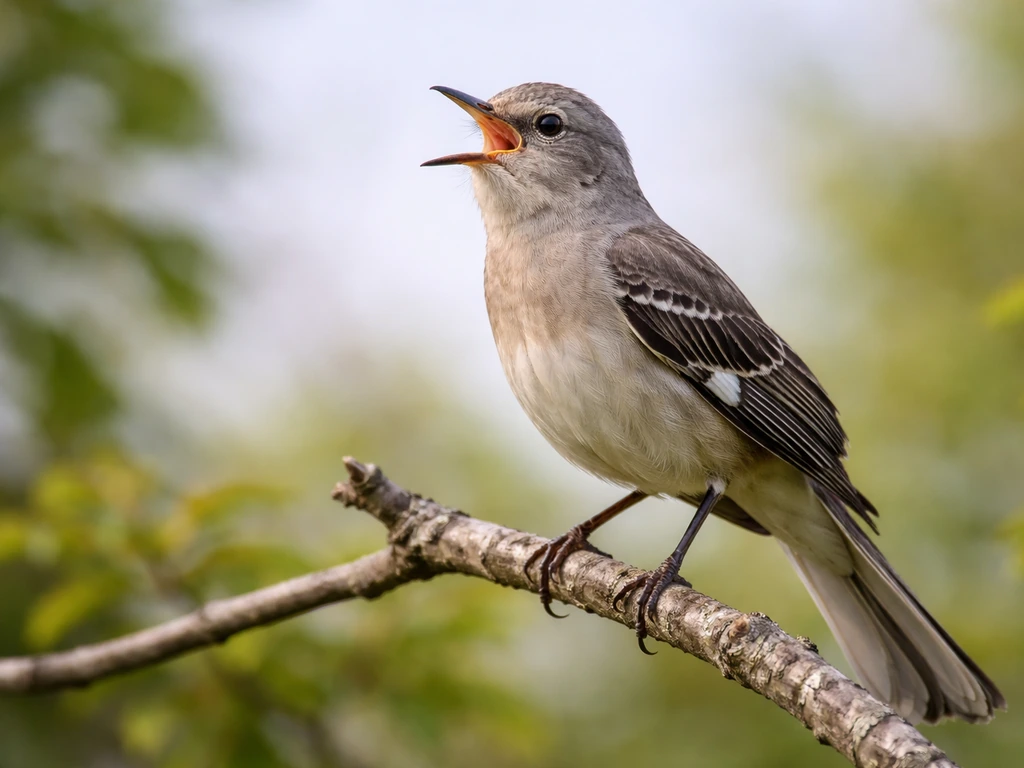
Five U.S. states have the mockingbird as their official state bird: Arkansas, Florida, Mississippi, Tennessee, and Texas. In every case the bird in question is the Northern Mockingbird (Mimus polyglottos), the familiar gray songbird found across most of the continental United States. Some states spell it out as 'Northern Mockingbird' in official documents, while others just say 'mockingbird,' but they all mean the same species.
What State Bird Is the Mockingbird? Answer by State

Marcus Webb
20 May 2026
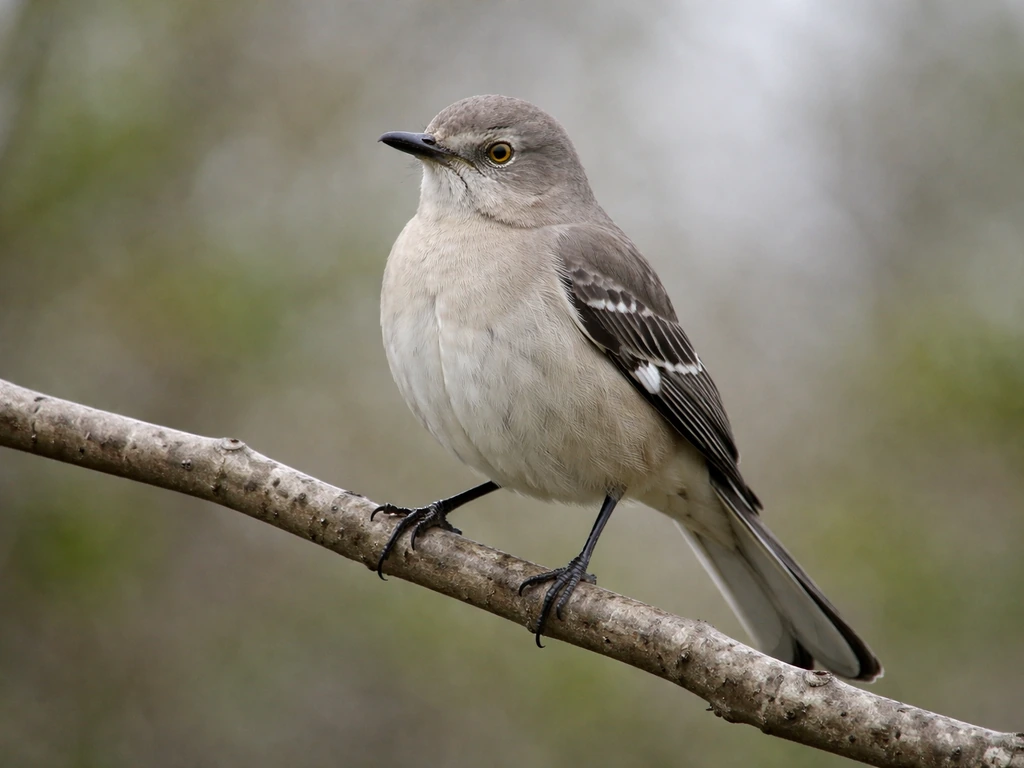
All five states at a glance

| State | Official wording | Year designated |
|---|---|---|
| Arkansas | Mockingbird | Not specified in statute |
| Florida | Mockingbird | 1927 (Senate Concurrent Resolution No. 3) |
| Mississippi | The bird commonly called the mocking bird | Codified in state law |
| Tennessee | Northern Mockingbird | 1933 |
| Texas | Mockingbird | 1927 (Senate Concurrent Resolution No. 8, 40th Legislature) |
The variation in wording is worth noting if you are researching official statutes. Arkansas simply declares 'The mockingbird is declared and everywhere recognized as the state bird of the State of Arkansas.' Mississippi uses equally plain language: 'the bird commonly called the mocking bird.' Tennessee is the most explicit, naming it 'Northern Mockingbird' on the official Wildlife Resources Agency page. Florida and Texas both used resolutions passed in 1927 that refer only to 'mockingbird.' Despite these differences in official phrasing, ornithologists and state agencies all agree the designated bird is Mimus polyglottos.
The exact species: Northern Mockingbird (Mimus polyglottos)
When any of these five states say 'mockingbird,' they mean the Northern Mockingbird, scientific name Mimus polyglottos. That name translates roughly to 'many-tongued mimic,' which is a fitting description. There are other mockingbird species in the world, but none native to the continental U.S. in any meaningful way for state-bird purposes. If you see someone call it just 'the mockingbird' in an official state document, you can confidently read that as the Northern Mockingbird.
How to identify a Northern Mockingbird in the field
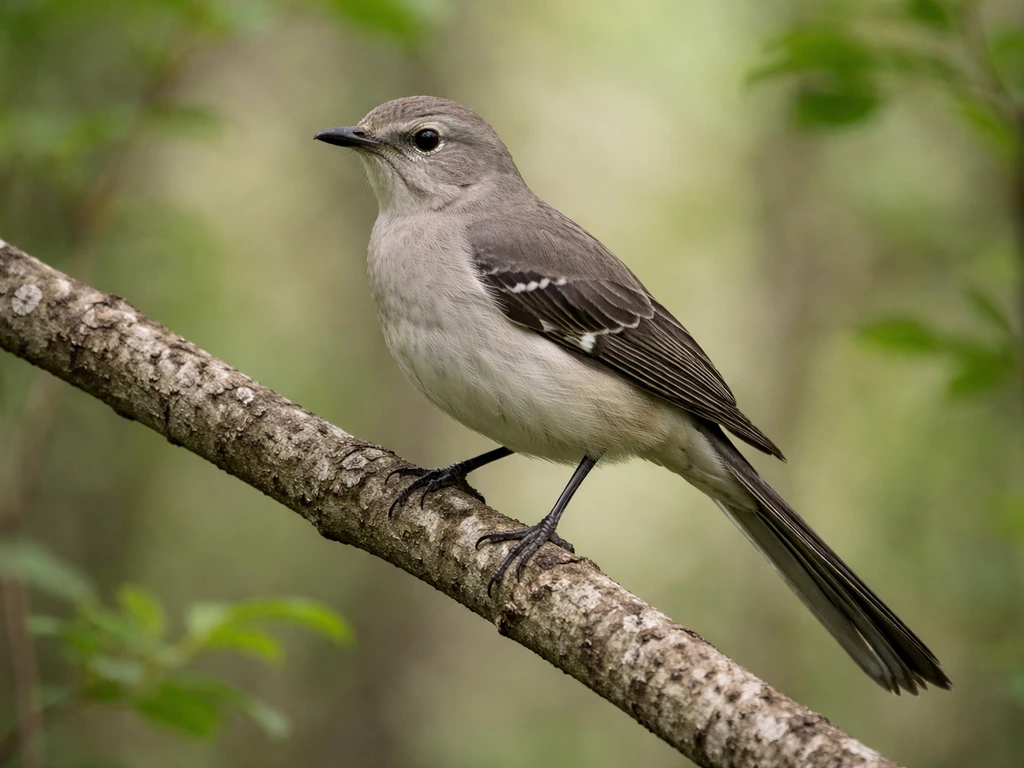
Once you know what to look for, the Northern Mockingbird is fairly easy to pick out. It is a medium-sized songbird with a slender build, gray-brown upperparts, and a noticeably paler breast and belly. The tail is long and dark gray, and the most reliable field mark of all is the white outer tail feathers that flash dramatically in flight. On the wings you will see two white wingbars and a white crescent at the base of the primary feathers, which also shows well when the bird is perched.
- Overall gray-brown above, pale gray-white below
- Long dark tail with bright white outer tail feathers (very visible in flight)
- Two white wingbars on each wing
- White crescent at the base of the primary wing feathers
- Slim, medium-sized build with a fairly long bill
- Loud, varied song that repeats each phrase multiple times before switching
The song is arguably the easiest identifier of all. A Northern Mockingbird will repeat each phrase three to six times in rapid succession before moving to the next one, often cycling through dozens of imitations of other birds in a single performance. Males sing at night as well as during the day, especially in spring. If you hear a bird that sounds like it is doing impressions and cannot stop, it is almost certainly a Northern Mockingbird.
Why so many states picked the mockingbird
The wave of mockingbird designations in the 1920s and 1930s was not a coincidence. Women's clubs and civic organizations across the South were actively campaigning for state bird designations during this era, and the mockingbird was a clear favorite in the region. It was already deeply embedded in Southern culture, literature, and daily life. John James Audubon had written admiringly about its song as early as 1840, and the bird's ability to mimic other species gave it an almost mythological status as the ultimate American songbird.
In Mississippi, the blank" rel="noopener noreferrer">Federation of Women's Clubs led the push for the designation, drawing on exactly that kind of cultural reverence. Texas and Florida both acted in 1927, the same year, with concurrent resolutions that reflected a broader regional pride in a bird that was abundant, recognizable, and genuinely beloved. Tennessee followed in 1933. Tennessee’s state symbols page notes that the Northern Mockingbird (Mimus polyglottos) was selected as the official state bird in 1933 blank" rel="noopener noreferrer">Tennessee followed in 1933.. If you are wondering why the mockingbird became Tennessee’s state bird, the timing and local cultural support help explain it Tennessee followed in 1933. The mockingbird was not just common; it was seen as a symbol of Southern resilience and vocal brilliance, a bird that could hold its own against any other.
If you want to go deeper on the reasoning behind any individual state's choice, the stories differ in interesting ways. Florida's designation came alongside growing civic pride in its natural environment. That is why Florida chose to honor the Northern Mockingbird as its state bird why Florida's state bird is the mockingbird. Florida's official state bird is the Northern Mockingbird. Texas emphasized the bird's widespread presence across the state. Tennessee's officials specifically noted the bird's singing ability. Each state had its own angle, but the common thread was a bird that felt genuinely native to the culture of the region.
Avoiding confusion with similar birds (and other state birds)
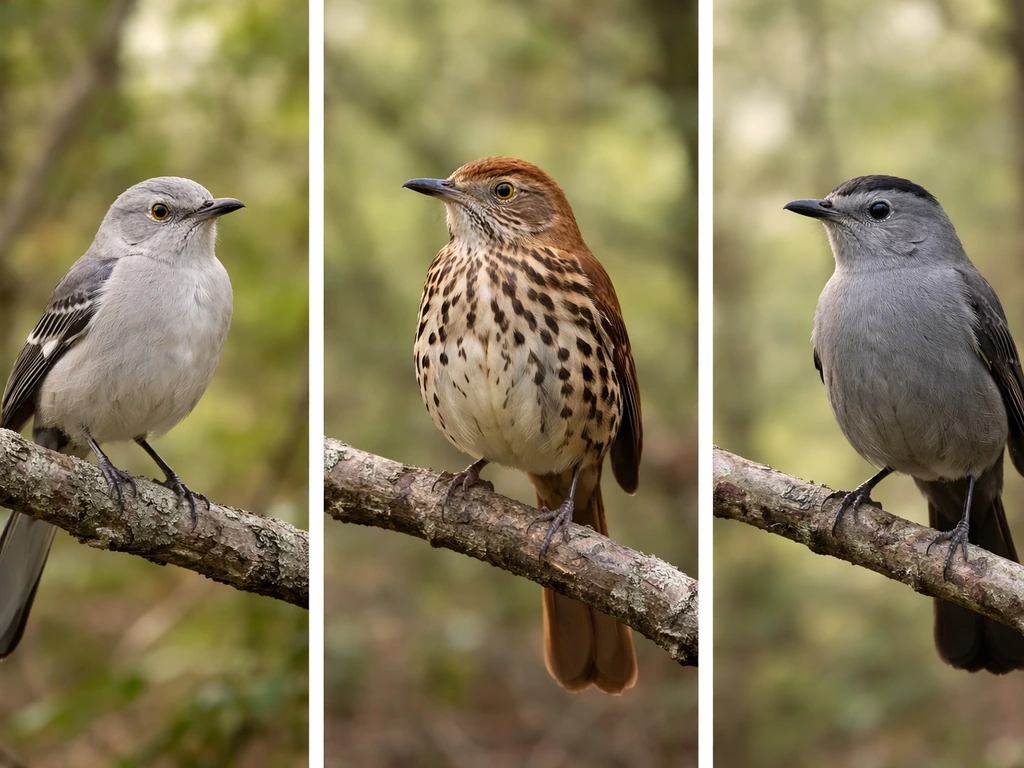
The Northern Mockingbird has a few lookalikes that trip people up, especially beginners. The Brown Thrasher and the Gray Catbird are the main ones. All three are in the family Mimidae (the mimics), so they are genuinely related, but you can tell them apart quickly. The Brown Thrasher is rufous-brown above with heavy streaking on the breast. The Gray Catbird is slate gray with a distinctive black cap and a rusty patch under the tail. Neither has the Northern Mockingbird's white wingbars and white outer tail feathers, which are the fastest way to confirm what you are looking at.
| Bird | Upperparts | Breast | Key distinguishing mark |
|---|---|---|---|
| Northern Mockingbird | Gray-brown | Pale gray-white, unstreaked | White wingbars + white outer tail feathers |
| Brown Thrasher | Rufous-brown | Heavily streaked | Reddish-brown coloring, long curved bill |
| Gray Catbird | Slate gray | Gray, unstreaked | Black cap, rusty undertail patch, cat-like mew call |
On the state-bird side, it is also worth knowing that South Carolina once designated the mockingbird as its state bird but later switched to the Carolina Wren. So if someone tells you South Carolina's bird is the mockingbird, that was historically true but is no longer the case today. North Carolina's state bird is the Northern Cardinal, not the mockingbird, despite the geographic name similarity sometimes causing confusion. If you are comparing state-bird designations across the Southeast, those two states are the main ones where 'mockingbird' might come up incorrectly.
Which state mockingbird are you looking for?
If you came here trying to answer a specific question about one of the five states, here is the quick reference. If you are counting the total, the next step is to see how many states have the Northern Mockingbird as their state bird quick reference. All five use the same species, but each state has its own story behind the designation and its own official wording in the law. Florida and Texas share the distinction of both acting in 1927 with nearly identical timing. Tennessee's designation in 1933 came with more explicit species naming. Arkansas and Mississippi both kept the language simple and colloquial in their statutes. Whichever state you are researching, you are looking for the same bird: a gray, white-winged, endlessly singing Northern Mockingbird that earned its place as a state symbol through decades of cultural recognition across the American South.
FAQ
If a state statute just says “mockingbird,” does it refer to the Northern Mockingbird or another species?
No. All five states that designate the bird in their law mean the Northern Mockingbird (Mimus polyglottos), not a different mockingbird species. If a document just says “mockingbird,” you can still interpret it as the Northern Mockingbird for these states.
Is the mockingbird currently the state bird of every state that ever had it? What about South Carolina?
South Carolina is the main historical exception mentioned in state-bird discussions. It once selected the mockingbird, but it later changed to the Carolina Wren, so the mockingbird claim is outdated for current state-symbol purposes.
What are the most common lookalikes of the Northern Mockingbird when you are trying to verify it?
Yes. The bird can be confusing in the field because Brown Thrasher and Gray Catbird are related mimics (same bird family, Mimidae). The fastest confirmation for Northern Mockingbird is the white wingbars plus the white outer tail feathers that flash in flight.
How can I tell from the sound that I am hearing a Northern Mockingbird rather than another bird?
A quick clue is how it sings. Northern Mockingbirds repeat each phrase multiple times (often three to six) and then move to the next one, frequently chaining many imitations together. Also, males can sing at night, especially in spring.
If I am writing a paper or checking the statute, do the exact wording differences matter?
In these states, “mockingbird” is treated as a common-name shorthand, but wording still matters for legal research. If you are citing the statute, double-check whether the text says “mockingbird,” “the bird commonly called the mocking bird,” or “Northern Mockingbird.”
Could the term “mockingbird” mean something different in other contexts outside these five states?
If you are trying to identify “mockingbird” beyond the state-bird context, remember that the term could refer to other mockingbird species elsewhere in the world. For the state-bird question in the U.S., though, the designated species is specifically Mimus polyglottos in the five states listed.
I want to verify total counts across the Southeast, what is the best next step to avoid mistakes?
Because only five states are included in the designations described here, a reliable next step is to count which states officially designate the Northern Mockingbird. If you are cross-checking, also watch for mix-ups with the Carolinas, since North Carolina’s state bird is not the mockingbird.
Next Article
Why Is the Mockingbird Tennessee’s State Bird? Facts
Learn why Tennessee chose the Northern Mockingbird, including history, symbolism, and tips to identify it by song and fi