The bird on the Maine license plate is the black-capped chickadee, Maine's official state bird. The classic "Chickadee" plate, which was the standard general-issue Maine plate from 1999 until it began being replaced by the new "Pine Tree" plate on May 1, 2025, blank" rel="noopener noreferrer">features a chickadee perched on a pine cone and tassel against a pine-themed background. If you're looking at an older Maine plate and wondering what that little bird is, it's a black-capped chickadee every time.
What Bird Is on the Maine License Plate? State Bird ID

Marcus Webb
17 May 2026
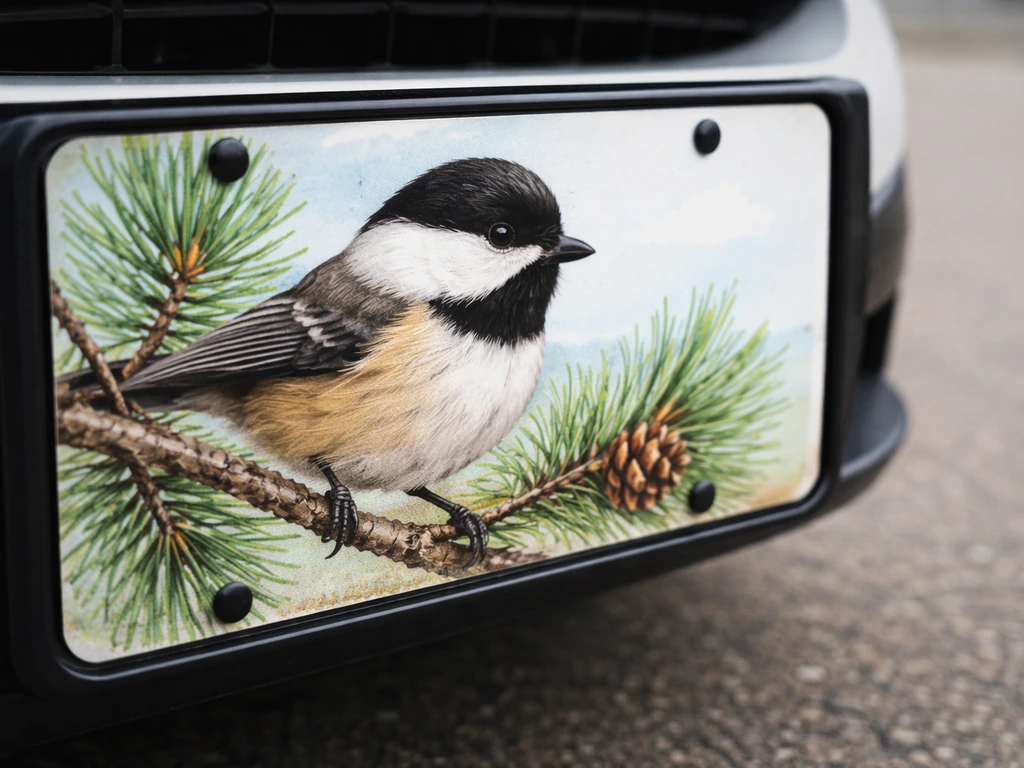
How to confirm the bird from the plate artwork
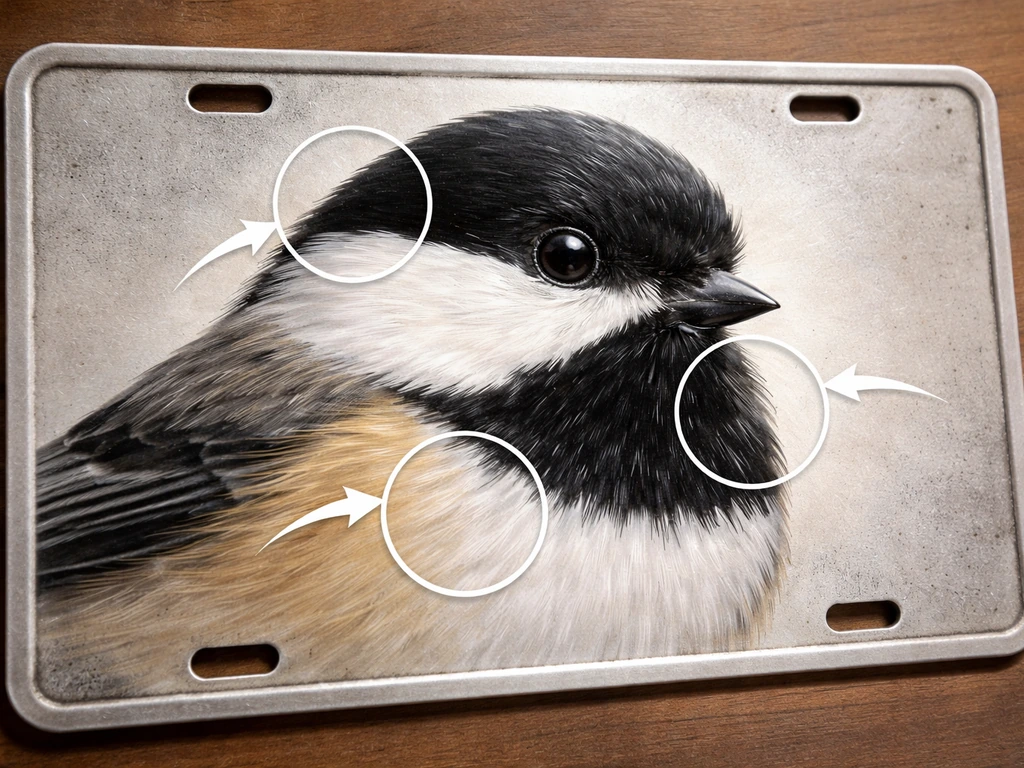
Even on a stylized license plate, the black-capped chickadee has enough distinctive features to confirm the ID. Here's what to look for on the plate design:
- A solid black cap covering the top of the head and extending down over the eyes
- A matching black bib or throat patch just below the bill
- Bright white cheek patches contrasting sharply against the black cap and bib
- A small, short, rounded bill (a key feature even in stylized artwork)
- A compact, round-bodied posture, typically shown perched on a pine cone or branch
- Pine cone and tassel imagery in the background, which ties the bird directly to Maine's pine tree symbolism
The black-and-white head pattern is the clearest tell. No other common bird has that crisp combination of a solid black cap, white cheeks, and black bib all at once. If the plate image is small or unclear, focus on the head: if you see that three-part pattern (black above, white cheeks, black throat), it's a chickadee. To cross-check officially, Maine Revised Statutes Title 1, Section 209 states plainly: "The state bird shall be the chickadee." The Maine Secretary of State's educational materials also confirm the designation and describe the bird's physical traits, matching what's depicted in the plate artwork.
One timing note worth knowing: if you're looking at a Maine plate issued after May 1, 2025, it may be the new Pine Tree design, which does not feature the chickadee artwork. The chickadee plate is being retired and replaced, so the bird you see on the plate depends on when the vehicle was registered. Older plates still in circulation will show the chickadee; newer plates show the Pine Tree design.
The black-capped chickadee: what you're actually looking at
The black-capped chickadee (historically listed as Parus atricapillus, now classified as Poecile atricapillus) is a small, energetic songbird found throughout northern and eastern North America. It's one of the most recognizable backyard birds on the continent, and for good reason: that bold black-and-white head pattern makes it nearly unmistakable in the field.
Key field marks
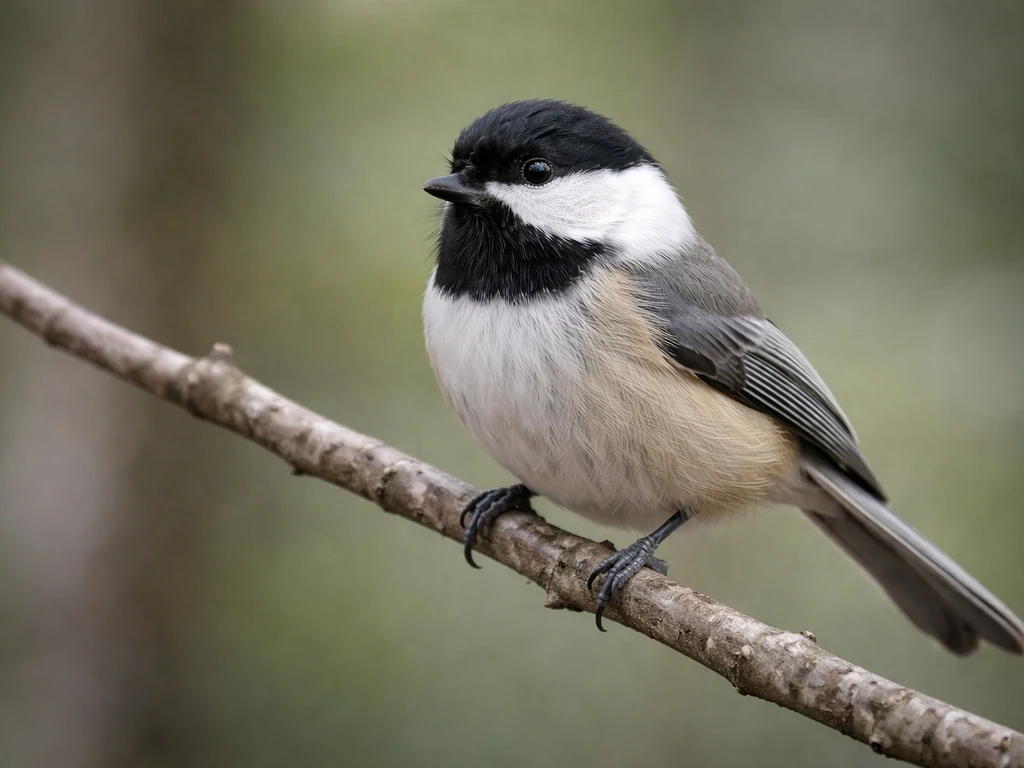
- Black cap from forehead to nape, covering the eyes
- Black bib on the chin and throat
- Bright white cheeks between the black cap and bib
- Grayish back and wings with whitish or buffy flanks
- Short, straight, rounded bill suited for picking insects and seeds
- Small body, roughly 4.7 to 5.9 inches in length
In Maine, you'll find black-capped chickadees year-round. They don't migrate, so they're a constant presence at feeders and in mixed forests throughout the state across all four seasons. Their chickadee-dee-dee call is one of the most familiar sounds in northeastern woodlands, and they're bold enough to take seeds directly from a hand in some parks. Their comfort with people and their cheerful, active behavior are part of what made them such a natural choice as a state symbol.
Why Maine chose the chickadee in 1927
Maine's Legislature officially adopted the chickadee as the state bird in 1927. The choice reflects the bird's deep presence in Maine's landscape: the black-capped chickadee is everywhere in the state, from coastal forests to inland woodlands, and it's one of the few birds hardy enough to stick around through Maine's notoriously harsh winters. That year-round resilience fits well with Maine's identity as a rugged, northern state.
One interesting wrinkle: the statute itself says only "the chickadee," without specifying the species. Maine actually has two chickadee species, the black-capped and the boreal chickadee. This ambiguity has come up in the Legislature more than once. A bill (blank" rel="noopener noreferrer">HP0416 / LD 572) was actually proposed to formally specify which species the designation refers to, though the matter was ultimately not pursued. In practice, the black-capped chickadee is universally understood to be Maine's state bird, and it's the species depicted on the plate artwork and referenced in the Secretary of State's official educational materials.
Maine isn't alone: other states with the same bird
Maine shares the black-capped chickadee with one other state: Massachusetts. You can use the same approach to figure out the Massachusetts state bird, the black-capped chickadee, by matching the distinctive head pattern. If you are wondering why Massachusetts chose it, the state also lists the black-capped chickadee as its own state bird for similar reasons. Both states officially designate the black-capped chickadee as their state bird, which can occasionally cause confusion when people are comparing state bird lists. Massachusetts also lists the black-capped chickadee as its state bird. The birds themselves are identical across state lines, of course, but the license plate and emblem artwork differs. Maine's plate paired the chickadee with pine cone and pine tree imagery, while Massachusetts uses its own distinct state symbolism.
| State | State Bird | Designated |
|---|---|---|
| Maine | Black-capped chickadee | 1927 |
| Massachusetts | Black-capped chickadee | 1941 |
If you're researching state birds and want to avoid mix-ups between Maine and Massachusetts, the key is the surrounding context: Maine's plate used pine cone and tassel imagery, which is distinctly Maine. Massachusetts has its own design and symbolism. The bird in both cases is the same species, but the two states arrived at that choice independently and for overlapping reasons: the chickadee is native, year-round, recognizable, and widely loved across the northeast. If you're curious about why Massachusetts made the same choice, that's worth a separate look.
Where to go next to confirm or learn more
If you want to dig deeper or verify any of this, here are the most useful next steps:
- Check the Maine state bird page on this site for a full species profile of the black-capped chickadee, including more detail on identification, habitat, and behavior.
- Read up on what is Maine's state bird for the official designation history, the 1927 legislative context, and more on the species ambiguity in the statute.
- Compare with Massachusetts: since both states share the black-capped chickadee, the Massachusetts state bird page is a useful side-by-side look at how two states ended up with the same symbol.
- For the plate itself, the Maine Secretary of State's Bureau of Motor Vehicles website has information on both the historical Chickadee plate design and the new Pine Tree plate that replaced it in 2025.
- If you want a visual ID guide to distinguish a black-capped chickadee from a boreal chickadee (the other Maine species that causes occasional confusion), look for comparison guides focused on the buffy flanks and brown cap of the boreal versus the cleaner gray and white of the black-capped.
The bottom line is straightforward: that bird on the Maine plate is the black-capped chickadee, it's been Maine's state bird since 1927, and it's one of the most identifiable birds in North America. The black-capped chickadee is the bird of Maine, and it appears on many official Maine license plate designs. Oregon’s state bird is the Western meadowlark. The plate artwork makes it easy to confirm once you know what the head pattern looks like. If you are wondering what bird is on an Oregon driver's license, the answer will depend on Oregon's specific plate or license design and year what bird is on the Oregon driver's license.
FAQ
What if the Maine license plate picture is too blurry to see the head pattern, what should I check first?
Start with the overall contrast, look for a dark cap on top of a white face, then check whether the throat area is darker than the cheeks. Even when the body details are unclear, that black-on-white head pattern (cap, cheek, bib) is usually recognizable at typical plate viewing distances.
Can the bird on the plate ever be a different chickadee species than the black-capped chickadee?
On Maine’s official plate artwork, the depicted bird is the black-capped chickadee. In the real world, Maine can host more than one chickadee-type species, but the plate design is specific, so the practical ID answer for the plate remains black-capped chickadee.
If the plate is newer and says Pine Tree, does that mean the bird is not on it at all?
Yes, for plates issued on or after the switch date, the Pine Tree design replaces the chickadee artwork. If you see pine-themed imagery without the chickadee, you should treat it as a different design era rather than trying to identify a bird that is no longer present.
How can I tell whether my Maine plate is the older Chickadee design or the newer Pine Tree design?
The simplest approach is to check the plate issue year, plates registered after the May 1, 2025 change are likely to use the Pine Tree design. If you do not have the issue year, compare the artwork, the chickadee plate includes a chickadee on a pine cone and tassel motif.
Are there any other Maine plates or specialty plates that might show a different bird even if they are still “Maine” plates?
The standard general-issue chickadee design is specific to the Chickadee plate era, but specialty plates can use different artwork. If the plate is not the general-issue Chickadee/Pine Tree style, use the design elements (presence of the chickadee and the pine cone/tassel) rather than assuming every Maine plate uses the same bird.
I’m comparing Maine and Massachusetts state birds, how do I avoid mixing up the artwork if the bird species is the same?
Use the bird’s head pattern for species, both states choose the black-capped chickadee. Then use surrounding symbolism to assign state, Maine’s plate pairs the bird with pine cone and pine imagery, while Massachusetts uses its own distinct emblem design.
Does Maine’s legal wording “the chickadee” mean the ID is uncertain on the plate?
For the plate question, no. Even though the statute language is broad, the plate artwork and official educational materials show and describe the black-capped chickadee. The legal ambiguity matters more for species-specification debates, not for identifying what the plate depicts.
What common mistake do people make when trying to identify a chickadee from small images like license plate artwork?
People often focus on the body or size, but those details are stylized and can be misleading. The reliable cue is the head pattern, black cap, white cheeks, and darker bib area, which is the most consistent feature across small, simplified depictions.
Next Articles
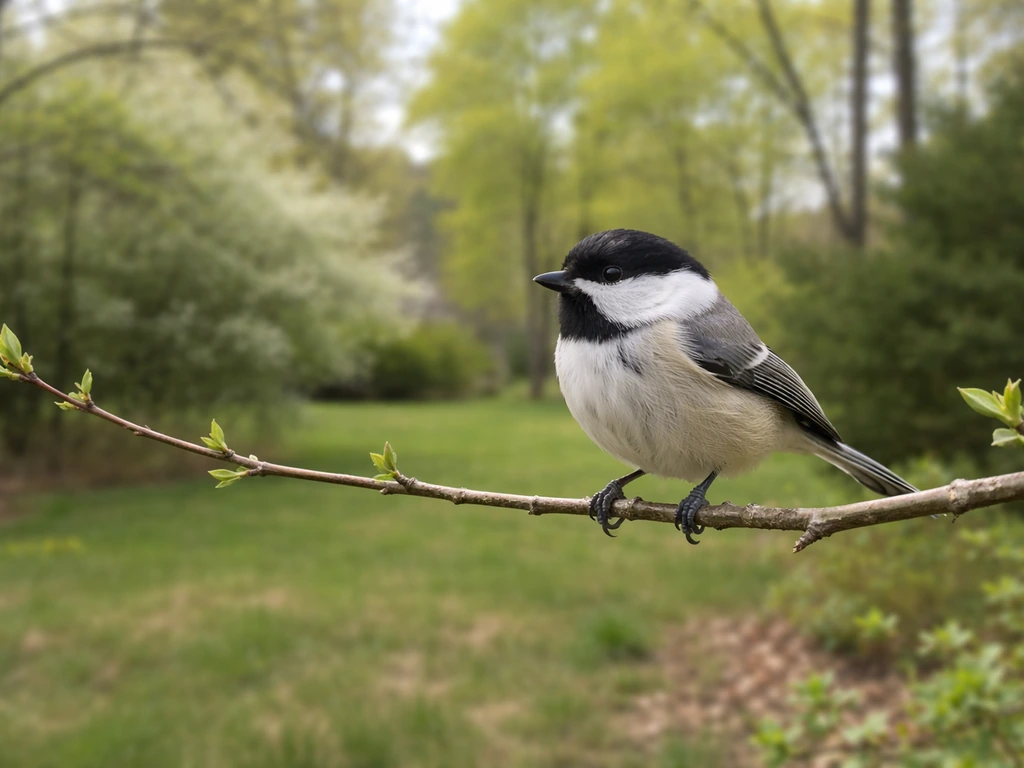
Why Is the Black-Capped Chickadee Massachusetts State Bird?
Learn why Massachusetts chose the black-capped chickadee as its state bird, plus key traits to identify it and where to
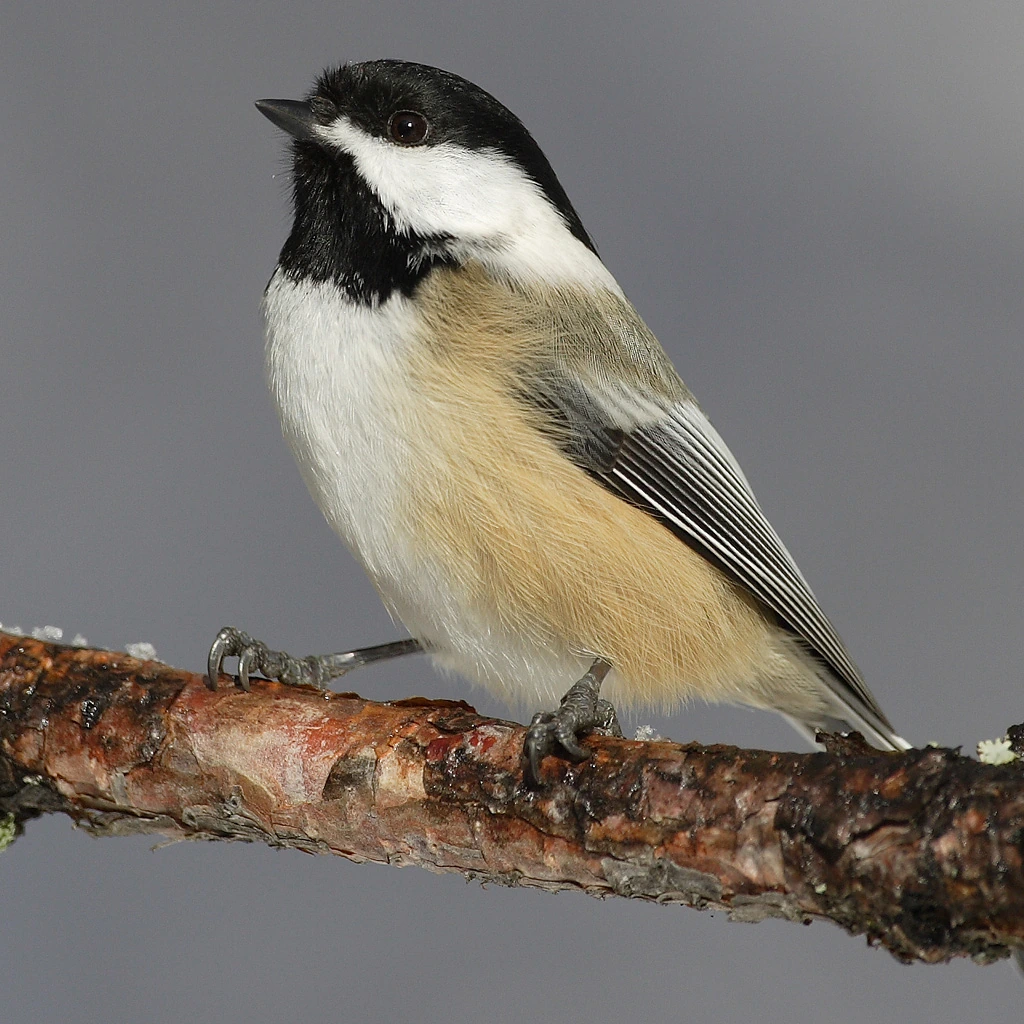
What Is the Bird of Maine? Identify the State Bird
Maine state bird ID, how to spot it, where to find it, and why it was chosen plus similar birds in other states
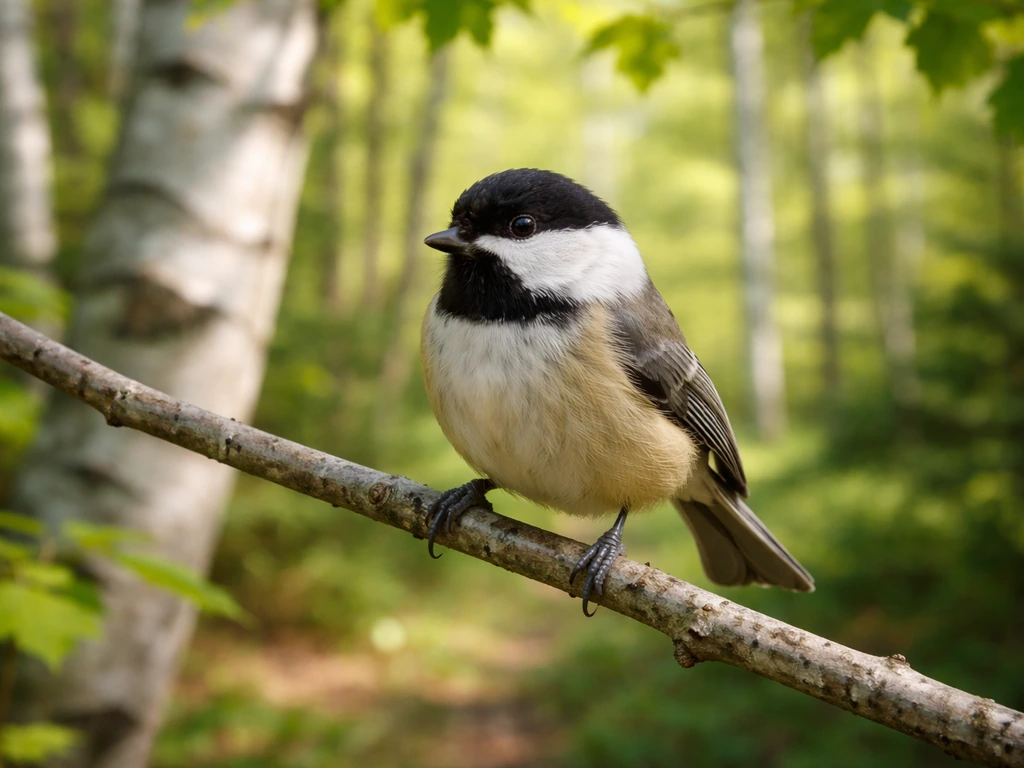
What Is Maine's State Bird? Bird ID, History, Facts
Get the answer to what is Maine state bird, plus ID tips, habitat, and the history of its official designation.