Alaska chose the willow ptarmigan as its official state bird because Alaska schoolchildren voted for it in a 1955 territorial contest, and the bird genuinely earned that vote. It has the widest range of any upland game bird in Alaska, it has fed Alaska Native communities for thousands of years, and it is deeply woven into the tundra and subalpine landscapes that define the state. It is not a symbolic pick in name only. It is one of the most visible, widespread, and ecologically important birds in Alaska.
Why Is the Willow Ptarmigan Alaska’s State Bird

Marcus Webb
4 May 2026
How and when Alaska made it official
The story starts in 1955, before Alaska was even a state. The Territorial Department of Education ran a contest to give the territory an official bird symbol, partly as a civic exercise connected to Alaska's push toward statehood and its drafting of a state constitution. Schoolchildren across the territory cast votes, and the willow ptarmigan received the greatest number. On February 4, 1955, Alaska's territorial legislature formalized that result by passing House Bill 2, officially declaring "The Alaska Willow Ptarmigan" the official bird of the Territory of Alaska.
When Alaska was admitted to the union as the 49th state in 1960, the designation carried over. Today it is codified in Alaska Statutes, Title 44, Chapter 9, Section 44.09.060, which identifies "The Alaska Willow Ptarmigan (Lagopus lagopus alascensis Swarth)" as the official bird of the state. Alaska Statutes, Title 44, Chapter 9, Section 44.09.060 identifies “The Alaska Willow Ptarmigan (Lagopus lagopus alascensis Swarth)” as the official bird of the state. That subspecies name, alascensis, was described by naturalist Harry Swarth specifically from Alaskan specimens, which tells you just how tightly this bird is tied to the state.
What the willow ptarmigan actually looks like
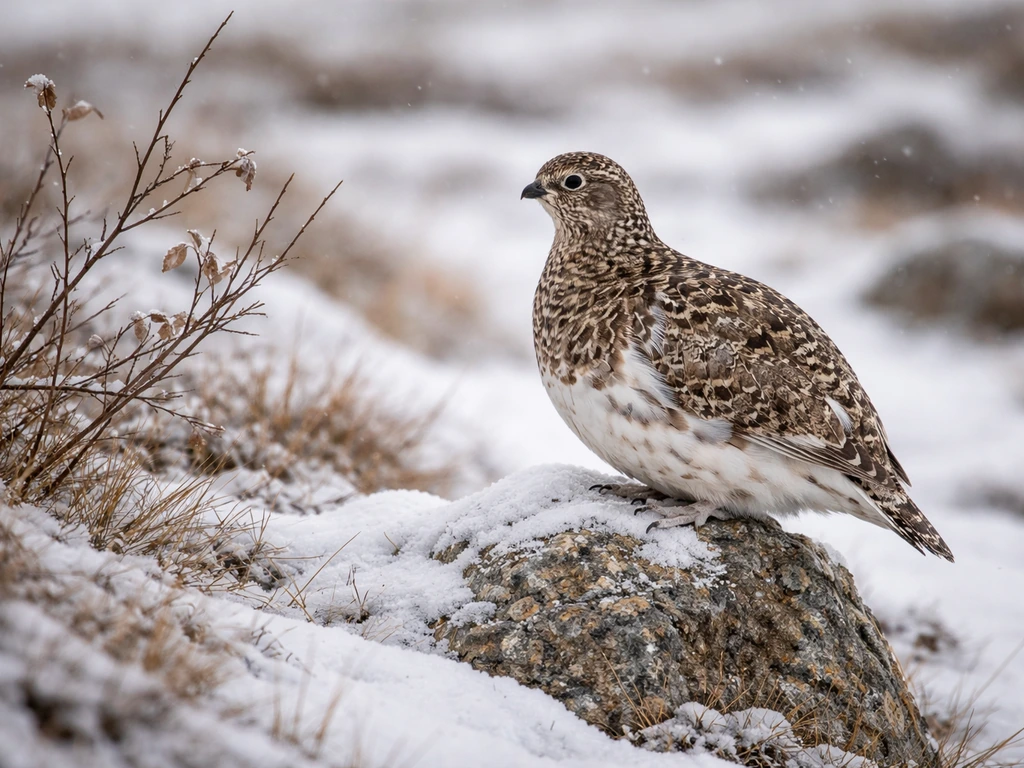
If you have never seen one, think of a plump, chickenlike bird about the size of a small gull and bigger than a quail but smaller than a teal. It has a short neck, small head, a thick wide bill, and notably large feathered feet that act like snowshoes in winter. The feathered feet are one of the quickest field marks that separate ptarmigan from other grouse.
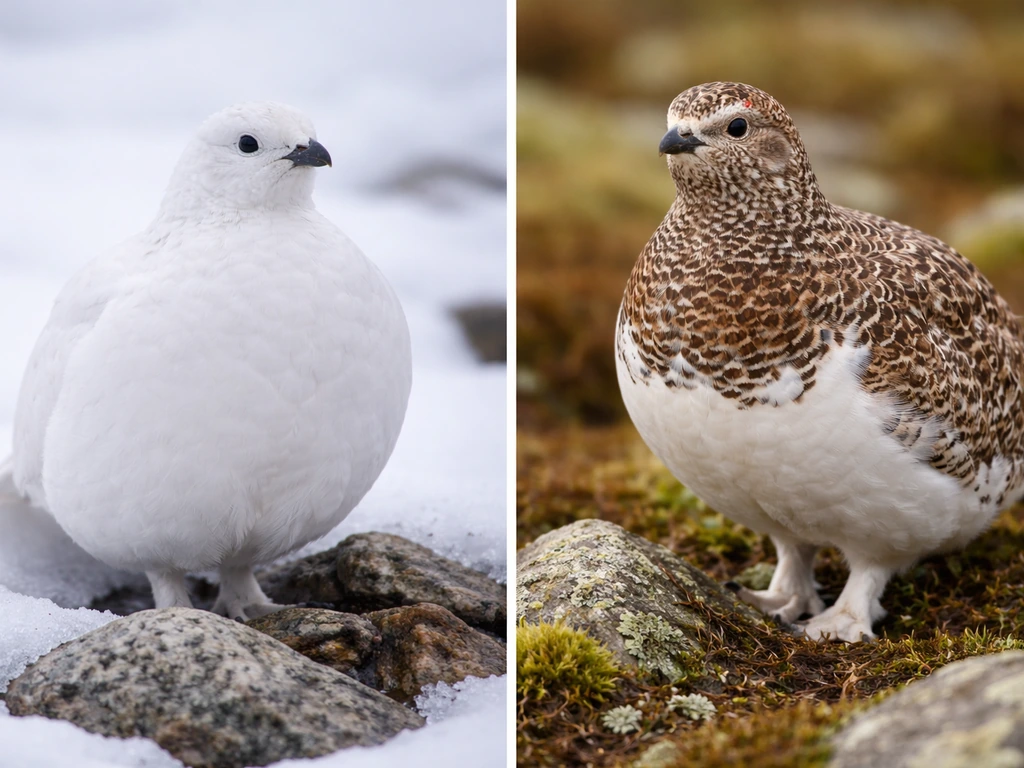
The plumage changes dramatically through the year. In winter both males and females turn completely snow white, which provides camouflage against predators on the open tundra. In spring the male develops a chestnut-red cape starting in early May, and there is a white patch behind his bill that lasts only about two to three weeks. By summer the birds wear light brown plumage that blends with tundra vegetation. In winter white plumage, telling males from females is nearly impossible for a human observer. As one Alaska Department of Fish and Game note puts it, only another ptarmigan can reliably tell them apart.
The willow ptarmigan is also the largest of Alaska's three ptarmigan species (the other two being the rock ptarmigan and the white-tailed ptarmigan), and it is considered the largest and most numerous of all three North American ptarmigan species.
Where it lives across Alaska
One of the strongest arguments for the willow ptarmigan as a statewide symbol is its range. It has the widest distribution of any upland game bird in Alaska. You will find it on coastal plains along willow-lined waterways in western and northern Alaska, and in subalpine areas throughout the rest of the state. The main areas where it is absent are the broad forested valleys of the Interior, the thick woods of Southeast Alaska, and the Aleutian Islands west of Unimak Island. Everywhere else, it is a reliable presence.
The name "willow" ptarmigan is not arbitrary. Cornell’s All About Birds overview notes that willow ptarmigan rely heavily on willows, reflecting how important this plant is to the bird’s diet blank" rel="noopener noreferrer">Willows are this bird's most important food source. Willows are this bird's most important food source. In summer, willow leaves often rank above everything else in the diet. In winter, willow buds, twigs, and catkins make up four-fifths or more of what the bird eats. Willows are one of the most widespread shrubs in Alaska, and their resilience (they recover quickly even from heavy browsing by moose and snowshoe hare) is part of why the ptarmigan has such a stable, broad range.
Why it matters to Alaska beyond symbolism
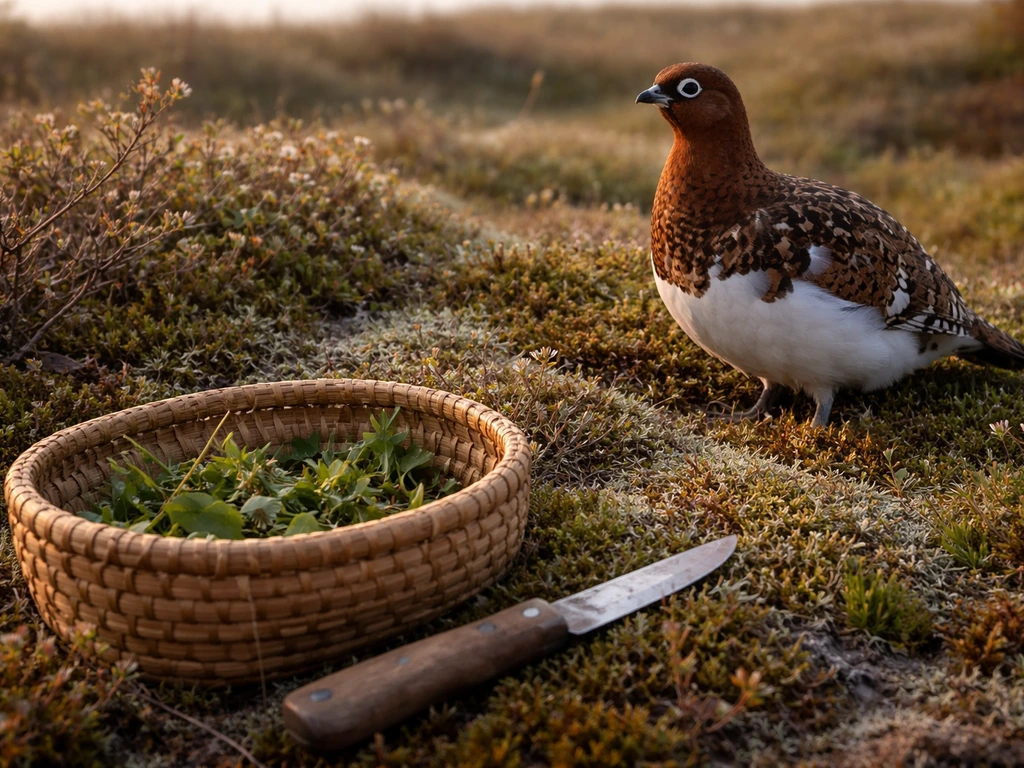
The willow ptarmigan has been a traditional food source for Alaska Native peoples for as long as those communities have lived on the land. In Yup'ik, the bird is called "aqesgiq," a name connected to the sound of its spring mating call. That kind of embedded cultural language signals centuries of close relationship between Alaskans and this bird. It is not a mascot chosen for aesthetic reasons. It is a species that fed people through long winters, whose seasonal behavior signaled changes in the land, and whose presence is tied to the health of the tundra ecosystem.
The bird also plays an important ecological role as prey. Foxes, hawks, owls, and other predators depend on ptarmigan populations. During years when ptarmigan numbers are high, predator populations across the tundra tend to follow. This makes the willow ptarmigan a genuine keystone element of Alaska's northern and subalpine food webs, not just a bird people admire from a distance.
Even the bird's family behavior stands out. Male willow ptarmigan are unusually attentive parents for a grouse-family bird. Males help defend the nesting female, and after the chicks hatch (usually in late June and early July from clutches of six to ten eggs after about three weeks of incubation), males continue helping to guard and tend the young. That is not typical behavior for grouse and ptarmigan, and it is one of the biological details that makes the species memorable.
How Alaska's choice compares with other state birds
Most states pick a bird that is native, recognizable, and strongly associated with the local landscape. Alaska's choice fits that pattern well, but it stands out for a few reasons. The bird of Alabama is the state bird of Alabama, and it is often used to represent the state in official and cultural contexts.
| State | State Bird | Native Species? | Selection Rationale |
|---|---|---|---|
| Alaska | Willow Ptarmigan | Yes (Alaska subspecies) | Widest range of any Alaskan upland game bird; cultural food source; schoolchildren's vote in 1955 |
| Pennsylvania | Ruffed Grouse | Yes | Native game bird closely tied to the state's forests; designated 1931 |
| South Dakota | Ring-Necked Pheasant | No (introduced 1908) | Introduced successfully and became strongly associated with the state's identity |
| Arizona | Cactus Wren | Yes | Largest North American wren; iconic to the Sonoran Desert landscape |
The comparison with South Dakota is instructive. South Dakota's state bird, the ring-necked pheasant, is not native at all. It was introduced in 1908 and became culturally significant through its association with hunting. Alaska went the opposite direction, choosing a bird so native it has a subspecies named after the state. Pennsylvania's ruffed grouse is a closer parallel, a native upland game bird chosen for its deep connection to the local landscape, though it was designated by the legislature rather than through a children's vote. Arizona's cactus wren is another good example of a state picking a bird that is unmistakably tied to its specific environment. Arizona designated the cactus wren as its state bird because the species is so well adapted to the deserts and scrublands of the Southwest. The bird of Arizona is typically the cactus wren, which is strongly associated with the state's arid desert environment Arizona's cactus wren. Alaska's pick reflects similar logic at a much larger geographic scale.
No other U.S. state shares the willow ptarmigan as a state bird. If you are comparing how other states choose theirs, you may also want to know why is the yellowhammer Alabama's state bird. It is uniquely Alaska's, which makes sense given that the species' core North American range is heavily concentrated in Alaska and northern Canada. If you are comparing state birds across the map, you may also wonder what is the Arizona state bird.
Where to verify this and keep exploring
If you want to confirm the official designation directly, the primary source is the Alaska State Legislature's compiled statutes. Title 44, Chapter 9, Section 44.09.060 is the controlling law, and you can find it on the Alaska Legislature's official website. The Alaska Department of Fish and Game also maintains a detailed species profile for the willow ptarmigan that covers identification, habitat, diet, reproduction, and seasonal movements, and it is one of the more thorough state wildlife agency write-ups available for any state bird.
For field identification, Cornell Lab of Ornithology's All About Birds has strong seasonal photos and range maps that make it easy to understand the plumage changes throughout the year. The U.S. National Park Service also has willow ptarmigan pages tied to specific Alaska parks like Gates of the Arctic and Bering Land Bridge, which give you a sense of the landscapes where this bird actually lives.
If you are working through state birds systematically, the states surrounding Alaska in the alphabet make for interesting comparisons. Alabama's state bird is the northern flicker (yellowhammer), chosen for its connection to Civil War history, and Arizona's is the cactus wren, chosen for its iconic desert presence. Both follow the same logic Alaska used: pick the bird that best represents what makes your state distinct. Alaska just happened to have a particularly fitting candidate already living across most of its landscape.
FAQ
Is Alaska’s willow ptarmigan choice mostly symbolic, or does the bird actually play major roles in the ecosystem?
It is not just a mascot. The bird is a key prey species for foxes, hawks, and owls, so shifts in ptarmigan numbers can affect predator populations across tundra and subalpine habitats.
Why does the bird’s “willow” diet matter for the state-bird argument?
Because willows are among the most widespread shrubs in Alaska, the ptarmigan’s reliance on willow leaves in summer and willow buds, twigs, and catkins in winter supports a stable, broad distribution rather than a narrow habitat niche.
Where should I look in Alaska to have the best chance of seeing a willow ptarmigan?
The best odds are coastal plains and willow-lined waterways in western and northern Alaska, plus subalpine areas elsewhere. It is notably absent from broad forested Interior valleys, much of Southeast’s dense woods, and the Aleutian Islands west of Unimak Island.
How can I identify a willow ptarmigan in winter when males and females look the same?
Look for the large feathered “snowshoe” feet, a fast field mark that separates ptarmigan from other grouse. In winter plumage, sex is nearly impossible to tell by appearance alone, so focus on size and foot feathering.
Does the willow ptarmigan have any distinctive seasonal markings besides the winter white coat?
Yes. In spring, males develop a chestnut-red cape starting in early May, and there is a small white patch behind the bill that can persist for only about two to three weeks, which helps narrow the timing of sightings.
Is the willow ptarmigan actually the largest ptarmigan species in North America?
Within North America’s ptarmigan groupings, it is described as the largest and most numerous of the three ptarmigan species found in Alaska (willow, rock, and white-tailed).
What is one common mistake people make when comparing ptarmigan species in Alaska?
They assume all ptarmigan look similar year-round. Plumage shifts and differences by season matter, so it is easiest to compare using consistent field marks like the feathered feet, then confirm location and season.
If the state bird was chosen by schoolchildren, why did it still apply after Alaska became a state in 1960?
The earlier territorial designation carried over when Alaska joined the union, and the status is now codified in Alaska Statutes, Title 44, Chapter 9, Section 44.09.060.
Is the bird’s cultural importance limited to being an occasional food source?
No. The article notes it served as a long-term traditional food for Alaska Native peoples, and its seasonal behaviors helped signal changes in the land. The local Yup’ik name is also tied to the sound of the spring mating call, reflecting deep familiarity.
Can I confirm the official state-bird designation in an official document?
Yes. The controlling law is in the Alaska State Legislature’s compiled statutes (Title 44, Chapter 9, Section 44.09.060). This is the best place to verify the exact wording and the subspecies name.
Does the male parental care described for willow ptarmigan occur in all grouse species?
No. The article specifically highlights male willow ptarmigan as unusually attentive for a grouse-family bird, including guarding and tending chicks after hatching, which is less typical for many other grouse and ptarmigan species.
Next Article
What Is the Bird of Alabama? Alabama State Bird Guide
Learn Alabama’s state bird name and scientific ID, key traits, habitat, and why it was chosen. Spot it today.