The bird on the U.S. dollar bill is the American bald eagle. It appears on the back of the $1 Federal Reserve Note as part of the Great Seal of the United States, shown on the right side of the bill's reverse. The eagle is depicted clutching an olive branch in one talon and a bundle of 13 arrows in the other, with a shield across its chest and a ribbon in its beak bearing the Latin phrase "E Pluribus Unum."
What Is the Bird on the Dollar Bill? Identify It Fast

Marcus Webb
27 May 2026
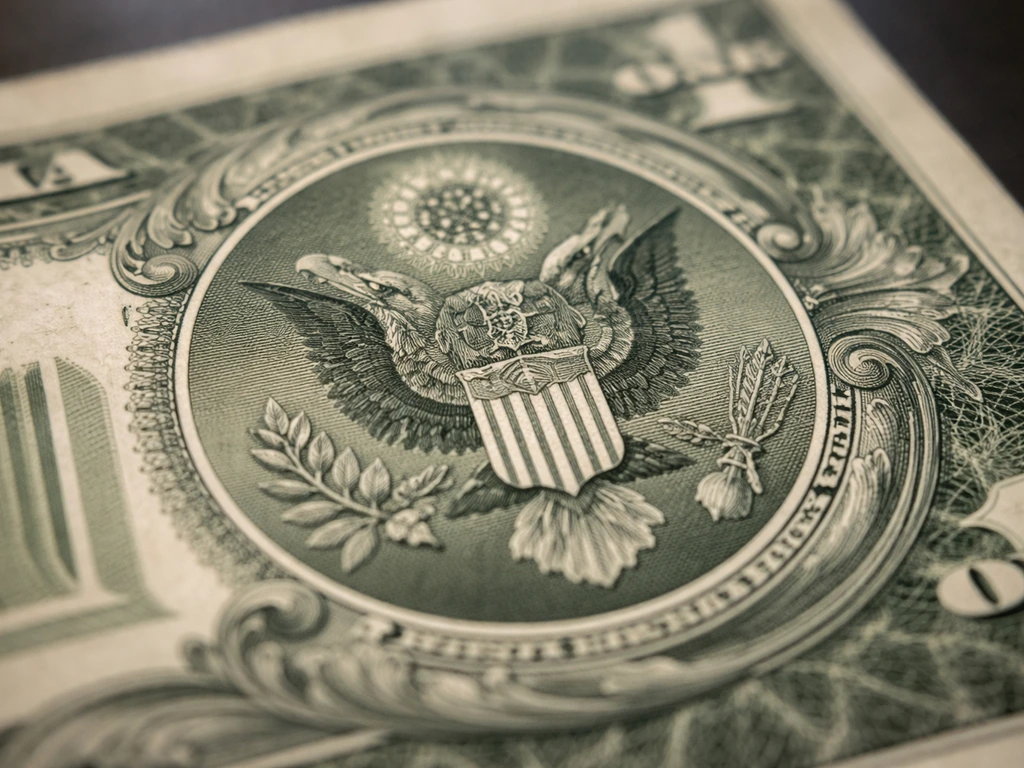
Which dollar bill has the bird, and exactly where to find it
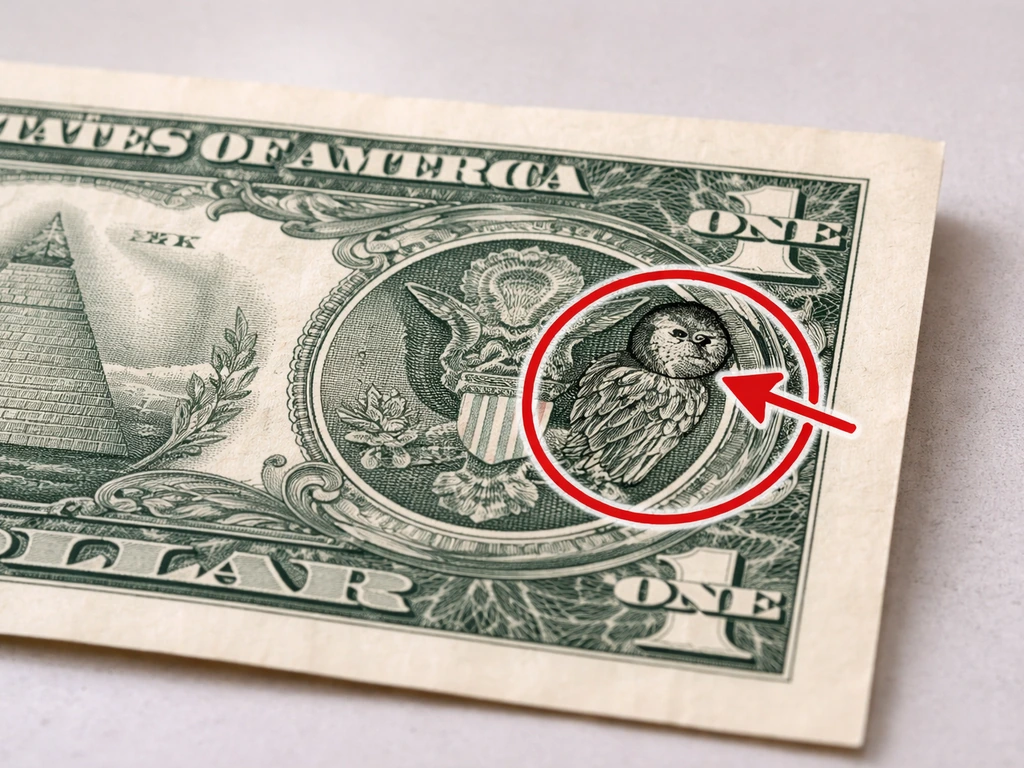
Flip any modern $1 note over and look at the right half of the back. You'll see two circular seal vignettes side by side. The left circle shows the pyramid (the reverse of the Great Seal); the right circle shows the eagle (the obverse of the Great Seal). That eagle image is what most people are asking about. This design has been on every $1 Federal Reserve Note since the series began in 1963, replacing the earlier $1 silver certificates. The Bureau of Engraving and Printing (BEP) confirms the design has not changed since then: George Washington stays on the front, the Great Seal stays on the back.
If you're looking at an older $1 silver certificate from before 1963, the Great Seal eagle also appeared on those notes, so the bird is the same species regardless of which series you have. The key thing to know is that the eagle is always on the back, always on the right seal, and always in that characteristic spread-wing posture.
Eagle or something else? Working through the options
Almost every time someone asks about "the bird on the dollar bill," they're looking at the Great Seal eagle on the $1 note. But it's worth checking a couple of things before landing on that answer, because the stylized engraving can look abstract at first glance, and people sometimes wonder if it could be a different species.
- If the bird is on the BACK of a $1 note, inside a circular seal on the right side, it's the Great Seal eagle. Full stop.
- If you're looking at a different denomination (like a $20 or $100), those notes do not prominently feature a bird in the same way. The eagle does appear on some other denominations in security features or watermarks, but the iconic full-body eagle vignette belongs to the $1 back.
- Some readers ask about a "phoenix" instead of an eagle, based on older conspiracy theories about the Seal's design. The official government record is clear: the bird is an eagle, and the BEP's own FAQ language specifically calls it "the American bald eagle."
How to confirm the species using the bill itself
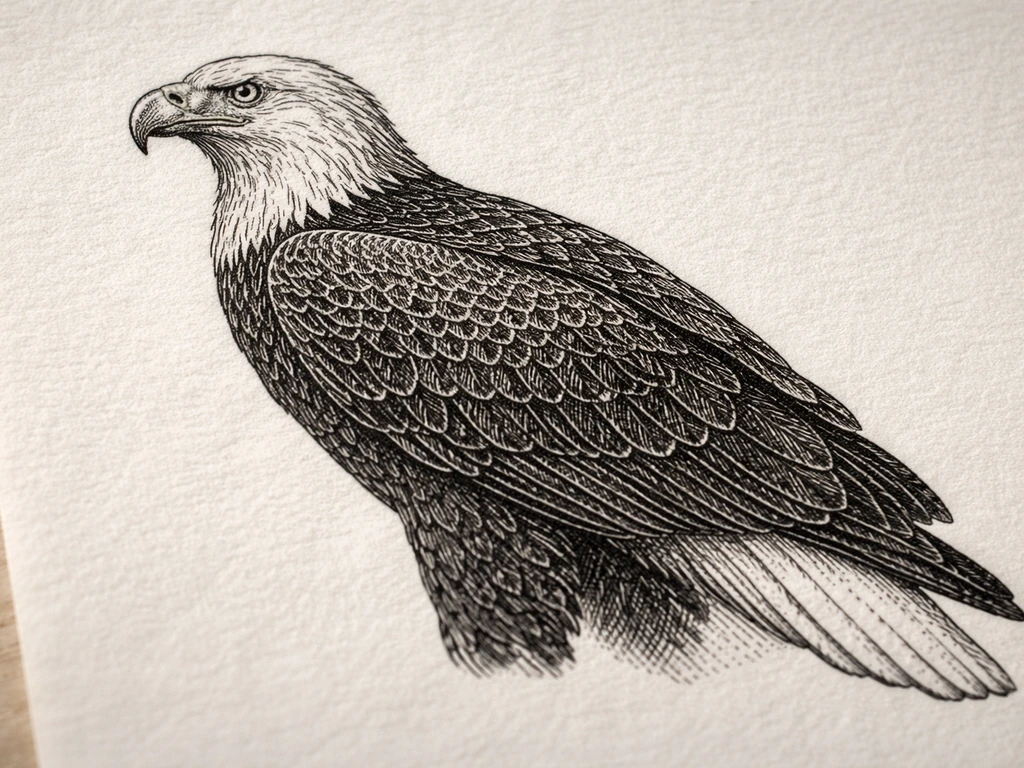
You don't need a field guide to confirm this one. The engraving gives you several visual clues that map directly to real bald eagle field marks, even in a stylized black-and-white print.
- Head color contrast: The eagle's head appears lighter than its body and wings in the engraving. On a real adult bald eagle, the head is white against a dark brown body, and the engravers preserved that contrast deliberately.
- Hooked beak silhouette: Look at the profile of the beak. It curves sharply downward at the tip, a hallmark of large raptors and specifically matching the heavy, yellow hooked bill of the bald eagle. Even in fine-line engraving, that hook is visible.
- Body mass and posture: The bird is large, broad-shouldered, and has a heavy head relative to its body. Bald eagles are very large raptors, and the engraving reflects that stocky, powerful build rather than the slender proportions of, say, a hawk or falcon.
- Wing spread: The wings are fully extended in a heraldic spread, which is a classic depiction used specifically for eagles in American symbolism.
- Talons with objects: No other common bird symbol clutches both an olive branch and a bundle of arrows simultaneously. This detail is unique to the Great Seal eagle design.
If you want to go deeper, the U.S. Currency Education Program's official $1 note page and the BEP's "$1 Note Issued 1963–Present" reference both provide high-resolution imagery you can compare directly to your bill. The U.S. Currency Education Program also hosts a dedicated $1-note denomination landing page for Series 1963, Present with imagery and feature descriptions U. S. Currency Education Program's official $1 note page. The uscurrency.gov PDF for the 1963-present series is a free download that labels every design element on the note.
The bald eagle: what it is and why it's on U.S. currency
The bald eagle (Haliaeetus leucocephalus) is North America's largest bird of prey outside of the California condor. Adults are instantly recognizable: white head and tail, dark brown body and wings, and a large yellow hooked bill. Their wingspan typically runs 6 to 7.5 feet. Juveniles are mostly brown with mottled white patches and don't get the full white head and tail until around age 5.
The bald eagle was chosen for the Great Seal in 1782 because it was seen as uniquely North American, powerful, and long-lived. The Seal's designers wanted a symbol that couldn't be claimed by any other nation. The olive branch in the eagle's right talon represents the power of peace; the 13 arrows in the left represent the power of war, with both powers vested exclusively in Congress according to the BEP's own explanation of the Seal's symbolism.
Fast forward to 2025, and President Biden signed legislation officially designating the bald eagle as the national bird of the United States, giving it statutory recognition that the Great Seal had implied for over 240 years. So the bird on your dollar bill isn't just a decorative choice: it's the official national bird.
What if the bird doesn't look like an eagle to you
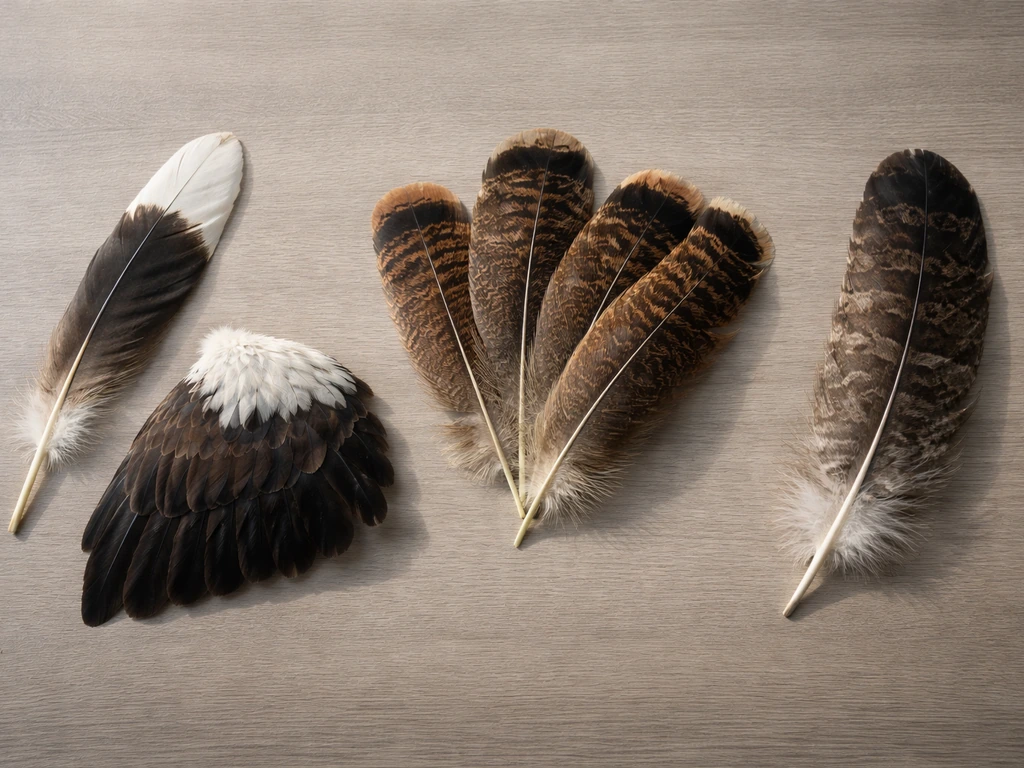
Every now and then someone looks at the $1 seal and wonders if the bird could be a turkey (Benjamin Franklin famously preferred it), a phoenix, or even an owl. Here's how to rule those out quickly.
| Bird | Key visual difference from the $1 Seal eagle | Verdict |
|---|---|---|
| Turkey | Rounded tail fan, small unhooked beak, no spread-wing heraldic posture | Not the $1 bird |
| Phoenix (mythological) | No standardized real-world field marks; purely symbolic and variable in design | Not an official species; BEP confirms it's an eagle |
| Golden eagle | Very similar silhouette, but golden eagles lack the white head contrast; both are large raptors | Possible confusion, but the Seal specifies bald eagle explicitly |
| Owl | Round head, no hooked raptor beak profile, different wing shape | Not the $1 bird |
| Bald eagle | White head contrast against dark body, heavy hooked beak, large body, spread wings, talons holding objects | This is the bird on the $1 note |
The golden eagle is the one case worth a second look. Both species are large, dark-bodied raptors. But the Great Seal design specifically captures the adult bald eagle's lighter head, and the official government description has always named it as the bald eagle. If you're using a magnifying glass on your bill, the head being noticeably paler than the wings is your clearest confirmation.
How the dollar bill's bird connects to state birds
The bald eagle is the national bird of the United States, but it's actually not the official state bird of any U.S. state. That's a surprisingly common misconception. States that wanted to honor eagles chose the bald eagle as their national symbol and left it at that; no state has formally designated the bald eagle as its own state bird.
This means the bird on your dollar bill occupies a unique symbolic space: it represents the federal government and the nation as a whole, while every state has chosen a different bird to represent its own identity. Some of those choices celebrate birds that are regionally distinctive, like the scissor-tailed flycatcher for Oklahoma or the mountain bluebird for Idaho. On the Oklahoma quarter, the scissor-tailed flycatcher appears, connecting back to the common question about what bird you see on U.S. coins. The scissor-tailed flycatcher is the official state bird of Oklahoma, so that is the connection to why it is sometimes mentioned in this context scissor-tailed flycatcher for Oklahoma. Oklahoma's official state bird is the scissor-tailed flycatcher Oklahoma state bird. For example, Oklahoma’s state bird is the scissor-tailed flycatcher. Others went with the same popular species as neighboring states, which is why the northern cardinal is the official state bird of seven different states.
If you're curious which specific bird represents your state (or any state), each has its own official designation worth exploring. Some state birds appear on state quarters too, which is another common source of "what bird is this? Idaho has its own state quarter, and that coin features a different bird than the one on the dollar bill state quarters. " questions similar to the one you started with here.
Quick reference: the dollar bill bird at a glance
| Feature | Detail |
|---|---|
| Species | American bald eagle (Haliaeetus leucocephalus) |
| Where on the bill | Back of the $1 note, right-side seal (Great Seal obverse) |
| Bill series | All $1 Federal Reserve Notes, Series 1963 to present |
| What it's holding | Olive branch (right talon) and 13 arrows (left talon) |
| Key ID traits on bill | Light head, dark body/wings, heavy hooked beak, large spread-wing posture |
| National symbol status | Official national bird of the United States |
| State bird of any state? | No state has designated the bald eagle as its state bird |
FAQ
Is the bird on the $1 bill on the front or the back?
No. The bird is on the back of the $1 note, and it is always the Great Seal eagle shown in the right-hand circular seal vignette. If you see a raptor on the front, you are looking at the portrait side (George Washington) or an unrelated design detail, not the “bird on the dollar bill.”
If the engraving looks abstract, how can I tell it is a bald eagle and not another raptor?
On the $1, the eagle is drawn in a simplified, engraved style. The easiest confirmation is the head appearing lighter than the wings, plus the overall “white head and tail” look that the design emphasizes (even in black-and-white). If the head does not read as distinctly paler than the wings, it is likely just a printing effect or you may be looking at the wrong seal circle.
Does the bird change on older $1 notes, like pre-1963 silver certificates?
The bird on the seal is the bald eagle regardless of the $1 series. However, the exact placement, border details, and security features vary by year and series, so older notes can look different overall even though the eagle is still the same species and still on the back.
Could the bird be a turkey instead of a bald eagle?
A turkey is sometimes mentioned because Benjamin Franklin preferred it as a national bird, but that preference did not replace the Great Seal design. The Great Seal’s eagle image on the $1 note has always been labeled and described as the bald eagle, not a turkey.
How do I locate the right seal circle so I’m looking at the correct bird?
You can double-check the seal layout by flipping the note and focusing on the two circular vignettes. The left circle shows the pyramid, and the right circle shows the eagle. If your “bird” is not inside the right circular vignette, you might be mixing up seal elements.
What details on the bird’s talons can I use to verify what it is?
Look for the talon symbolism that is part of the same eagle design: one talon holds an olive branch and the other holds arrows. Those elements are part of the Great Seal engraving, so they help confirm you are seeing the correct eagle depiction.
Is the bald eagle also the official state bird for any U.S. state?
No state has formally designated the bald eagle as its own official state bird. Some states use the bald eagle as a regional or cultural symbol, but the official designation is handled at the state level, and the bald eagle is not the listed state-bird designation.
Why do people sometimes mix up the $1-bill eagle with state birds?
If you are comparing to state birds you may notice confusion, since many people associate eagles with “state symbols.” State birds are separate from the federal Great Seal, and the bird on the $1 note represents the federal government rather than any single state identity.
What should I look for if I suspect my bill might be counterfeit?
Some collectors worry about counterfeit notes when designs look off. A practical check is to ensure the eagle is on the back right seal circle and that the bird’s head appears noticeably paler than the wings in the engraving. If the layout is wrong or the seal circles appear swapped, that is a stronger red flag than small line-quality differences.
Does the “bird on the dollar bill” refer to the same eagle design used on other U.S. government documents?
Your question is usually about the $1 note’s Great Seal eagle. But the Great Seal appears on other U.S. items too, and those can feature different eagle stylizations. On currency, the bird most people mean is the Great Seal bald eagle on the $1 bill’s back.
Next Articles
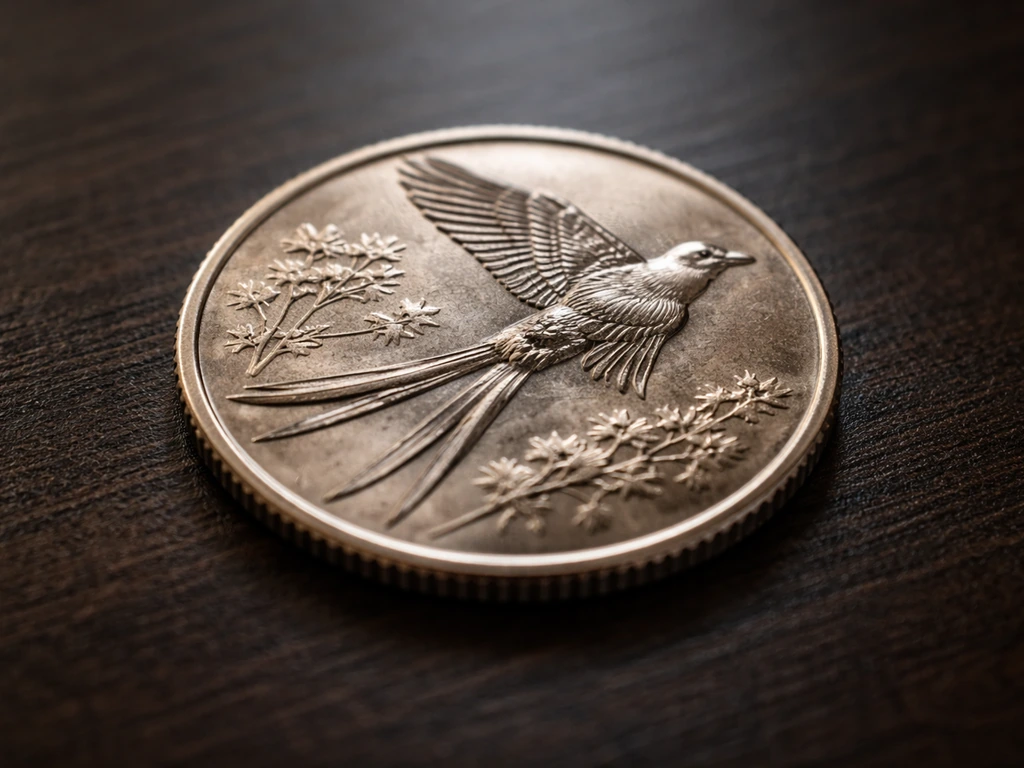
What Bird Is on the Oklahoma Quarter? State Bird Match
Identify the bird on the Oklahoma quarter and match its cues to Oklahoma’s official state bird, with tips to confirm.
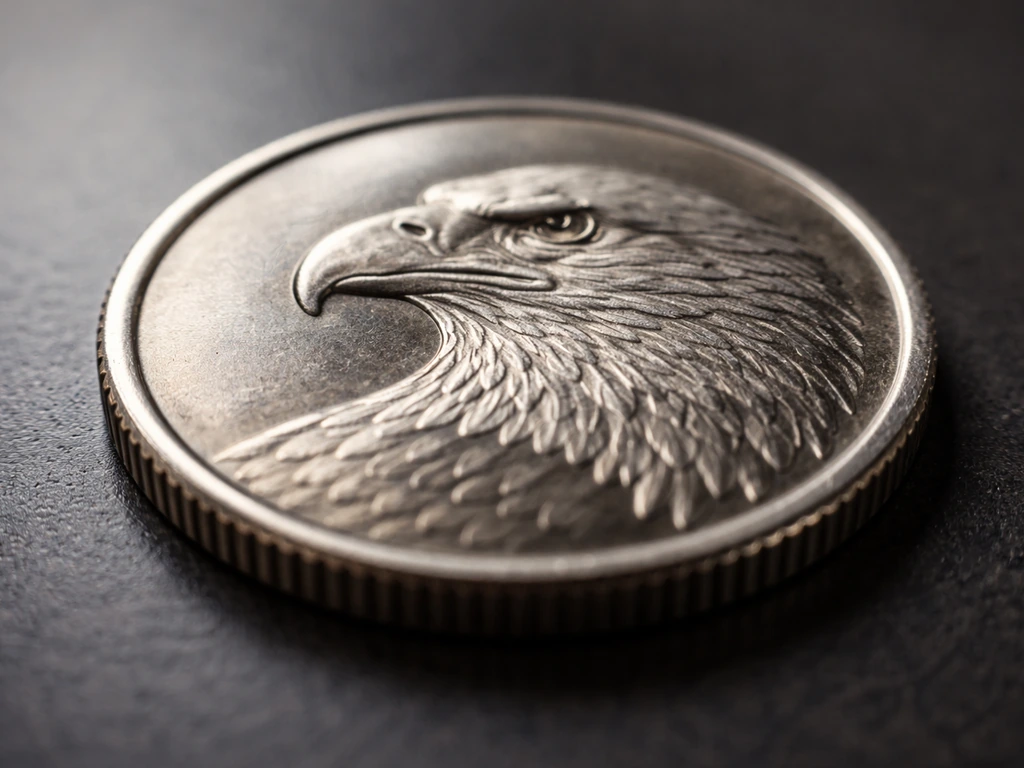
What Bird Is on the Idaho Quarter U.S. Coin
Identify the exact bird on the Idaho quarter, confirm it as Idaho’s state bird, and learn why it was chosen.
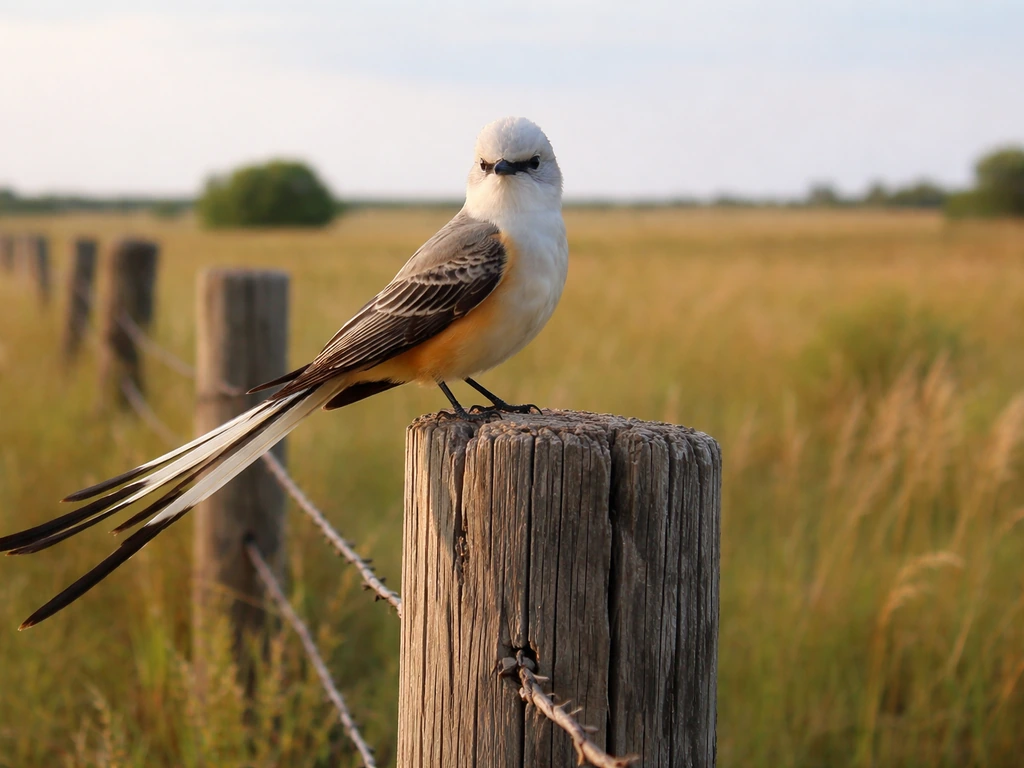
Why Is the Scissor-Tailed Flycatcher Oklahoma State Bird?
Learn why Oklahoma chose the scissor-tailed flycatcher: ID traits, state adoption history, and habitat presence.