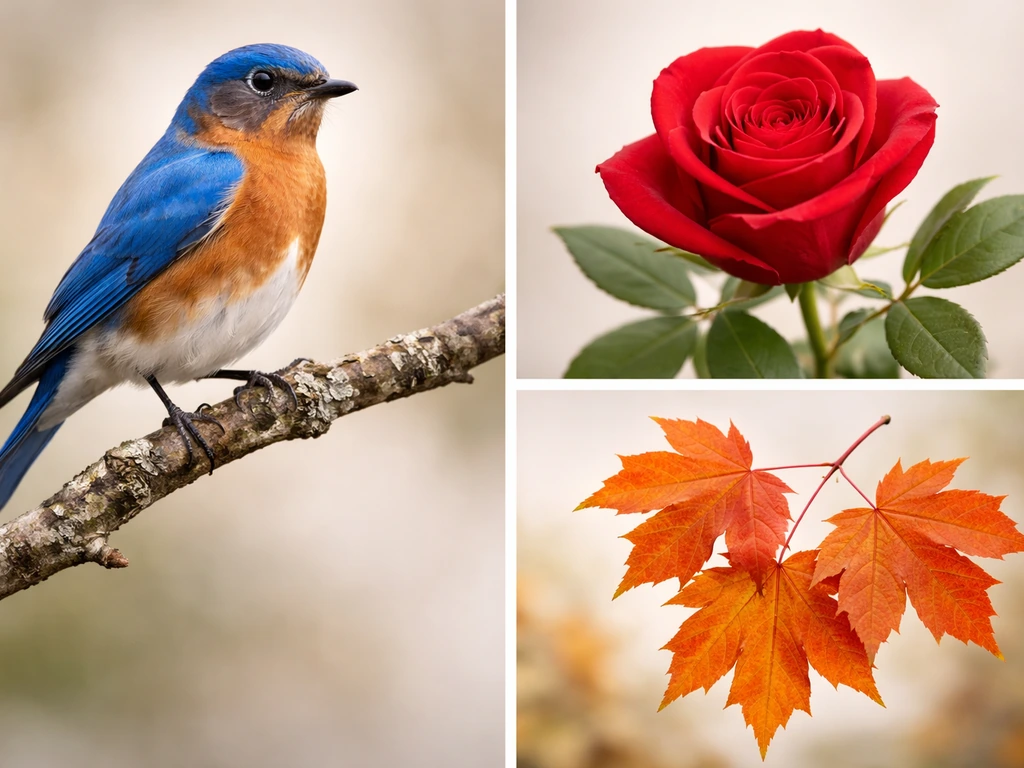
New York's official state bird is the eastern bluebird (Sialia sialis), its state flower is the rose (any color or combination of colors), and its state tree is the sugar maple (Acer saccharum). All three are enshrined in New York State Law, and each has a surprisingly interesting backstory.
What Is the New York State Bird and Flower

Marcus Webb
27 May 2026
New York's State Bird: The Eastern Bluebird
The official designation reads: "The bluebird (Sialia Sialis) shall be the official bird of the state of New York." Governor Nelson Rockefeller signed the bill into law on May 18, 1970. That's a relatively recent adoption compared to some states, but the bluebird had long been a beloved presence in New York's fields and orchards before it got the official title.
New York shares this designation with Missouri, which also recognizes Sialia sialis as its state bird. It's one of the more common pairings in state bird symbolism, and it speaks to just how widespread and recognizable the eastern bluebird is across the eastern half of the country. If you're curious about why New York specifically chose the eastern bluebird over other candidates, there's a deeper dive into that history worth reading. If you're wondering why the eastern bluebird was selected over other candidates, the article breaks down the history and symbolism behind the choice why the eastern bluebird was chosen.
How to identify the eastern bluebird
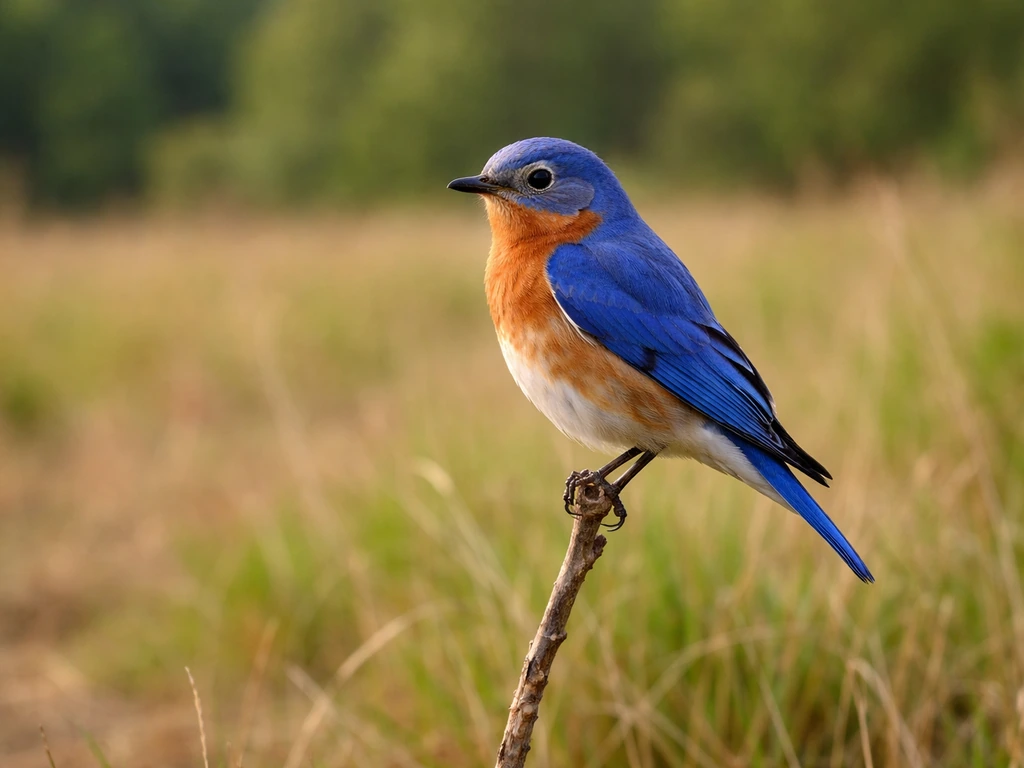
The male eastern bluebird is one of the easier birds to spot once you know what you're looking for. He has vivid, deep blue on his back and wings, with a rusty or brick-red throat and breast. The female is softer: grayish above with bluish wings and tail, and a muted orange-brown wash on the breast. Size-wise, think about two-thirds of an American Robin, which is a useful mental anchor. They're small, upright-perching birds you'll often see on fence posts or low wires at the edge of open fields.
The call is a gentle, liquid tu-a-wee, low-pitched and musical. The song is a soft warble made up of short phrases. If you're out in a meadow or open woodland edge and you hear something that sounds like a quiet, mellow flute, look for a small blue shape on the nearest perch. That's almost always your bluebird.
New York's State Flower: The Rose
New York's state flower is the rose, officially designated with notably flexible wording: "The rose shall be the official flower of the state in any color or combination of colors common to it." That language, adopted by legislation on April 20, 1955, means no single variety or color is pinned down, which reflects a long and sometimes messy history of trying to pick a flower.
The story behind the rose goes back to 1890, when New York schoolchildren participated in a statewide vote around Arbor Day to choose a state flower. The competition was essentially goldenrod versus rose. When the vote was reopened, the rose came out ahead with 294,816 votes. Even though that children's vote wasn't a formal legal designation, the rose was treated as the de facto state flower from that point. It took another 65 years before the legislature made it fully official in 1955. Iowa also recognizes the wild rose as its state flower, so New York is in good company in the broader rose-as-state-symbol category, though New York's designation is unusually broad in allowing any color.
How to identify a rose
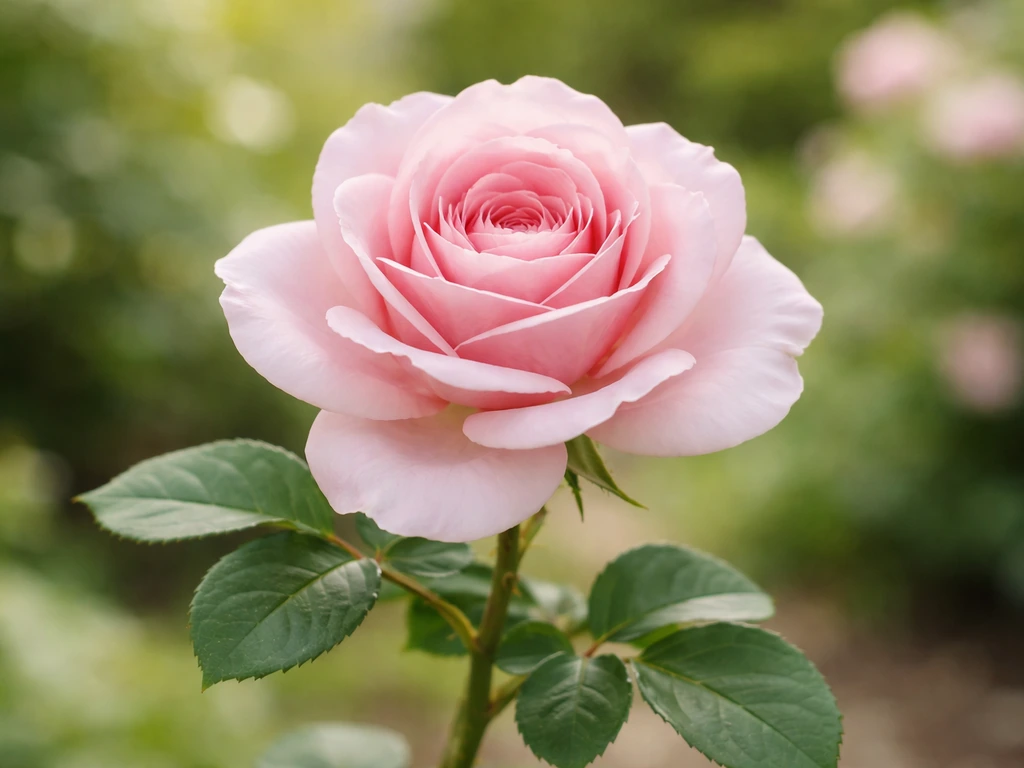
Roses (genus Rosa) are woody shrubs that can grow upright, sprawl, or climb. The leaves are alternate and pinnately compound, meaning each stem carries multiple smaller leaflets with serrated edges. The stems have prickles, which most people just call thorns. Flowers have five petals in wild varieties (cultivated roses can have many more layered petals) and come in white, pink, red, yellow, and orange tones. If you see a woody, thorny shrub with compound serrated leaves and fragrant five-petaled flowers, you're almost certainly looking at a rose.
New York's State Tree: The Sugar Maple
The official wording is clean and simple: "The sugar maple (Acer Saccharum M.) shall be the official tree of the state." The designation came through at the 1956 legislative session, with the Senate acting on January 31, 1956. New York had gone a surprisingly long time without an official state tree before finally landing on the sugar maple, and the choice wasn't without drama. Vermont, famously proud of its maple syrup industry, reportedly took some issue with New York claiming the sugar maple. But New York has plenty of sugar maples of its own, and the tree's cultural and economic significance to the state made it a natural fit.
How to identify a sugar maple
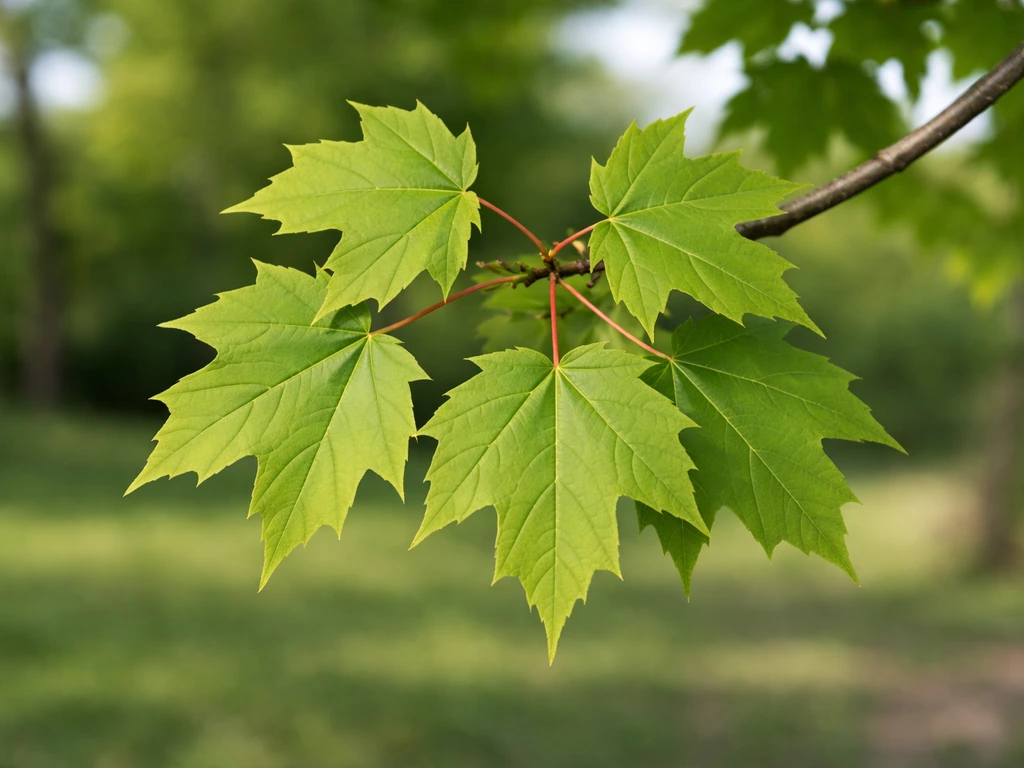
Sugar maple leaves are simple and opposite on the branch, typically 3 to 5 inches long, with three to five pointed lobes and smooth (not serrated) edges between the lobes. That smooth edge between lobes is actually one of the key ways to tell a sugar maple from a red maple, which has more jagged sinuses. In fall, sugar maples put on a spectacular show of orange, red, and yellow. In late summer, look for the paired winged seeds called samaras, with each wing about an inch long, spinning like little helicopters as they fall.
Why New York chose these three symbols
Each of New York's three main nature symbols reflects a different slice of the state's character. The eastern bluebird is a bird of open countryside and farmland, and it carries a strong association with hope and the arrival of spring. Choosing it in 1970 aligned with a broader national awareness of wildlife conservation at the time. The rose connects to a grassroots democratic moment, a children's vote in 1890 that captured public imagination long before the legislature got involved. And the sugar maple is deeply tied to the economics and landscape of upstate New York, from the Catskills to the Adirondacks, where maple syrup production and blazing fall foliage are both part of the regional identity.
How New York's symbols compare to other states
| Symbol | New York | Shared by / Notable comparison |
|---|---|---|
| State Bird | Eastern Bluebird (Sialia sialis) | Also Missouri's state bird |
| State Flower | Rose (any color) | Iowa designates the Wild Rose; several states use rose variants |
| State Tree | Sugar Maple (Acer saccharum) | Vermont is strongly associated with maple but chose a different designation path |
The eastern bluebird pairing with Missouri is probably the most notable overlap. Both states landed on Sialia sialis independently, which tells you something about how beloved this bird is across its range. States like Pennsylvania went a very different direction with the ruffed grouse, a forest bird that reflects a totally different landscape and hunting tradition. Delaware's choice of the blue hen chicken is even more distinctive, rooted in Revolutionary War lore rather than ornithology. If you're wondering why the blue hen became Delaware's state bird, the Revolutionary War story explains it Delaware's choice of the blue hen chicken. New York's bluebird sits comfortably in the middle: a wild, native species with broad appeal and a strong symbolic connection to spring and open land.
Where to go from here
If you landed here looking for a quick fact-check, you've got all three answers: eastern bluebird, rose, sugar maple. You might also be wondering, is the roadrunner a state bird in any state? If you want to go deeper on the bird specifically, the dedicated New York state bird page covers the full story of why the eastern bluebird was chosen, more detailed identification guidance, and how it compares to bluebird designations in other states. The roadrunner is often associated with New Mexico, so if you are wondering about its background, that state bird story explains why it was selected. It's worth a look if you're trying to understand the pattern of which states chose which birds and why. The site covers all 50 states, so you can easily cross-reference New York's bluebird against Missouri's or explore how northeastern states differ from western ones in their bird choices.
FAQ
What is the official state bird and state flower of New York, according to state law?
New York’s official state bird is the eastern bluebird, and the official state flower is the rose (designated broadly as roses in any common color or combination of colors).
Does New York specify a particular rose color or type for the state flower?
No. The law is intentionally flexible, it covers roses in any common colors or mixes, so you do not need to match a single variety or colorway to be “correct.”
Is the “state flower” meant to be a wild rose only, or can it be cultivated roses?
Either can fit the designation in practice. The article’s plant description applies to roses generally (woody shrubs), and the state flower wording does not limit the choice to wild roses only.
Are there any other state flowers or competing flower symbols in New York?
For the official state flower, the designation is the rose. Even if people celebrate other plants informally, the legal state flower is the rose under New York’s statute.
Can the eastern bluebird be confused with other birds that also look blue?
Yes, visually. A common mix-up is with other small blue songbirds, but the eastern bluebird’s combination of vivid blue back and wings plus a rusty or brick-red throat and breast, along with its gentle tu-a-wee call, is a key way to confirm.
When should I expect to hear or see the eastern bluebird in New York?
Because it is tied to spring and open-country habitats, it is most noticeable during the warmer months when it is actively singing and perching on fence posts or low wires at field edges.
Why does New York choose a rose instead of a more narrowly defined plant?
The rose designation came from a long selection process that began with a popular vote. The final legal language kept the outcome open to any common rose colors, which prevented the need to settle on one cultivar.
If I’m making a school project, what should I write to be fully accurate?
Write all three official symbols clearly, state bird eastern bluebird, state flower rose, and also the state tree sugar maple, since many projects ask for the full set rather than just one symbol.