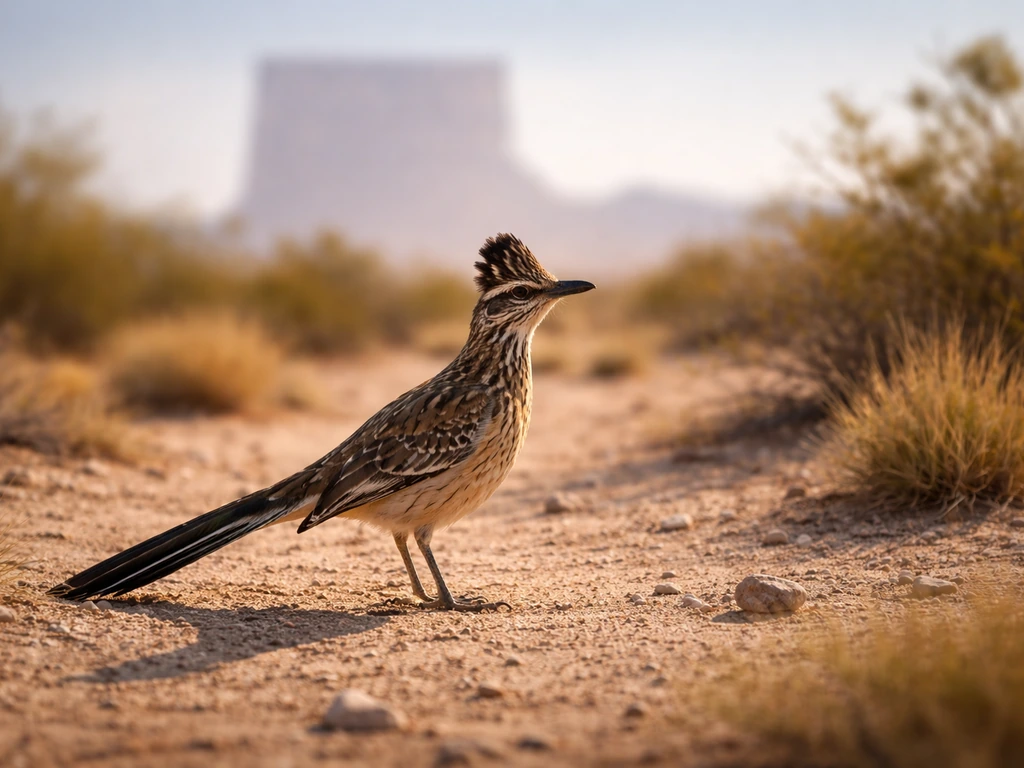
New Mexico chose the Greater Roadrunner (Geococcyx californianus) as its official state bird on March 16, 1949, because no other bird is more deeply woven into the landscape, culture, and identity of the state. The legislature officially named it the "chaparral bird, commonly called roadrunner," and the reasons behind that choice range from the bird's unmistakable desert appearance to centuries of Native American symbolism to the simple fact that it darts and dashes across nearly every corner of the state. You might also be wondering why Delaware chose its own official state bird, including the connection behind the “blue hen.”.
Why Is the Roadrunner the New Mexico Bird? Facts and History

Marcus Webb
11 Jun 2026
What the "New Mexico bird" actually means
When people search for the "New Mexico bird," they are almost always looking for the state's official state bird, which is a formal designation made by the state legislature. Every U. S. state has one, and it is usually written into law as part of the state's official symbols alongside things like the state flower, state tree, and state fossil.
In New York, the state bird and state flower are also official symbols set by the state state flower, state tree, and state fossil. New Mexico's Secretary of State maintains the official list, and the Greater Roadrunner sits right at the top of the bird category. The legal language in New Mexico statutes refers to it as "the chaparral bird, commonly called roadrunner," a name that reflects both its formal regional identity and its popular one.
You will also see it listed under two Spanish nicknames: "el corre caminos" (the road runner) and "el paisano" (the countryman or fellow countryman), both of which speak to how embedded this bird is in the culture of the region.
Quick ID: how to recognize the Greater Roadrunner
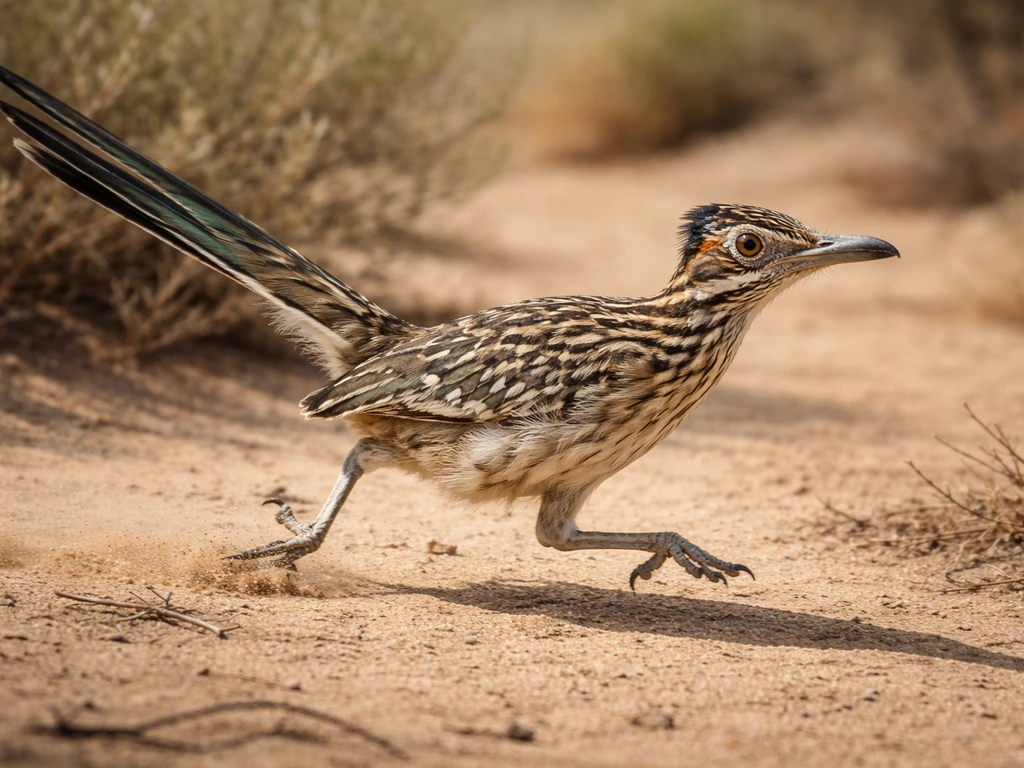
The Greater Roadrunner is hard to confuse with anything else once you know what to look for. It runs along the ground rather than flying, and its body shape reflects that lifestyle completely.
- Size: roughly 56 cm (about 22 inches) long, making it a substantial bird
- Distinctive head crest that it raises and lowers depending on mood or alertness
- Thick, strong beak and noticeably long legs built for sprinting
- Long, exaggerated tail that it pumps up and down while running
- Bare patch of blue and red skin behind each eye, visible up close
- Streaked brown and white plumage that blends into desert scrub
- Colors said to reflect the tones of the New Mexico desert itself
The roadrunner is a member of the cuckoo family, which surprises most people. It prefers arid and semi-arid habitat: sagebrush flats, chaparral, mesquite, and desert scrub. It can run at speeds up to 15 miles per hour, and it genuinely prefers sprinting to flying. Its call is a series of 6 to 8 downward-slurring coos (often written as "co-coo-coo-coo-coooooo") that carries up to a quarter mile before sunrise. Interestingly, that call is often mistaken for a mourning dove, so if you hear what sounds like a dove in the desert at dawn, double-check your surroundings.
Why New Mexico picked the roadrunner
The symbolism behind this choice is layered. A 2009 New Mexico legislative memorial (SJM 42) framed the roadrunner as "an icon for all New Mexicans," and that framing holds up on several levels.
It lives almost everywhere in the state
The roadrunner "darts, dashes and roams throughout the state" according to the state legislature's own language, with only the Four Corners area being a notable exception. For a state that wanted a bird its residents would recognize and feel connected to, that geographic reach matters. New Mexico's Secretary of State puts it plainly: there is probably "no State Bird more closely connected to the people of the state than the Greater Roadrunner is to the citizens of New Mexico."
Deep roots in Native American tradition
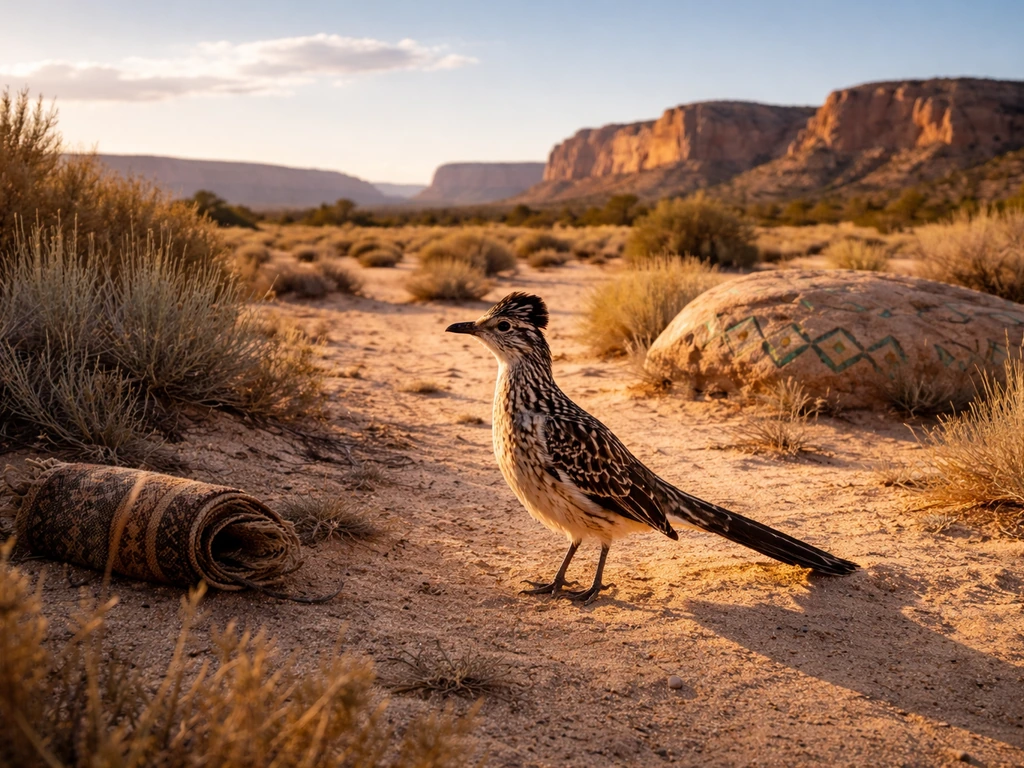
Long before the 1949 legislative vote, the roadrunner already carried significant cultural weight. Native American groups across the region attributed supernatural powers to the bird. The Hopi famously used the roadrunner's distinctive "X"-shaped footprint (two toes point forward, two point back, making it impossible to tell which direction the bird was heading) on Kachina figures as a way to confuse and ward off evil spirits. Early settlers were also told that if they got lost, following a roadrunner could lead them back to the path. That kind of folklore does not attach itself to a bird that blends into the background.
Its appearance and behavior are a natural fit for the desert Southwest
The bird's coloring, build, and diet all tie directly to the New Mexico landscape. Its streaked brown-and-white plumage mirrors the desert palette. It eats insects, small reptiles, and rodents, which is essentially the local desert food web in a nutshell. It is fast, tough, adaptable, and completely at home in harsh, dry terrain. Those are traits New Mexico was happy to claim as representative of the state's character. The eastern bluebird is New York's state bird because its bright song and gentle presence are closely tied to the state's open fields and woodlands.
When it became official: the 1949 designation
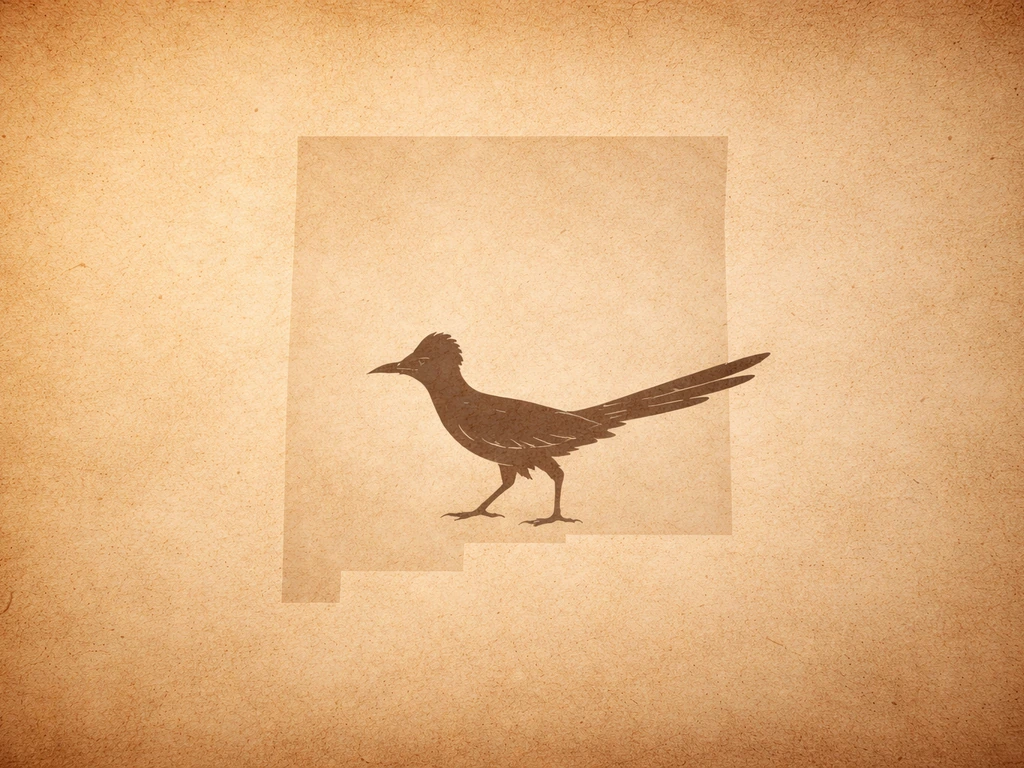
The New Mexico Legislature formally adopted the roadrunner as the official state bird on March 16, 1949. The statute named it "the chaparral bird, commonly called roadrunner," leaning on the regional name first and the popular name second. That legal language has held up through multiple subsequent pieces of legislation, including a 2025 Senate bill that still references the same "chaparral bird, commonly called roadrunner" phrasing, showing the designation has never been challenged or replaced.
In 2009, the New Mexico Legislature passed SJM 42, a joint memorial that declared March 16, 2009 as "Day of the Roadrunner" at the legislature to mark the 60th anniversary of the 1949 adoption. That memorial is also the source of some of the most detailed official language about why the bird was chosen in the first place, essentially a legislative love letter to the chaparral bird written six decades after the fact.
How it fits alongside other state birds
No other U.S. state has claimed the Greater Roadrunner as its official state bird, making New Mexico's choice genuinely unique. That stands in contrast to some species that ended up shared across multiple states: the Northern Cardinal, for instance, is the state bird of seven different states. The roadrunner is New Mexico's alone.
In terms of themes, though, New Mexico's choice fits a recognizable pattern. Several states picked birds that are deeply tied to the character of the local landscape rather than just being common or colorful. Pennsylvania's Ruffed Grouse, Delaware's Blue Hen Chicken, and New York's Eastern Bluebird each tell a story about what the people of that state wanted to represent about themselves.
New Mexico's roadrunner does the same thing, just with a desert twist: the bird is fast, independent, built for a tough environment, and carries centuries of cultural meaning that goes well beyond ornithology. The "X" footprint, the pre-dawn call carrying a quarter mile across the desert, the sprint instead of a flight: all of it paints a picture that feels very specifically New Mexican.
| State | State Bird | Shared with Other States? | Key Selection Theme |
|---|---|---|---|
| New Mexico | Greater Roadrunner | No (unique) | Desert identity, Native American symbolism, statewide presence |
| Pennsylvania | Ruffed Grouse | No (unique) | Forest habitat, historical hunting tradition |
| Delaware | Blue Hen Chicken | No (unique) | Revolutionary War history, regional pride |
| New York | Eastern Bluebird | Shared with Missouri | Widespread presence, cultural familiarity |
| 7 States (e.g., Ohio, Indiana) | Northern Cardinal | Yes (most shared) | Colorful, year-round resident across large range |
What to do next if you want to dig deeper
If you want to verify any of this for a school project, a quiz, or just personal satisfaction, here are the best moves:
- Check the New Mexico Secretary of State's official state symbols page, which lists the Greater Roadrunner with its common names, scientific name, and the 1949 designation date
- Read the original SJM 42 (2009) joint memorial on the New Mexico Legislature's website (nmlegis.gov) for the most detailed official explanation of why the roadrunner was chosen
- Use Cornell Lab of Ornithology's All About Birds to hear the roadrunner's actual call and see its range map confirming its presence across New Mexico
- Check the USGS range map for Geococcyx californianus if you want an authoritative geographic distribution source
- Explore other state bird pages to compare New Mexico's unique pick against states that share birds or chose species for very different reasons
The short version: New Mexico picked the roadrunner in 1949 because it was already the state's bird in every meaningful sense. It lived there, it ran through the culture, it carried centuries of symbolic weight from Native American traditions, and it looked like the desert itself. The legislature just made it official. USGS also provides species-labeled media for the Greater Roadrunner (Geococcyx californianus), which can help with a quick visual cross-check of the correct scientific name.
FAQ
Is the state bird “roadrunner” the same everywhere, or can it be a different species?
New Mexico’s official bird is the Greater Roadrunner (Geococcyx californianus). If you see a different road-runner species or a lookalike bird in a photo, it may be from another region or country, so check the scientific name before using it for a homework submission.
What should I do if I hear something like a mourning dove in the desert, could it still be a roadrunner?
It’s normal for people to mix it up at dawn, because its call can be misheard as a mourning dove. A quick differentiator is behavior, the Greater Roadrunner typically runs on the ground and rarely flies, so if you observe ground-running, you are likely hearing or seeing the right bird.
How can I confirm I found roadrunner tracks instead of another desert bird’s signs?
Use the “X” footprint clue and the call together. The footprint pattern (two toes forward, two back) is distinctive for tracks, and the call is a series of downward-slurring coos that often carries well before sunrise.
What exact wording should I use when citing the roadrunner as New Mexico’s state bird?
For school or quiz answers, use the exact legal wording pattern: it is referred to as “the chaparral bird, commonly called roadrunner.” Even if you prefer the nickname in everyday speech, that phrasing is the safest match to what the statutes and official materials use.
Why do some sources list more than one “New Mexico bird” when the state bird is supposed to be a single species?
The state does name a single official state bird, so there is no separate “official roadrunner” category beyond the Greater Roadrunner. If you see websites listing multiple birds, they are usually discussing unofficial symbols or general state wildlife, not the formal state-bird designation.
If roadrunners are supposed to be everywhere, why might I not see one in my specific part of New Mexico?
Yes, because the bird’s range is not perfectly uniform across New Mexico. The article notes a notable exception in the Four Corners area, so if you are there and not seeing one, that doesn’t necessarily contradict the state symbol choice.
How can I tell the difference between a state’s official bird and a bird that is just culturally popular?
When people ask this, they’re often comparing official symbols across states. A helpful check is whether the bird is explicitly defined by state law as the “state bird,” because some birds are popular cultural mascots without being the formal legislature-designated symbol.
Did the 2009 Roadrunner memorial change the state bird, or just celebrate it?
The “Day of the Roadrunner” memorial in 2009 is tied to the 60th anniversary of the 1949 adoption, so it’s a commemoration rather than a change in the official bird. The Greater Roadrunner designation itself is what matters, and the celebration marks that anniversary.
What are common mistakes when trying to identify a roadrunner from a distance?
Don’t rely only on speed claims or plumage from one photo. The strongest identification cues from the article are ground-running tendency, the call style at dawn, and the desert-adapted habits, so combine observation and sound when possible.
What’s the best way to write a short “why roadrunner” answer for an essay or quiz?
If your goal is the “why,” focus on the legislature’s framing, the bird’s deep ties to New Mexico’s landscape, culture, and identity, plus its distinct desert-appropriate traits. For a concise paragraph response, you can structure it as origin and adoption (1949), cultural symbolism, and desert fit (behavior, habitat, and diet).
Next Article
What Is the New York State Bird and Flower
Get New Yorks official state bird and state flower plus state tree, with why chosen and easy ID tips.