Connecticut designated the American robin (Turdus migratorius) as its official state bird in 1943, when the General Assembly formally adopted it. To learn more about Connecticut’s choice, check what the state says about its official state bird what is the connecticut state bird. The choice came down to two reasons spelled out in the state's own records: the robin's special contribution to Connecticut's history and, interestingly, concern about its welfare as a species facing pressures at the time. That combination of cultural familiarity and conservation awareness made the robin the clear pick over other candidates.
Why Is the American Robin Connecticut’s State Bird?

Marcus Webb
10 Jun 2026
What Connecticut officially designated

Connecticut General Statutes § 3-109 is unambiguous: "The American robin, Turdus migratorius, shall be the state bird." The designation was made by the General Assembly in 1943 and is documented in the Connecticut State Register and Manual, which also carries the rationale language. So if you're fact-checking this for a school project, a trivia night, or just personal curiosity, those two primary sources (the statute and the Register and Manual) are your go-to confirmation points.
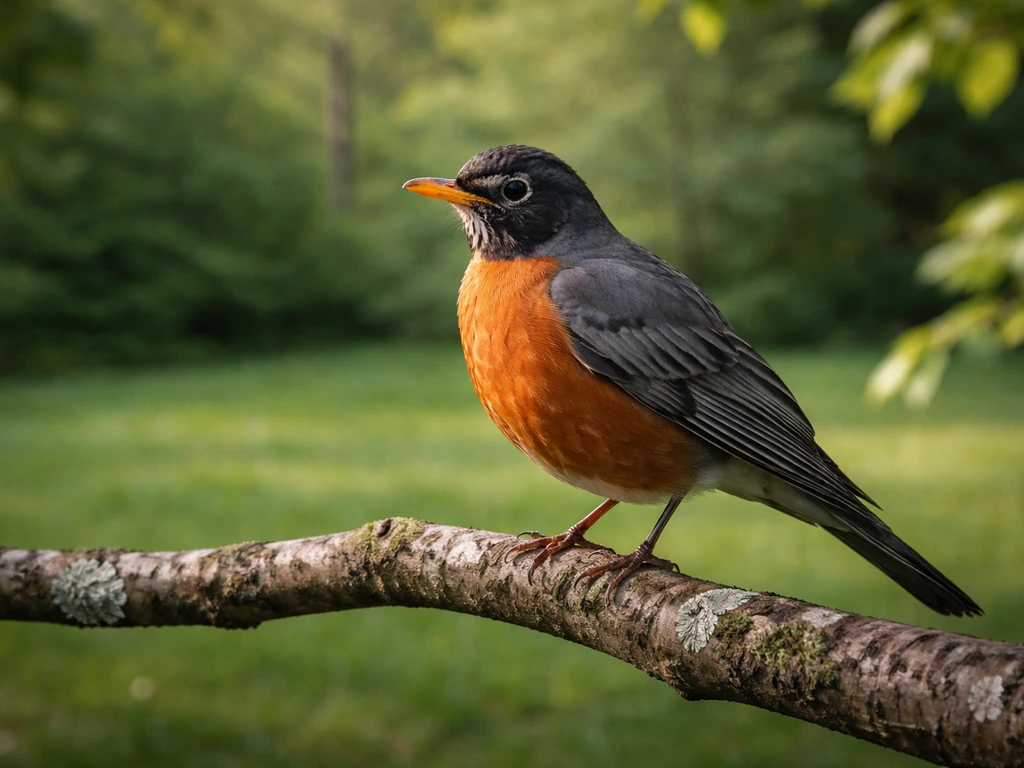
The American robin is one of the most recognizable birds in North America, which is part of why the designation resonates. Adults measure 7.9 to 11 inches long (20 to 28 cm), weigh around 2.7 to 3.0 oz (77 to 85 g), and have a wingspan of roughly 12.2 to 15.8 inches (31 to 40 cm). The signature field mark is the warm orange-red breast set against a dark gray-to-black back. Males tend to have a blacker head and richer overall coloring than females. If you hear a cheerful, repeating song from a lawn or park tree in spring, there's a very good chance you're already listening to Connecticut's state bird. Connecticut Public Media also describes the American robin as a “sure sign of spring” in public life cheerful, repeating song.
Why Connecticut picked the robin in 1943
The Connecticut Register and Manual is direct about the rationale: the American robin was chosen "because of its special contribution to the state's history and because of its ongoing plight as an endangered species." That second part surprises a lot of people. In the early to mid 20th century, widespread use of pesticides and habitat changes had put pressure on robin populations in ways that felt alarming at the time. Designating the bird as a state symbol was, in part, an act of public recognition that it deserved protection.
The historical contribution angle matters too. The robin had long been woven into New England life as one of the most visible and culturally familiar birds in the region. It showed up in yards, farms, and poetry as a reliable sign that winter was ending. That kind of deep-rooted presence in everyday Connecticut life made it a natural fit for a state symbol. There was also reportedly a competing suggestion floated around 1941 to adopt the European robin instead, but Connecticut moved forward in 1943 with the native American robin, which was the far more appropriate choice given the species actually lives there.
The historical and symbolic context behind the decision
State bird designations in the United States picked up steam in the 1920s through the 1940s, often driven by civic pride campaigns, school contests, or women's club lobbying efforts. Connecticut's 1943 adoption fits squarely into that wave. Selecting the robin was a statement about identity: this is a bird that ordinary Connecticut residents knew, saw in their backyards every spring, and cared about. Unlike some state bird choices that honored rare or regionally exotic species, Connecticut's pick was deliberately accessible and community-connected.
The conservation thread is also worth holding onto. Naming a bird an official state symbol raises its public profile and, historically, has often preceded or accompanied legislative interest in protecting it. In 1943, with DDT and other pesticides starting to make their way into broader agricultural use, there was genuine reason for concern about the robin's long-term numbers. The designation signaled that Connecticut took that seriously.
Where and when you'll see American robins in Connecticut
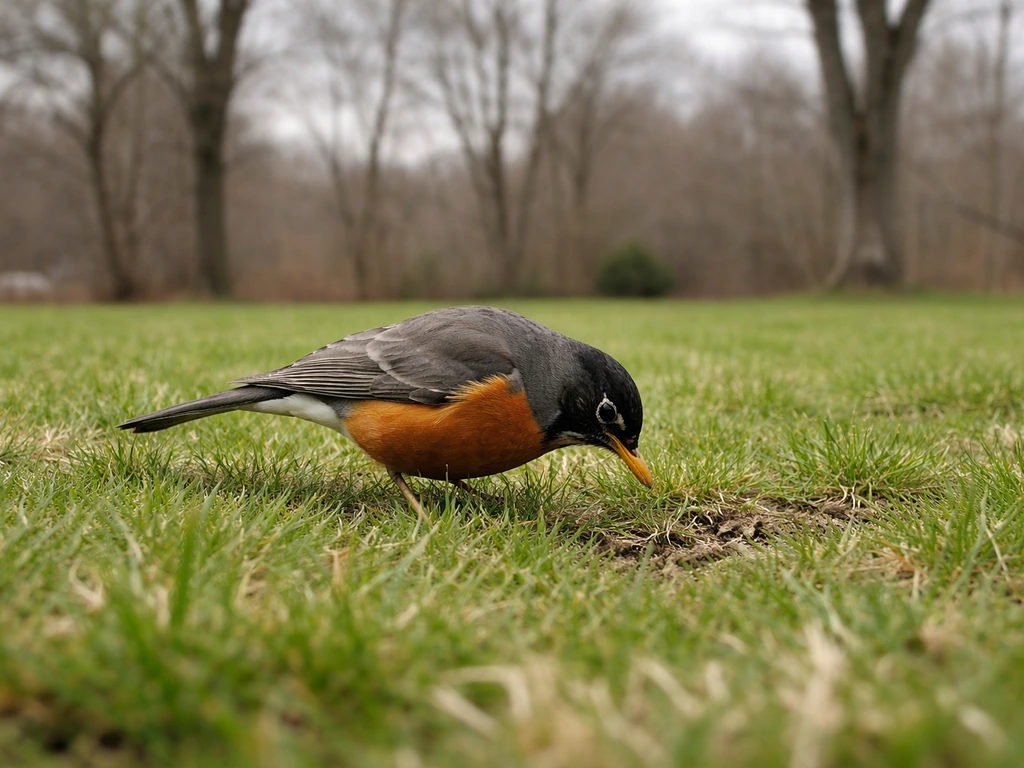
The robin's range and adaptability make it easy to find across Connecticut for much of the year. Spring is the classic season: robins reappear on lawns, fields, and parks as temperatures rise, and their earthy, worm-hunting behavior on open grass is one of the most familiar bird-watching experiences in the state. They're heavily present from March through early fall across lawns, suburban backyards, woodland edges, city parks, and open grasslands with shrubs. In spring and summer, they shift heavily toward earthworms and insects as their primary diet, which is why you'll see them tilting their heads and pulling worms on any freshly watered lawn.
In winter, robins don't always leave Connecticut entirely. They tend to gather in flocks in wooded areas where berry-producing trees and shrubs are abundant, which makes them harder to spot than their spring counterparts on open grass. If you hear a sharp "kwee-kwee-kuk-kuk-kuk" or "puck-kuk-kuk-kuk" call accompanied by tail-jerking behavior, that's the robin's alarm or contact call, a reliable audio confirmation alongside the visual field marks.
How to confirm you're looking at an American robin (not a lookalike)
The American robin belongs to the thrush family, and a few other thrushes share somewhat similar patterning. Here's a quick field checklist to be sure:
- Orange-red breast (not spotted, not pale): the warmth and solid coverage of the breast color is distinctive
- Dark gray to black back and head: the contrast between the dark upperparts and bright breast is the clearest single mark
- White eye-ring and white-tipped outer tail feathers: visible in good light
- Size: robin-sized is actually a birding benchmark, roughly 9 to 11 inches, noticeably larger than a sparrow
- Upright posture and run-stop-tilt foraging behavior on lawns: that confident, bouncy ground movement is almost diagnostic on its own
- Song: a rich, rolling "cheerily, cheer-up, cheerio" phrase, often delivered from a high perch early in the morning
The Varied Thrush and Spotted Towhee can superficially resemble a robin in low light, but neither is likely to be standing on a Connecticut lawn pulling earthworms in April. If you're seeing a big thrush with a solid orange breast on a suburban lawn in Connecticut, you're almost certainly looking at Connecticut's official state bird.
Connecticut's choice compared to other states
Connecticut is not alone in choosing the American robin. You may also be wondering whether another bird, like the crow, holds the same state-bird status in Connecticut is the crow a state bird. Michigan adopted it as their state bird in 1931, more than a decade before Connecticut, and Wisconsin followed in 1949. Wisconsin later adopted the American robin as its state bird, which is why you might see it referenced in that context today Wisconsin followed in 1949. If you're also wondering about Michigan specifically, the American robin is the Michigan state bird Michigan adopted it as their state bird. That makes the American robin one of only a handful of species shared by three states as their official bird. If you want the bigger picture, Michigan and Wisconsin also adopted the American robin as their state bird, so it has three state-bird designations in total how many states have the robin as their state bird. It's worth noting that each state had its own rationale: Michigan's designation came partly from a widely conducted popularity contest in which the robin was named the best-known and best-loved bird in the state, while Wisconsin's process followed a similar civic engagement path. Michigan Public Radio also explains the robin became Michigan’s state bird through a contest and legislative recognition history, which is part of how the rationale was communicated over time. Connecticut's rationale was more explicitly tied to conservation concern alongside cultural familiarity, which makes it a slightly different story even though the bird is the same.
| State | Year Adopted | Key Rationale |
|---|---|---|
| Connecticut | 1943 | Historical contribution to the state and conservation concern for the species |
| Michigan | 1931 | Won a statewide popularity contest; "best known and best loved" bird in the state |
| Wisconsin | 1949 | Civic adoption following public engagement; familiar and widespread species |
If you're curious about how the robin compares to other state birds across the country, or whether any other common birds are shared across multiple states the way the robin is, those comparisons reveal interesting patterns in how states have approached their official symbols. The robin stands out as a genuinely beloved, broadly distributed species rather than a regionally rare or exotic pick.
How to verify this and where to go next
If you need an authoritative source to confirm Connecticut's state bird designation, two primary government sources have you covered. First, Connecticut General Statutes § 3-109 states it directly in law. Second, the Connecticut State Register and Manual (published by the Secretary of the State) repeats the 1943 adoption date and includes the rationale language. Both are publicly accessible and are the same sources Connecticut's own state agencies cite.
For bird identification, Cornell Lab's All About Birds and the U.S. Fish and Wildlife Service bird guide are the most reliable free resources for confirming field marks. If you want to see the bird locally, any Connecticut park or suburban yard with open lawn from March through October is a reliable starting point. Spring mornings, especially after light rain when earthworms come to the surface, are prime time. The robin doesn't require a special trip or binoculars to find. It's deliberately and appropriately Connecticut's most approachable official symbol.
FAQ
So is Connecticut’s reason for choosing the American robin historical, conservation-based, or both?
Because Connecticut’s law names it directly. In other words, the “why” is tied to the official legislative rationale recorded in 1943, not just popularity, and the bird is formally defined as Turdus migratorius (American robin) in the statute.
What sources should I cite if my assignment asks for both the designation and the reason behind it?
For school projects, prioritize the statute text itself for the designation, then use the Connecticut State Register and Manual for the stated rationale. If a worksheet asks for “who decided” or “why it was chosen,” the Manual’s wording is usually the better fit than general bird descriptions.
Could Connecticut’s state bird have been the European robin instead, and does that affect identification?
The European robin is different from the American robin, and even though their names sound similar, Connecticut chose a native species. The practical takeaway is that you should never treat “robin” as a universal bird name when identifying or researching state birds.
Why don’t I see American robins in Connecticut every month, even though they’re the state bird?
Yes. In winter, robins may be in berry-rich trees and shrubs in flocks, so they can look “missing” compared with spring lawn sightings. Using this seasonal expectation helps avoid assuming the bird isn’t in your area.
What’s the most common mistake when people try to identify a robin versus lookalike thrushes?
Look for the combination of habitat and behavior, not just color. A robin is often on open ground or lawns pulling earthworms, and the orange-red breast with a darker back is a strong field clue; similar thrushes usually show different proportions and less consistent lawn worm-feeding behavior.
How can I confirm I’m hearing the state bird when it won’t come into view?
You can still confirm it audibly. The tail-jerking contact or alarm calls can be a reliable cue, but they’re easiest to catch when you’re near trees or shrubs where birds perch and socialize, not only in open grass.
Do other states that chose the American robin (like Michigan and Wisconsin) have the same reason Connecticut used?
Shared state-bird status does not mean identical reasons. Connecticut’s rationale emphasizes both cultural familiarity and concerns about species pressures at the time, while Michigan and Wisconsin also reflect civic engagement and popularity-style approaches.
If the American robin is so common, why did Connecticut still frame the choice around species pressures?
Yes, and it’s practical: robins are a thrush and are widespread in North America, so they can feel “common.” That said, the state-level choice was about elevating public attention, particularly during periods when pesticides and habitat changes were affecting populations.
When and where in Connecticut is the highest chance of spotting the state bird?
If you want a fast, reliable local plan, aim for early spring after light rain when earthworms are more available. Pair that with parks or suburban lawns from morning through early afternoon, when robins are actively feeding.