Wisconsin chose the American robin as its state bird because schoolchildren across the state voted for it overwhelmingly, preferring the familiar robin over every other candidate by a 2-to-1 margin. That vote led directly to the official designation, which was codified into law on June 4, 1949, under Wisconsin Statutes § 1.10(3)(f): "The robin (turdus migratorius) is the state bird." The reason it won so decisively is simple: the robin is everywhere in Wisconsin, it shows up in backyards and parks every spring, and generations of Wisconsin kids grew up watching it tug earthworms out of the lawn.
Why Is the Robin the State Bird of Wisconsin? Reasons

Marcus Webb
15 Jun 2026
What Wisconsin's state bird is (and what that designation actually means)
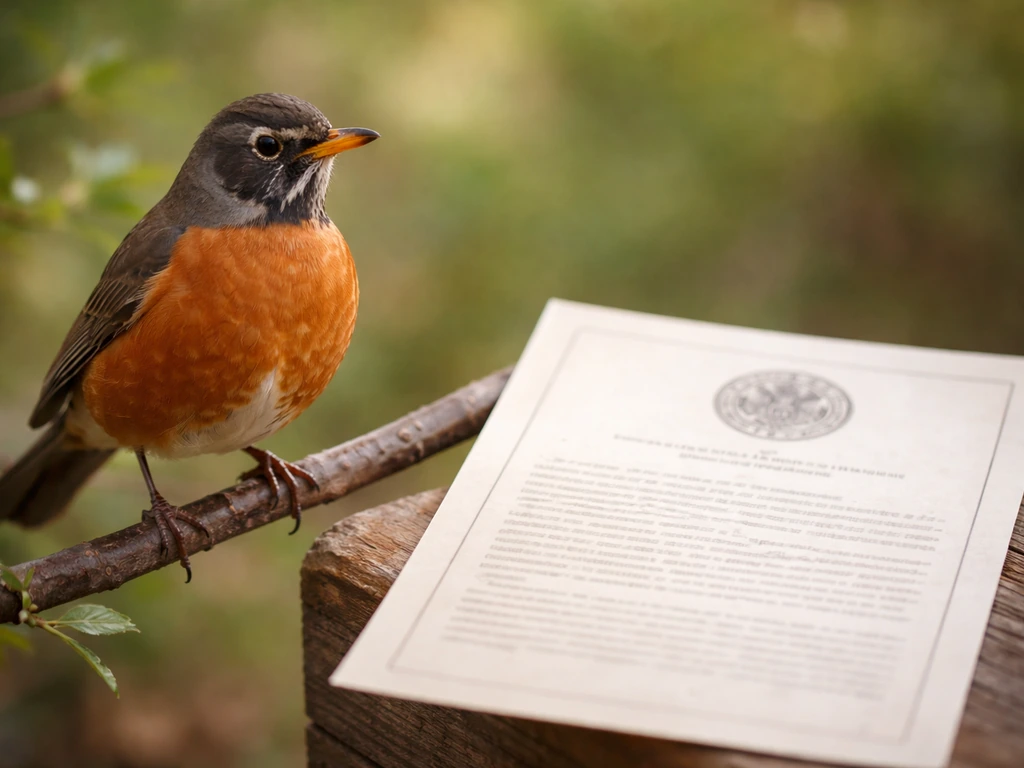
The official state bird of Wisconsin is the American robin, scientific name Turdus migratorius. The designation is written directly into Wisconsin's compiled statutes, making it a permanent legal symbol of the state alongside the state flower, state tree, and other official emblems. State bird designations like this one are not just honorary titles. They get embedded in state law, taught in schools, and used to represent the character of a place. Wisconsin's choice reflects a bird that residents recognized without needing a field guide, one that signals the arrival of spring and is present in virtually every corner of the state.
Meet the American robin: what to look for in Wisconsin
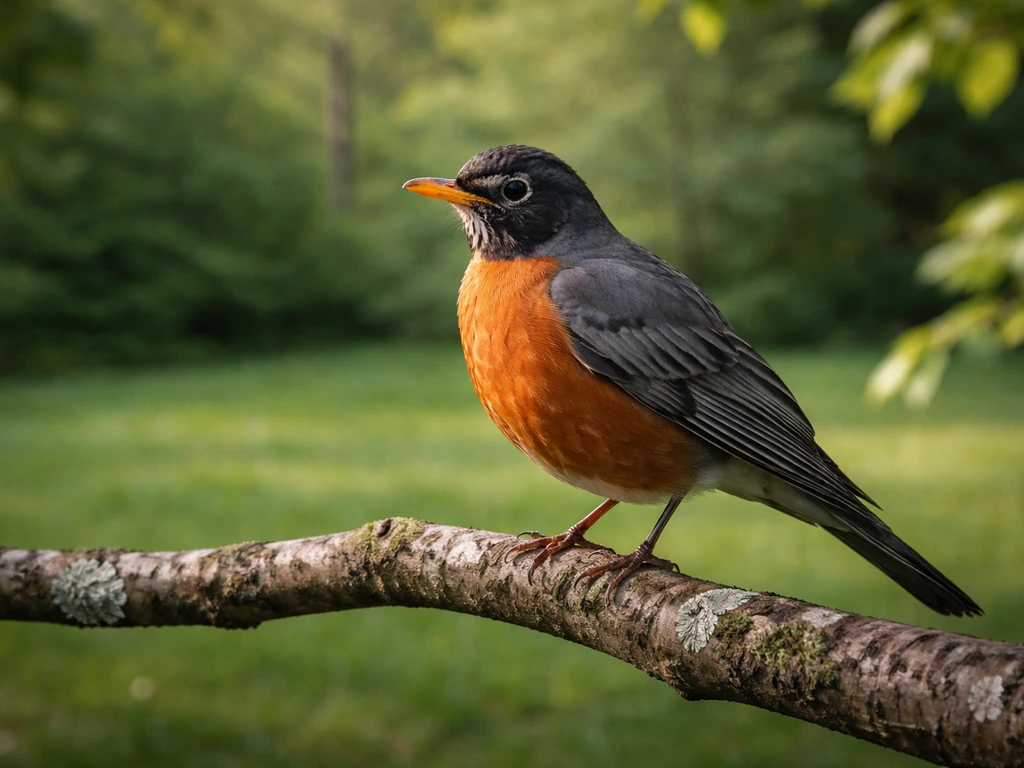
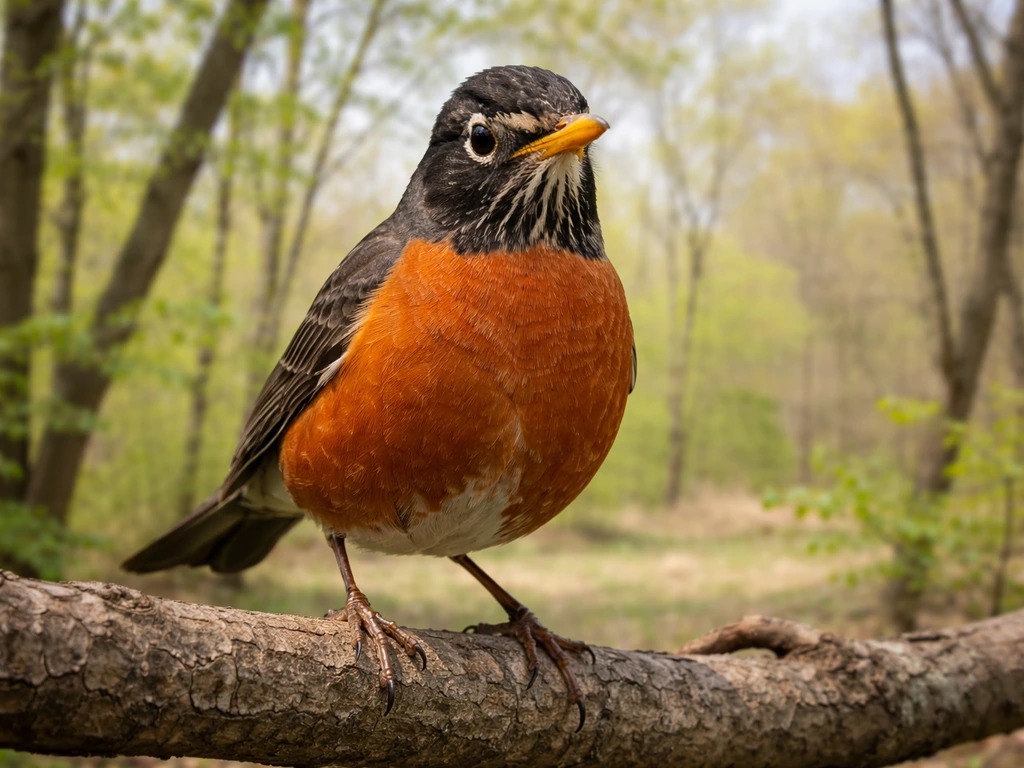
If you want to confirm you're looking at the right bird, the American robin is hard to confuse once you know what to look for. It's a fairly large songbird, around 10 inches (25 cm) long, with a round body, long legs, and a fairly long tail. The most obvious feature is the brick-red or orange-red breast, which contrasts sharply with its dark gray-to-black back and head. The chin is white with dark streaks, and there's a partial white eye ring. Males are slightly brighter and darker-headed than females and immatures.
The robin's song is just as recognizable as its plumage: a series of rich, caroling phrases often described as "cheer-up, cheerily, cheer-up, cheerily." You'll hear it early in the morning throughout spring and summer, well before most other birds start calling. In Wisconsin, robins breed from early April through mid-July, with activity peaking in May and June, which means they are a constant presence during the warmest and most outdoors-oriented months of the year. Cornell Lab’s All About Birds offers natural-history context for the American robin’s ecology and behavior, which can help with field identification and understanding seasonal patterns blank" rel="noopener noreferrer">seasonality understanding.
Robins thrive in the kind of landscape most Wisconsin residents live in: suburban yards, parks, open fields, and woodland edges. They forage on the ground for earthworms and berries, making them highly visible to anyone spending time outside. That approachability is exactly why Wisconsin kids in the mid-20th century voted for them so heavily.
Why Wisconsin chose the robin: the history behind the vote
The selection process is what makes Wisconsin's robin story particularly interesting. Rather than legislators simply picking a bird, the choice was driven by a statewide vote among schoolchildren. The robin won by a 2-to-1 margin over its nearest competitor, which tells you a lot about how deeply embedded the bird already was in Wisconsin's everyday outdoor experience before the law was ever written. The children were asked which bird best represented Wisconsin, and they picked the one they saw every single day.
The formal result of that process was enacted through the Laws of 1949, which created the relevant section of Wisconsin Statutes and officially made the robin the state bird. The specific date the designation became official was June 4, 1949. Wisconsin's official government documentation frames the robin as the "familiar robin," which is telling language: familiarity, not rarity or uniqueness, was the point. Wisconsin wanted a bird that every resident could immediately recognize and feel connected to.
How well does the robin actually represent Wisconsin's natural world?
Better than almost any other bird could. Data from the Wisconsin Breeding Bird Atlas found the American robin present in 96% of the 1,130 survey units across the state. The Wisconsin Breeding Bird Atlas fast facts report that the American robin was present in 96% of the 1,130 survey units surveyed across Wisconsin blank" rel="noopener noreferrer">present in 96% of the 1,130 survey units across the state. That is extraordinary coverage for any species. It means that whether you're in Milwaukee's suburbs, the Northwoods, the Driftless Area, or the Door Peninsula, you are almost certainly sharing space with breeding robins during spring and summer.
The robin is also migratory, which adds another layer of symbolic meaning. Wisconsin winters are harsh, and the robin's return each spring is one of the clearest seasonal signals residents notice. That migration pattern made the robin a living calendar for Wisconsin families: when the robins come back, winter is over. Choosing a bird that marks the arrival of spring in a state defined by seasonal extremes is a choice that makes real cultural sense.
Wisconsin, Michigan, and Connecticut: three states, one bird
Wisconsin is not alone in its admiration for the American robin. Connecticut designated it as their state bird in 1943, Michigan did so in 1931, and Wisconsin followed in 1949. The fact that three separate states, in different decades, independently arrived at the same choice says something meaningful: the robin's combination of wide distribution, recognizability, and seasonal symbolism made it a natural candidate for any state in the northeastern and Great Lakes region where the bird is abundant.
| State | Year Designated | Scientific Name |
|---|---|---|
| Michigan | 1931 | Turdus migratorius |
| Connecticut | 1943 | Turdus migratorius |
| Wisconsin | 1949 | Turdus migratorius |
Each state had its own process. Michigan was first, adopting the robin almost two decades before Wisconsin. Connecticut came next in 1943. Wisconsin's schoolchildren-driven vote in 1949 was its own distinct path to the same destination. Connecticut made the American robin its state bird in 1943 for similar reasons, emphasizing the bird’s widespread familiarity and seasonal presence. If you're curious about why Michigan or Connecticut made the same call, the reasoning in each state circles back to the same core truth: the American robin is one of the most widely recognized and beloved birds in North America, and it's hard to argue with a bird that virtually everyone already knows by sight. The same American robin is also the state bird of Michigan, which is why the question "why is the American robin Michigan's state bird" comes up so often.
Quick facts worth remembering
- Official name: American robin (Turdus migratorius), codified in Wisconsin Statutes § 1.10(3)(f)
- Date of designation: June 4, 1949, under the Laws of 1949
- How it was chosen: statewide schoolchildren vote, robin won by a 2-to-1 margin
- How common is it: found in 96% of Wisconsin Breeding Bird Atlas survey units
- Size: approximately 10 inches (25 cm) long
- Key field marks: brick-red breast, dark gray back, white-streaked chin, partial white eye ring
- Song: rich caroling phrases, often described as "cheer-up, cheerily"
- Other states with the same bird: Michigan (1931) and Connecticut (1943)
- Seasonal role in Wisconsin: return of robins each spring is a widely recognized sign that winter has ended
If you want to dig further, the robin's designation in Michigan and Connecticut followed similar logic, with the bird's familiarity and near-universal recognizability driving the choice in each case. It can also be compared across states to see how many have the American robin as their state bird how many states have the robin as their state bird. Wisconsin's version of that story is especially clear because the vote came directly from children who chose the bird they knew best, not one they had to be told about. That democratic, ground-up origin is part of what makes Wisconsin's state bird designation one of the more straightforward ones to explain: the people who knew the state best picked the bird they saw most.
FAQ
What bird species do people most often mix up with Wisconsin’s state bird?
You are looking for the American robin, scientific name Turdus migratorius. It is often confused with the European robin, which is a different species (from a different genus). If you see a bird with a true brick-red breast, dark back, and a white chin with dark streaks, you’re almost certainly seeing the American robin.
Does Wisconsin’s law specify a scientific name or just the common name?
The robin is the state bird, but the official text in law uses the scientific name Turdus migratorius. If you ever need to verify the designation in an official or school setting, use the scientific name to avoid confusion with look-alikes.
Are robins in Wisconsin year-round, or do they migrate?
Yes, robins are common residents in Wisconsin during the warm months, but they still migrate. In winter, many robins move south, which is why you will see far fewer of them in midwinter than in April through June.
How can I confirm I’m seeing an American robin and not a similar backyard songbird?
If you want to identify one in your yard, focus on behavior and shape: they forage on the ground, hopping and running after prey, and they typically have the round body and long legs described for American robins. Even when breast color varies a bit by individual or lighting, the overall body shape plus the ground-foraging habit makes them easier to pin down.
Is the state bird designation permanent, or does it change over time?
The state bird designation was made by statute, meaning it is not a seasonal or temporary title. It stays in effect year after year, even though robin sightings change by season and weather.
Why do robin sightings sometimes seem higher one spring than another?
Robins can look especially abundant when breeding peaks, but their overall presence can vary with habitat and snowfall. In years with fewer open ground patches or more persistent snow cover, you may notice fewer robins in suburban yards even though they still exist statewide.
Was Wisconsin’s state bird chosen by legislators or by public voting?
The most important distinction is that Wisconsin’s selection came from a vote among schoolchildren, not a committee choosing from a list behind the scenes. That origin is why the answer is so consistently framed around familiarity, not rarity or specialist expertise.
Do other states have similar reasons for choosing the robin as their state bird?
If you’re comparing across states, note that multiple states selected the American robin, so the “why” will overlap (wide distribution and easy recognition). But each state’s process differs, and Wisconsin’s schoolchildren vote is the specific reason its story is considered distinct.
If robins are scarce in a given year, does that affect Wisconsin’s state bird status?
No, the state bird is always the American robin. You may still see seasonal movements and occasional out-of-range individuals, but the official designation does not depend on yearly variation in where robins show up most.
Next Article
Why Is the American Robin Connecticut’s State Bird?
Learn why Connecticut chose the American robin as its state bird, its history, and how to identify it locally.