When people search for 'state bird meaning,' they're usually asking two things at once: which bird is the official symbol of a given U. In most states, the bald eagle became the official state bird because it symbolizes strength and national pride bald eagle is what state bird. S. state, and why that particular bird was chosen. The meaning behind a state bird isn't just the species name. It's the combination of what the bird looks like and does in the wild, what it represented to the people who campaigned for it, and how it ended up written into law. This guide walks through all of that, with specific examples and practical ways to look up the exact meaning for any state.
State Bird Meaning: Why States Chose Their Official Birds

Marcus Webb
24 May 2026
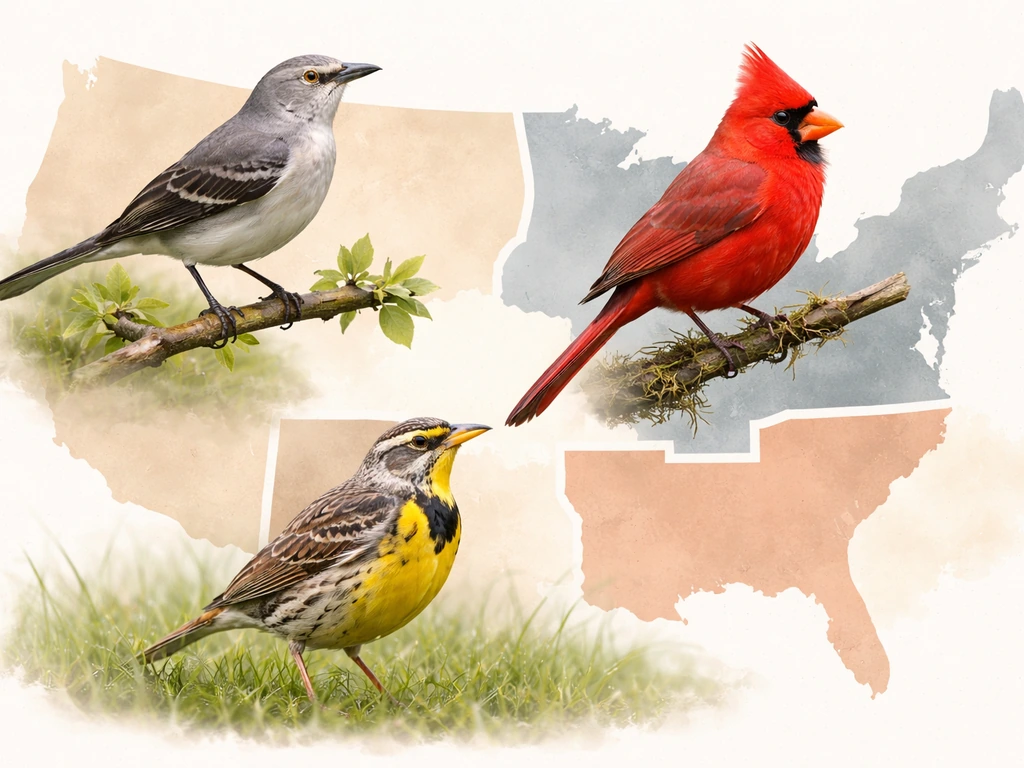
What people usually mean when they search 'state bird meaning'
Most of the time, the search isn't really about a dictionary definition. Merriam-Webster keeps it simple: a state bird is 'a bird chosen as an official symbol of a U.S. state.' But that just raises the follow-up question: why was this specific bird chosen? That's the real answer people want. Whether you're researching California, New York, Texas, or any other state, the 'meaning' typically breaks down into three pieces: the species identity (what the bird is), the symbolic reasoning (why it was selected), and the historical record (when and how it became official).
Sometimes the search is even more specific. Someone might want to know what the state bird of Texas represents culturally, or why Florida and Texas share the same bird. Others just want a quick lookup: what is New York's state bird, and what does it look like? If you want the quick answer for your own state, you can use the state bird meaning sections throughout this guide what is New York's state bird. All of those questions fall under the 'state bird meaning' umbrella, and this guide is built to address each of them.
How state birds actually got chosen
Most state birds were selected during a surprisingly concentrated window of history. The 1920s saw a wave of official bird adoptions across the country, largely driven by campaigns organized through the General Federation of Women's Clubs. These campaigns built popular momentum behind certain species, and state legislatures followed by passing resolutions or statutes making the selections official. Florida, for example, adopted the northern mockingbird through Senate Concurrent Resolution No. 3 in 1927. Texas did the same around that era with similar symbolic reasoning.
Some states took a more democratic approach. Washington state let schoolchildren vote on the bird, with the western meadowlark winning an early poll. But legislators later realized the meadowlark was already the state bird of several other states. After more deliberation, the willow goldfinch was codified as Washington's official bird through state statute (RCW 1.20.040). That story captures the typical process well: public enthusiasm, a campaign, a vote or resolution, and then a legal designation that stuck.
The selection criteria varied but usually centered on a few consistent themes: the bird had to be common enough that residents would recognize it, distinctive enough to represent the state's character, and ideally native rather than introduced. Vocal ability, striking appearance, year-round presence, and cultural familiarity were all factors that made certain birds win out.
The meaning behind a specific state bird: the northern mockingbird as an example
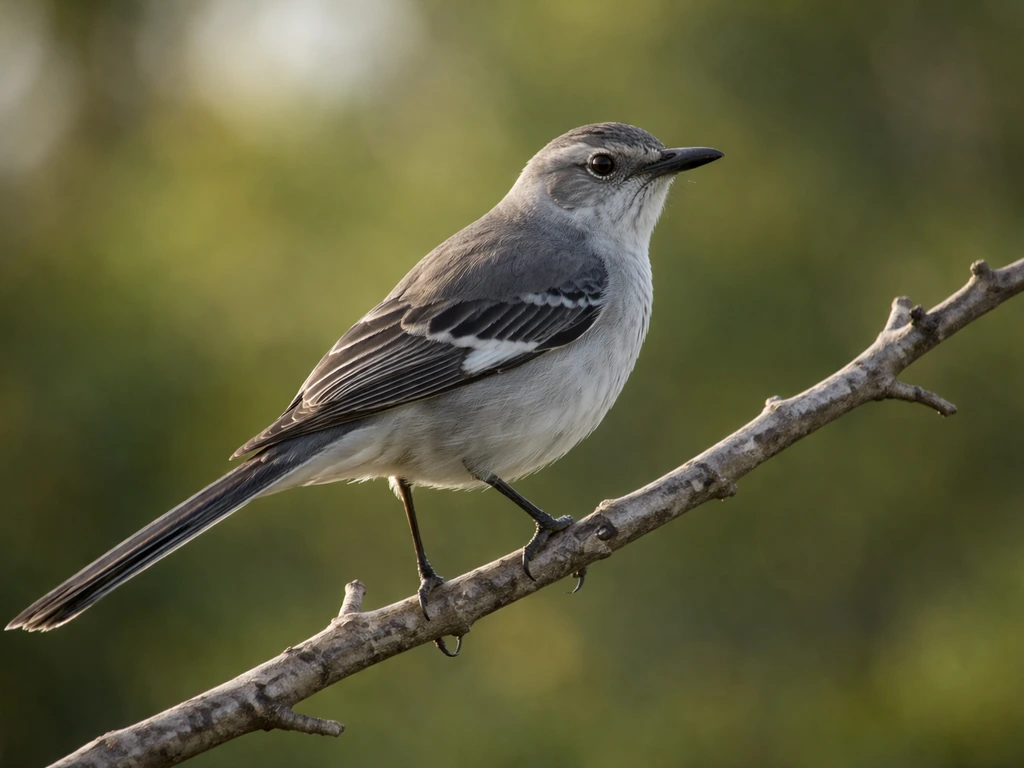
The northern mockingbird is one of the best examples for unpacking what 'state bird meaning' really involves, partly because so many states chose it. Texas officially designated the mockingbird as its state bird, and the symbolic reasoning was direct: the bird is found statewide, it sings year-round, and it's famously bold in defending its territory. That combination of presence, voice, and tenacity mapped neatly onto values Texans wanted to project. The blank" rel="noopener noreferrer">1927 resolution language emphasized these traits explicitly.
From a species standpoint, the northern mockingbird is a medium-sized songbird blank" rel="noopener noreferrer">measuring about 8 to 11 inches in length with a wingspan of roughly 12 to 15 inches. Its most recognizable field mark is the flash of white wing patches visible in flight. The bird is gray above and pale below, with a long tail it often cocks upward. Its signature trait is mimicry: a single mockingbird can produce dozens of distinct songs, often stringing together phrases borrowed from other bird species, frogs, and even mechanical sounds. That vocal versatility is a large part of why it resonated so strongly as a symbol.
New York's state bird, the eastern bluebird (Sialia sialis), was designated through a different kind of meaning. The bluebird carried strong associations with hope and the arrival of spring, and its brilliant blue plumage made it immediately recognizable. New York state law (STL 78) formally identifies the bluebird as the official bird of New York, and the species' warm cultural associations gave it a symbolic weight that went beyond habitat range or common sighting. California's state bird, the California quail, was adopted in 1931. It's a distinctly western bird with a distinctive forward-curving plume on its head, common across California's foothills and chaparral, and it reads as uniquely Californian in a way that a more widespread species wouldn't.
Which states share the same state bird
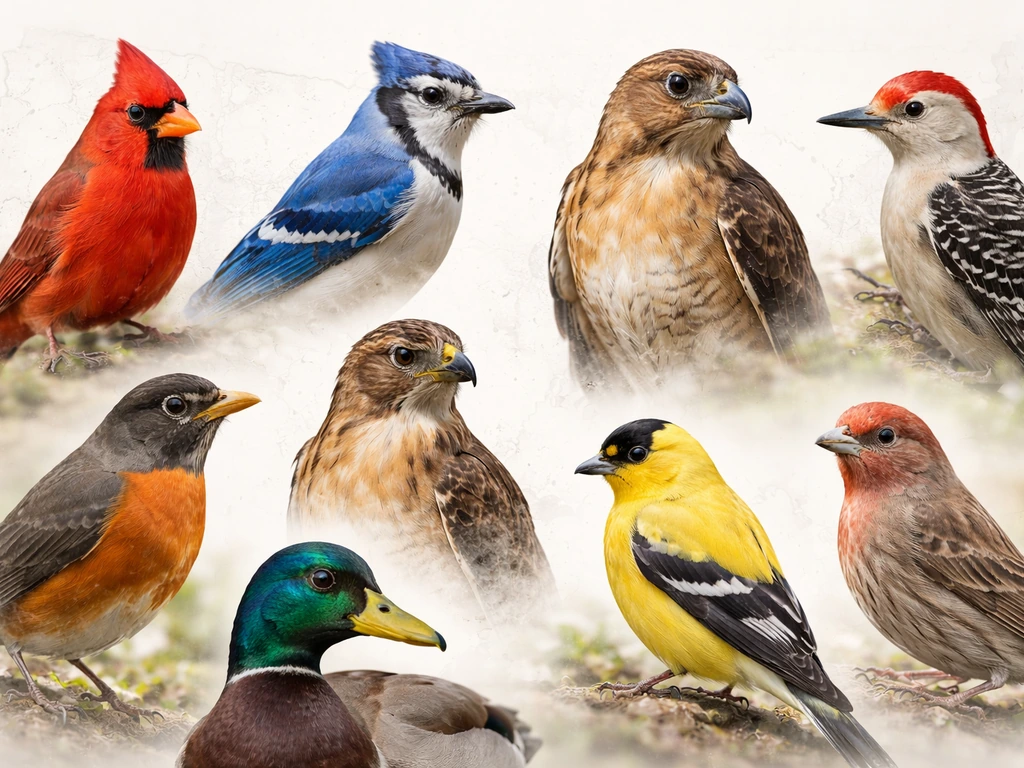
Several species were popular enough that multiple states independently selected them, which is part of why Washington specifically sought a more unique option. The northern mockingbird is the clearest case of overlap: five states adopted it as their official bird. The western meadowlark and the cardinal are similarly shared among multiple states. Here's a quick breakdown of the most common shared state birds: The most common state bird is the species that shows up in the greatest number of state bird lists.
| Species | States That Claim It |
|---|---|
| Northern Mockingbird | Texas, Florida, Arkansas, Mississippi, Tennessee |
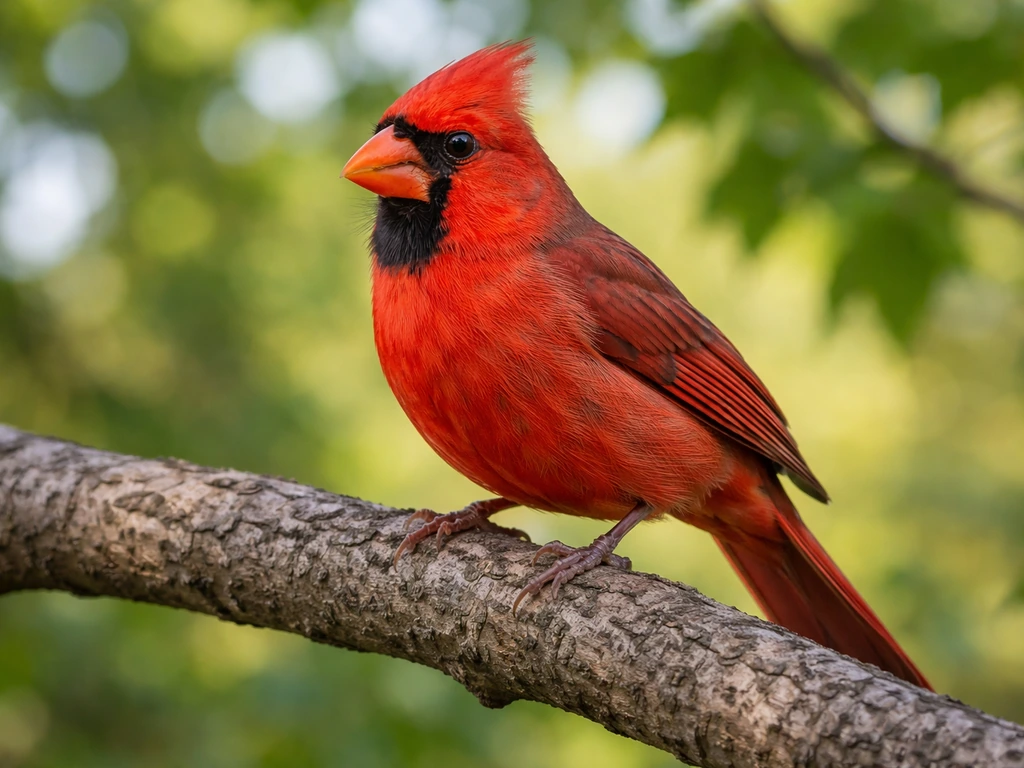
| Northern Cardinal | Illinois, Indiana, Kentucky, North Carolina, Ohio, Virginia, West Virginia |
| Western Meadowlark | Kansas, Montana, Nebraska, North Dakota, Oregon, Wyoming |
| American Robin | Connecticut, Michigan, Wisconsin |
| Willow Goldfinch (American Goldfinch) | Iowa, New Jersey, Washington |
| Hermit Thrush | Vermont |
| Ruffed Grouse | Pennsylvania |
The overlap isn't a mistake or a sign of carelessness. In many cases, states made their selections independently during the same 1920s campaign wave, before anyone had a clear picture of which birds were being chosen elsewhere. The northern cardinal's dominance across the Midwest and mid-Atlantic reflects how beloved and common the species is in those regions. If you're researching which states share the same bird, those three species (mockingbird, cardinal, and western meadowlark) account for the largest clusters.
How to identify your state bird in real life

Knowing the name and symbolism of a state bird is one thing. Actually spotting it in the wild adds a whole other layer to understanding why it was chosen. Most state birds were selected partly because they're easy to find and recognize, so you don't need to be an experienced birder to see yours.
For the northern mockingbird, look for a robin-sized gray bird with white wing patches that flash clearly in flight. It often sings from exposed perches like fence posts, rooftops, or the tops of shrubs, and it'll keep singing well into the evening and even at night during breeding season. The continuous, varied song is the easiest give-away. Once you've heard a mockingbird cycling through 10 or 15 different song types in a row, you won't forget it.
For the eastern bluebird (New York's bird), look for the vivid blue back and rusty-orange chest on the male. Bluebirds favor open fields, meadows, and forest edges, and they're cavity nesters that take readily to nest boxes. For the California quail, listen for its three-note call (often described as 'chi-CA-go') and watch for small coveys moving through shrubby habitat. The curved head plume makes it unmistakable.
Whatever your state's bird is, a few identification basics always apply: note the bird's size relative to common species like a sparrow or a robin, look for distinctive color patterns or markings, listen to the call, and pay attention to the habitat and behavior. Field guides from Cornell Lab's All About Birds and Audubon both provide measurement details and range maps that make identification straightforward.
Key ID traits to look for by state bird type
- Size: compare to a sparrow (small), robin (medium), or crow (large) as a quick mental anchor
- Color pattern: note the dominant colors on the back, breast, wings, and head separately
- Behavior: is it ground-foraging, perch-singing, or diving in flight? Behavior often narrows it down fast
- Call or song: even a rough description of the sound (melodic, harsh, repetitive) helps confirm ID
- Habitat: field, forest, wetland, and urban settings each host different species
- Season: some state birds are year-round residents; others are more visible in specific seasons
How to find the exact state bird meaning for any state
The most efficient way to get the full meaning for any specific state is to go directly to that state's dedicated page on this site. Each state page covers the species name and identification details, the historical record of when and how the bird was designated (resolution number, year, legislative process), the symbolic reasoning behind the selection, and notes on whether the bird is shared with other states.
When you land on a state bird page, pay attention to four things in particular: the official designation date and mechanism (this tells you the historical context), the species traits highlighted as reasons for selection (this is the core 'meaning'), any notes about regional presence or uniqueness, and the shared-bird information if it applies. Those four elements together give you the complete picture of what a state bird means, not just what it's called.
If you're not sure which state you want or you're browsing more generally, the full list of all 50 state birds is a useful starting point. From there, you can compare which species repeat across states, spot regional patterns (the mockingbird dominating the South, the meadowlark spread across the Great Plains), and click through to any state for the deeper meaning behind its choice. For specific high-traffic searches like Texas, New York, or California, those individual pages go into particular depth on the symbolism and identification details.
One thing worth knowing: the 'meaning' of a state bird is almost always best understood as a combination of the bird's natural traits and the cultural values the state wanted to associate with them. A bird that sings boldly and defends its territory gets adopted to represent resilience. A bird with brilliant color and a connection to spring gets chosen for hope and renewal. Understanding that trait-to-value mapping is the real key to reading state bird symbolism, and every state page on this site is structured to make that connection clear.
FAQ
When someone asks for “state bird meaning,” what exactly are they usually looking for?
No. The “meaning” most people want is the mix of (1) what the bird is like in the wild (voice, appearance, behavior), (2) what traits campaigners highlighted, and (3) the formal record of when and how the designation was made by the state. A few states also note whether the bird is shared with other states, which affects how people interpret the symbolism.
How can I tell what historical context a state bird selection came from?
Look for the official designation date and the legal mechanism on the state’s page (resolution, statute, or vote). That section tells you the historical context, including whether the decision followed a 1920s-style campaign wave or a school or public vote approach.
Why do multiple states have the same state bird, and is that ever a mistake?
Some states adopted a bird that overlaps with other states. That is intentional in many cases, especially when multiple regions independently favored a widely recognized species during similar campaigns. To avoid confusion, check the state page for “shared with other states” notes and the specific resolution or statute language for your state.
What are the best practical ways to identify a state bird correctly in the wild?
Use identification clues, not just color. For example, mockingbirds are often recognized by the flash of white wing patches in flight and continuous mimicry, bluebirds by the male’s blue back and rusty-orange chest plus cavity nesting behavior, and quail by their distinct multi-syllable call and small coveys in shrubby habitat.
If my state shares its bird with another state, should I expect the “meaning” to be the same?
If a bird is shared, do not assume the symbolism is identical. Even with the same species, states can emphasize different traits (like song style, regional familiarity, or cultural themes) in their designation notes. The state’s page is the safest place to compare the specific symbolism and rationale.
Is “state bird meaning” based on official reasoning, or is it more of a cultural story people tell?
Yes, but it should be handled carefully. “State bird meaning” can be interpreted as either the official symbol’s rationale or a broader, modern cultural story. If you want the authoritative answer, prioritize the state’s designation record and the specific traits listed as reasons for selection, rather than general folklore.
What’s the quickest way to search for the exact “meaning” I want, without getting the wrong info?
When searching, add the state name to reduce ambiguity, for example “state bird meaning Texas” or “state bird meaning New York.” Also check whether you need the quick facts (what it looks like) or the full breakdown (species traits, symbolism, and legal process), since those are commonly different user intents.
What should I do if I see a bird that seems similar to my state bird, but I am not sure it is the same species?
If you are trying to verify an identification, focus on matchable details that were mentioned in the state bird presentation, such as calls, distinctive markings, and habitat preferences. If those cues do not line up, you may be dealing with a different species, a seasonal variant, or a misidentification.
How do I figure out which state birds are most common across all 50 states?
If you want to confirm which birds are most commonly selected, start from the “most common state bird” idea and then cross-check your comparison against the full list of 50 state birds. That prevents the common mistake of remembering a few popular species and assuming they represent the overall pattern.