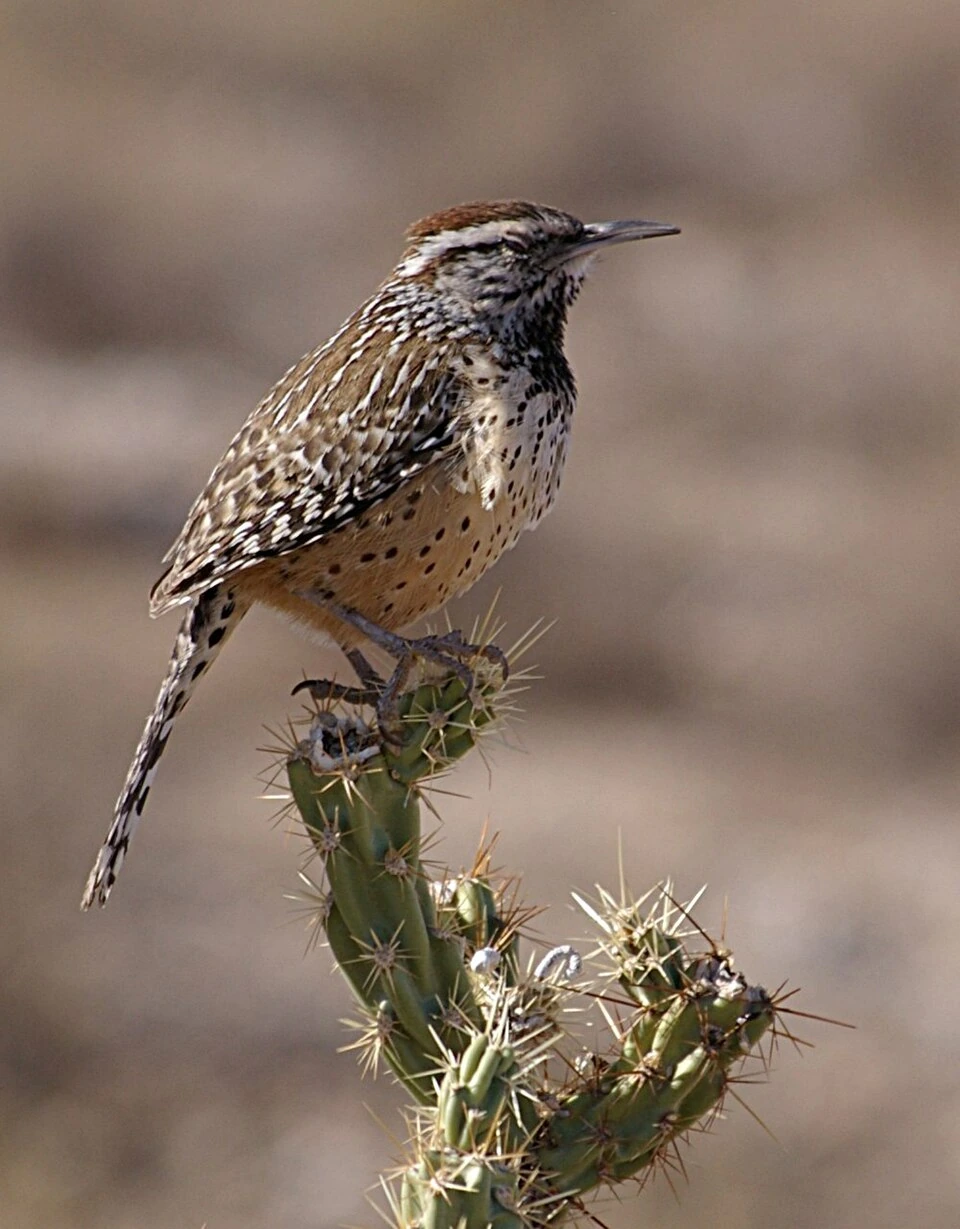
The cactus wren became Arizona's official state bird because it is one of the most recognizable, widespread, and distinctly Southwestern birds in the state. No other bird is so tightly linked to Arizona's Sonoran Desert landscape. If you want the quick answer to what the Arizona state bird is, it is the cactus wren what is the arizona state bird. It was formally designated by the Arizona Legislature in 1931 and is the only state in the U.S. to claim this species, making Arizona's choice as unique as the bird itself.
Why Is the Cactus Wren Arizona’s State Bird? The Story

Marcus Webb
15 May 2026

What the cactus wren actually symbolizes for Arizona
The cactus wren represents resilience and adaptation, two qualities Arizonans have always had to embody. This bird doesn't just survive in harsh desert conditions, it thrives in them. It nests in cholla cactus and saguaro, tolerates extreme heat, and holds its territory year-round without migrating. For a state defined by its desert environment, that's a powerful symbol. The cactus wren says: this is what belongs here, and this is what endures.
How and when Arizona made it official
Arizona designated the cactus wren as its state bird in 1931, placing it among the earliest state-bird designations in the western U.S. The choice was not arbitrary. By the early 20th century, naturalists and conservation-minded citizens were already pushing to give official recognition to birds that were strongly associated with each state's natural identity. The cactus wren was an obvious frontrunner for Arizona because it was already well-known to residents, well-documented by ornithologists, and visible across nearly every part of the state's desert zones.
The designation is codified in Arizona Revised Statutes § 41-854, which specifically names the bird as "cactus wren, otherwise known as Coues' cactus wren or heleodytes brunneicapillus couesi (Sharpe)." The formal scientific name in the statute is a nod to Elliott Coues, a 19th-century U.S. Army surgeon and prominent ornithologist who documented many bird species across the American Southwest and played an outsized role in early American natural history.
Why the cactus wren fits Arizona better than any other bird could
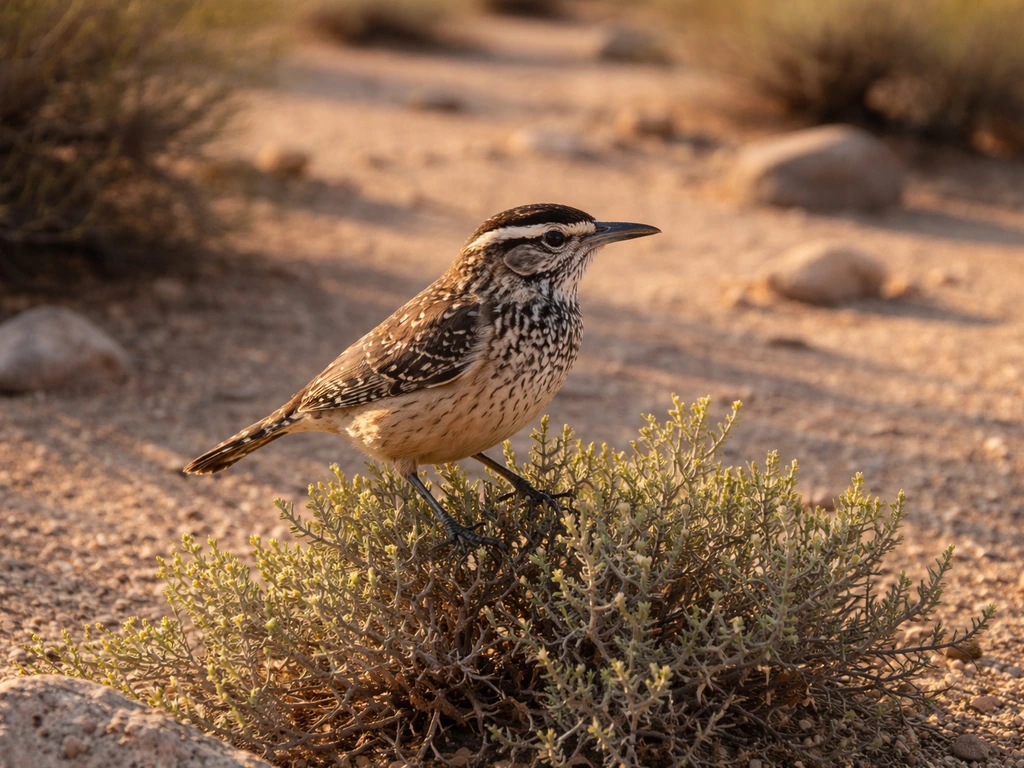
The cactus wren's range lines up almost perfectly with Arizona's character. It lives throughout the Sonoran and Chihuahuan Desert regions, which cover a massive portion of the state. You'll find it in the Phoenix metro area, the Tucson Basin, the lower Colorado River valley, and most desert scrubland in between. It is not a bird you have to go out of your way to find in Arizona.
Behaviorally, the cactus wren is conspicuous in a way that reinforces its symbolic fit. It is loud, territorial, and active during the day, calling from the tops of saguaros and palo verde trees with a raspy, repetitive churr that carries a long distance. It doesn't hide. For a state that is equally bold and unmistakable in its landscape, the cactus wren is the right personality for the job.
Nesting behavior also makes the connection concrete. Cactus wrens build large, football-shaped nests tucked into the spiny protection of cholla cactus. They're fiercely defensive of their nesting territory and may maintain several nests simultaneously. This attachment to the cactus itself is part of why the bird feels so inseparable from the Arizona desert, both ecologically and symbolically.
How to recognize a cactus wren in the field
If you're heading out to see one, here's what to look for. If you are wondering what is the bird of Alabama, you can find that state-bird identification right alongside other state symbols. The cactus wren is blank" rel="noopener noreferrer">about 7 to 8 inches long, making it the largest wren species in North America. Its size alone sets it apart from most other wrens, which are small and easily overlooked. The cactus wren is hard to miss.
- Brown upperparts with streaked, darker coloring across the back and wings
- Heavily speckled chest and belly, with bold dark spots on a white or pale background
- A distinctive white eyebrow stripe (supercilium) running clearly over each eye
- A long, slightly curved bill suited for probing cactus and soil for insects
- A long tail often held cocked upward, typical of wrens
- Raspy, repetitive call that sounds like a car engine struggling to start, often rendered as "char-char-char" or a series of low churring notes
The best times and places to find cactus wrens in Arizona are early morning in desert lowlands, particularly in areas with saguaro, cholla, and prickly pear cactus. Desert parks within Tucson, the Saguaro National Park (both east and west districts), and the Desert Botanical Garden in Phoenix are reliable spots. The bird is year-round and non-migratory, so any season works, though fall and winter can actually be productive because reduced foliage makes them easier to spot.
Early naturalist records and how the cactus wren entered the history books

Elliott Coues, whose name is embedded in the statutory scientific name of Arizona's state bird, was among the first naturalists to systematically document the birds of the American Southwest during the 1860s and 1870s while stationed at various U.S. Army posts. His records, along with those of other 19th-century field ornithologists, established the cactus wren as a well-documented, identifiable, and regionally distinct species long before Arizona became a state in 1912.
By the time Arizona's legislature took up the question of a state bird in the early 1930s, the cactus wren had a well-established scientific profile and a clear association with the Sonoran Desert. Unlike some states that chose their birds based on romantic symbolism or historical accident, Arizona's choice reflected what naturalists had observed for decades: this was the bird of the desert Southwest, and it lived here in ways no other species did.
State bird designations from this era were also influenced by a broader national movement to build civic identity around native plants and animals. Arizona's 1931 designation came in the middle of a period when many states were formalizing their symbols, and choosing a bird as distinctively local as the cactus wren was a deliberate statement about what made Arizona different from every other state in the Union.
How Arizona's choice compares to other states' state birds
One of the most interesting things about the cactus wren designation is how exclusive it is. You might also be wondering why the yellowhammer is Alabama's state bird, and the story comes down to how the bird reflects the state's identity. Many states share their state bird with one or more other states. The northern cardinal, for example, is the state bird of seven states, including Illinois, Indiana, Kentucky, North Carolina, Ohio, Virginia, and West Virginia. The western meadowlark is claimed by six states. The mockingbird is shared by five. Arizona has none of that overlap.
| State Bird | States That Share It | Arizona's Status |
|---|---|---|
| Northern Cardinal | 7 states | Not Arizona's bird |
| Western Meadowlark | 6 states | Not Arizona's bird |
| Northern Mockingbird | 5 states | Not Arizona's bird |
| Cactus Wren | Arizona only | Arizona's exclusive state bird |
No other U.S. state has designated the cactus wren as its state bird. California, New Mexico, and Nevada all have significant cactus wren populations within their borders, particularly in their desert regions, but none of them have claimed the bird officially. That makes Arizona's designation stand out as one of the more geographically precise and locally meaningful state-bird choices in the country.
This pattern of exclusivity mirrors what you see with Alaska's willow ptarmigan, another state bird tightly associated with a specific regional habitat, the subarctic tundra, that doesn't translate elsewhere. Alaska’s willow ptarmigan is designated as the state bird because of its close connection to the subarctic tundra habitat. The state bird of Alaska is the willow ptarmigan Alaska's willow ptarmigan.
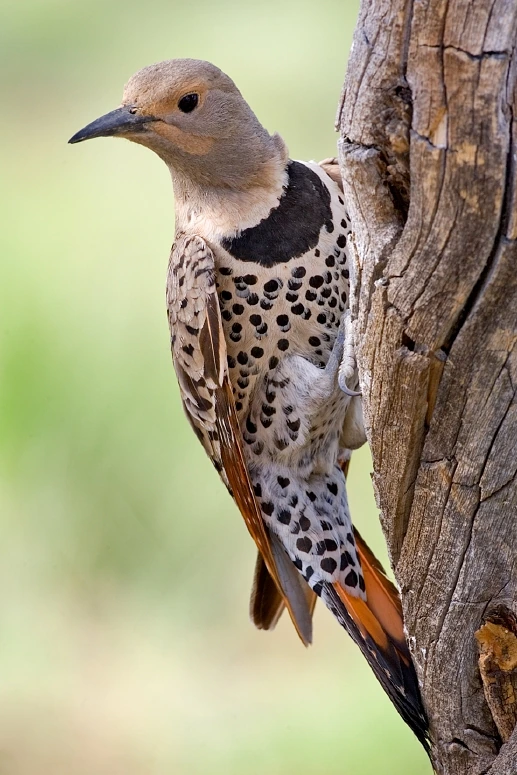
Arizona and Alaska both made choices rooted in what's genuinely native and defining about their environments, rather than defaulting to a popular or widely distributed species. Alabama's choice of the yellowhammer (northern flicker) has a similar historical grounding in Civil War symbolism and regional identity, showing how each state's reasoning reflects its own particular story. If you’re also curious about Alabama’s official state bird, Alabama has a different choice than Arizona what is alabama state bird. Alabama’s official state bird is the yellowhammer, also known as the northern flicker what is alabama state bird.
If you're exploring state bird designations across the country, Arizona's cactus wren is a standout example of a choice that is scientifically specific, geographically accurate, and symbolically on the mark. It's the kind of designation that makes sense the moment you've spent a morning in the Sonoran Desert and heard that unmistakable churring call echoing off the saguaros.
FAQ
Where exactly in Arizona is the cactus wren most likely to be seen?
Your odds are highest in Sonoran Desert habitat with saguaro, cholla, and prickly pear, especially in desert scrub and low desert canyons. In higher-elevation places where those cactus communities thin out, the bird can be present but is harder to spot.
Does the cactus wren migrate or change where it lives in winter?
It is non-migratory, so you can look for it in the same general areas year-round. What does change is visibility, in fall and winter there is less dense foliage and the bird’s bright, open perch choices stand out more.
Why is the cactus wren considered Arizona-specific if other states have it too?
Other states can have cactus wrens in their desert regions, but Arizona’s designation is exclusive because Arizona is the only state that formally codified this species as the official state bird. The legal “claim” depends on legislation, not just where the bird occurs.
How can I avoid confusing the cactus wren with other birds in the desert?
Focus on size and behavior. At about 7 to 8 inches, it stands out as a larger wren, and its loud, repetitive, raspy churr from exposed perches is a strong clue. Also, look for nesting structures associated with cholla, since the nests are conspicuously football-shaped and defended aggressively.
What is the best time of day to hear the cactus wren?
Early morning is often most productive, because it is active during daylight and calls can carry farther when the air is calmer. If you do evening birding, keep in mind that day-long territorial activity is common, but mornings are typically when it first “lights up.”
Are cactus wrens easy to find in urban areas like Phoenix and Tucson?
They can be, particularly near desert preserves, parks, and landscaped areas that include saguaro or cholla. If you are in a fully landscaped urban block with no native cactus, your sightings are less likely.
Can you reliably spot cactus wrens at Saguaro National Park and the Desert Botanical Garden?
Those are good starting points, but the most consistent approach is to target sections with saguaro and cholla rather than just any trail. In larger parks, microhabitat matters, the bird’s presence clusters around suitable desert scrub.
Is it ethical or legal to get close to cactus wren nests?
Avoid approaching nesting sites, even if they seem accessible, because cactus wrens defend territories aggressively and disturbance can affect breeding success. Stick to public trails, keep distance, and do not try to locate nests directly in cholla.
What do the cactus wren’s nests look like, and where are they placed?
Look for large, football-shaped nests tucked into spiny cholla. They are often defended, so you may see repeated low flights, warning calls, or attention from the adult bird when you are too close.
If I want the quick answer for planning a trip, what should I search for?
Use the phrase “cactus wren Arizona” plus the specific desert features you will see, such as “saguaro and cholla.” Then plan around early morning in desert lowlands, since those conditions combine the highest call activity with the easiest visual confirmation.