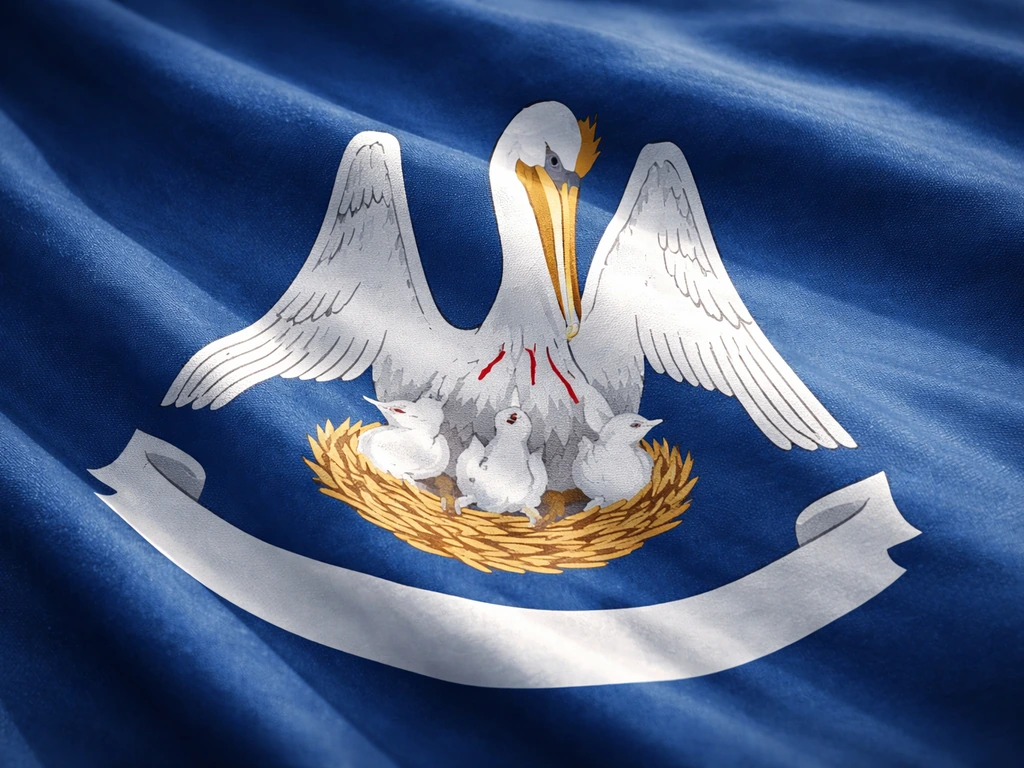
The bird on the Louisiana quarter is the Brown Pelican (Pelecanus occidentalis). The U.S. Mint explicitly included a brown pelican on the reverse of the 2002 Louisiana state quarter alongside a trumpet and musical notes, tying the design directly to Louisiana's official state bird and its well-known nickname, the Pelican State.
What Bird Is on the Louisiana Quarter? Identify It

Marcus Webb
15 May 2026
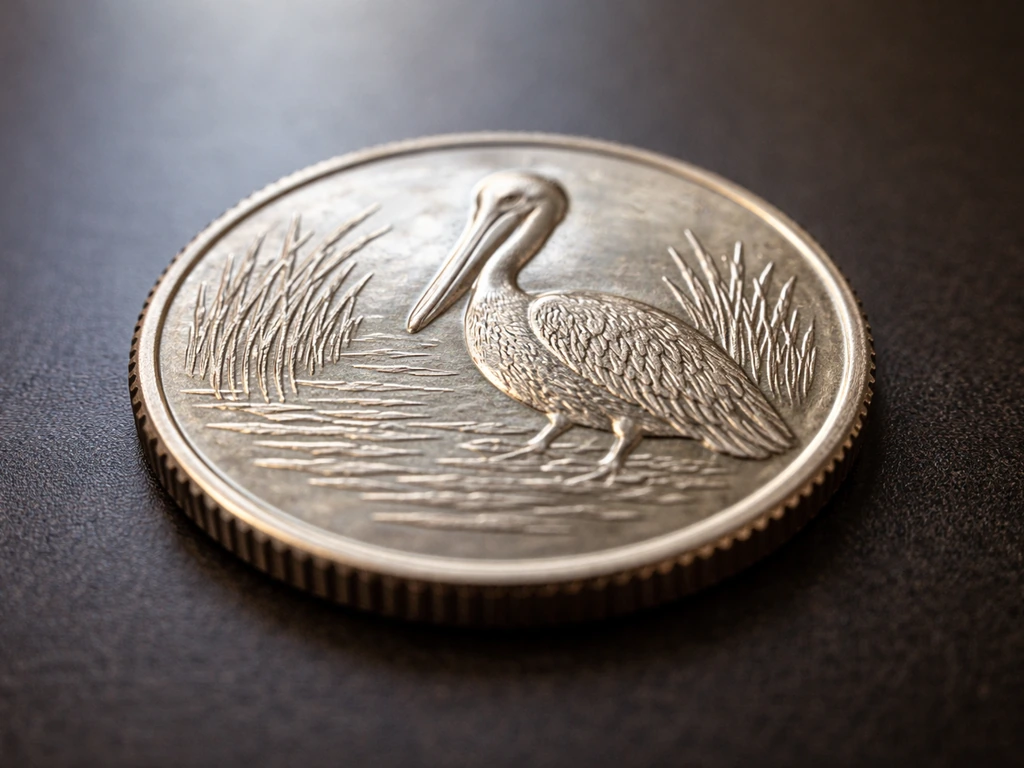
What's actually on the Louisiana quarter
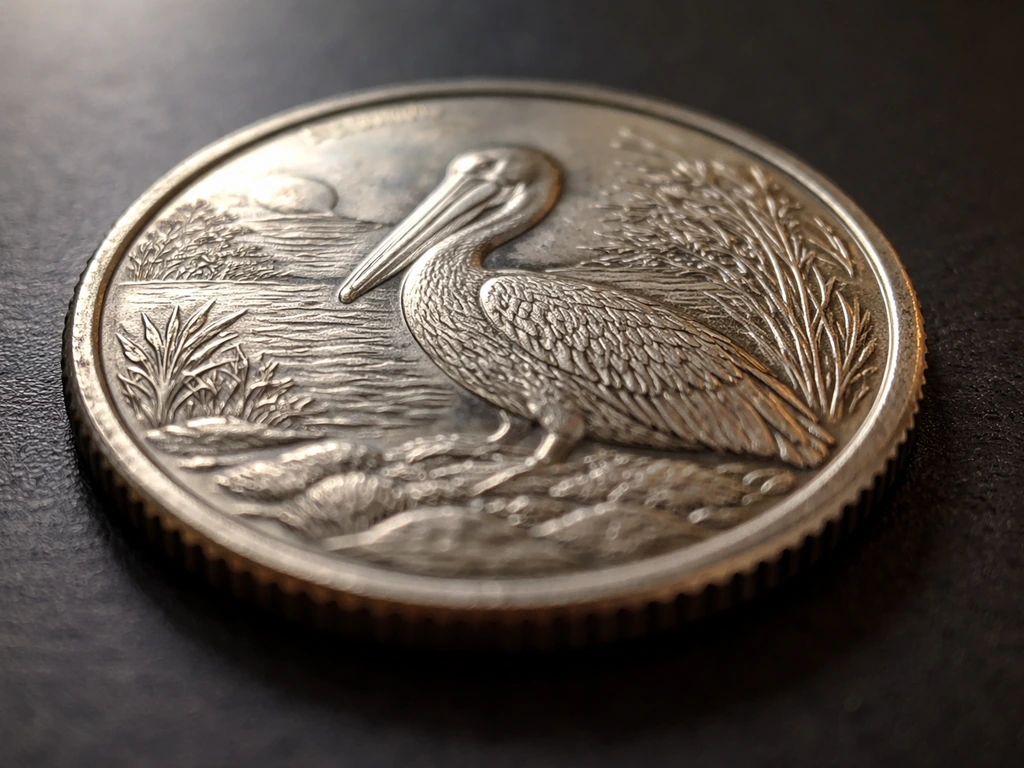
The Louisiana quarter was released in 2002 as part of the U.S. Mint's 50 State Quarters program. The reverse design celebrates three of Louisiana's most recognizable identities: the Louisiana Purchase (the outline of the acquired territory), the musical heritage of New Orleans (a trumpet with musical notes), and the state's wildlife symbol, a brown pelican. The U.S. Mint's own press materials name the brown pelican by species, so there's no ambiguity here. It's not a generic bird or a stylized symbol open to interpretation. It's a deliberate depiction of Pelecanus occidentalis, the same bird on Louisiana's state seal and flag.
How to visually confirm the bird on the quarter
Quarter art is always stylized and small, so it helps to know what to look for. The Brown Pelican has a few distinctive physical traits that show up even in simplified coin engravings.
- Large, stocky body with a notably long bill and a distinctive throat pouch underneath it
- Dark gray-brown body plumage contrasting with a lighter, whitish head and neck on adults
- A hunched, low-profile posture that makes it look heavier and more compact than other large waterbirds
- Much smaller overall than the American White Pelican, and darker in color throughout the body
On the coin, the bird is shown in a way that emphasizes the long bill and large body, which are the most recognizable pelican features. If you're ever second-guessing whether the quarter shows a pelican or some other coastal bird, the bill shape alone is the giveaway. No other common Louisiana bird has that long, pouch-equipped bill. The U.S. Mint also confirmed in writing that the design depicts a brown pelican, so visual confirmation just reinforces what's already documented.
Louisiana's official state bird
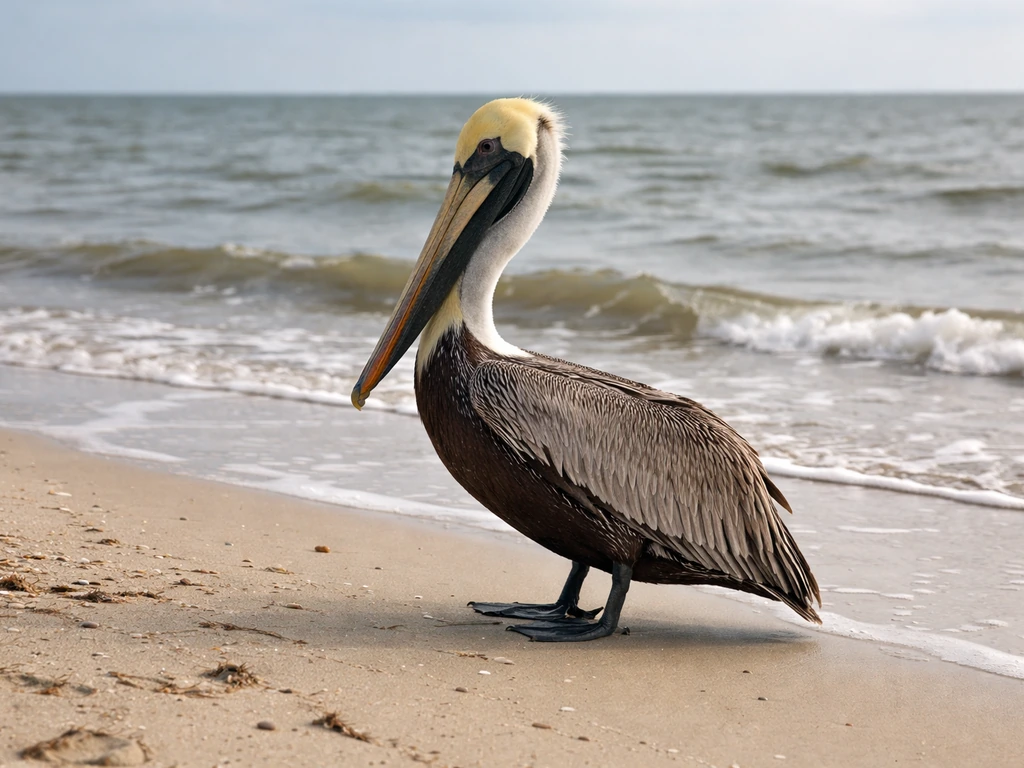
Louisiana's official state bird is the Brown Pelican, sometimes listed on state materials as the Eastern Brown Pelican. The scientific name is Pelecanus occidentalis. Louisiana law officially designated the Brown Pelican as the state bird on July 27, 1966, and the law specifically authorizes its use on the state seal, insignia, and official documents. That's why you'll see the pelican on the state flag and the state seal, not just the quarter.
As a species, the Brown Pelican is the smallest of the world's eight pelican species but still a large bird by most standards. Adults have that signature dark gray-brown body, white-to-yellow head, and an unmistakable long bill with a expandable gular pouch used for catching fish. Adults have a dark gray-brown body, a white-to-yellow head, and a long bill with a expandable gular pouch, which are useful visual traits for identifying brown pelicans signature dark gray-brown body, white-to-yellow head, and an unmistakable long bill with a expandable gular pouch. They're coastal birds, found along the Gulf of Mexico, the Atlantic coast, and the Pacific coast of the Americas. Louisiana's Gulf Coast habitat is prime Brown Pelican territory.
Why Louisiana chose the Brown Pelican
The pelican has been part of Louisiana's identity for centuries. It appears on Louisiana's state seal, which dates back to the 1800s, depicted in the classic 'pelican in her piety' pose, a mother pelican feeding her young with her own blood, a symbol of self-sacrifice and nurturing that resonated deeply with the state's culture and values. By the time Louisiana formally made the Brown Pelican its official state bird in 1966, the bird was practically a done deal as a symbol, having already been embedded in state imagery for generations.
What makes the 1966 designation especially striking is the timing. By that point, brown pelicans had virtually disappeared from Louisiana as a breeding species. Pesticide use, particularly DDT, had devastated their population through eggshell thinning and reproductive failure. Louisiana's Wildlife and Fisheries Department documented that there were essentially no breeding pelicans left in the state when the law was passed. Rather than abandoning the bird as a symbol, Louisiana doubled down, and a reintroduction effort started in 1968 to bring the species back.
The recovery effort worked. After DDT was banned in the early 1970s and active restoration programs continued, brown pelicans came back in significant numbers along the Louisiana coast. The species was eventually removed from the federal endangered species list in 2009. For Louisiana, the Brown Pelican isn't just a mascot. It's a conservation story with a meaningful ending, which adds real weight to seeing it on the state's quarter.
Do any other states share the Brown Pelican as their state bird?
No other U.S. state has designated the Brown Pelican as its official state bird. Louisiana stands alone with this one. That's actually unusual, since several bird species are shared across multiple states. The Northern Cardinal, for example, is the state bird of seven states, and the Western Meadowlark is claimed by six. The Brown Pelican being exclusive to Louisiana reflects how strongly the bird is tied to that particular state's coastal identity and history.
If you're curious about other Southern state birds in the same region, Mississippi's state bird is the Northern Mockingbird, which is also worth knowing if you're comparing Gulf Coast states. The state bird of Mississippi is the Northern Mockingbird Mississippi's state bird. Missouri, further north in the Mississippi River corridor, uses the Eastern Bluebird. The Eastern Bluebird became Missouri's state bird because of its strong presence and appeal in the state. The most common bird in Missouri is the Northern Cardinal. So if you are wondering what the state bird of Missouri is, the answer is the Eastern Bluebird Missouri, further north in the Mississippi River corridor, uses the Eastern Bluebird. Neither of those states has any pelican connection, which makes Louisiana's choice stand out even more in a regional comparison.
Brown Pelican vs. American White Pelican: quick comparison
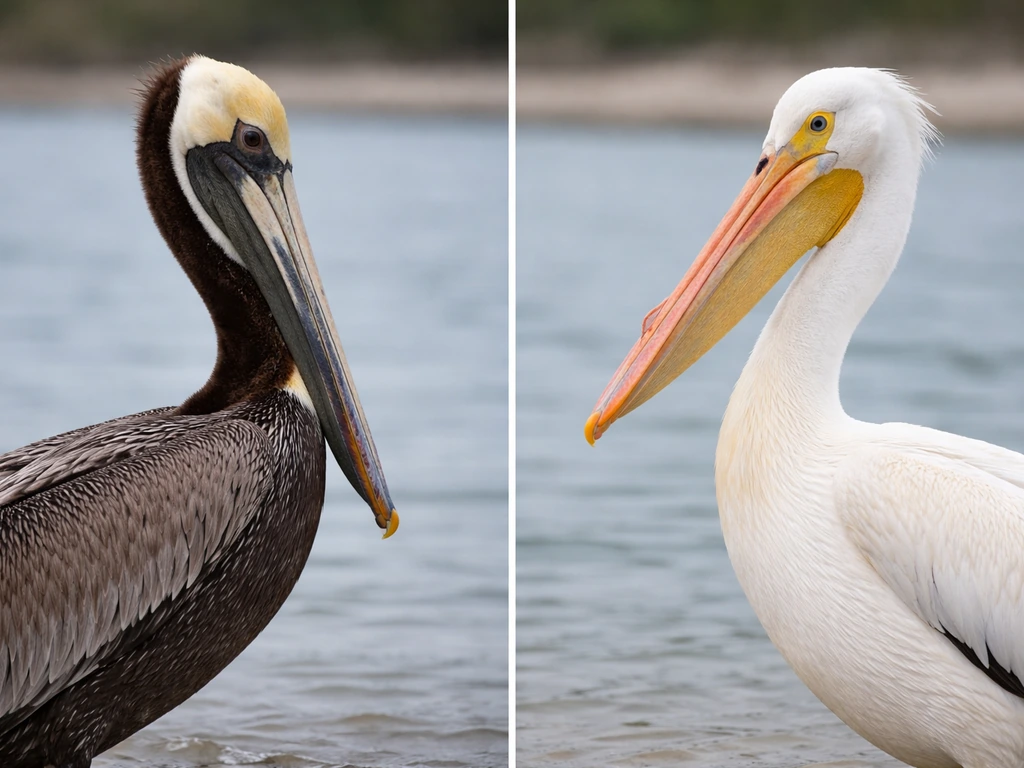
Because Louisiana has both species passing through at times, it's worth knowing the difference, especially if you're trying to match what you saw with what's on the coin or the state flag.
| Feature | Brown Pelican | American White Pelican |
|---|---|---|
| Scientific name | Pelecanus occidentalis | Pelecanus erythrorhynchos |
| Body color | Dark gray-brown body, lighter head | Entirely white with black wing tips |
| Size | Smaller, roughly 4 ft wingspan | Much larger, up to 9 ft wingspan |
| Feeding style | Dives from the air into water | Scoops fish while swimming |
| Louisiana connection | Official state bird, on flag, seal, and quarter | Passes through but has no official designation |
| Quarter appearance | Yes, depicted on the 2002 Louisiana quarter | No |
The bottom line: if you're looking at the Louisiana quarter, the Louisiana flag, or the state seal, it's always the Brown Pelican. If you're checking the Louisiana flag too, you'll find the what bird is on the louisiana flag question answered with the same Brown Pelican. The species is deeply woven into Louisiana's official identity in a way no other bird comes close to matching.
FAQ
How can I be sure it’s a brown pelican and not a different pelican?
On the 2002 Louisiana quarter, it is a brown pelican, not a white pelican or a generic “pelican shape.” The key detail to confirm in the coin’s stylized art is the long, dark bill with the pouch at the base, plus the large, rounded body.
What if my Louisiana quarter is not from 2002? Does it still show the same bird?
The U.S. Mint’s 50 State Quarters designs are tied to specific release years. If you’re holding a different Louisiana-related coin issue (for example, a commemorative medallion or a later redesign), it may depict different imagery, so make sure you’re checking the 2002 quarter.
Is it possible the coin shows an egret or another long-billed bird?
Collectors sometimes confuse the quarter’s bird with other Gulf Coast coastal birds that have long bills, like egrets. However, egrets have slender, straight bills and a more upright posture, while pelicans show a heavier body and a distinctly long bill associated with a large throat pouch.
Why do some sources call it the Eastern Brown Pelican? Is that different from the bird on the quarter?
Louisiana’s state bird is listed as the Brown Pelican, and some materials may call it the Eastern Brown Pelican, which refers to the same species in common usage. On the quarter, you should treat it as Brown Pelican (Pelecanus occidentalis).
Does the bird on the Louisiana quarter match the bird on the Louisiana flag and seal?
Yes, the pelican is also the same bird you will see on Louisiana’s state flag and state seal. If you want a quick cross-check, compare the quarter’s bill-and-body proportions to the seal imagery rather than only the overall silhouette.
Where on the coin should I look to confirm the bird (obverse or reverse)?
If you are verifying a coin you received from circulation, look for the 2002 date and the quarter’s reverse design (with the trumpet and musical notes). The bird appears on that reverse side, so don’t judge by the obverse portrait.
What viewing trick helps when the coin engraving makes the bill hard to see?
The coin artwork is small and stylized, so lighting can make the bill look less obvious. Try viewing the reverse at an angle where the engraved lines catch light, then focus on whether the bill appears extra long and thick at the base (pouch area).
What other features on the Louisiana quarter can help confirm the bird identification?
If you want to double-check attribution beyond appearance, confirm the quarter’s reverse features match the 50 State Quarters Louisiana layout (Louisiana Purchase outline plus trumpet and notes alongside the pelican). Those combined elements make the identification much more reliable than comparing the bird alone.
Next Article
What Bird Is on the Louisiana Flag? State Bird Match
Identify the bird on the Louisiana flag, compare it to the official state bird, and learn key visual cues to confirm.