Alabama chose the yellowhammer as its official state bird in 1927 because of a deep Civil War connection: Confederate soldiers from Alabama wore homespun gray uniforms trimmed with yellow, which reminded fellow troops of the yellow-shafted northern flicker they called the 'yellowhammer.' That nickname stuck so firmly that Alabama itself became known as the 'Yellowhammer State,' and when legislators formalized the designation under Acts 1927, No. 542, the choice was already a cultural given. The bird itself is the northern flicker (Colaptes auratus), a striking, medium-large woodpecker found across Alabama year-round. So, what is the bird of Alabama? It is the yellowhammer, the state bird name for the northern flicker.
Why Is the Yellowhammer Alabama’s State Bird

Marcus Webb
14 Jun 2026
Alabama's state bird: confirmed
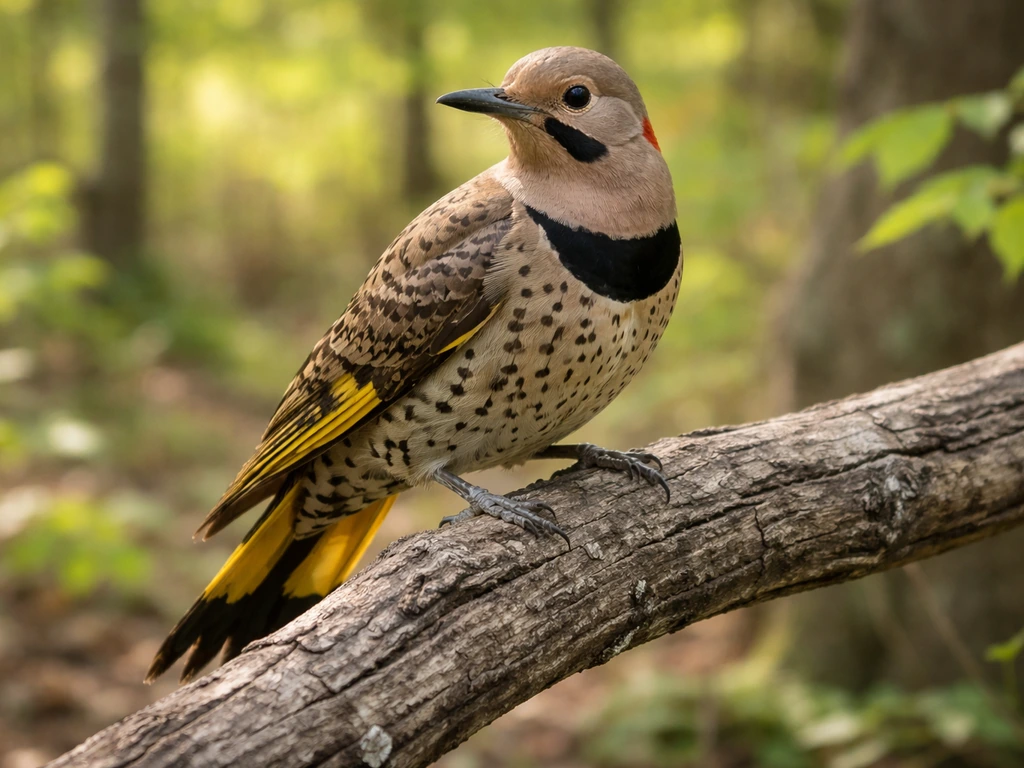
Alabama's official state bird is the yellowhammer, adopted in 1927. The Code of Alabama (§ 1-2-7) states it plainly: 'The bird commonly called the yellow-hammer is hereby designated the state bird.' The Alabama Department of Archives and History lists it simply as 'Bird | Yellowhammer | 1927.' There is no ambiguity in the record.
One point worth clearing up right away: 'yellowhammer' is Alabama's regional common name for the northern flicker. If you search 'yellowhammer bird' outside of Alabama, you might also encounter the Eurasian yellowhammer (Emberiza citrinella), a small bunting native to Europe. That bird has nothing to do with Alabama's designation. Alabama's yellowhammer is strictly the northern flicker, Colaptes auratus, specifically the yellow-shafted eastern form.
What exactly is the yellowhammer?
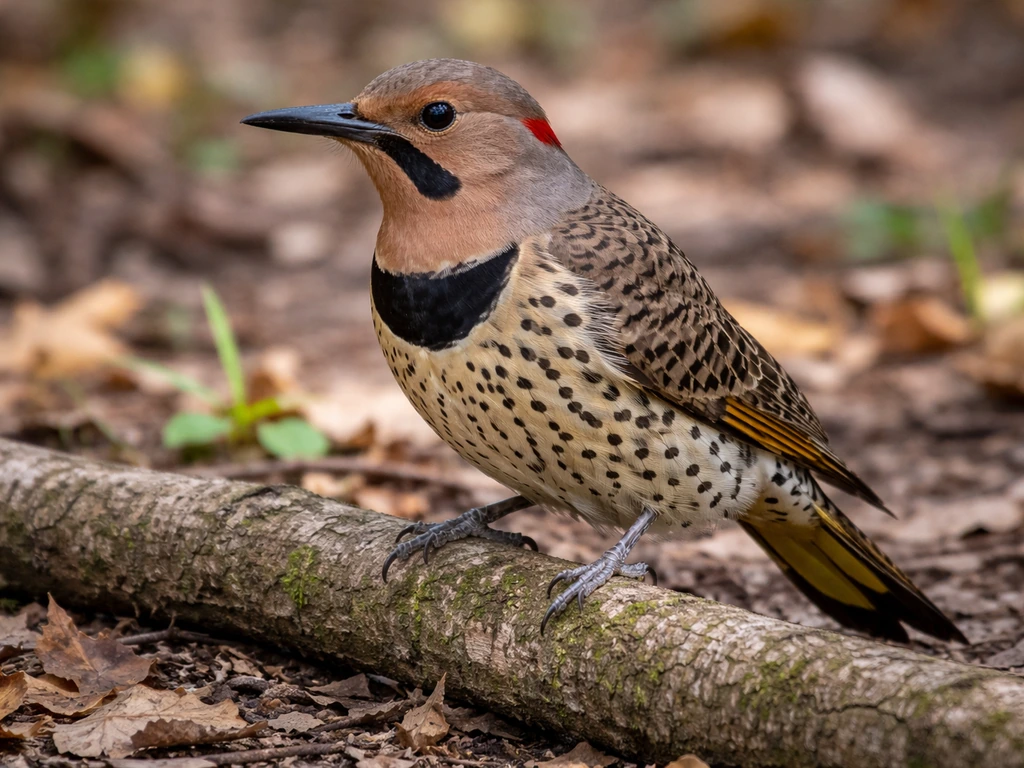
The northern flicker is not your typical tree-clinging woodpecker. It is a large, brownish woodpecker that spends a surprising amount of time on the ground, often foraging for ants and beetles in open grass. Adults measure roughly 11 to 12 inches long, making them noticeably bigger than most backyard woodpeckers. The brownish-barred back, black chest crescent (sometimes called a bib), and heavily spotted belly make it look unlike almost any other bird in Alabama. In flight, the white rump patch flashes brightly, and the undersides of the wings and tail light up yellow. That last feature is the key one: it is why this bird earned the 'yellowhammer' name in the first place.
Technically there are two forms of northern flicker. The yellow-shafted form lives in the eastern United States, including all of Alabama, and shows yellow underwing and undertail color. The red-shafted form lives in the West and shows reddish tones in the same places. Alabama's bird is always the yellow-shafted form. This distinction also matters for identification: if you see a flicker anywhere in Alabama with yellow under its wings, you are looking at the exact bird the state designated.
The history: when Alabama made it official
The formal designation came in 1927 through Acts 1927, No. 542, page 628. Alabama was among the earlier states to adopt an official state bird, reflecting a broader movement during that era to codify regional identity through official symbols. The state song (Julia Tutwiler's 'Alabama') followed in 1931, the camellia became the state flower in 1959, and the longleaf pine serves as the state tree, all part of the same ongoing project of formalizing what Alabamians already felt defined their state. By 1927, the yellowhammer had been a beloved regional nickname for decades, so lawmakers were essentially ratifying something the public had long accepted.
The Civil War origin story is well documented. Alabama Confederate cavalrymen arrived at a muster wearing homespun uniforms dyed a grayish-yellow color. Soldiers from other units reportedly called them 'yellowhammers' because the uniform's trim resembled the yellow and black markings of the northern flicker. This is Alabama also describes how the yellowhammer became Alabama’s state bird in 1927, explaining the story behind the nickname and designation yellowhammers. The men from Alabama apparently embraced the nickname rather than resenting it, and over time 'Yellowhammer State' became one of Alabama's most recognized informal titles. When the legislature looked for a state bird, the answer was obvious.
Why the yellowhammer was the right choice symbolically
The choice was not arbitrary or purely sentimental. Several practical factors reinforced what history had already suggested:
- The northern flicker is found throughout Alabama in every season, making it a genuinely representative state symbol rather than a migratory visitor most residents rarely see.
- It is abundant and conspicuous, meaning ordinary Alabamians could encounter, recognize, and feel connected to their state bird without needing binoculars or a field guide.
- Its coloration (yellow, black, and brown) directly matched the existing cultural narrative tied to Alabama's Civil War identity and the 'Yellowhammer State' nickname.
- It is a native species, well adapted to Alabama's varied habitats from open pine forests to suburban edges, giving it a broad geographic connection across the state.
The Encyclopedia of Alabama confirms that northern flickers are found throughout the state at all times of year, with populations peaking during winter when northern birds move south and add to the resident population. That year-round presence made the bird a more meaningful choice than a strictly seasonal species would have been.
How to spot the yellowhammer in Alabama today
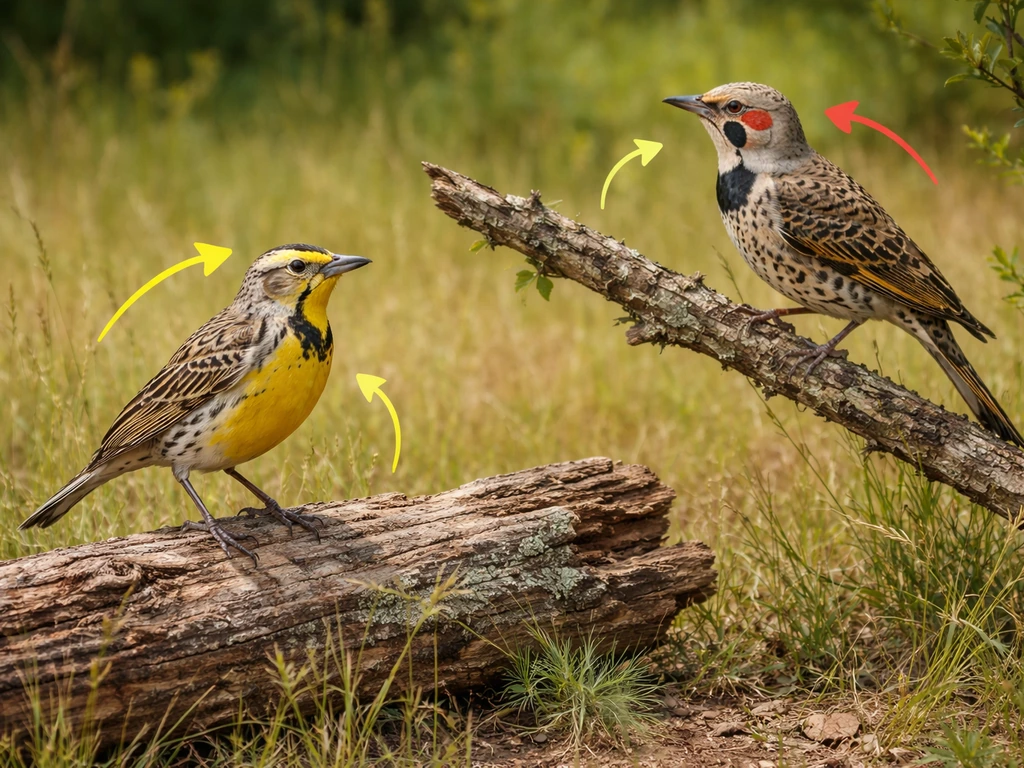
If you want to actually find and identify Alabama's state bird, the good news is it is one of the more cooperative birds you can look for. Yellowhammers are loud, conspicuous, and not particularly shy. Here is what to look and listen for:
Key field marks
| Feature | What you see |
|---|---|
| Size | Large woodpecker, about 11-12 inches long, bigger than a robin |
| Back and wings | Brown with black barring, giving a scalloped look |
| Chest | Bold black crescent or 'bib' across the upper breast |
| Belly | Pale with heavy black spots |
| Rump | Bright white patch, very visible when the bird flies away |
| Underwing/undertail | Bright yellow (the feature that gives the bird its Alabama name) |
| Face | Gray crown, tan face, red crescent on the back of the neck in males |
Where to look
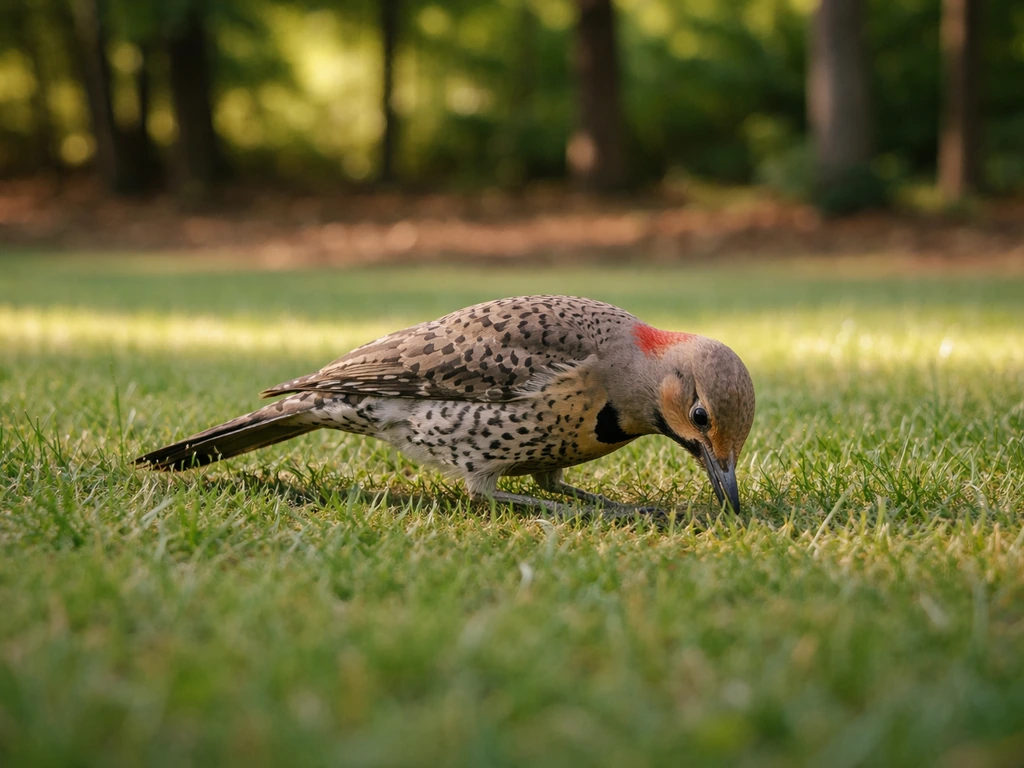
Northern flickers favor open areas and woodland edges rather than deep, dense forest. You are most likely to find one on a suburban lawn, in a park, along a forest edge, or in open pine woodland. They spend a lot of time on the ground probing for ants, which sets them apart from other woodpeckers. Winter is the easiest time to find them in Alabama, when the population is at its highest. Feeders stocked with suet can also attract them.
Sounds to recognize
The yellowhammer is hard to miss auditorily. Its call is a loud, laughing 'wicker-wicker-wicker' that carries a long distance. It also produces a sharp 'kee-yer' call and loud bill-drumming on resonant surfaces, including metal gutters and utility poles, which can sound surprisingly mechanical. Once you learn the call, you will start hearing yellowhammers all over Alabama before you ever see one.
How Alabama's choice fits into the bigger state bird picture
Alabama is the only U.S. state to designate the northern flicker as its official state bird, which makes the yellowhammer a genuinely unique choice among the 50 states. Most states gravitate toward robins, cardinals, mockingbirds, and meadowlarks, with several states often sharing the same species. The northern mockingbird, for instance, is the state bird of five states. Alabama's yellowhammer stands alone.
It is worth briefly comparing Alabama's reasoning to similar state bird designations nearby. Alaska's willow ptarmigan was chosen partly because it thrives in Alaska's challenging conditions year-round, a logic that mirrors Alabama's emphasis on a resident, widely distributed species. Arizona's cactus wren was chosen for similar place-specific reasons: it is iconic to the Sonoran Desert landscape and native only to that region. If you are asking what bird is the bird of Arizona, the answer is the cactus wren. If you are also wondering what the what is the arizona state bird, the answer is different from Alabama's yellowhammer. Alabama's yellowhammer follows that same pattern, grounding the choice in both local abundance and cultural history rather than picking a bird simply because it is attractive or well-known nationally.
If you are exploring state birds across the country, Alabama's choice is a good example of how history and natural presence can combine to make a designation feel inevitable rather than arbitrary. The bird was already the state's symbol in spirit long before legislators wrote it into law.
Where to go from here
If you want to keep exploring, the Alabama state bird page on this site covers the northern flicker's natural history in more depth, including its range, behavior, and status as a resident species. The willow ptarmigan, for example, is Alaska’s state bird and reflects the state’s cold-climate wildlife. You can also browse state bird pages for neighboring states to see how the Southeast compares, or dig into the broader list of all 50 state birds to spot the patterns in how states make these choices. The yellowhammer is a great entry point because its story is so clear: a bird that earned its symbolic status through both battlefield history and everyday presence across the state.
FAQ
If I look up “yellowhammer,” how do I make sure I have Alabama’s bird and not the wrong species?
In Alabama, the “yellowhammer” is the northern flicker (Colaptes auratus), and the state designation is tied to the yellow-shafted form that shows yellow under the wings and tail. If you are seeing a small, European bunting labeled “yellowhammer” online, that is a different species (Eurasian yellowhammer) and not Alabama’s bird.
What type of feeder or food actually helps you see Alabama’s yellowhammer (northern flicker)?
Northern flickers do visit feeders, but suet is the most reliable option because it matches their typical diet and foraging style. Put suet near open areas or a yard edge, since they often spend more time on the ground probing than other woodpeckers.
What are the best “field marks” to identify a northern flicker as Alabama’s yellowhammer?
Yellow-shafted flickers in Alabama are easier to confirm by the underside colors, the white rump patch flashes in flight, and the loud “wicker-wicker-wicker” call carries far. Relying only on body color can be misleading, because lighting and distance can blur the brown and barred pattern.
Is the yellowhammer only a winter bird in Alabama, or can you spot it year-round?
Yes, you can still see them outside winter. Winter often makes them easier to spot because resident numbers are higher with northern birds moving south, but Alabama’s yellow-shafted form is year-round, especially in open woodlands, parks, and suburban lawns.
What common mistake do people make when they hear “yellowhammer” and try to identify the bird?
To avoid confusion, do not use the name “yellowhammer” to look for a specific kind of sparrow or small ground bird. In Alabama, the northern flicker is a medium-large woodpecker, with ground foraging and woodpecker-style behaviors like bill-drumming on resonant surfaces.
How can I confirm I’m seeing the right bird when I can’t clearly tell male from female?
Males and females can look similar from a distance, so sexing is not usually needed for identification. When you are trying to be accurate, focus on the yellow underwing and undertail in Alabama, plus the distinctive calls and the white rump flash during flight.
Why might yellowhammers be hard to find even though they are common in Alabama?
If your yard has lots of deep forest, you may struggle because northern flickers prefer woodland edges, lawns, and open pine areas. A good tactic is to watch from a place with visibility to a transition zone, like the border between trees and grass.
Are any other U.S. states officially using the northern flicker or “yellowhammer” as a state bird?
Alabama’s designation is often described as “unique” because other states have different official birds, and many states share species like mockingbirds or cardinals. If you see a “yellowhammer” mention for another state, check whether it’s a different species or only an informal nickname, not that state’s official symbol.
Next Articles
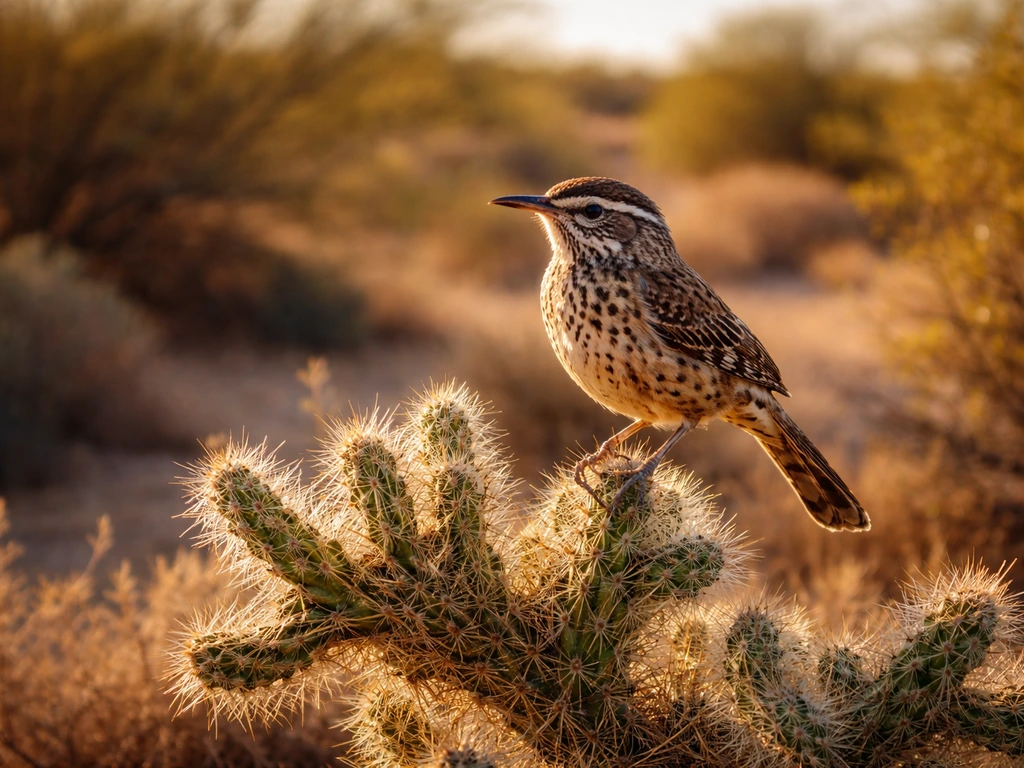
Why Is the Cactus Wren Arizona’s State Bird? The Story
Learn why the cactus wren became Arizona’s state bird and how to spot its call, range, and desert habitat.
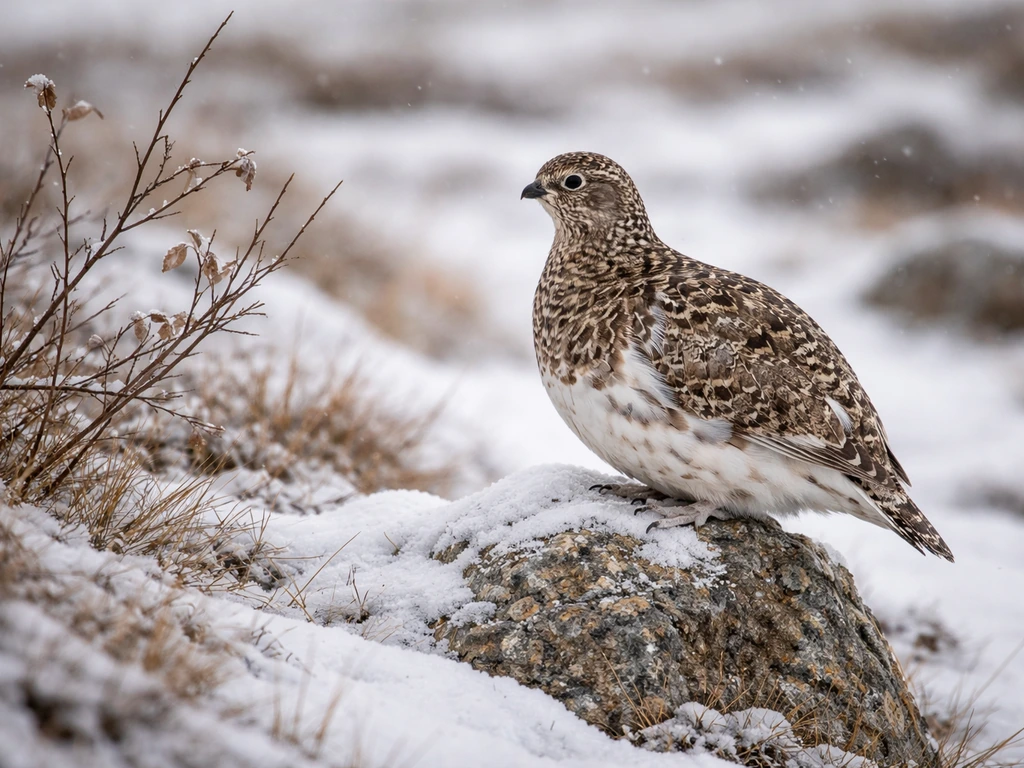
Why Is the Willow Ptarmigan Alaska’s State Bird
Find out why willow ptarmigan was chosen as Alaska’s state bird, plus key ID traits and its native habitat history.
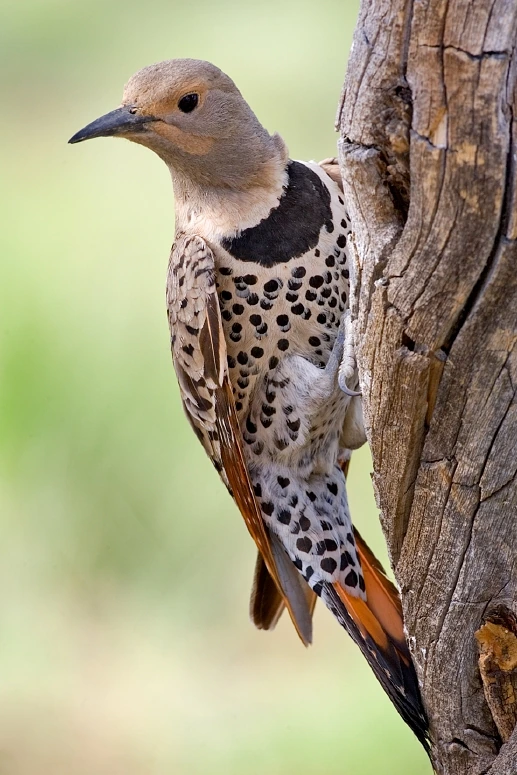
What Is the Bird of Alabama? Alabama State Bird Guide
Learn Alabama’s state bird name and scientific ID, key traits, habitat, and why it was chosen. Spot it today.