
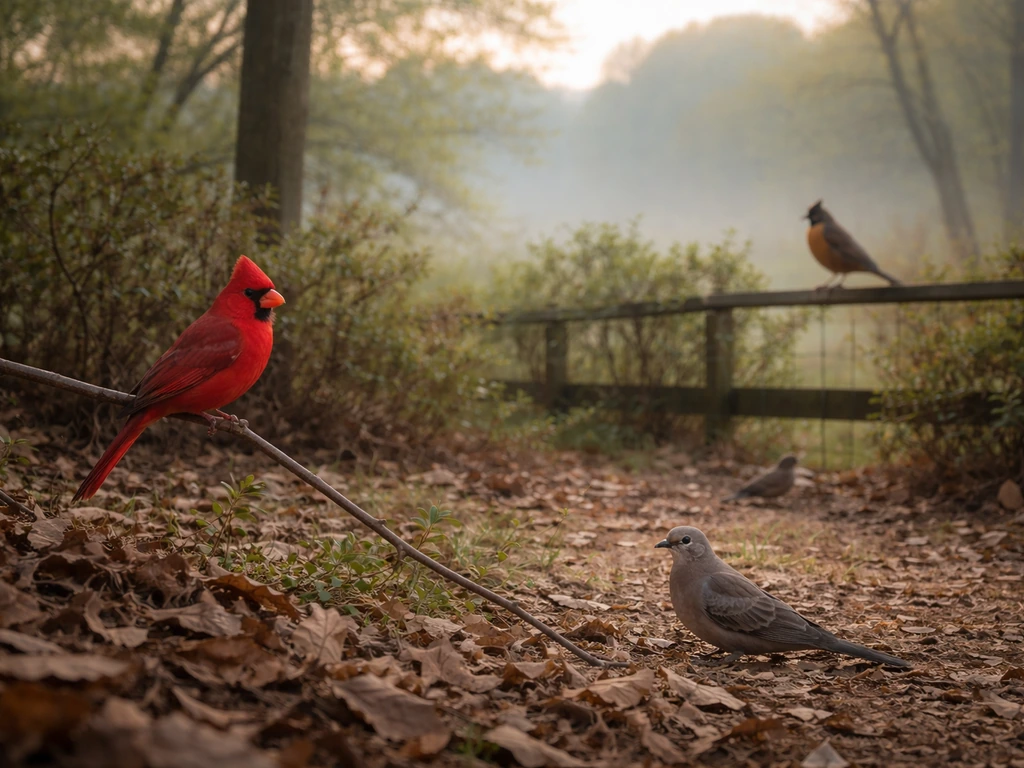
If you're watching a bird feeder or walking through a Missouri neighborhood and want to know what you're most likely to see, the Northern Cardinal is probably your answer. On the Louisiana quarter, the bird is typically the brown pelican. If you're also curious about the state bird of Mississippi, that answer is different from Missouri's. It shows up year-round across the entire state, visits feeders reliably, and is one of the most frequently reported species on Missouri bird checklists. If you're out in open fields or grasslands, the Mourning Dove gives it serious competition. And if you're scoring by sheer survey numbers in winter, the American Robin can swamp a count. 'Most common' depends a little on where you are and how you measure it, but for everyday backyard sightings statewide, the Northern Cardinal is your best single answer.
What Is the Most Common Bird in Missouri? Likely Picks

Why 'most common' isn't one simple answer
Missouri has nearly 400 bird species on record, with around 350 seen regularly. When birders talk about 'most common,' they usually mean one of three things: most frequently spotted in backyards and parks, most abundant by raw population count, or most often reported on formal survey checklists like eBird. These don't always point to the same species.
eBird measures 'reporting frequency,' meaning the percentage of complete checklists that include a given species in a region over a date range. A bird that's easy to see and always around scores high even if its total numbers aren't the largest. A bird that forms massive flocks but only passes through briefly might rank lower by frequency even though it dominates a single CBC count.
The top contenders and what puts each one on the list
| Species | Strongest Season | Best Habitat | Why It Ranks High |
|---|---|---|---|
| Northern Cardinal | Year-round | Backyards, woodland edges, shrubby areas | Permanent resident statewide; reliable feeder visitor; high eBird reporting frequency |
| American Robin | Spring through fall (some winter) | Lawns, parks, gardens, open fields | Huge numbers in migration; widespread breeding; common in surveys statewide |
| Mourning Dove | Spring through fall (year-round in SE) | Open fields, roadsides, backyards | Common migrant and summer resident statewide; ground feeders see them constantly |
| Carolina Wren | Year-round | Towns, backyards, shrubby areas, forest edges | Loud, bold, and resident year-round in even suburban yards |
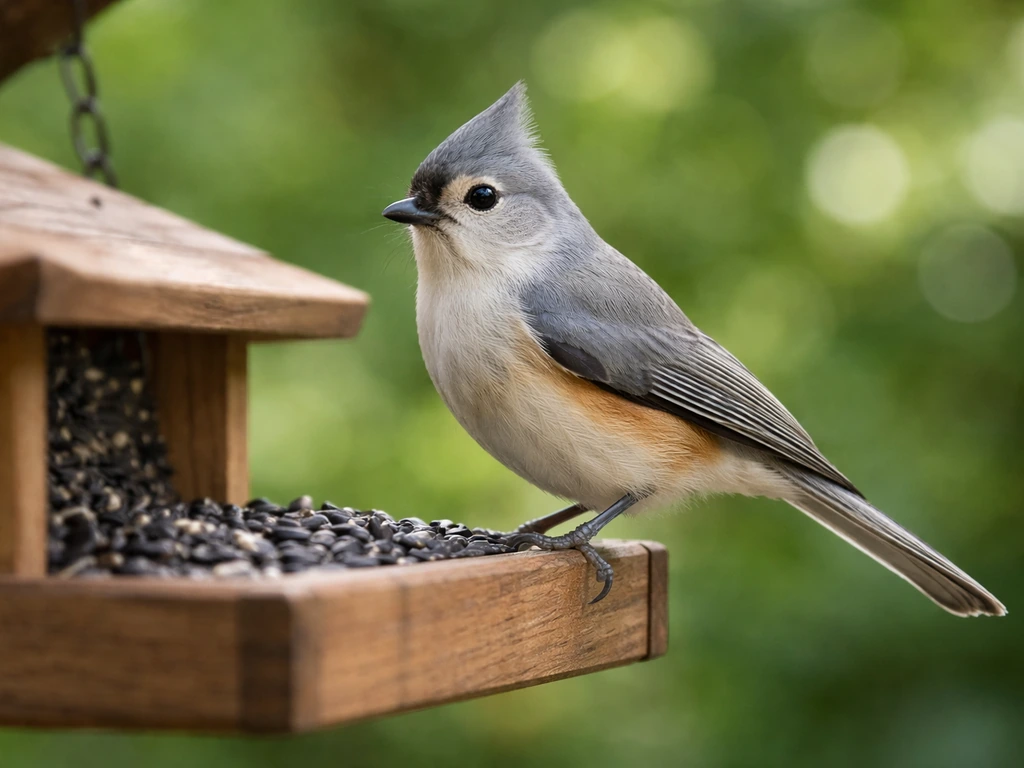
| Tufted Titmouse | Year-round | Forests, woodland edges, feeders | Permanent resident in eastern forests; vocal and visible at feeders all winter |
For most Missouri residents, the Northern Cardinal wins on pure visibility. It doesn't migrate, it comes to feeders, and both the bright red male and the subtler brownish-red female are easy to recognize. The American Robin surges into huge flocks during migration and breeds across the state, making it the dominant bird in lawns and open areas from spring through fall. The Mourning Dove is listed by the Missouri Department of Conservation as a common migrant and summer resident statewide, with strong numbers in the southeast even in winter.
How to identify the birds you're probably seeing
Northern Cardinal
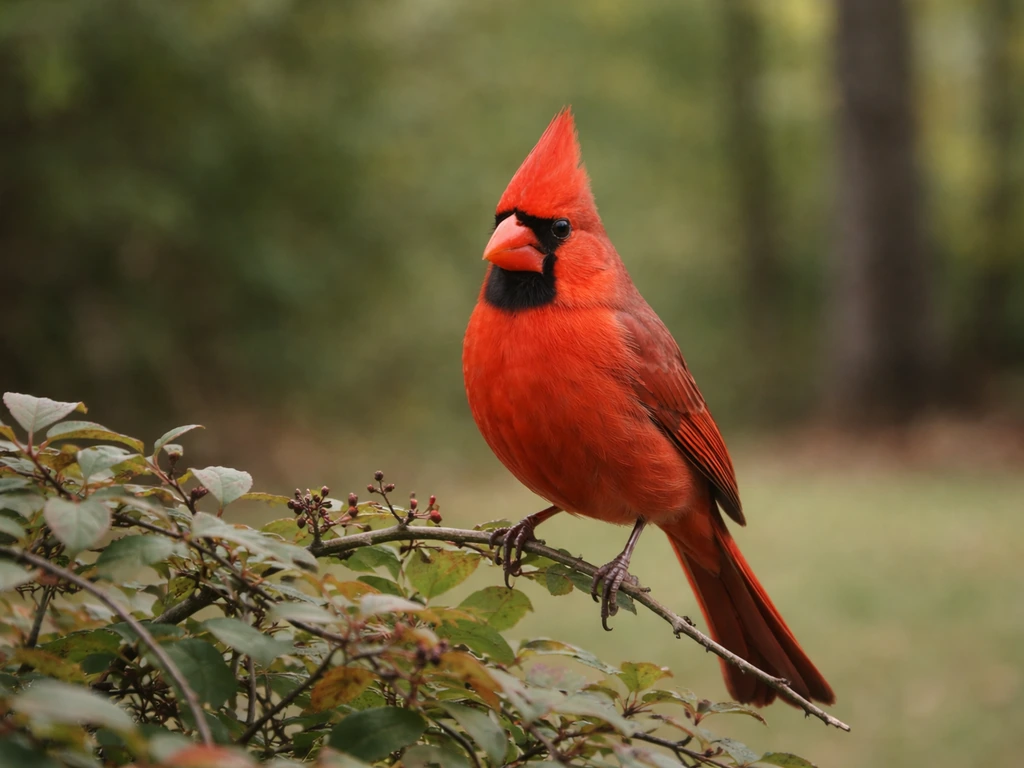
Cardinals are fairly large songbirds with a thick, cone-shaped orange-red bill and a prominent pointed crest on the head. Males are unmistakably bright red with a black mask around the face. Females are warm brownish-tan with reddish tints on the crest, wings, and tail. Both sexes have that same heavy bill and crest shape, so even the female is easy to identify once you know the silhouette. They tend to sit low in dense shrubs or at mid-height feeders, and their sharp metallic 'chip' call is one of the most recognizable sounds in a Missouri backyard.
American Robin
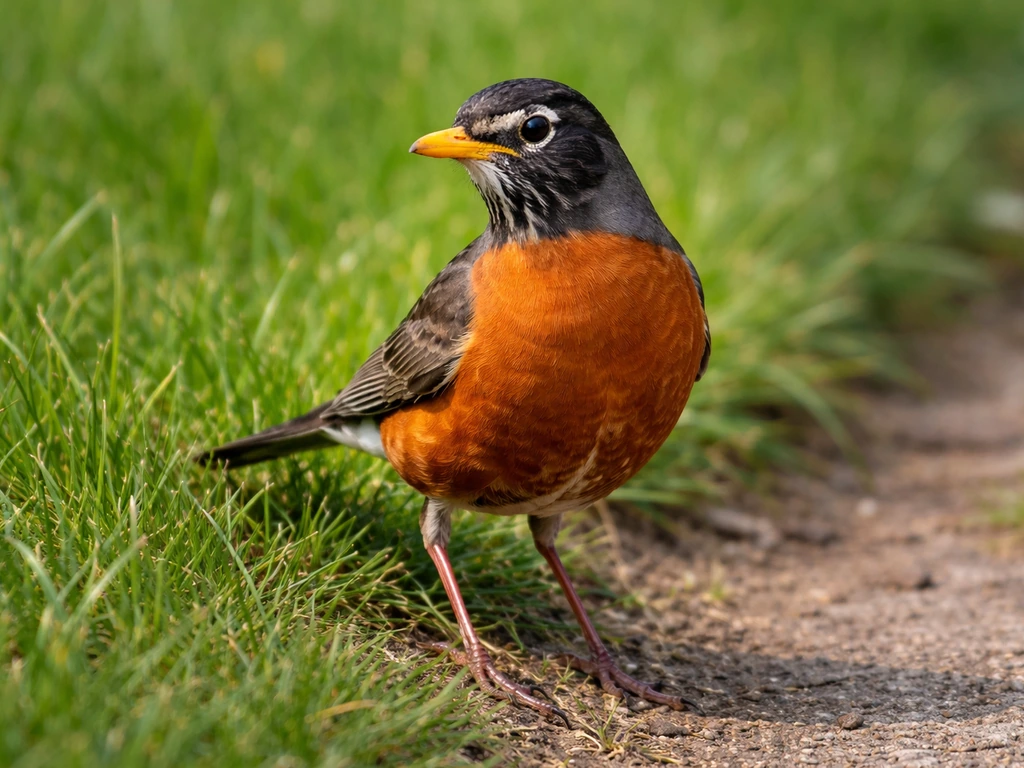
Robins are medium-large thrushes with a brick-red or orange breast, dark gray-to-black back and head, and a yellow bill. They run and stop across lawns in a distinctive pattern, cocking their head to listen for earthworms. In spring their cheerful 'cheerily, cheer-up, cheerio' song is one of the first things you'll hear at dawn. In late fall and winter they form large nomadic flocks that move through wooded areas eating berries, so you might not see one for weeks and then suddenly have 50 in a single tree.
Mourning Dove
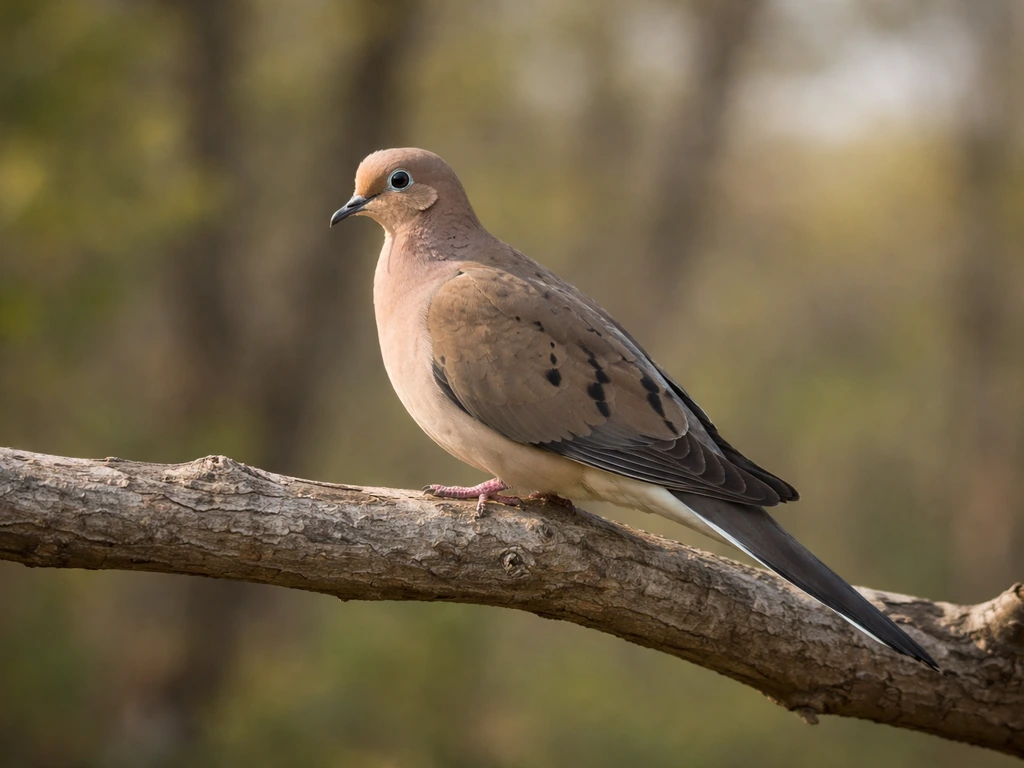
Mourning Doves are slim, long-tailed doves with a small rounded head, pinkish-tan body, and small black spots on the wings. In flight the tail shows white outer edges and the wingbeats make a distinctive whistling sound. They spend a lot of time on the ground under feeders or on roadsides, and their soft, mournful cooing is a staple background sound across Missouri from spring through fall.
Tufted Titmouse
Tufted Titmice are small, gray-backed birds with a pointed crest, pale underparts, and a rusty wash on the flanks. They're active and acrobatic at feeders and in tree canopies. The song is a loud, clear whistled 'peter-peter-peter' that carries well, and you'll hear it year-round, with winter thaws often triggering bursts of singing.
Where to find these birds across Missouri
The Missouri Department of Conservation breaks bird habitat into five main types: grasslands, towns and backyards, shrubby areas, forests, and wetlands. For the species on this list, here's where each one sits in that framework.
- Towns and backyards: Northern Cardinal, Carolina Wren, Mourning Dove, and American Robin are all regulars in developed areas. If you put up a sunflower seed feeder almost anywhere in Missouri, you'll have cardinals within days.
- Shrubby areas and woodland edges: Cardinals, catbirds, and wrens thrive here, especially in parks and neighborhood greenbelts.
- Open fields and grasslands: Mourning Doves are especially abundant, along with American Robins in migration. The southern half of Missouri holds doves year-round.
- Forests: Tufted Titmice are most common in eastern Missouri's hardwood forests, though they range statewide.
- Wetlands: Less relevant for everyday 'most common' sightings, but robins and doves will feed near wetland edges in wet meadows and flooded fields.
Seasonally, spring and fall migration inflates robin and dove numbers dramatically. Cardinals and titmice are your most consistent year-round birds regardless of region. In winter, the southeast corner of Missouri is notably warmer and holds higher dove numbers than northern counties.
This is not Missouri's state bird
Missouri's official state bird is the Eastern Bluebird, not the Northern Cardinal. The brown pelican is the Louisiana state bird, chosen for its coastal presence along the Gulf of Mexico why is the brown pelican louisiana state bird. The Missouri legislature made that designation on March 30, 1927, codified in Missouri Revised Statutes Section 10.010. The Eastern Bluebird is a genuinely beautiful and meaningful choice with deep roots in Missouri's open-country heritage, but it doesn't crack the top of the 'most commonly seen' list for most residents. You'll find bluebirds in open fields, along roadsides with nearby tree cavities, and in areas with bluebird nest boxes. They're present statewide but not nearly as concentrated at feeders or backyards as cardinals.
It's worth noting that the Northern Cardinal is the blank" rel="noopener noreferrer">official state bird of seven other states, not Missouri. So if you're ever on a quiz or a school project, remember: Missouri's state bird is the Eastern Bluebird, and the most commonly seen everyday bird is most likely the Northern Cardinal. If you need the official answer to what is the state bird of missouri, it is the Eastern Bluebird, even though the Northern Cardinal is often the most commonly seen backyard bird. If you’re curious about Louisiana instead, the bird on the Louisiana flag is the symbol you should look for. The what is the state bird of louisiana question has a different official answer than Missouri Northern Cardinal. Those are two different answers to two different questions.
How to confirm what's most common where you live
The best way to verify which bird is actually most common in your part of Missouri is to check real local data, and the tools to do that are free and easy to use.
- Go to eBird.org and use the 'Explore' section to pull up bar charts for Missouri or your specific county. The bar chart shows reporting frequency by week across the year, so you can see at a glance which species dominate checklists in your area and season.
- Set up a bird alert through the Missouri Department of Conservation's eBird partnership. You can get an email any time someone reports a specific species near you, which helps you track when target species are active locally.
- Check Missouri Christmas Bird Count results. The CBC is a long-running citizen science effort that counts every individual bird seen in a given area on a single day each December. Missouri CBC totals feed into national counts that track tens of millions of individual birds across 600+ species, and local circle results tell you exactly which species pile up in your region in winter.
- Use a bird ID app like Merlin (Cornell Lab) for real-time identification. Point your phone at a bird or use the Sound ID feature to identify species by call. This is genuinely the fastest way to put a name to the bird you're watching right now.
- Keep a simple backyard tally for one week. Write down every species you see and how many visits. Most Missouri residents doing this find Northern Cardinals at or near the top, with robins surging in spring and mourning doves consistent through summer.
If you want to go deeper, MDC publishes bird identification field guides and song recordings specifically tied to Missouri species, which are especially useful during CBC season when you're trying to sort through winter flocks quickly. For backyard-specific timing and seasonal questions, MDC’s Backyard Bird FAQs can also help you plan when to look for the most common species at feeders MDC publishes bird identification field guides and song recordings specifically tied to Missouri species. Between eBird bar charts, the CBC, and a good ID app, you can confirm the most common birds for your exact zip code in about 20 minutes.
FAQ
Is the Northern Cardinal the most common bird in all of Missouri, even in winter?
For everyday backyard sightings across most counties, it is the safest single answer, since it stays year-round and comes to feeders. In winter, you may see higher numbers of American Robins and Mourning Doves in specific regions or during short waves when flocks move through, so “most common” can vary by season and location.
What if I do not use a bird feeder, what bird is most common then?
Without feeders, Mourning Doves and American Robins often become more noticeable in open areas, lawns, and roadside edges where they naturally spend time. Cardinals can still be common, but your sightings may shift toward birds that forage on the ground or in open habitat instead of shrub and feeder stations.
How can I tell whether “most common” in a list means population size or reporting frequency?
Check the metric behind the list. Reporting frequency usually means the bird appears on a high percentage of checklists, so easy-to-see residents like cardinals score well. Raw abundance measures how many individuals are present, which can elevate winter flocks like robins in some counts even if they are not on every checklist.
Does the most common bird change if I only look at my backyard birds?
Yes, backyard-only counts tend to favor year-round feeder visitors and species that tolerate neighborhoods, Northern Cardinals and Tufted Titmice are strong examples. Species that pass through briefly or prefer certain habitat types may rank lower even if they dominate a broader statewide survey.
Which Missouri bird is more likely to show up at dawn, Cardinals or Robins?
Robins are often most noticeable around dawn in spring and early fall because they are active on lawns and vocal early. Cardinals can be heard and seen throughout the day, but their strongest feeder and shrub presence can be more consistent than dawn-specific activity.
Why do I sometimes have weeks with no Robins, then suddenly many at once?
Robins form seasonal movement patterns, in late fall and winter they can gather into nomadic flocks and then shift locations. That means your local “most common” impression can swing based on how long your area happens to be on their route.
Are bluebirds ever the most common bird in Missouri?
They are present across Missouri, but they generally do not compete with feeder-focused, year-round birds for the top “most commonly seen” spot for most residents. If you have open fields, nearby nesting cavities, or a bluebird nest box nearby, you might see them often enough locally to feel they are your most common bird.
If I’m doing a school quiz, what should I answer for the most important difference, state bird vs most common backyard bird?
Answer the official state bird question with Eastern Bluebird, and answer the everyday sightings question with Northern Cardinal. They are different birds because one is a legal symbol and the other depends on observation patterns and what “most common” is measuring.
What is the easiest way to confirm the most common bird for my exact zip code?
Use real local checklist data for your county or nearby areas, then compare at least two time windows (for example, winter vs spring). Also check whether the source is using reporting frequency or abundance, because those can swap which species ranks first.
Do carol birds and song prompts help identify the Northern Cardinal quickly?
Yes. The sharp metallic “chip” call is a frequent giveaway, especially when the bird is partially hidden in dense shrubs. If you hear that call near feeders, you can usually narrow the ID faster than relying only on the red male plumage.