Arizona's state bird is the Cactus Wren (Campylorhynchus brunneicapillus), and drawing it well comes down to nailing three things: a chunky body with a long, level tail, a bold white eyestripe, and a heavily spotted breast. Get those right and your sketch will be unmistakably a Cactus Wren rather than just a generic small brown bird.
How to Draw Arizona State Bird Cactus Wren Step by Step

Marcus Webb
7 Jun 2026
What you're actually drawing: the Cactus Wren at a glance
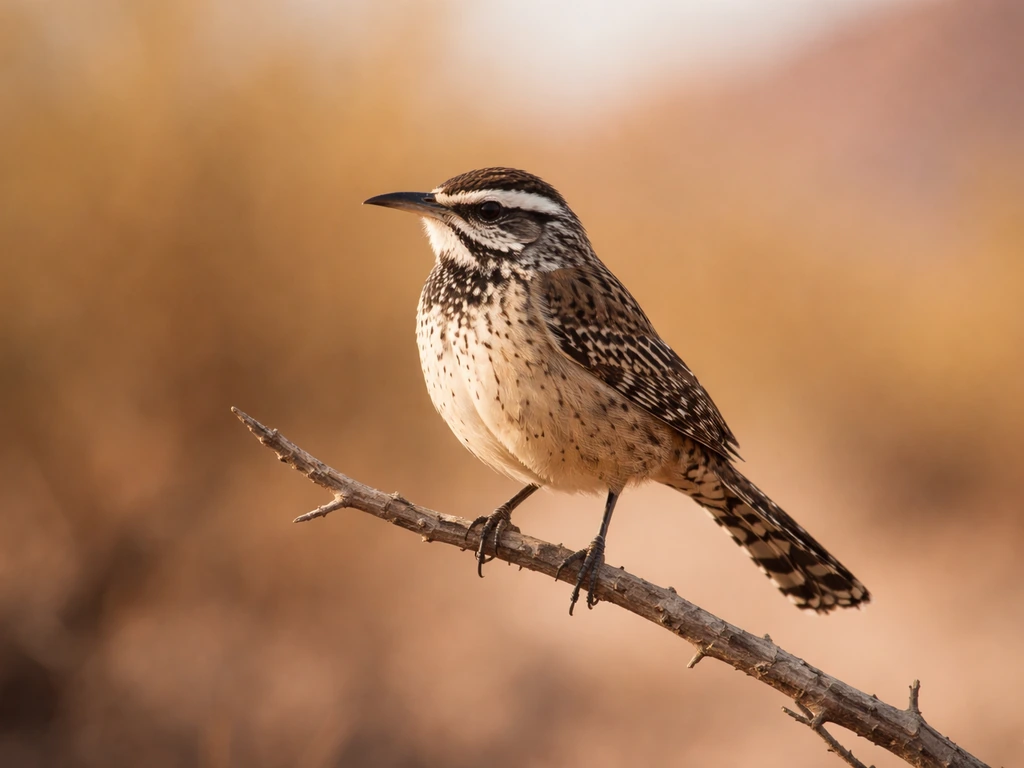
The Cactus Wren was officially designated Arizona's state bird, and it earns that status by being impossible to overlook in the Sonoran Desert. At 7.1 to 8.7 inches long with a wingspan of 10.6 to 11.8 inches, it's the largest wren in North America, roughly the size of a Spotted Towhee. That size matters for your drawing: this is not a delicate little sparrow-sized bird. It's a stocky, assertive-looking creature.
The color palette is brown, white, and black, but boldly patterned. The back is gray-brown with white and black streaks. The wings and long tail are barred black and white. The crown is dark rusty brown. The throat and breast are densely spotted with dark brown and black, transitioning into a lighter buff or whitish belly. And cutting across all of it is that wide, bright white eyestripe that runs from the base of the bill past the eye all the way toward the back of the neck. Audubon describes the Cactus Wren as 'more boldly barred, striped, and spotted than other desert birds,' which is exactly the energy you want to capture on paper.
Get your reference right before you draw a single line
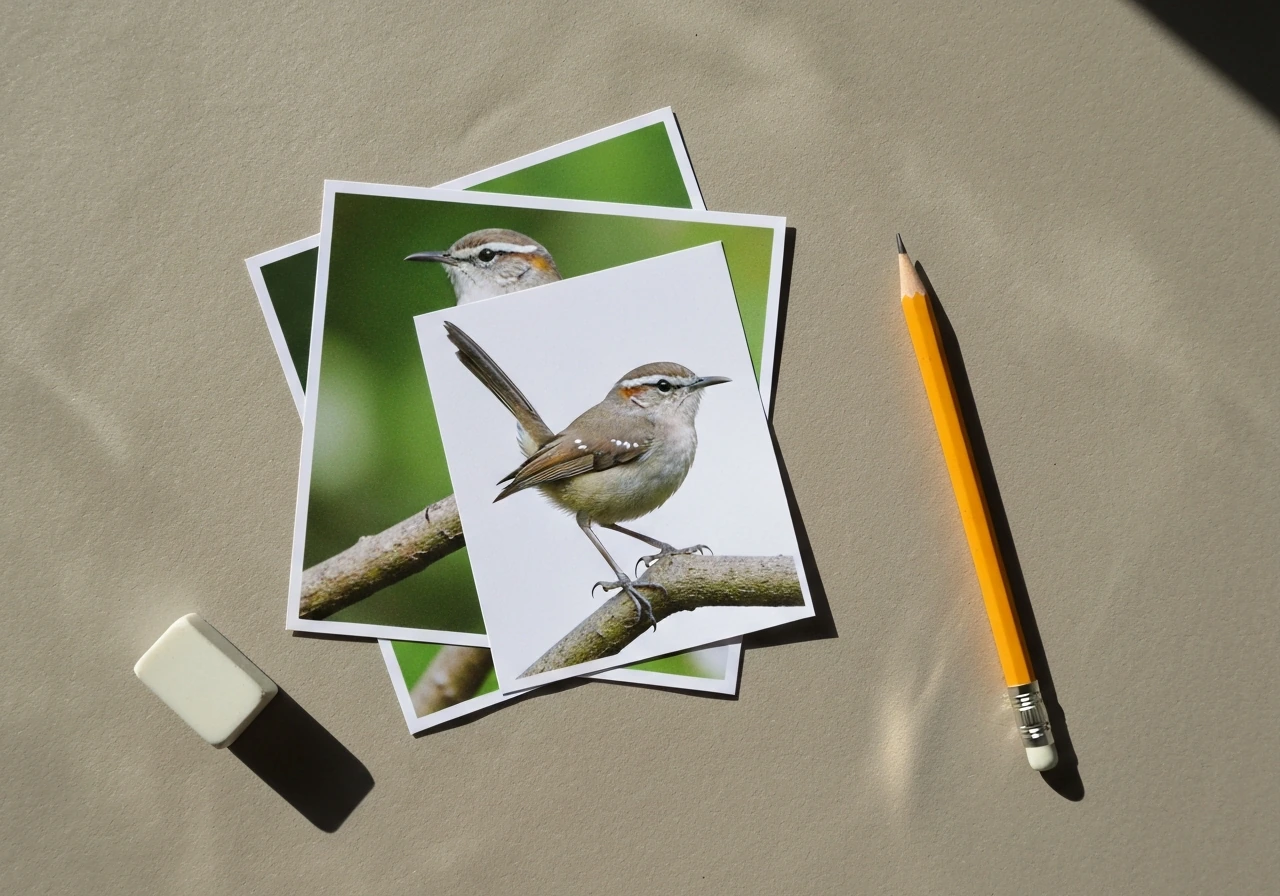
Before you pick up a pencil, spend two or three minutes looking at reference photos of the Cactus Wren specifically. Your eye needs to calibrate to its proportions and patterns, because a lot of small brown birds look superficially similar. Here's what to lock onto in your reference:
- The tail is long and rounded, and the bird holds it level, not cocked upward. This is a critical species-specific posture. Many wrens tilt their tail up at an angle, but the Cactus Wren keeps it nearly horizontal.
- The bill is long and heavy, with a slight downward curve. It looks substantial on the face, not a thin little seedcracker.
- The white eyestripe is broad and extends from the bill all the way past the eye toward the sides of the neck. It's one of the widest, clearest supercilium stripes of any wren.
- The breast and throat are covered in dark spots, not just faint streaking. They look dense and deliberate.
- The wings and tail show clear black barring against white and brown. The barring on the tail is especially visible from below.
- The body is chunky and rounded, not slim or elongated.
A perching pose on a cholla or saguaro cactus is the most iconic and useful reference for a beginner. Artlex’s bird-drawing tutorial recommends starting with basic shapes, then adding separations and feather direction before moving into more realistic shading, including a perching-branch approach for wing and leg placement. It gives you a clean side view or three-quarter view where all the key markings are visible at once.
Build the sketch with construction shapes
Start with very light pencil lines. The whole point of construction shapes is that you'll erase most of them later, so press lightly and don't commit to anything yet.
- Draw the body first as a large egg or oval shape, slightly flattened on the bottom. The Cactus Wren's body is the dominant mass of the drawing, so make it bigger than your instinct suggests for a 'small bird.'
- Add a smaller circle or oval for the head, overlapping the front-top of the body oval. The head is noticeably smaller than the body but not tiny. Position it so the neck is short, because this bird has almost no visible neck.
- Sketch a long rectangle or tapered wedge extending from the rear of the body for the tail. It should be roughly as long as or slightly longer than the body itself. Keep it horizontal, not angled upward.
- Add a short, stout triangular shape for the bill, pointing forward from the lower third of the head circle. Make it longer than you think, with a subtle downward curve at the tip.
- Use your head circle as a measuring unit. The body oval should be about 1.5 to 2 head-lengths long. The tail should add another 1 to 1.5 head-lengths behind the body.
- Rough in two small wing shapes on either side of the body, sitting folded against the back. They don't extend past the body much when folded.
- Add two short legs dropping from the bottom of the body, slightly in front of center, ending in thin toes gripping a branch or cactus.
Step back and compare your construction to your reference. Is the tail truly level and long? Is the body chunky enough? Is the bill substantial? Adjust proportions now before you go any further.
Adding the details that make it a Cactus Wren
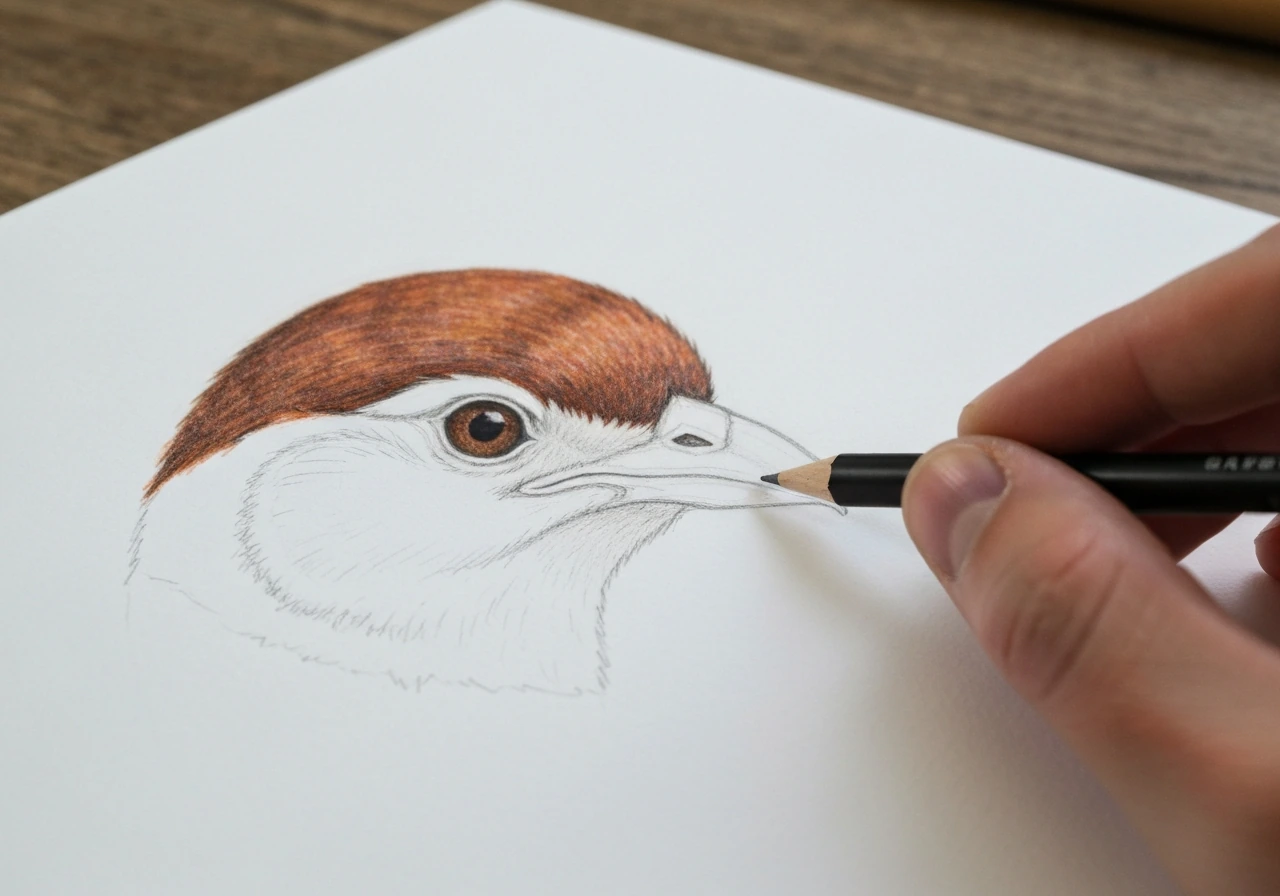
Once your proportions feel right, move into details with slightly more confident pencil pressure. Work from top to bottom and large features to small.
Head and face
Draw the dark rusty-brown cap across the top of the head. Then draw the white eyestripe as a broad, clean band starting right at the base of the bill, running above the eye (place a small dot or circle for the eye itself), and continuing all the way toward the back of the head. This stripe should be wide and confident, not a thin line. Below the eyestripe, add a thin darker cheek area, then a white throat that transitions into the spotted breast.
Breast and belly
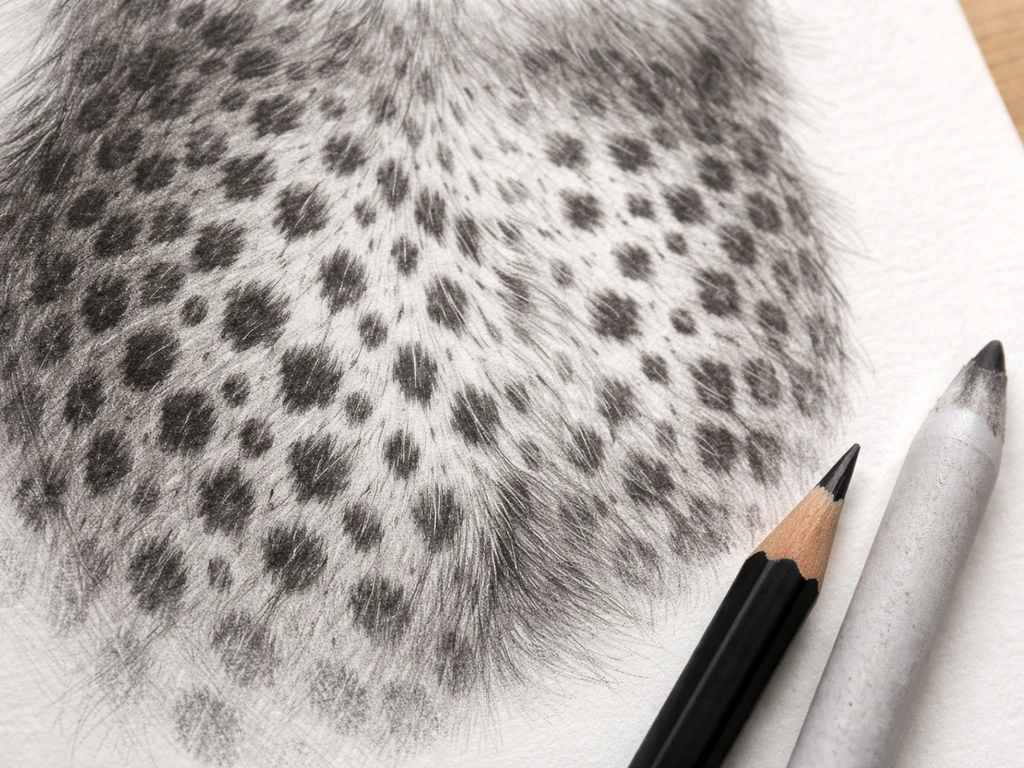
The throat and breast are the most detail-intensive part of the drawing. Fill this area with dense dark spots, oval or teardrop-shaped, packed fairly closely together. They're heaviest on the upper breast and throat and lighten toward the belly. The belly itself is buff or whitish with fewer, lighter spots. Don't be timid here: the spotting should look bold, not like a light dusting.
Back, wings, and tail
The back is gray-brown with white and black streaks running lengthwise. Draw these as short, slightly curved strokes following the direction of the feathers. On the wings, add horizontal bars: alternating dark and light bands across the feathers. The tail gets the same barring treatment, with clear black bands against a lighter brown or white ground. The barring on the tail should be evenly spaced and distinct.
Inking and cleaning up your sketch
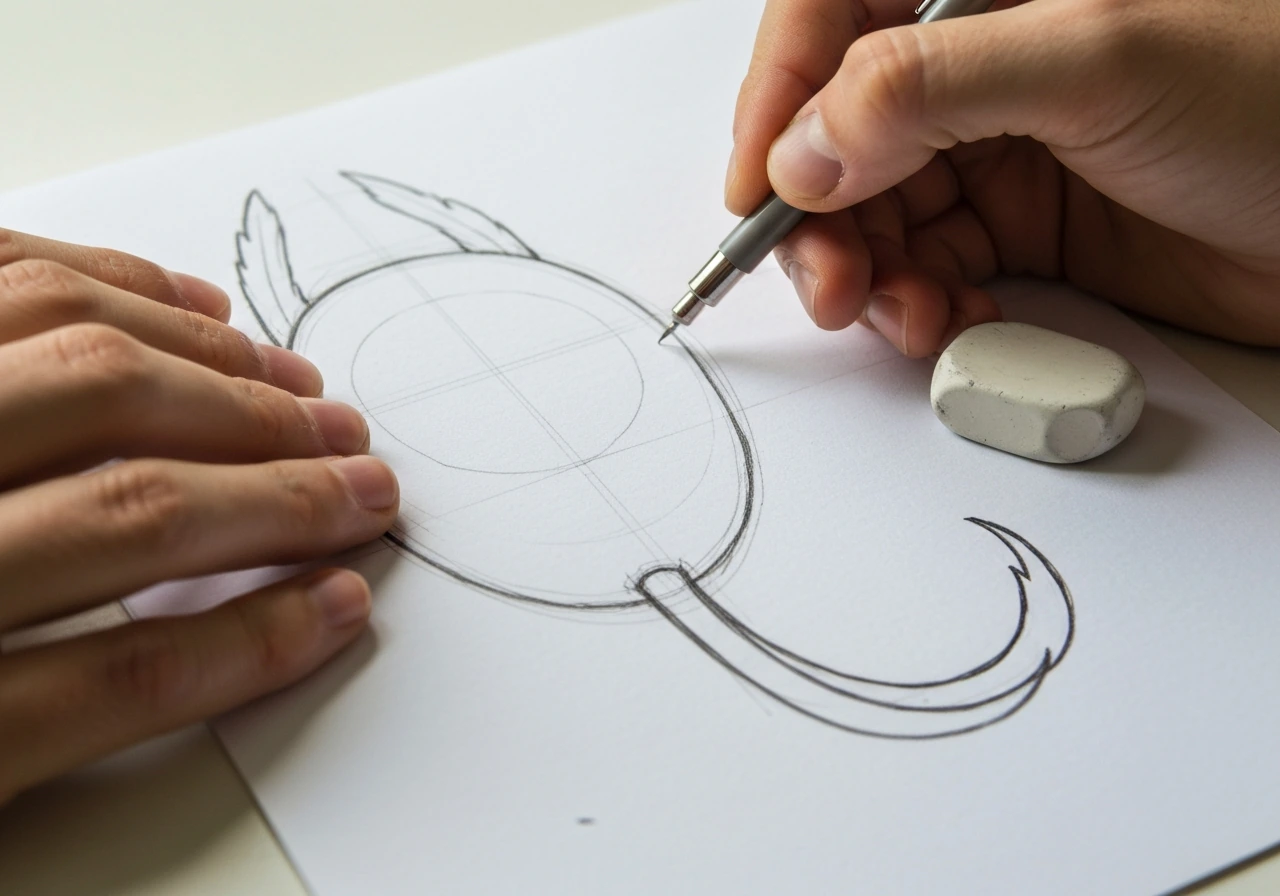
If you want a clean final drawing, let your pencil sketch dry for a moment and then go over your final lines with a fine-tipped pen or darker pencil. Use different line weights: heavier lines for the outer silhouette and the strongest markings (like the eyestripe edge and tail barring), lighter lines for internal feather texture and streaking. This separation of weights gives the drawing depth without shading.
Once your ink is dry, erase all the construction lines underneath. The oval body shape, the head circle, the tail rectangle, all of it should disappear, leaving only the clean outlines and detail work. At this stage, look at the silhouette alone: does the tail read as long and horizontal? Does the bill look heavy? Does the body look chunky? These are your final proportion checks before you move into color or shading.
Color and shading to match the real bird
Whether you're using colored pencils, watercolor, or digital tools, the Cactus Wren's palette is warm and earthy with high-contrast markings. Here's a practical color breakdown:
| Area | Color Description | Shading Notes |
|---|---|---|
| Crown | Rusty brown, darker than the back | Shade the edges darker to suggest the rounded cap shape |
| Back and scapulars | Gray-brown with white and black streaks | Apply a mid-tone brown base, then add white and dark streaks on top |
| Wings | Brown base with black-and-white barring | Use alternating dark and light strokes; keep bars even and horizontal |
| Tail | Brown with bold black barring | Bars should be crisp and evenly spaced; lighten the tips slightly |
| Eyestripe | Bright white, broad | Leave paper white or apply white gouache/colored pencil over a light base |
| Throat and upper breast | White to buff with dense dark brown/black spots | Apply spots with a fine brush or pencil tip; keep them bold and close together |
| Belly and flanks | Buff to whitish, lighter spotting | Use a warm cream or pale yellow; spots here are sparser and lighter |
| Bill and legs | Dark gray to black | Apply a consistent dark tone; the bill can have a slight warm tint at the base |
For shading the overall form, the bird's underside (belly and lower breast) catches the most light, so keep that area your lightest value. The back and crown are your darkest mid-tones. The white eyestripe should remain the brightest white on the entire drawing, it anchors the face and is the single most recognizable field mark.
If you're working in pencil only, use hatching on the back and wings to suggest the streaked and barred texture, and reserve your darkest pressure for the spots on the breast, the barring, and the eye.
Common mistakes and how to fix them
These are the errors that turn a Cactus Wren into an unidentifiable 'generic brown bird,' and they're all fixable once you know to watch for them.
| Mistake | Why It Happens | How to Fix It |
|---|---|---|
| Tail cocked upward | Many wrens in photos have an upturned tail, so it feels like a wren pose | Actively hold the tail horizontal in your construction sketch; it should be nearly parallel to the ground |
| Stubby or short tail | Beginners underestimate tail length relative to body | Use your head-circle measurement: the tail should be at least one full head-length, often more |
| Thin, small bill | Instinct to draw a small bird with a small bill | The Cactus Wren's bill is long and slightly decurved; draw it heavier than feels right at first |
| Faint or thin eyestripe | Not committing to how wide and bright the real stripe is | Make the eyestripe a substantial white band, not a thin line; it should be clearly visible from a distance |
| Missing or light breast spots | Spotting detail feels tedious, so it gets skipped or softened | The spots are dense and dark, especially on the upper breast; don't soften them into vague shading |
| Body too small or slim | Mental model of 'small bird' overrides reference | The Cactus Wren is the largest wren; build the body oval generously before adding anything else |
If you've already finished a sketch and something feels off, the tail posture and the eyestripe are almost always the culprits. A quick redraw of just those two elements can transform a vague brown bird into a recognizable Cactus Wren.
Where to go from here
Once you're comfortable with the basic perching pose, try drawing the Cactus Wren from a three-quarter front angle, which emphasizes the spotted breast and the heavy bill even more dramatically. You can also practice the tail barring as a standalone exercise, just draw the tail feathers fanned slightly and work on getting the black-and-white bar pattern crisp and even.
If you enjoy drawing state birds, the Cactus Wren is a great challenge because its bold patterning teaches you how to handle complex markings. If you want a different challenge, look up how to draw the Oklahoma state bird next and apply the same step-by-step approach state birds. Birds like the Cardinal (state bird of several states including Ohio and Illinois) or the Hawaiian Nene goose present completely different drawing problems, from smooth color gradients to complex body proportions. If you want another state-bird challenge with a different look, you can also learn how to draw the Illinois state bird step by step Cardinal. To get started with the Ohio state bird, use similar steps: study clear reference photos, sketch the construction shapes, then lock in the key field marks. For more on the Hawaiian Nene, you may be wondering why it is Hawaii's state bird Hawaiian Nene goose. The Hawaiian Nene goose is the state bird of Hawaii. Each state bird has its own set of field marks worth mastering, and working through them species by species is one of the best ways to build real drawing skills. If you want to draw a different species, look up how to draw Nevada state bird and apply the same step-by-step field-mark approach state birds.
Keep a reference photo open whenever you practice. The Cactus Wren's specific combination of chunky proportions, level tail, heavy bill, white eyestripe, and spotted breast is what separates it from every other small brown bird in the American Southwest. The Cornell Lab’s All About Birds notes key identification features including a long white eyebrow or eyestripe, a long heavy bill, and a large chunky wren with a long rounded tail and short rounded wings blank" rel="noopener noreferrer">long white eyestripe, long heavy bill, and a large chunky wren with long rounded tail and short rounded wings. Draw those five things correctly, and you've got it.
FAQ
My Cactus Wren doesn’t look like itself even when the body is the right color, what’s the first detail to fix?
Use the eyestripe as your positioning guide, it should start at the base of the bill and stay wide over the head. If the stripe feels “too high” or “too thin,” your bird will read like a different desert wren, so adjust stripe width first, then redraw the cheek edge and eye placement.
How can I draw the tail so it still looks like a Cactus Wren, especially if my pose is slightly different?
For a side view, keep the tail mostly level (not angled up). If you want more dynamic energy, tilt only the body and allow a slight tail dip, but avoid a strong downward tail, that is a common reason the drawing stops looking like a perching Cactus Wren.
Will the step-by-step markings work if I draw the bird from a three-quarter angle instead of straight side view?
Yes. When you do a three-quarter view, keep the eyestripe continuous and let it wrap across the head, the eye may be slightly offset but the stripe should still read as a single bold band. Don’t split the stripe into separate pieces, that makes the head look segmented.
How do I decide how dense to make the breast spotting so it doesn’t look messy or too dark everywhere?
The spots are the easiest place to overdo detail. Pack the densest spots on the upper throat and upper breast, then reduce spot size and intensity as you move toward the belly. If your entire belly has heavy dark spotting, it will look cluttered and lose the Cactus Wren’s light underside.
My wing and tail barring looks uneven or smudged, how do I keep the pattern crisp?
If your bars blur, they lose the signature pattern. Draw them as clear alternating stripes before adding feather texture, and keep spacing consistent from wing to wing and from base to tip on the tail. Even bar spacing is more important than perfect “feather realism.”
What’s the best way to choose which pencil lines to make darker so the bird reads clearly without shading?
Use the “line weight” rule: silhouette and strongest borders should be darkest, internal feather streaks and spot edges should be lighter. A quick check is to squint at your drawing, if the eyestripe and tail bars are not still the darkest readable features, increase contrast only on those.
Can I shade the eyestripe, or should it stay completely white?
When working digitally or with colored pencils, keep the eyestripe near pure white and avoid blending it down with the surrounding browns. Treat it like a highlight shape that stays clean, then add contrast around it using darker cap, cheek, and spot values.
After finishing a sketch, how can I diagnose what’s causing it to look like a generic brown bird?
If your bird looks like a generic small brown wren, compare these five field marks in order: chunky body, long level tail, heavy bill, bold wide white eyestripe, and spotted upper breast. A fast fix is redrawing just the eyestripe and tail first, then re-checking body chunkiness.
What should I watch for in the bill shape and size?
Draw the bill a bit heavier than you expect, with a thicker base and a confident curve. If the bill looks too narrow or delicate, the whole head reads wrong, so set the bill width early in construction before you start the eyestripe stripe band.
Do you have a quick exercise to improve accuracy before I draw the whole Cactus Wren?
For practice, try a “mark-only” warm-up: sketch just the eyestripe, then add the spot map on the throat and upper breast, then finish with one controlled tail bar pattern. This isolates the biggest ID features without worrying about full anatomy.
Next Articles
Why Is the Nēnē Hawaiʻi’s State Bird? Reasons and ID Tips
Learn why nēnē is Hawaiʻi’s state bird and how to identify it, plus its conservation status and unique significance

What Is Hawaii’s State Bird? The Nēnē (Hawaiian Goose)
Hawaii’s state bird is the nēnē, the Hawaiian goose, native and endangered on the islands with ongoing recovery.
Which Is Karnataka State Bird? Identification and Facts
Discover Karnataka’s official state bird, key ID traits, where to spot it, and why it was chosen.